

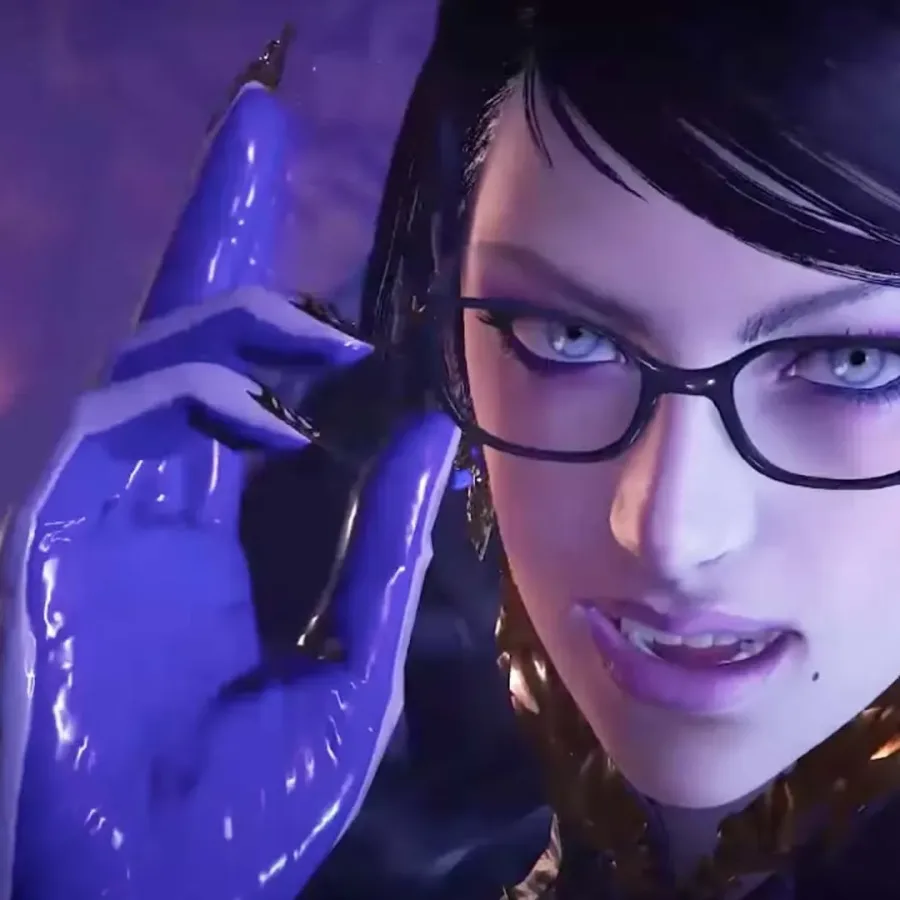
PlatinumGames has not announced Bayonetta 4, but the studio has made its clearest recent statement that it still sees a future for its signature gun-wielding witch. CEO Atsushi Inaba says PlatinumGames has a "strong desire" to continue developing Bayonetta as a character and to broaden the world around her, even if he stopped short of discussing a specific project or timetable.
The comments arrive at an important and somewhat uncertain moment for the Osaka-based action specialist. Bayonetta remains one of PlatinumGames' most recognizable creations, defined by extravagant combo systems, theatrical boss encounters, demon-summoning spectacle, and an unapologetically stylized heroine whose footwear doubles as firearms. Yet the studio that made the original game has changed substantially over the years, with several prominent developers from its earlier era having moved on.
For fans, Inaba's remarks are not a confirmation that a new Bayonetta game is actively in production. They are, however, a notable sign that PlatinumGames does not consider the character's story complete.
A Carefully Worded but Positive Bayonetta Update
Asked about Bayonetta's future during a Famitsu interview connected to the Nintendo Switch 2 crossover between Stellar Blade and Bayonetta, Inaba declined to provide a direct answer about what comes next. Instead, he emphasized the company's appetite for doing more with the heroine and her setting.
For useful background on this topic, read Best Buy Gaming Deals Include Invincible VS, Star Wars Zero Company and Xbox Hardware.
"I can't really answer that right now," Inaba said. "We have a strong desire to further develop the character of Bayonetta and expand her world. Please look forward to seeing what form that takes in the future."
That distinction matters. "Develop" and "expand" can mean a conventional sequel, but they could also point toward new kinds of projects, collaborations, or stories that do not follow the expected numbered-series format. There is no indication yet of which route PlatinumGames and its partners may pursue. Still, the statement acknowledges that Bayonetta herself remains a priority worth exploring rather than simply a completed chapter in the company's history.
The timing of the interview also makes the crossover event relevant. Stellar Blade shares some obvious surface-level DNA with PlatinumGames' most famous character-action work: fast combat, striking costumes, a highly stylized protagonist, and an emphasis on dramatic set-piece battles. Bringing Bayonetta into that setting puts the character in front of players on Nintendo Switch 2 while underlining her continued cultural value as an action-game icon.
A Series With a Complicated Publishing History
Any future Bayonetta project involves more than a simple internal decision at PlatinumGames. The series is co-owned by Sega and Nintendo, and its release history has been shaped by those relationships.
The first Bayonetta established the character and the series' high-speed combat identity. The follow-up, Bayonetta 2, became a Wii U exclusive under Nintendo's publishing support. That game was later brought to Nintendo Switch, but it has not received releases on other modern consoles. Bayonetta 3 followed as a Nintendo Switch release in 2022.
As a result, a potential new game's platform plans are impossible to infer from Inaba's comments alone. The recent Switch 2 crossover provides a fresh Nintendo connection, but it is not an announcement of exclusivity, a sequel, or a release window. The ownership arrangement means that Sega and Nintendo would likely both be central to whatever comes next.
For now, players should view the CEO's statement as an expression of intent rather than a product reveal. There is no announced title, no confirmed development team, no trailer, and no date. But after several years without a formal update on the franchise's long-term direction, even that intent carries weight.
PlatinumGames Has Changed Since Bayonetta's Early Years
Bayonetta's future is being considered at a studio that looks very different from the one that launched the original game. A number of notable creators have departed PlatinumGames, including original Bayonetta director Hideki Kamiya. Kamiya has since established Clovers, the studio developing Okami 2.
Other departures include character designer Masaki Yamanaka, Metal Gear Rising: Revengeance director Kenji Saito, and Astral Chain director Takahisa Taura. Bayonetta 2 director Yusuke Hashimoto also left PlatinumGames for Capcom, where he recently contributed to the combat work in Onimusha: Way of the Sword.
That list naturally raises questions over what a future Bayonetta game would look like without many of the figures associated with the franchise's formative years. Creative teams evolve, and no long-running series stays frozen in time. At the same time, Bayonetta's personality, animation, combat rhythm, enemy design, music, and surreal sense of scale have been unusually tied to the identities of its original creators.
Inaba's framing is therefore significant because it centers the character and the world rather than promising a return to a particular past formula. If PlatinumGames does eventually continue the series, the challenge will be preserving the elements that made Bayonetta distinct while allowing a changed team to establish its own perspective.
What "Expanding the World" Could Mean
There are plenty of unexplored possibilities in Bayonetta's fictional universe, although PlatinumGames has not committed to any of them. The existing games have built a cosmology around angels, demons, parallel worlds, Umbra Witches, Lumen Sages, and reality-spanning threats. Bayonetta 3 in particular pushed the series toward multiverse storytelling and multiple interpretations of its central figure.
A new entry could continue that approach, revisit earlier parts of Bayonetta's history, introduce a new lead alongside her, or tell a more focused story with the original heroine at its center. Those are only possibilities, not details confirmed by the studio. The important point is that the language used by Inaba leaves room for something broader than another familiar sequence of missions and combat chapters.
The franchise has also shown a willingness to experiment. Bayonetta Origins: Cereza and the Lost Demon took the property in a different direction with a storybook presentation and a more adventure-focused structure. Its existence demonstrated that Bayonetta can support projects outside the mainline character-action mold. Whether PlatinumGames' future ambitions involve another such experiment or a full-scale action sequel remains unknown.
PlatinumGames' Current Workload
While Bayonetta's next form is undecided publicly, PlatinumGames is not standing still. Its most recently released game is Ninja Gaiden 4, created in collaboration with Team Ninja. The action title launched on October 21, 2025, for PlayStation 5, Xbox Series consoles, and PC.
The studio is also working on Teenage Mutant Ninja Turtles: The Last Ronin, an action-adventure adaptation of the popular comic series. PlatinumGames' version was announced at Summer Game Fest in June 2026 as a partnership with Paramount, following the cancellation of an earlier version that had been in development at Black Forest Games.
That project faces an uncertain wider corporate backdrop. Warner Bros. and Paramount are expected to complete their $110 billion merger on October 6, 2026, creating Skydance and placing a large collection of entertainment properties under one corporate umbrella. Major mergers can bring shifts in priorities, restructurings, and project reviews. A live-action, R-rated adaptation of Teenage Mutant Ninja Turtles: The Last Ronin had already been put on hold before the companies joined, though that does not establish the status of PlatinumGames' game.
Until PlatinumGames, Paramount, or Skydance provides an update, the action-adventure game remains an announced project with unanswered questions around its longer-term path.
The Witch Is Still on PlatinumGames' Mind
Bayonetta's immediate future remains unannounced, and fans should not read Inaba's comments as a promise that a new game is imminent. PlatinumGames has other work in progress, the series has shared ownership, and the studio's creative roster has undergone considerable change.
Nevertheless, the message is encouraging for a franchise that has often faced uncertainty between releases. PlatinumGames still wants to build on Bayonetta, still sees potential in the setting around her, and still regards the witch as a character worth developing further.
Whether that becomes Bayonetta 4, a spinoff, a new multimedia direction, or something harder to predict, the studio has made one thing clear: Bayonetta is not being treated as a closed book.
Community
Discussion
Start the conversation.
No comments have been posted yet.