

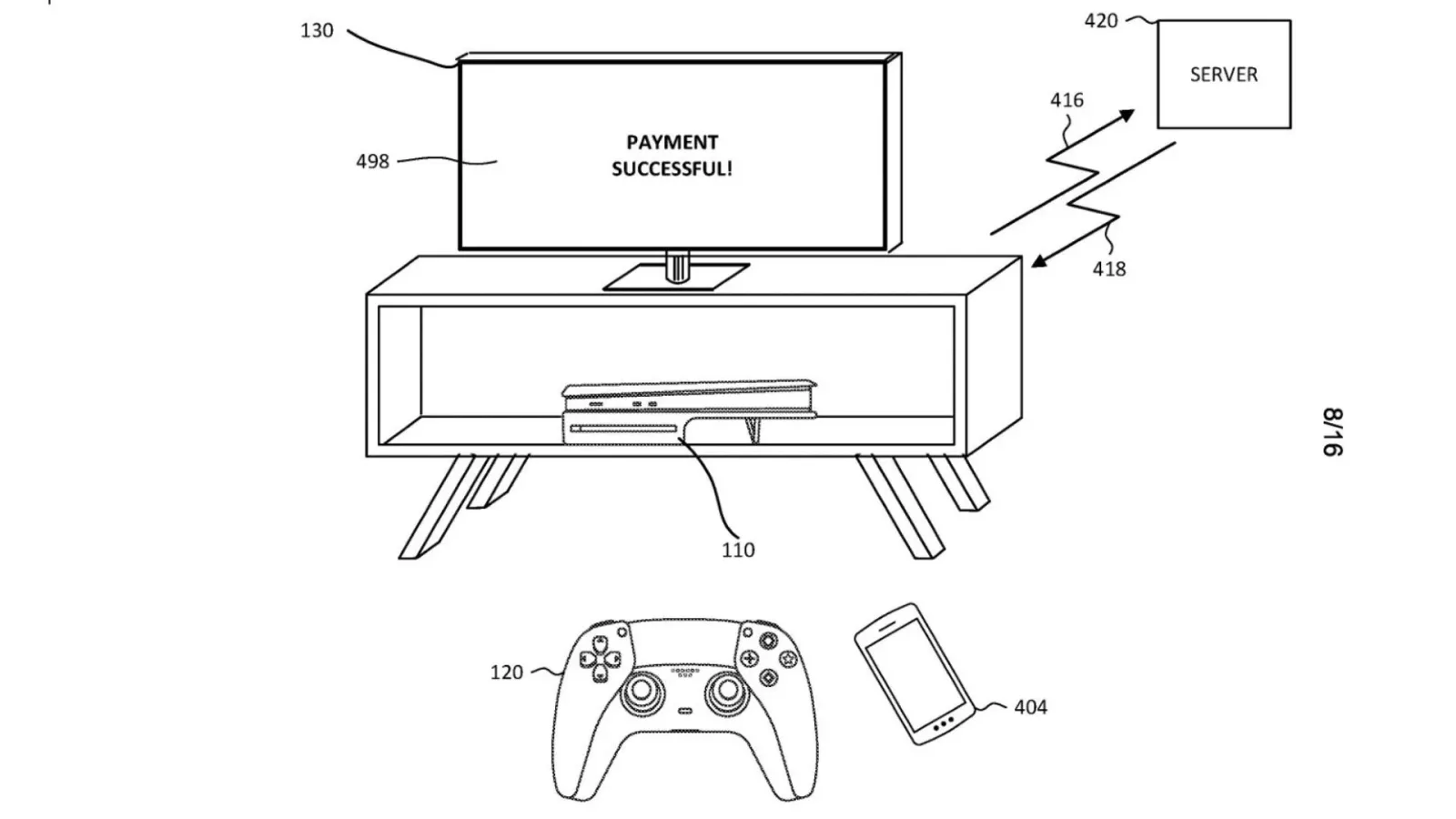
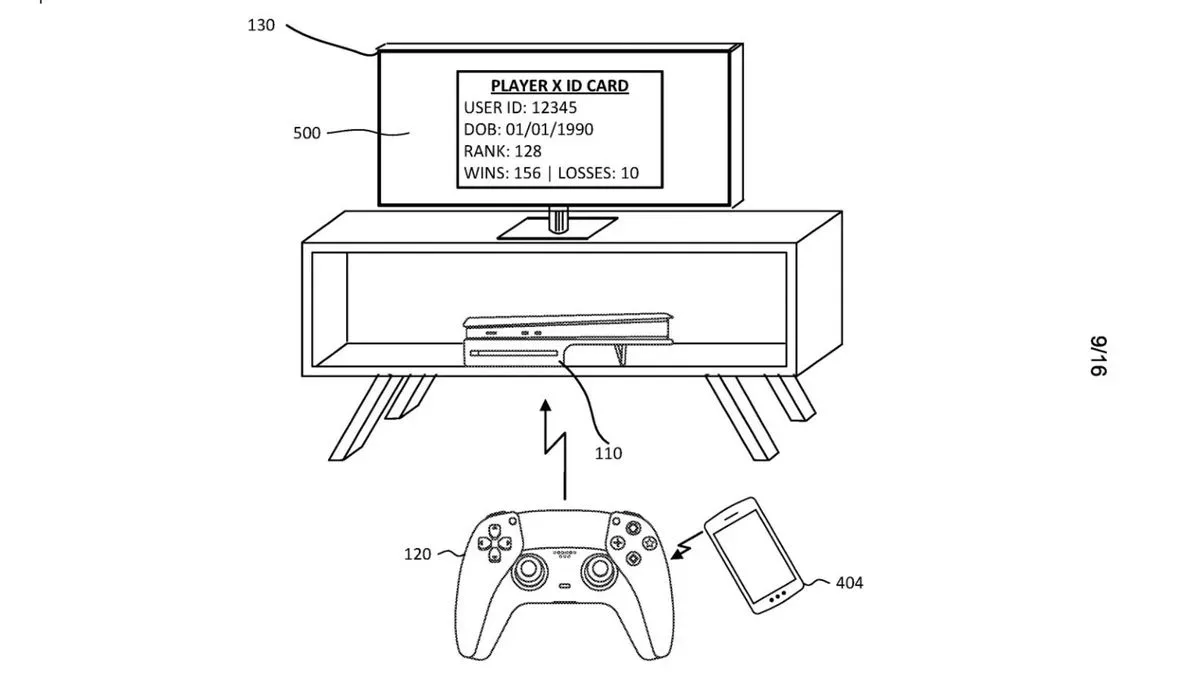
A newly published PlayStation patent has raised the possibility that a future controller could do more than manage games. The filing describes a controller-led system for receiving information from a nearby electronic device, using technologies including Near Field Communication (NFC) and Bluetooth. In practical terms, that could potentially let a player tap a phone against a controller to transfer account details, payment information, gift-card data, or login credentials to a console.
The concept has naturally prompted speculation around a possible PlayStation 6 controller, particularly because the patent illustrations resemble the current DualSense design while the existing PS5 controller is not known to include NFC hardware. Still, this is a patent rather than a product announcement. Companies frequently protect technical ideas that are never introduced commercially, and the filing does not confirm that the feature is planned for PS5, PlayStation 6, or any specific future device.
The patent application, listed as 19082121, is titled "VIDEO GAME CONTROLLER-DRIVEN INFORMATION TRANSFER." Its central proposal is a controller that can recognize when an electronic device is close enough, then help coordinate the transfer of data to a video game console. That data could include information associated with a payment method or a player account.
What the controller-driven transfer system could do
The most immediately understandable use is payment setup. Entering a card number, expiration date, security code, and billing details using a controller and an on-screen keyboard can be slow and inconvenient. A controller with NFC support could theoretically act as a familiar contact point: a player might bring a phone near it, authenticate on the phone, and pass the relevant payment information to the PlayStation account without manually typing every field.
For useful background on this topic, read Marvel's Wolverine Director Explains Why Logan Had to Look Up at Sabretooth.
NFC is already widely used for contactless interactions. It is the technology behind many tap-to-pay bank cards and phone wallet services, while game hardware has used it for physical collectibles and accessories. Nintendo has included an NFC reader in its Switch Pro Controller since the original Switch launched in 2017, primarily for scanning amiibo figures. PlayStation's patent envisions a broader administrative role for a controller's proximity functions.
Importantly, the filing's language is wider than simply "tap a bank card to buy a game." It refers to an electronic device that can be detected within a predetermined distance, or through physical contact with the controller. It also mentions NFC and Bluetooth as examples of communications protocols. That leaves room for phones, tablets, and potentially other connected devices rather than limiting the idea to a payment card alone.
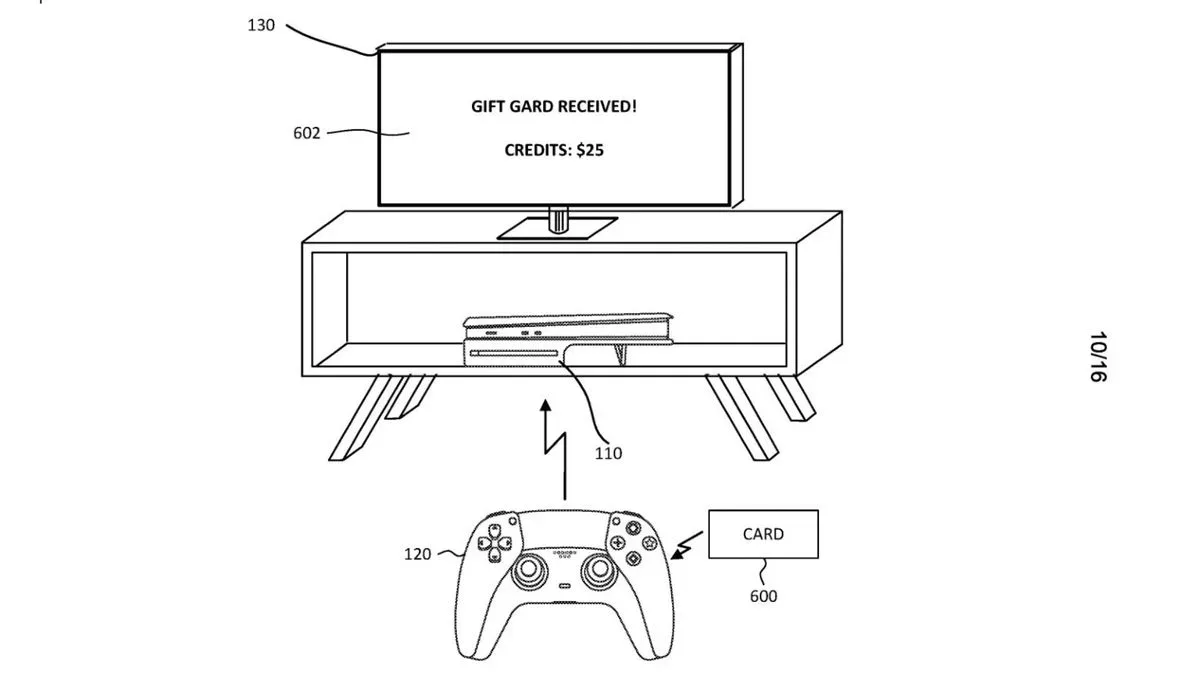
One illustration reportedly depicts the movement of gift-card information. The written description also refers to stored payment methods, credit accounts, bank accounts, gift cards, and associated credentials. However, the patent does not explicitly lay out a finalized consumer-facing process for taking a physical bank card payment through a controller. Any conclusions about exactly how cards would work, or whether they would work at all, remain speculative.
More than purchases: account access and guest profiles
The potentially more useful application may be account access. Local multiplayer remains a common PlayStation use case, but signing into an account on a console away from home can be cumbersome. Players may need to enter credentials manually, deal with verification steps, or use a temporary guest arrangement that lacks their familiar settings and profile data.
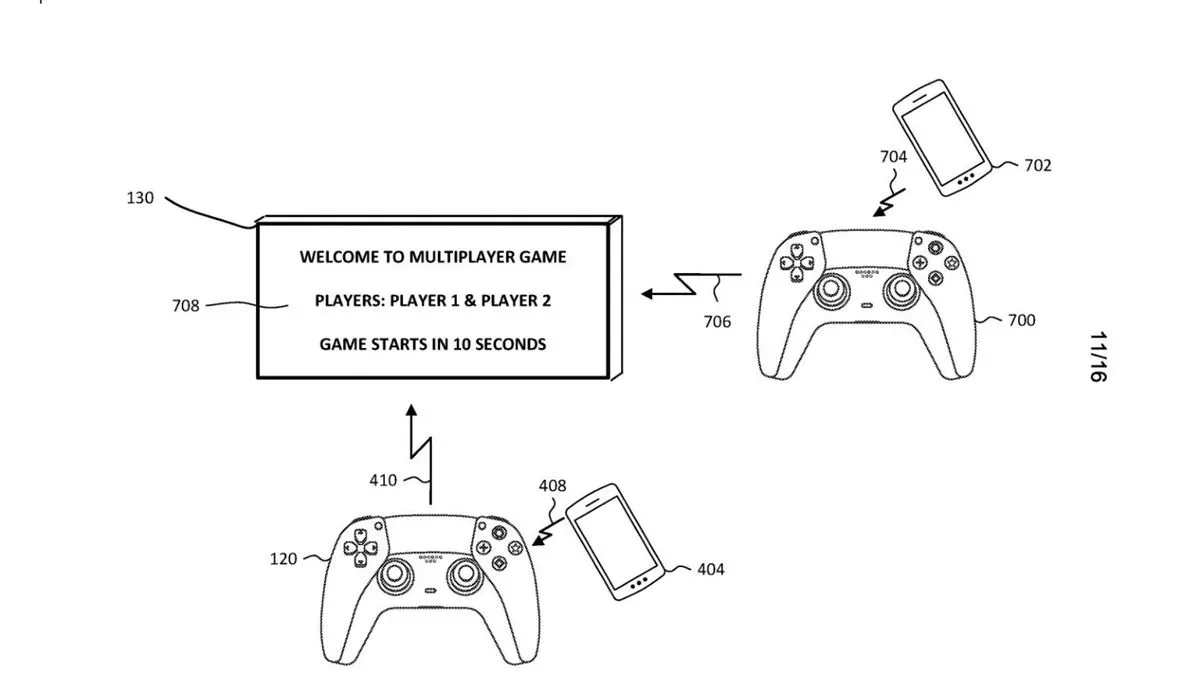
A controller-enabled proximity system could make that process simpler. A visitor might tap a phone running the PlayStation app against the controller, confirm their identity on the phone, and bring their own profile onto the console for the session. That could be valuable for a player who wants access to their account, messages, purchases, save-related settings, or multiplayer identity without repeatedly entering a password on a television interface.
The patent also includes a scenario involving the transfer of messages between a phone and a controller. The exact consumer benefit of that specific example is less obvious from the available material, but it underscores the filing's larger goal: treating the controller as a bridge between the console and a personal device. Instead of the controller being only an input accessory, it could become a physical point for identifying a user and initiating device-to-device exchanges.
There are obvious security questions that any real implementation would need to address. Payment and login credentials require protections against accidental transfers, unauthorized use, and account compromise. A retail version of such a feature would likely need confirmation prompts, encryption, account authentication, limits on what data can be passed, and ways to remove or manage stored details. The patent discusses the general transfer concept, but a public filing is not necessarily a complete blueprint for the security design of an eventual product.
An unusual argument about console performance
The patent frames the feature not only as a convenience tool but also as a way to improve the operation of a game console. Its description notes that players value storing payment and account information to make game purchases easier to manage. But it goes further, arguing that coordinating multiple operational steps across multiple devices can cause console performance problems or failed operations.
That is a striking justification for a payment or login feature. Entering information on a console is generally thought of as a user-experience issue rather than a hardware-performance concern. Yet the filing positions controller-driven transfers as a technical improvement that could reduce the burden involved in coordinating those operations.
Patent language often describes an invention in the broadest and most technically favorable terms possible, so that framing should not be read as evidence that current PlayStation consoles struggle with basic account or payment setup. Instead, it highlights how the proposed system is being defined: the controller detects a device, helps initiate communication, and supports a transfer process that may reduce the number of actions required through the console interface.
Why a future controller seems more plausible than a PS5 revision
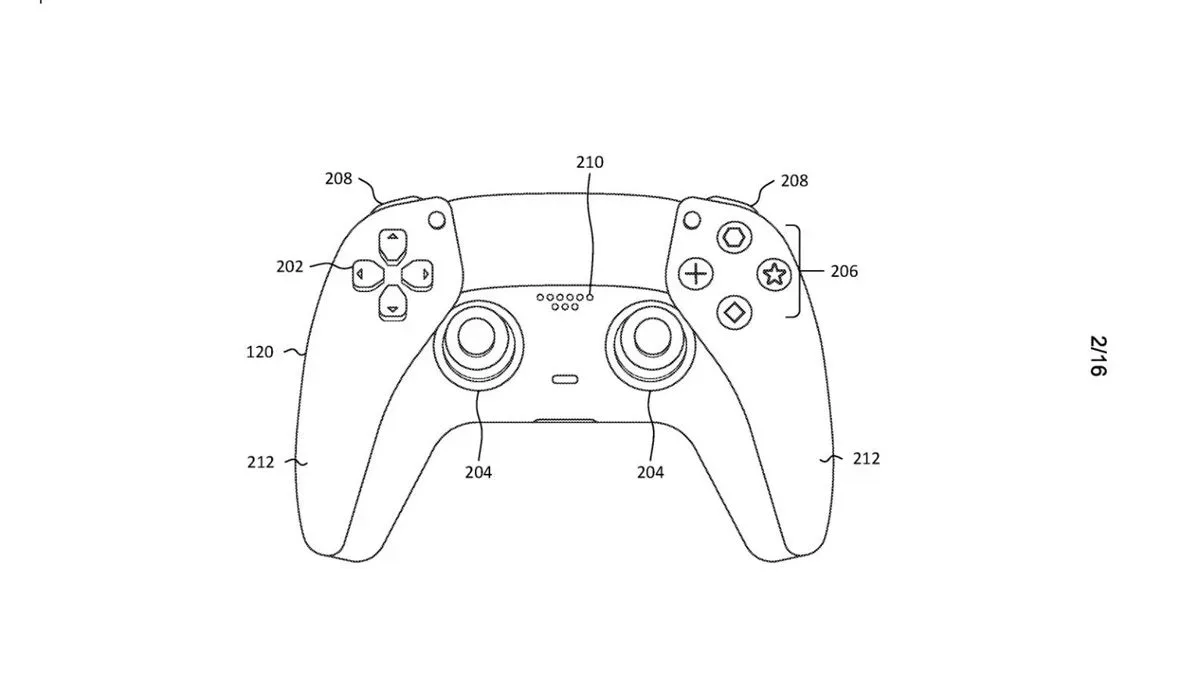
The illustrations resemble a DualSense-style controller, but that does not mean Sony is preparing an NFC-equipped version of the PS5 pad. Patent diagrams regularly use recognizable product-like shapes to explain a concept. The current DualSense already supports Bluetooth connectivity, though it does not currently advertise NFC capabilities.
Adding NFC would involve hardware changes, and introducing a substantially revised controller late in a console generation could create manufacturing, cost, retail, and compatibility considerations. For that reason, the concept may make more sense as an option for a next-generation controller than as a quiet revision to the existing DualSense. That remains inference, not confirmation.
A future PlayStation controller could also use NFC for purposes beyond payments and sign-ins. Physical collectibles, pairing flows, parental controls, event check-ins, digital ownership verification, or quick profile sharing are all conceivable categories for proximity technology. None of those possibilities are confirmed by this filing, but they illustrate why a platform holder might want a controller to recognize nearby devices.
Patents are possibilities, not promises
The key point is that Sony has patented an approach to controller-driven information transfer, not announced a new PlayStation feature. Patent activity can reveal areas of research and product experimentation, but it cannot establish a release schedule, final hardware specifications, supported devices, or a future console's capabilities.
Even so, the idea is notable because it reflects an effort to make the controller part of account management rather than just gameplay. For players, tapping a phone to sign in or add a payment method could be faster than navigating several screens with analog sticks. For PlayStation, it could create a more direct connection between the console experience and the phone that many users already keep close by.
Whether that idea appears in a revised DualSense, a PlayStation 6 controller, or never reaches store shelves is unknown. For now, the filing offers an intriguing look at how PlayStation may be considering NFC, Bluetooth, and proximity-based interactions as part of its future hardware design.
Community
Discussion
Start the conversation.
No comments have been posted yet.