

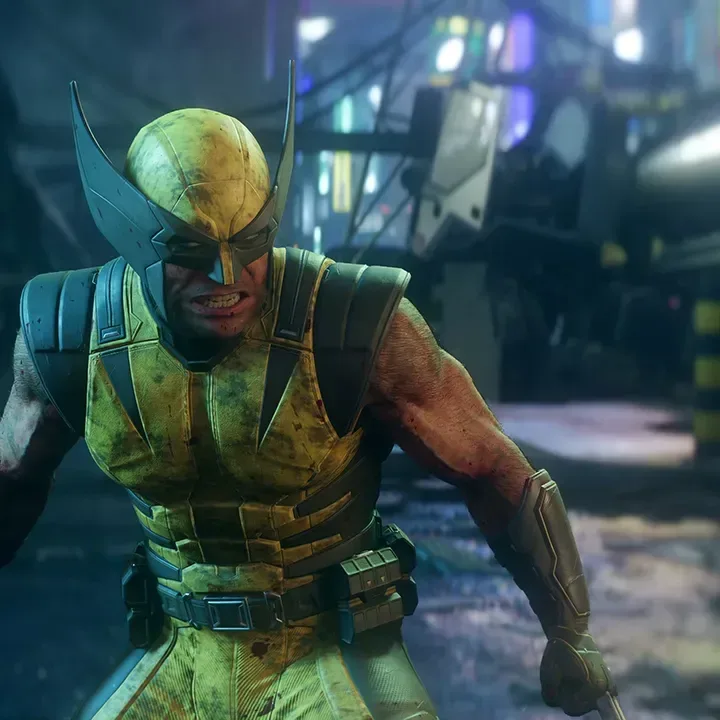
Marvel's Wolverine has given players plenty to discuss following its arrival on PlayStation 5, from its combat encounters and Sentinel battles to the interpretation of one of Marvel's most enduring mutants. One of the most visible choices in Insomniac Games' portrayal of Logan is also one of the simplest: he is notably short, especially when he is standing opposite Sabretooth.
That contrast was not incidental. Narrative director Walt Williams has explained that the size difference between Logan and Victor Creed was important to the team, both because it reflects the characters' comic-book depictions and because it reinforces the emotional direction of their conflict. Rather than treating Wolverine and Sabretooth as nothing more than two aggressive rivals trapped in an endless contest of dominance, the game aims to find the hurt, longing, fear, and loss underneath their rage.
It is an approach that has become particularly relevant amid online debate over Logan's characterization. Some players have argued that this version is too restrained or too emotionally open, suggesting that he does not lean hard enough into Wolverine's fury. Williams' comments make clear that Insomniac's intention was not to remove that anger. Instead, the team wanted to examine what causes it.
Rage Is Only One Part of Logan
Wolverine has always been associated with violence, animal instinct, and an explosive temper. Those qualities are fundamental to the character's appeal, but they are rarely the whole story in the strongest Wolverine tales. Logan's anger is often connected to trauma, stolen memories, grief, isolation, and his fear of hurting those he wants to protect. He is dangerous because of what has been done to him and what he is capable of doing, yet he is also compelling because he continually tries to decide what kind of man he will be.
For useful background on this topic, read GTA 6 Marketing Reaches Miami With Vice City Sign Atop Kaseya Center.
Williams framed rage as a reaction rather than a complete identity. Anger can grow from a sense of absence or loss, whether the response is reasonable in the moment or not. That perspective informs the game's treatment of the Wolverine-Sabretooth relationship. An antagonism built only on the idea of two "alpha" figures fighting because they are destined to do so would have been recognizable, but it would not have revealed much about Logan's inner life.
For a story centered on making the audience understand and empathize with Logan's emotional journey, Sabretooth needs comparable emotional depth. Victor is not simply an obstacle made of claws, muscle, and cruelty. He functions as Logan's dark reflection: someone who carries similarly powerful wants and wounds but processes them in a far more destructive way.
That distinction is key. Logan may feel yearning and become frightened by it, causing him to retreat or push people away. Sabretooth can feel the same need, but channel it into pain, aggression, and the urge to force that pain onto everyone around him. The two mutants may share roots in loss and longing, but their responses create the divide between them.
For another perspective on this story, read Marvel's Wolverine Narrative Director Explains Why Logan Had to Be the Short King Against Sabretooth.
Sabretooth works as a dark mirror for Wolverine because the feelings underneath the violence matter as much as the violence itself.
A Rivalry With More Than Brute Force Behind It
For decades, Wolverine and Sabretooth have been among Marvel's most recognizable enemy pairings. They are naturally suited to spectacle: both are clawed healing-factor mutants with heightened senses, extensive histories of violence, and a personal hatred that can turn any meeting into a brutal confrontation. But the best versions of that rivalry give their conflict a psychological component as well.
Sabretooth represents a possible version of Logan who has abandoned restraint. He can be read as an embodiment of the instincts Logan fears in himself, a predator who has chosen not to temper his worst impulses with empathy or responsibility. That makes Victor an especially useful antagonist for a game interested in Wolverine's capacity for feeling. If Logan's core struggle is partly about whether he can remain connected to others despite pain, Sabretooth's presence asks what happens when connection curdles into possession, resentment, and cruelty.
This reading does not make Sabretooth less frightening. If anything, it can make him more unsettling. A villain whose anger comes from a recognizable emotional wound can still commit terrible acts; understanding the wound is not the same thing as excusing the behavior. The dramatic value comes from seeing how two characters with echoes of the same pain make radically different choices.
Williams also praised Brett Gipson, who provided Sabretooth's voice and motion-capture performance. He described Gipson as having a major presence during production and called the performance his favorite take on the character. Motion capture is especially significant for a character like Victor, whose threat is not limited to dialogue. Posture, movement, facial expression, proximity, and physical scale all help define how he dominates a scene.
Why Wolverine's Height Matters
The visual dimension of that dominance was a major consideration. Williams said that early in development he pushed for Wolverine to be around five feet tall. That places Insomniac's Logan close to the character's long-established comic-book height of five feet, three inches. Sabretooth, by comparison, is listed in the comics at six feet, six inches.
That is a substantial gap, and the game makes it clear when the two characters share the screen. Logan does not look like a conventional towering superhero. Against Victor, he is compact, dense, and visibly forced to look upward. Sabretooth looms over him, emphasizing the immediate physical danger of their encounters without diminishing Wolverine's presence.
It is also a choice many fans have welcomed as a faithful detail from the comics. Wolverine's shorter stature is a defining visual trait that adaptations have sometimes minimized. The character is frequently portrayed by taller performers, and games or films may favor a more traditionally heroic, broad-shouldered silhouette. Insomniac's version instead leans into the contrast: Logan is not intimidating because he is the biggest person in the room. He is intimidating because he is relentless, durable, fast, and willing to stand in front of something much larger than himself.
That framing fits the "short king" enthusiasm surrounding the model. The phrase may be playful, but it points to a meaningful creative decision. Wolverine's scale changes the feel of a confrontation. A shorter Logan facing a massive Sabretooth creates a different silhouette, different camera opportunities, and a more immediate sense that he is confronting an overwhelming force head-on.
Technical Work Behind the Comic-Accurate Look
Achieving that contrast required more than adjusting a number on a character model. The developers had to account for sightlines so that other characters would convincingly look downward toward Logan and Wolverine would look up at them when the scene called for it. Such details can seem minor, but they are essential to making scale feel real in a cinematic game.
The work was made more interesting by the fact that Liam McIntyre, the actor behind Logan, is six feet, one inch tall in real life. Performance capture preserves an actor's movement and expression, but the final game character can have very different proportions. That means the production team must bridge the gap between the performer's physical reality and the fictional character's intended body. Dialogue staging, eye direction, animation, framing, and interaction with other actors all need to support the final in-game scale.
In this case, that production effort serves both authenticity and storytelling. Logan's smaller frame aligns him more closely with his comic counterpart, while the deliberate eye-lines reinforce Sabretooth's threatening size. The result is not merely a visual gag or a piece of trivia. It makes the relationship legible before either character speaks.
An Interpretation Built on Vulnerability
The discussion around whether Wolverine is "soft" often reflects a familiar misunderstanding of the character. Vulnerability and rage are not opposites. In Wolverine's case, they are frequently intertwined. His tenderness gives his losses meaning; his fear of attachment helps explain why he can become distant; his rage carries weight because players understand what threatens to break through his defenses.
A Logan who only snarls and fights can be entertaining, but he risks becoming a surface-level version of the character. A Logan allowed to feel deeply can still unleash the berserker within him. The difference is that the violence has emotional context. Players can see the person struggling beneath the legend, rather than seeing only an unstoppable weapon.
Sabretooth sharpens that contrast. He is not there merely to provide a larger opponent for Wolverine to slash apart. He is a challenge to Logan's identity, a reminder of the darkness Logan carries, and a representation of what can happen when pain becomes the only lens through which someone sees the world.
Marvel's Wolverine is available exclusively for PlayStation 5. Its portrayal of Logan and Sabretooth suggests that the game's interest in the mutant hero reaches beyond claws, costumes, and explosive battles. By making Wolverine smaller in stature but expansive in emotional complexity, Insomniac has built an interpretation where looking up at Sabretooth is not a sign of weakness. It is part of what makes Logan's decision to keep fighting matter.
Community
Discussion
Start the conversation.
No comments have been posted yet.