

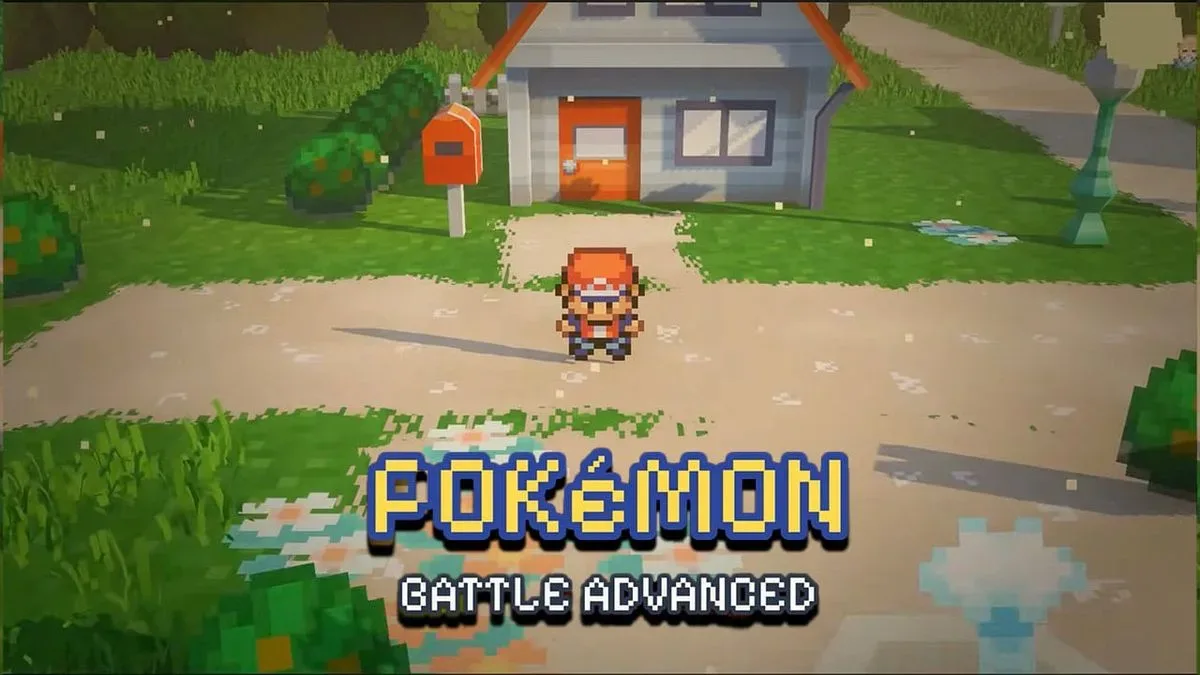
Pokémon Battle Advanced is putting a strikingly different spin on the familiar opening hours of Pokémon FireRed. Developed by The Daigan, the project moves Kanto into a 3D, voxel-like presentation and swaps traditional menu-driven trainer encounters for real-time fights. Better still, the currently available demo is playable directly in a web browser, with no stated need to download files, install a mod, or configure an emulator.
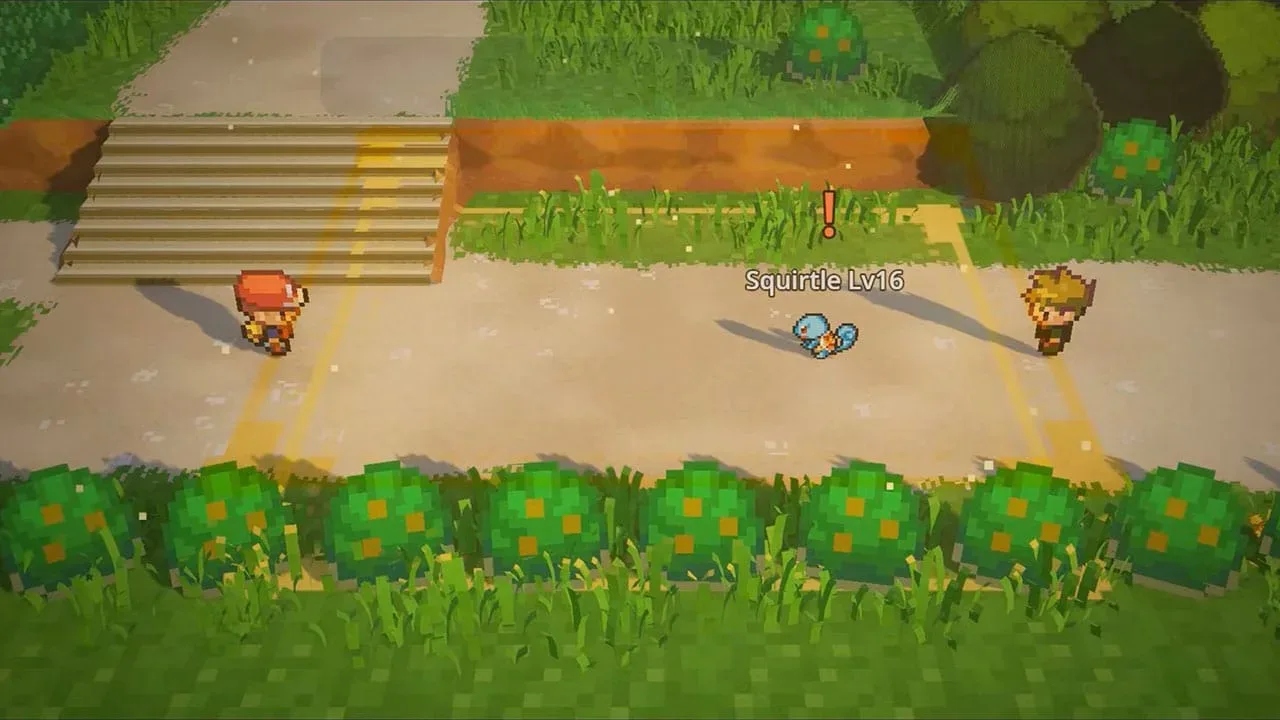
For a series built around deliberate turn-based decision making, the idea is a considerable departure. The project still draws on the recognizable framework of a Kanto journey: players begin with a starter, encounter their rival, travel through the region's early routes, and work toward the first Gym. But Pokémon Battle Advanced reframes the experience around direct movement, camera-following exploration, environmental effects, and battles designed to play out more like encounters with action-game bosses.
The demo presently covers the earliest portion of the adventure, culminating in the fight against Brock. That limited scope means it is not yet a complete replacement for FireRed, but it gives players a clear look at how The Daigan's reinterpretation could change the feel of a classic Pokémon journey.
A new perspective on Kanto
Pokémon FireRed originally presented its world from a top-down perspective, deliberately echoing the Game Boy era while updating the original Pokémon Red and Blue formula for Game Boy Advance. Pokémon Battle Advanced takes that same recognizable setting in a much more literal three-dimensional direction.
For useful background on this topic, read GTA VI launch trailer Sets the Stage for November 19.
The visual approach has a blocky, stylized quality that evokes voxel-based environments rather than attempting photorealism. Its towns, routes, grass, and characters are immediately rooted in the visual language of early Pokémon, while the camera and environmental detail make the world feel markedly more contemporary. It is an interpretation that sits somewhere between the simplicity of classic Pokémon designs and the toy-like, three-dimensional charm associated with newer stylized games.
Small touches appear to be a significant part of the project's appeal. Flowers move in the wind, fireflies can be seen around the landscape, and changing weather contributes to the atmosphere while exploring. A day-and-night cycle also affects the scene, with lights illuminating the surroundings once darkness arrives. These additions do not merely alter the camera angle; they aim to make familiar locations feel more alive and reactive.
That sense of motion is important because it differentiates the project from a straightforward graphical remake. Kanto has been revisited repeatedly over the decades, but Pokémon Battle Advanced is less concerned with reproducing FireRed exactly than with asking how its structure might work through a different kind of adventure-game lens. The result is still instantly recognizable to anyone who knows the road from Pallet Town toward Pewter City, yet its presentation changes the mood of every early step.
Turn-based battles give way to real-time confrontations
The largest mechanical change is the battle system. Standard Pokémon games typically pause exploration whenever a trainer battle begins, switching to a separate turn-based screen where trainers select moves and manage items. Pokémon Battle Advanced instead presents trainer encounters in real time.
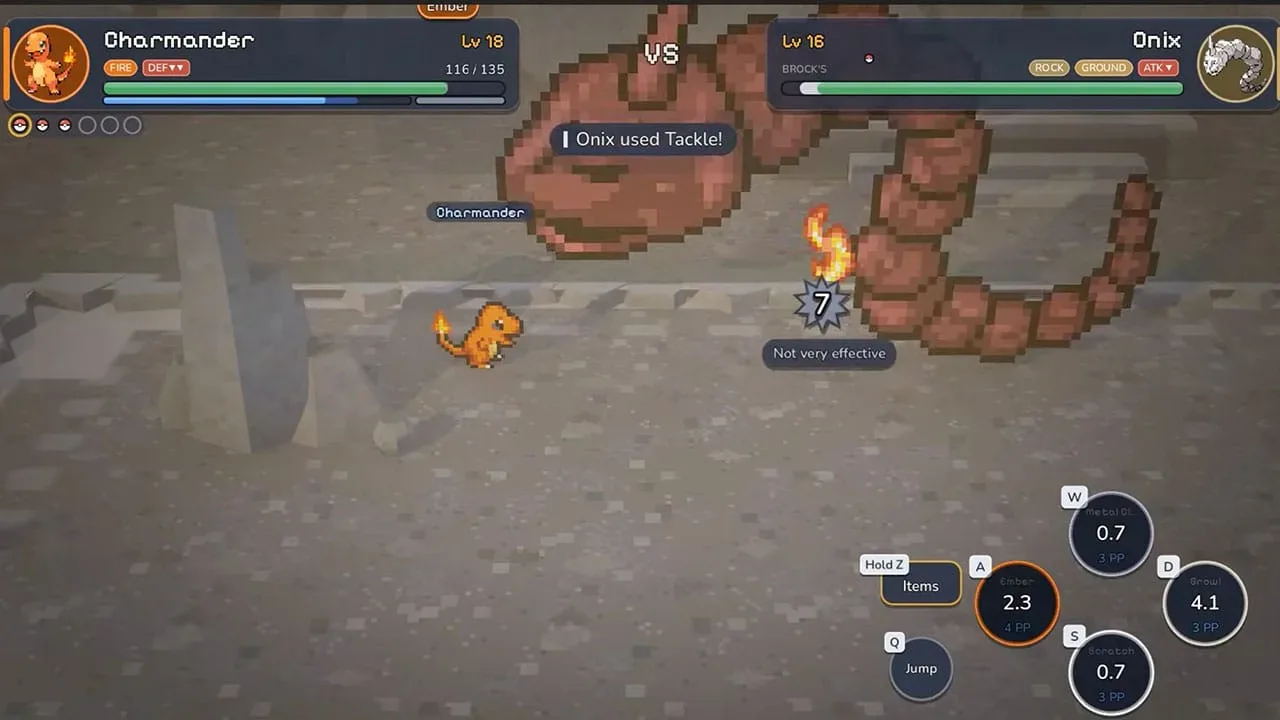
In these fights, players take to the field alongside their starter Pokémon. Health bars are displayed at the top of the screen for both sides, creating a clear boss-battle-style readout of how the contest is progressing. The goal is to overcome the opposing trainer in real time rather than working through the usual sequence of turns, menus, type checks, and move selections.
This setup is especially central to Gym challenges. Brock's battle is treated as a boss encounter that must be completed in real time before the player can advance. The design changes the role a Gym Leader plays: rather than functioning only as a tactical test of team composition and move choices, the leader becomes an immediate obstacle within the world's action-oriented structure.
The rival is also part of this system, preserving an important early milestone from FireRed while reshaping its flow. Players still meet and face that familiar opponent, but the confrontation is built around the new real-time format. Wild Pokémon can become involved as well, with the ability to tag-team them into battles adding another wrinkle to encounters outside the main trainer path.
It remains to be seen how deeply this format will expand if the project grows beyond its current demo. Classic Pokémon battles derive much of their identity from turns, party planning, elemental advantages, status effects, and carefully limited resources. A real-time approach can create a more immediate spectacle, but it also raises interesting questions about how moves, team variety, difficulty, and progression may be adapted. The opening area offers an early proof of concept rather than a final answer to all of those questions.
A browser demo lowers the barrier to entry
One of Pokémon Battle Advanced's most practical features is its accessibility. The demo is available through Itch.io and runs in a browser. For players interested in experimental fan projects, that is a meaningful distinction. Many ambitious mods require obtaining specific game files, applying patches, managing emulators, or following setup instructions that can be intimidating to newcomers.
Here, the emphasis is on immediate play. The browser format lets curious players see the revised visual style and combat concept without first navigating a technical installation process. That convenience is particularly well suited to a demo: players can quickly find out whether the new direction appeals to them, while the developer can present the concept in a format that is easy to access and share.
The project's current scope should remain front of mind. Only the initial segment through Brock's Gym is available at this stage. Players should not expect a full run through Kanto, later Gyms, or endgame encounters from the existing build. The available material is instead a focused vertical slice of the opening journey, designed to showcase the basic exploration and combat ideas.
Still, the small portion on offer makes it easy to imagine how later locations and major battles could look under this format. Characters and creatures such as Moltres and Mewtwo could make natural candidates for larger-scale real-time showdowns if development ultimately reaches those areas. For now, though, those possibilities remain prospective rather than confirmed content.
AI assistance is disclosed for coding
The Itch.io page notes that AI was used to assist with coding. The disclosure is noteworthy at a time when players are increasingly asking how generative tools are being used in game development. In this case, the available information frames AI as an aid in the coding process, while the project itself also reflects human development work.
That distinction matters because a playable game demo involves far more than generating isolated assets or snippets of code. Bringing together 3D movement, environmental behavior, combat rules, encounter progression, interface elements, and a browser-ready build requires design decisions and implementation work. Pokémon Battle Advanced's unusual combination of systems is ultimately what will determine whether its FireRed-inspired concept has lasting appeal.
Fans may have different reactions to an action-heavy Pokémon reinterpretation. Some will miss the precision and slower pace of traditional turn-based battling; others may welcome the chance to revisit a beloved region in a format that feels more immediate. The project does not need to replace the original formula to be interesting. Its value lies in showing how dramatically a familiar journey can change when its camera, atmosphere, and moment-to-moment battles are rebuilt around a new perspective.
An intriguing early experiment for a classic region
Pokémon Battle Advanced arrives as another reminder of how much creative potential players continue to see in Kanto. The original region remains recognizable enough that even substantial changes can feel nostalgic, while its straightforward opening progression makes it a compelling foundation for experimentation. A walk toward Pewter City is easy to understand; making that walk feel new is the harder challenge.
The Daigan's demo addresses that challenge through presentation and pace. Dynamic weather, moving plant life, nighttime lighting, and fireflies lend the routes more atmosphere. The third-person-style exploration changes how players observe familiar spaces. Real-time trainer and Gym encounters turn landmark battles into something more physical and immediate. None of those elements are standard FireRed features, yet together they preserve the broad outline of its early adventure.
For now, the browser demo offers a compact glimpse of that alternate approach, ending after the first Gym battle with Brock. Whether it eventually develops into a broader Kanto experience is not established, but its opening section already provides a distinct answer to a long-running fan question: what would Pokémon FireRed feel like if its world were built for 3D roaming and real-time boss fights rather than traditional turns?
Community
Discussion
Start the conversation.
No comments have been posted yet.