

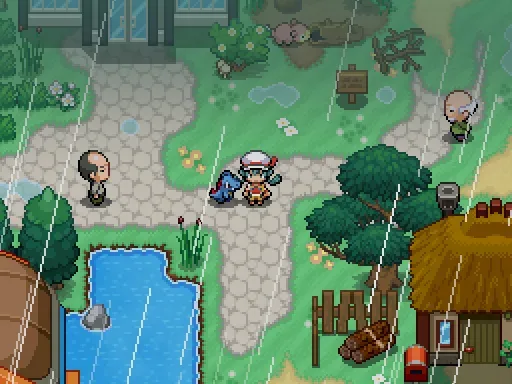
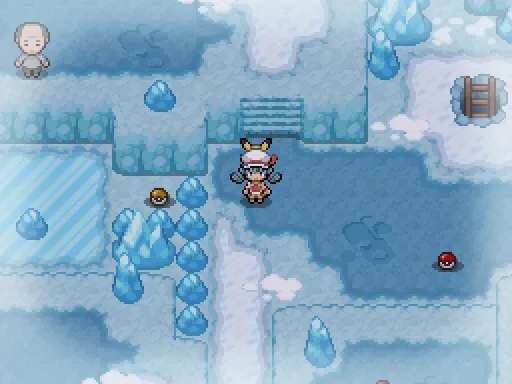
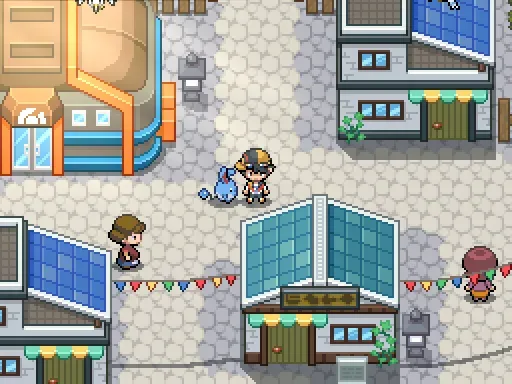
Pokémon GS Vitro is aiming to give the Johto journey a notably different shape when it arrives on October 30, 2026. The upcoming fan-made game reimagines Pokémon Crystal through an open-world structure, Nintendo DS-era visual inspiration and a collection of modern mechanics intended to make exploration more flexible without abandoning the appeal of Generation II.
Built in RPG Maker XP, Pokémon GS Vitro is planned for PC and Android. It may also be playable on iOS through an app called Empo, though that route appears to require additional setup rather than being presented as a native iOS release. The project's central idea is straightforward: let players experience Johto with far fewer of the familiar progress gates that traditionally dictate which town, route or destination can be visited next.
For fans who know the original Game Boy Color adventure inside out, that change could be the project's defining feature. Johto has long been one of Pokémon's most beloved regions, thanks to its compact geography, day-and-night identity, memorable towns and eventual return to Kanto. GS Vitro does not simply seek to retell that trip with sharper sprites. Instead, it is designed around the prospect of choosing a route through the region on the player's own terms.
An open Johto from the beginning
In a traditional Pokémon campaign, progression is often managed by a sequence of badges, story events and field obstacles. A blocked path may require a specific Hidden Machine, a particular key item or the completion of a major encounter before a player can advance. Those limits create a carefully guided sense of escalation, but they also mean repeat players are usually following a known order.
For useful background on this topic, read RetroAchievements Can Now Be Tracked on an Original PlayStation 2.
Pokémon GS Vitro takes a more open approach from the starter-town stage. Multiple towns and routes are expected to be accessible early, allowing players to make meaningful decisions about where their adventure begins. Rather than treating Johto as a line of mandatory checkpoints, the game frames it as a region that can be explored in different directions.
Field Moves replace the usual HM system, and they are available from the outset. The distinction is more than cosmetic. These moves are designed to serve the exploration-focused structure, with certain Pokémon able to use them in special ways outside battle. Rain Dance, for example, can be used in the overworld by appropriate Pokémon. That suggests the game is interested in making a team's utility matter beyond combat, while avoiding the traditional burden of dedicating party slots to HM-only duties.
That philosophy should make GS Vitro particularly appealing to players who enjoy building unusual teams, setting personal route rules or returning to an old region with a less predictable plan. Open-world design can alter the feel of even familiar maps: a route that was once a late-game corridor becomes an early risk, while a town normally visited after several badges might become the foundation of a player's first major team.
Scaling battles are meant to support freedom
An open Pokémon region needs a way to prevent exploration from becoming either trivial or punishing. GS Vitro addresses that with level scaling for wild Pokémon. Creatures encountered in the field will rise in level alongside the player's team, helping ensure that a detour does not simply lead to enemies that are too weak to matter.
The same general concern extends to trainer battles. Gym Leaders are set to have multiple possible team configurations, while many secondary trainers will also vary. That means an open route through Johto is not intended to become an easy shortcut around the usual challenge curve. Players should still need to consider matchups, team preparation and resources before entering major battles.
Variable Gym Leader rosters could also add replay value. In many classic Pokémon games, veteran players can plan for every major opponent from memory. If a leader's lineup can change, the familiar ritual of arriving with one obvious counter team becomes less certain. It is a small structural adjustment with the potential to make a replay feel less scripted, especially when paired with the freedom to approach gyms in different orders.
The project has not detailed every aspect of its scaling rules or every possible leader team. As a result, players should expect some questions about the exact balance to remain unanswered until launch. Still, the stated goal is clear: freedom of travel should not mean the world stops responding to the player's progression.
A larger Pokédex and Mega Evolutions
Pokémon GS Vitro will feature a Pokédex of 350 Pokémon. The roster includes Pokémon from the Johto and Kanto regional collections, supplemented by a limited selection of species from later generations. The developers have said that every included Pokémon can be obtained through normal play, avoiding an expectation that players must trade or rely on outside distribution methods to complete the available collection.
That is a significant promise for a game built around broad exploration. A larger selection offers more reasons to investigate different areas, and it creates more room for party experimentation than a strictly Generation II roster would allow. It also means longtime Johto fans may find species combinations that were impossible in the original adventure.
Mega Evolutions are also part of the package. Specific Mega-capable Pokémon have not been publicly detailed in full, leaving some discoveries for players to make. Their inclusion places GS Vitro firmly in the tradition of fan projects that combine a classic regional setting with mechanics introduced much later in the official series.
There is an interesting balance at work here. Pokémon Crystal is associated with a particular era of restrained sprites, limited move pools and a smaller creature roster. GS Vitro retains Johto as its core setting, but it does not aim to preserve every limitation of that period. The project instead treats the region as a foundation for a broader Pokémon experience, one informed by subsequent generations and by the expectations of players accustomed to more convenient systems.
DS-inspired presentation with newer conveniences
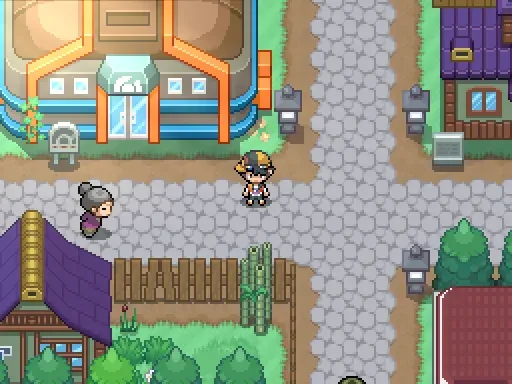
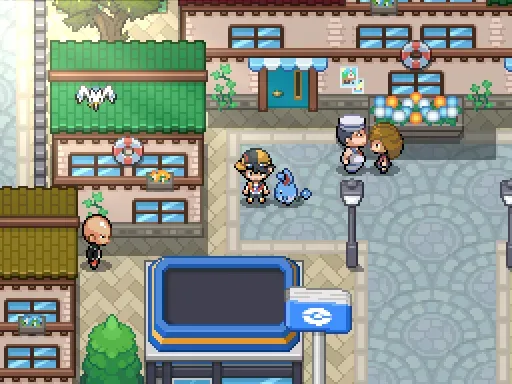
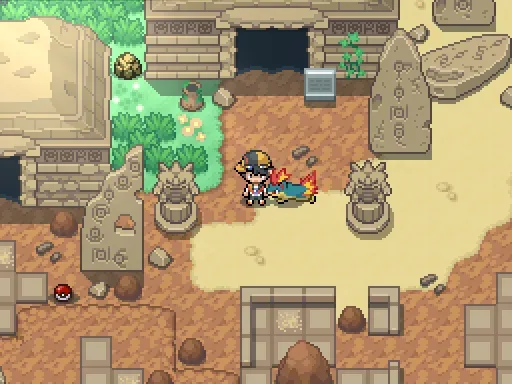
Visually, Pokémon GS Vitro draws inspiration from the Pokémon games released on Nintendo DS. That direction should give the game a different look from the Game Boy Color original while keeping it rooted in a pixel-art style suited to classic Pokémon exploration. It is a natural fit for a Johto revisit: DS-era remakes showed how older regions could be reworked with denser environments, stronger color and a more contemporary presentation without fully abandoning their original identity.
Its quality-of-life feature list is equally focused on reducing friction. Experience sharing follows the style of Generation VIII and later games, including experience gains for Pokémon stored in the PC. This can make it easier to rotate a wide group of Pokémon rather than feeling locked into the first six creatures that become dependable.
The Pokégear is gaining additional functions, including an encounter list and PC access. An encounter list can be especially useful in a game with 350 obtainable Pokémon, helping players identify what can be found in an area without relying purely on trial and error. PC access through the Pokégear further supports team rotation during long exploration sessions.
Other announced conveniences include a quick-heal option for the active party and a Turbo Mode that is restricted to battles. Keeping the speed-up function in combat may be a deliberate compromise: it can make routine fights move faster while preserving the pace and readability of overworld navigation. Pokémon will also have slight color variations reminiscent of the effect seen in Pokémon Stadium 2, giving individual catches a little more visual personality even when they are not standard shiny variants.
Options for Nuzlocke and randomizer-style runs
GS Vitro will offer a selector at the start of the game for Permadeath Mode, commonly associated with Nuzlocke-style play, and Random Mode. Including these choices up front recognizes the ways many fans already replay Pokémon games. Some players want an adventurous first journey with a curated set of encounters; others prefer the tension of permanent losses or the chaos of randomized possibilities.
Permadeath rules can substantially change the stakes of an open-world game. When a lost party member is gone for good, the ability to access several towns and routes may become a crucial recovery tool. Random Mode, meanwhile, has the potential to make the expanded Pokédex feel even less predictable. The full parameters of either option have not been outlined, so it remains to be seen precisely what systems each mode will alter.
Even so, their presence signals that Pokémon GS Vitro is being built with repeat playthroughs in mind. The open structure, scaling encounters, alternate trainer teams and optional challenge settings all point in the same direction: this is not merely a visual remake intended for one nostalgic trip through Johto.
What to expect before launch
Pokémon GS Vitro is scheduled to be available for download through its official website on October 30, 2026. As a fan-made game, it occupies a different space from official Pokémon releases, and prospective players should keep that distinction in mind. The project is not positioned as an official Nintendo or The Pokémon Company product.
Its announced feature set is ambitious, combining an open-world take on Johto with contemporary systems, a significantly expanded collection goal and presentation inspired by the DS generation. The real test will be how naturally those elements fit together. Open progression needs thoughtful balance, level scaling must maintain variety rather than flattening the world, and a wider roster needs to feel integrated into the region rather than simply added on top.
If it succeeds on those fronts, Pokémon GS Vitro could offer a compelling alternative for players who love Crystal's setting but want a new reason to chart its routes. Rather than asking fans to revisit Johto exactly as they remember it, the game is asking a more intriguing question: what would Johto feel like if the player, not the badge sequence, decided where the adventure goes next?
Community
Discussion
Start the conversation.
No comments have been posted yet.