

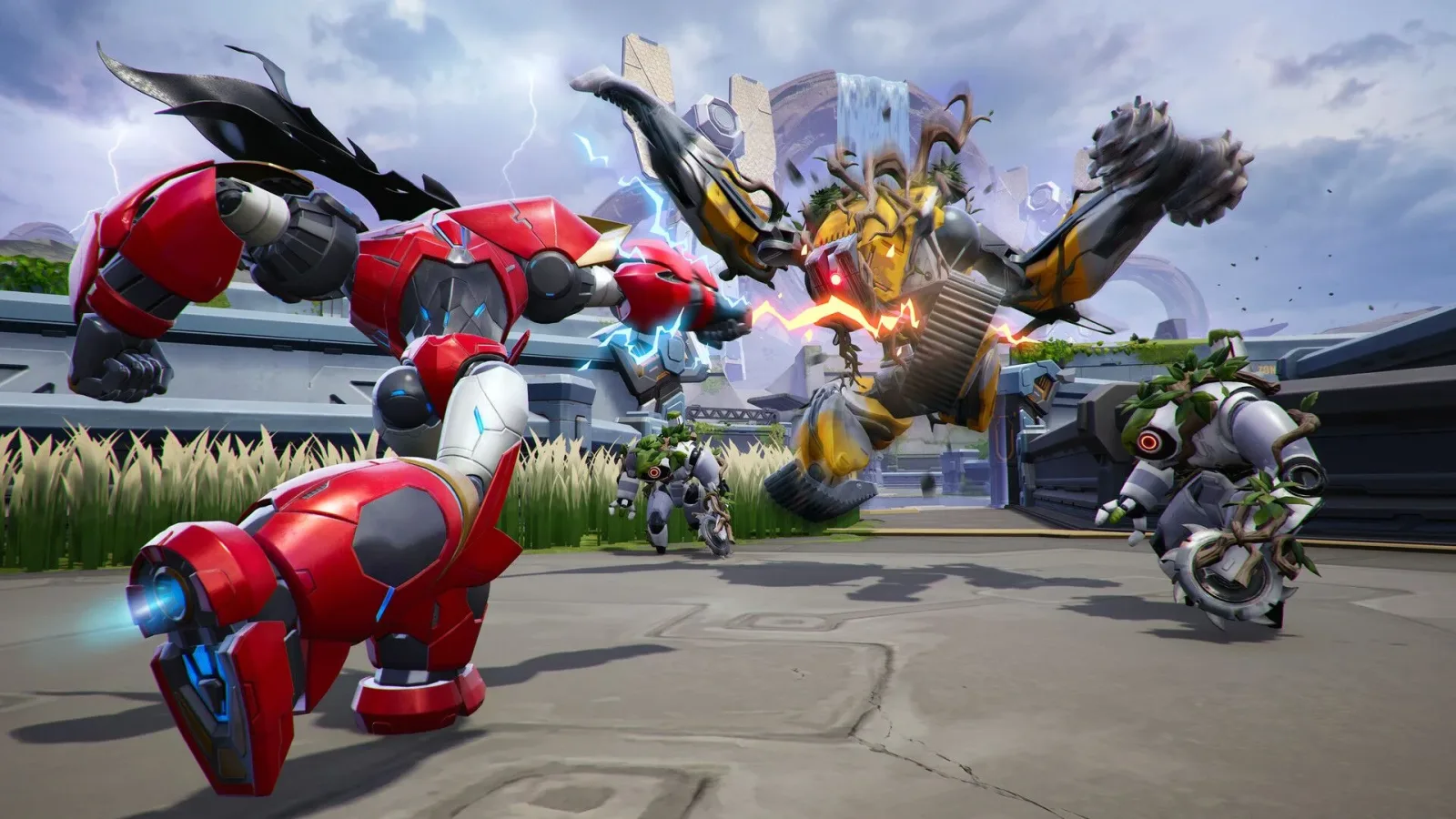
Project Zeta wants to enter one of competitive gaming's most established genres without behaving like a conventional entrant. Developed by Korean studio Nirvanana, the PC game uses familiar multiplayer online battle arena foundations but folds them into a broader mix of battle royale structure and hero-shooter immediacy. Rather than putting all of its emphasis on a single, tightly controlled clash between two sides, its central pitch is multi-team chaos: several four-player squads sharing a map, pursuing objectives, colliding unexpectedly, and creating fights large enough for players to score double-digit kill streaks.
That is an ambitious approach in a genre where the biggest names have built years, or even decades, of player knowledge, competitive culture, and established habits. Traditional MOBAs are also famously difficult to approach. Their dense item systems, character rosters, map knowledge, lane strategy, and team coordination can make the learning curve intimidating for newcomers. Project Zeta's apparent answer is not to abandon depth, but to put a greater emphasis on immediate combat satisfaction and on ensuring that a match can remain exciting even when a player's squad does not ultimately claim victory.
Nirvanana executive producer Namseok Kim has described the project as something beyond a MOBA in the narrowest sense. The game is being positioned as a hybrid, with objective-based team play and hero abilities sitting beside the unpredictable pressure of a battle royale. That blend could make Project Zeta distinct from both classic lane-focused MOBAs and the more linear formats familiar to shooter players.
A MOBA built around more than one rival team
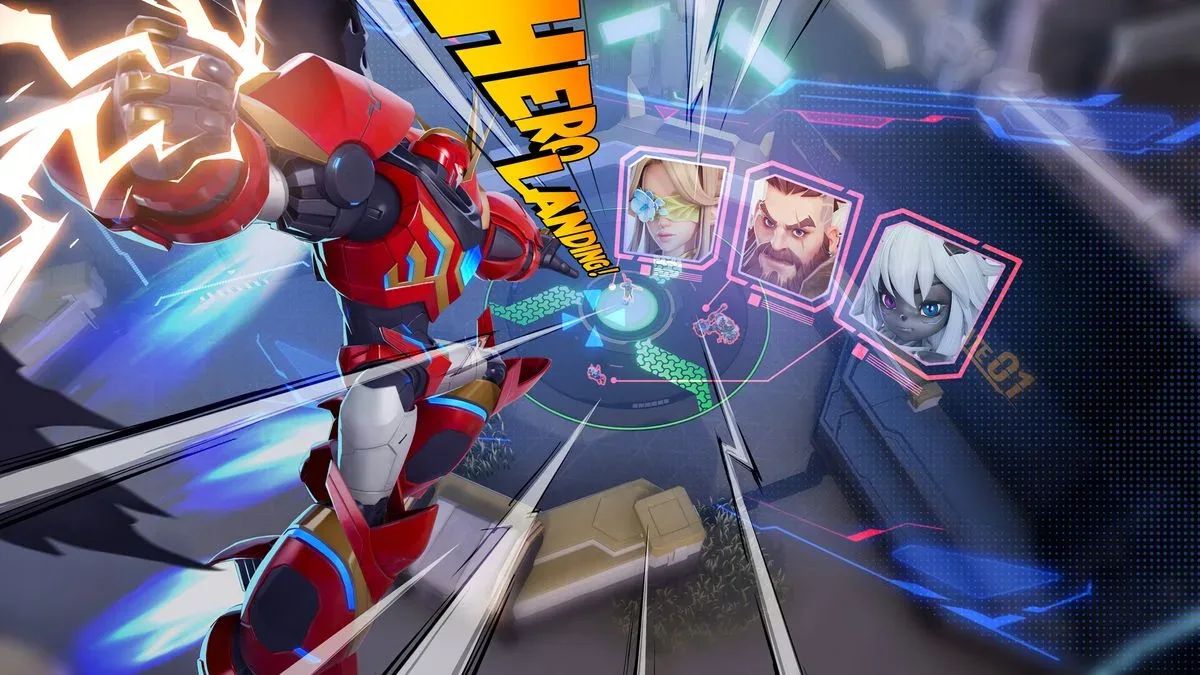
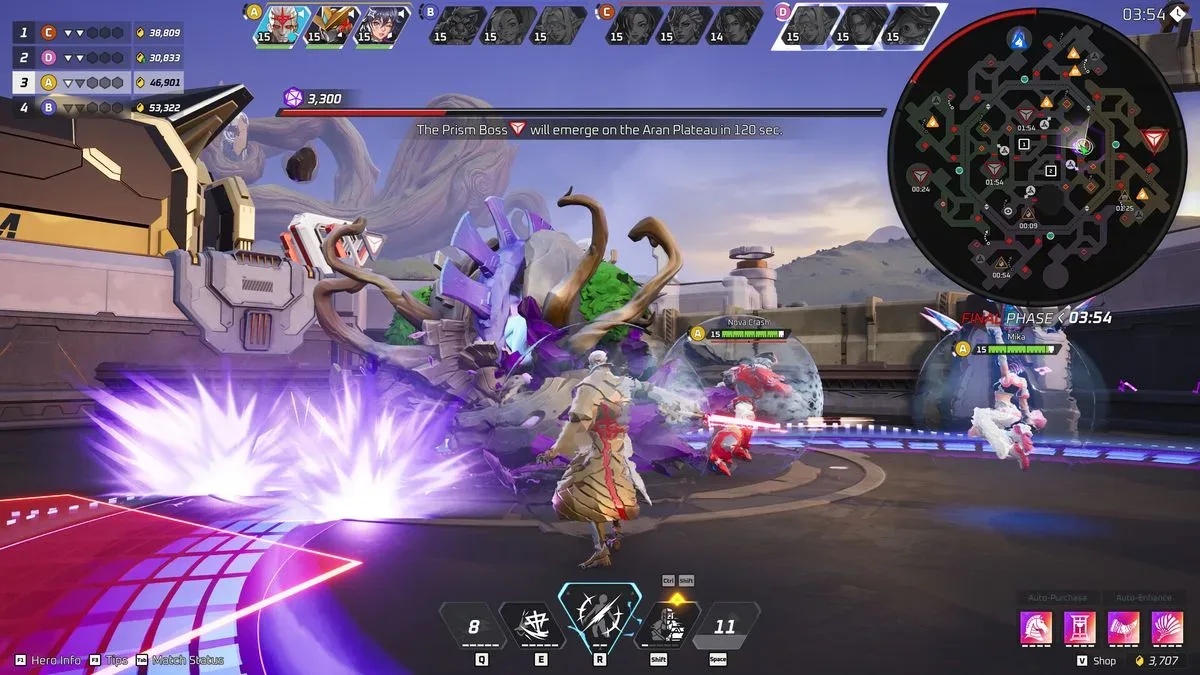
At its core, Project Zeta has players fighting in four-person teams on a shared map while completing objectives on the route to victory. The major difference is the number of groups involved. Instead of every decision being framed around one enemy team, squads may have to account for multiple rivals at once. A fight can begin as a calculated engagement and quickly become something much messier when another team arrives to capitalize on weakened opponents.
For useful background on this topic, read Bulkhead Says FPS Passion Is Part of Its Hiring Process for Wardogs Team.
That structure is key to the game's promise. In a traditional MOBA, a dramatic multikill is usually measured against the five members of one opposing side. A pentakill is therefore a defining highlight, an achievement that is rare precisely because a player must eliminate an entire enemy roster in a short span. Project Zeta is seeking a different scale. Kim recalled watching games where large groups converged and kills began erupting in rapid succession, producing 11 or 12 takedowns in a single burst of action.
"A large number of players were gathered together, [and] kills would just erupt - 11 kills, 12 kills at a time," Kim said. "When I saw that, I felt an enormous thrill myself, and I thought, 'this is the future of some new form of MOBA game'."
The appeal is easy to understand. Battle royale games have long created memorable stories from third-party attacks, sudden reversals, and opportunistic plays. Hero shooters, meanwhile, can generate spectacular moments when well-timed abilities turn a crowded objective fight upside down. Project Zeta appears designed to bring those sensations into a game with a MOBA-like roster and systems, making the possibility of an enormous kill total part of the normal match rhythm rather than a once-in-a-season anomaly.
Making defeat less frustrating
Project Zeta's philosophy is not solely about making scoreboards look bigger. Nirvanana is placing considerable importance on the moment-to-moment enjoyment of combat, including for players who lose. That is a notable priority in a genre where defeats can sometimes be lengthy, one-sided, and difficult to recover from. The studio's focus is on the journey through a match: the successful ambush, the frantic attempt to survive a third team's arrival, the thrill of eliminating opponents, and the chance to re-enter the action.
Footage shown during the game's presentation highlighted streamers celebrating after cutting through rival players, then getting caught off guard by another squad. The resulting defeats did not necessarily erase the excitement of the preceding encounter. Instead, the rapid swings of momentum seemed to encourage another attempt. For Project Zeta, that cycle of explosive success, sudden danger, and renewed engagement appears to be as important as the final placement.
It is a difficult balance to achieve. Too much unpredictability can make players feel that strategy does not matter, while too much structure can reduce the very chaos that gives a multi-team format its personality. The game will need readable encounters, clear objectives, dependable controls, and enough tactical options for squads to feel responsible for their results. At the same time, it will need to preserve the possibility that an apparently isolated skirmish can become a much larger brawl within seconds.
Feedback has reshaped the heroes and the map
Nirvanana has not treated Project Zeta's current form as fixed. Kim said the team has used public testing to identify weaknesses and make substantial changes. The studio continues to meet with players, collect feedback, and accept criticism as it refines the experience. That iterative approach has reportedly led to changes across some of the game's most important components.
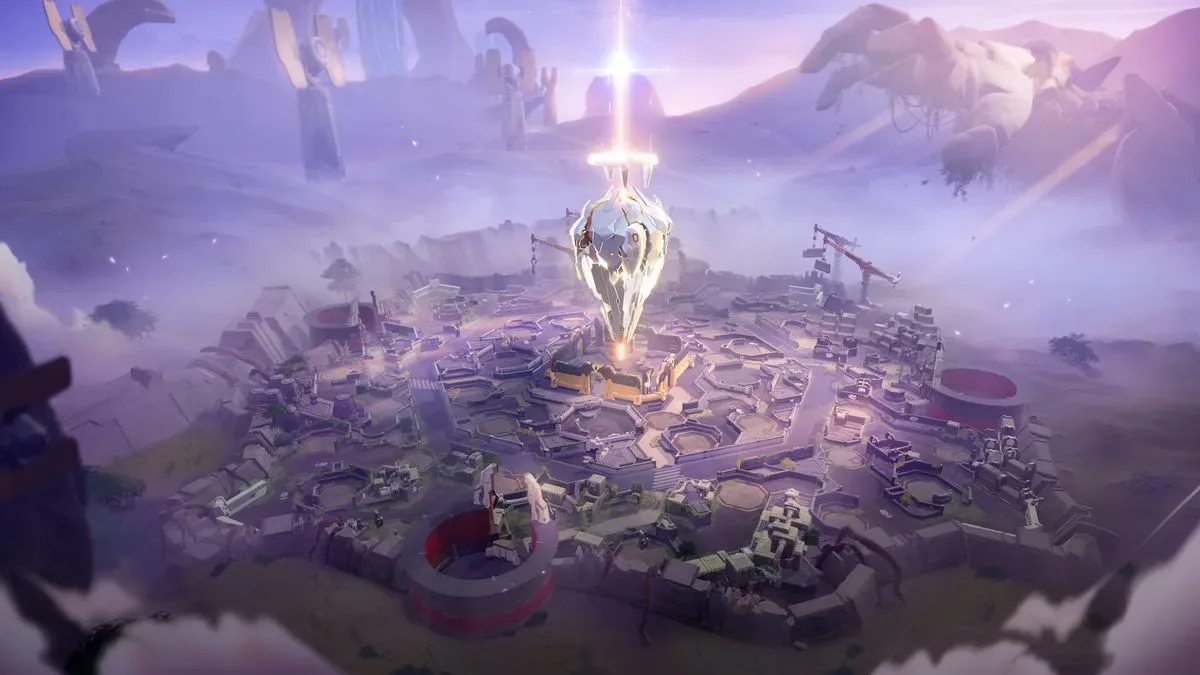
Every character has been reworked, Kim said, suggesting that the hero roster has been under close review rather than receiving isolated balance tweaks. The terrain has also been revised again, while the map itself has changed. These are consequential adjustments for any competitive game, especially one depending on players to navigate quickly through contested spaces while tracking several enemy teams.
Map clarity has emerged as a particular concern. Players wanted to understand their location intuitively at any point during a match, leading Nirvanana to alter the concepts and narratives assigned to individual areas. This does not just concern visual style. Distinctive regions can help squads call out locations, orient themselves after a hectic fight, decide where threats may come from, and understand how an objective relates to the rest of the battlefield.
In a game built around high player counts and sudden confrontations, such readability may be essential. If players cannot identify where they are, what terrain is nearby, or which paths enemies might use, chaos can quickly become confusion. Project Zeta's developers appear to be aiming for a version of disorder that remains legible enough for skillful reactions and teamwork to matter.
The importance of the deca-kill moment
For Kim, the moment that confirmed the project's potential was not simply seeing a prototype function as intended. It was watching players accomplish the kind of feat the game had been designed to support: a deca-kill, or ten kills. The milestone represented the convergence of numerous interlocking elements, from combat and controls to heroes, systems, interface design, and user experience.
"That's when every puzzle piece clicked into place at once - combat, controls, heroes, systems, UI, UX, all of it," Kim said, describing the impact of seeing players achieve a deca-kill.
That statement illustrates the central challenge facing Project Zeta. Its headline moments cannot exist in isolation. A 10-kill sequence only feels satisfying if opponents are understandable, abilities are responsive, the player can make informed decisions in a crowded fight, and the game communicates victories clearly. The spectacle of a giant multikill depends on a foundation that makes every individual elimination feel earned.
It also points to a potentially different audience strategy. Established MOBA players may be drawn by the systems, team composition, and competitive possibilities, while shooter fans may recognize the immediacy of hero combat and the rush of a chaotic objective battle. Battle royale players may find familiar tension in the threat of another squad appearing at exactly the wrong moment. Whether those groups will all embrace one game remains uncertain, but Project Zeta is clearly trying to build a bridge between them rather than ask players to leave their favorite genre instincts behind.
Steam playtest sign-ups are open
Project Zeta remains in an active feedback-driven phase, and global playtest sign-ups are open through Steam. Those tests will give players an opportunity to see how Nirvanana's unusual combination works in practice, while also contributing to the process that has already changed the game's characters, terrain, map layout, and area identity.
The project is entering a crowded field, and novelty by itself will not guarantee a lasting community. Yet Project Zeta's goal is specific enough to stand out: transform the familiar MOBA thrill of a decisive multikill into a much larger, more chaotic event made possible by several four-player teams sharing the same battlefield. If Nirvanana can keep that action readable, rewarding, and tactically meaningful, its vision of 10-, 11-, or 12-kill explosions could offer a fresh type of competitive highlight for PC players.

Community
Discussion
Start the conversation.
No comments have been posted yet.