

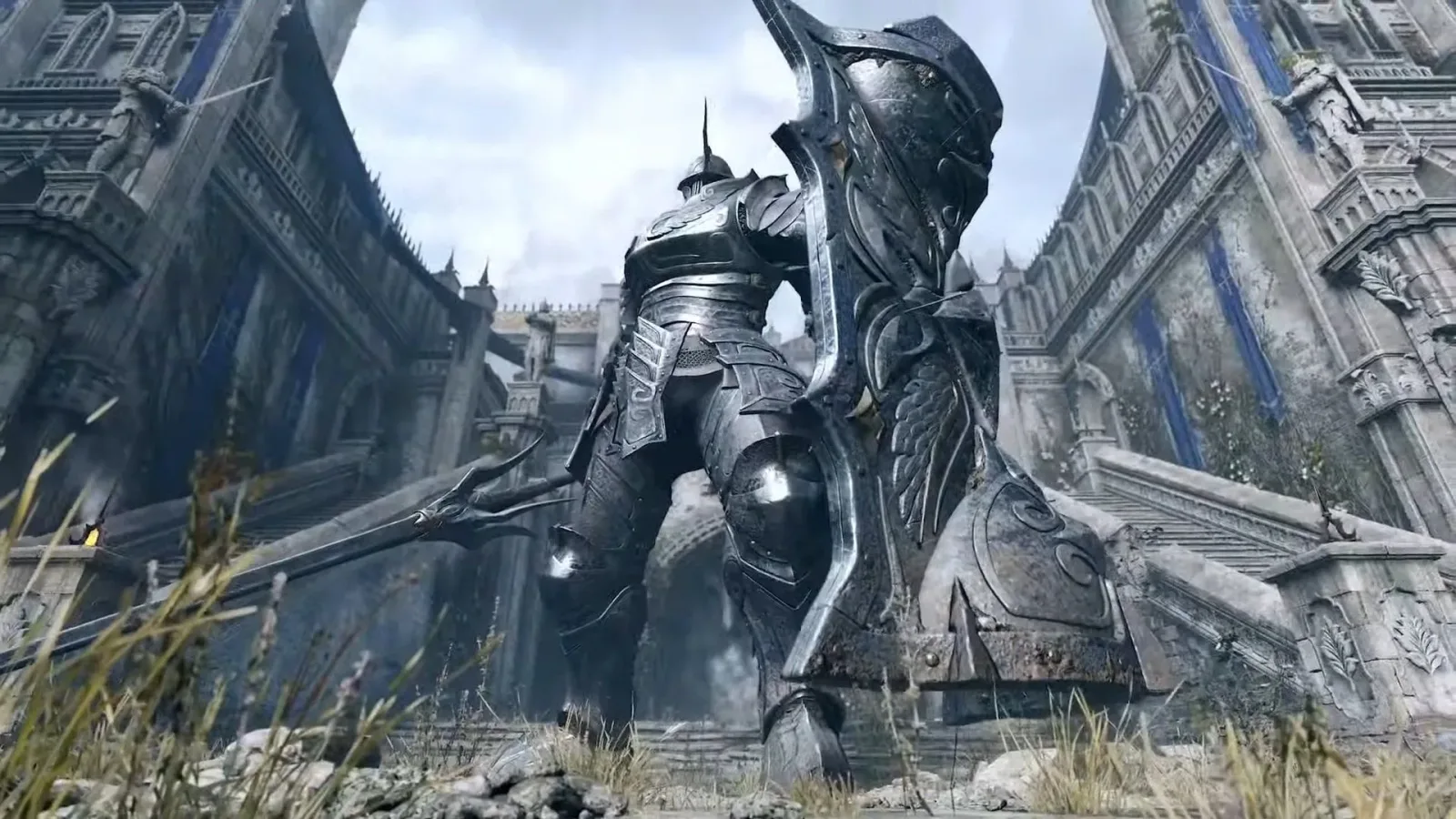
PS5 emulation is beginning to produce the kind of results that once seemed far too distant to discuss seriously. Two prominent experimental projects, SharpEmu and KytyPS5, have recently shared compatibility and performance improvements that put a small number of PlayStation 5 games into playable territory. The headline figures are still modest, and the hardware demands can be extreme, but the pace of advancement is notable.
SharpEmu developer Scarecrow said that, from 55 games tested by the project, 12 are now able to reach in-game gameplay. Of those, six are described as fully playable at 60 frames per second. Meanwhile, KytyPS5 has demonstrated increasingly capable results with major PS5 releases, including the Demon's Souls remake and Astro Bot.
There is an important qualification before anyone treats these developments as an alternative to owning a PS5: neither emulator is currently a broadly practical consumer solution. Compatibility remains limited, and even games that boot may suffer from bugs, visual errors, instability, or poor performance. The latest demonstrations are better understood as evidence of technical momentum than as a recommendation for everyday play.
A small but meaningful playable list
Compatibility lists are a useful way to measure an emulator's development, particularly for a system as recent and technically complex as the PS5. At SharpEmu, the current numbers illustrate both the promise and the limitations of the work underway. Twelve games reaching gameplay out of 55 tested is progress, but it also means the overwhelming majority of tested titles are not yet in a state where players can expect a functional experience.
For useful background on this topic, read Path of Exile Co-Creator Sees Encouraging Signs in Diablo 5's Old-School Direction.
The six games classified as fully playable at 60 FPS are largely smaller releases, retro-focused packages, and less demanding software rather than the biggest current-generation blockbusters. One example is Tomb Raider 4-6 Remastered. Those kinds of games are still valuable tests for the emulator, since they help developers verify graphics, timing, input, filesystem behavior, and other essential parts of PS5 software support.
It is also worth avoiding the assumption that a game being playable at 60 FPS means every part of it is flawless. Emulator status labels can reflect a particular build, a particular setup, and the portions of a game that have been tested so far. Menus, cutscenes, specific levels, audio, save behavior, and unusual graphical effects can all expose issues that do not appear immediately in a brief performance clip.
Still, a working selection of games running at a stable frame rate is a meaningful milestone. PS5 emulation has moved beyond a purely theoretical conversation and into the difficult phase where developers turn partial boots into functional gameplay, then address the many game-specific problems that remain.
Demon's Souls becomes a major technical marker
The more striking recent progress comes from KytyPS5's work with Demon's Souls, the PS5 remake of FromSoftware's original game. Just weeks earlier, the title was reportedly running at around 30 FPS in KytyPS5. Recent user-posted videos have shown it reaching roughly 40 to 50 FPS in some circumstances.
That result should not be confused with full-speed emulation. The PS5 version includes a 60 FPS performance mode, so a 40-to-50 FPS result remains below the console target. It also comes with a formidable PC requirement: the reported setup used an Nvidia RTX 5090 graphics card alongside an Intel Core i9-14900K processor. Hardware at that level is well beyond a typical gaming PC, and it underlines just how expensive early emulation performance can be.
Even so, seeing a visually demanding PS5 exclusive approach those figures is significant. Demon's Souls is not simply a small 2D title or an older collection being pushed through an immature emulator. Its progress provides developers and observers with a demanding real-world benchmark, while also demonstrating that key parts of the PS5 environment are being understood well enough to render and run substantial games.
Scarecrow acknowledged the achievement while also noting the personal importance of the game as a SharpEmu objective. The developer described Demon's Souls as a milestone they had pursued for a long time, calling KytyPS5's showing impressive while admitting it was a humbling comparison. That reaction speaks to the competitive but shared technical challenge facing separate emulator teams.
Astro Bot adds another encouraging test case
Astro Bot is another notable game appearing in the conversation around PS5 emulation progress. A video from Modern Vintage Gamer showed the title running at frame rates reaching up to 30 FPS. As with Demon's Souls, that does not indicate a polished or universally reliable way to play the game on PC. However, it is another indication that projects are making progress with software that would have seemed unrealistic for early PS5 emulators not long ago.
Results such as these matter because they test more than whether an application can launch. Modern games place pressure on emulators through rendering pipelines, memory management, multithreaded workloads, unusual engine behavior, audio systems, and system-level services. Getting into a game is one stage. Holding a usable frame rate, avoiding crashes, correctly displaying effects, and ensuring gameplay systems work consistently are all separate challenges.
For players, clips of a game reaching 30 FPS or higher can be exciting. For emulator developers, they are likely just as important as diagnostic evidence. Every successful scene can point toward subsystems that are already behaving correctly, while every glitch or slowdown can reveal where further reverse engineering and optimization are needed.
Why development may be moving faster
The apparent speed of these gains has raised an obvious question: why does PS5 emulation seem to be reaching visible milestones more quickly than PS4 emulation did? There is no single confirmed explanation, and direct comparisons between projects at different points in time can be misleading. Development communities, available documentation, PC hardware, programmer experience, and the games being tested all change from one era to another.
One factor increasingly discussed is the use of AI-assisted tools during research and development. Modern Vintage Gamer suggested that AI is a substantial part of the process. The exact degree to which either emulator relies on those tools is not completely clear, but the public contribution policies for both projects explicitly permit certain forms of AI assistance.
KytyPS5 allows AI tools for research, reverse engineering, and development help. SharpEmu permits assistance for research, reverse engineering, code generation, and documentation. Crucially, both projects set a boundary that matters more than the presence of AI itself: contributors must understand and be able to explain the code they submit, including code that has been assisted by AI.
That standard reflects a practical concern for open-source technical work. An emulator is an intricate project where a contribution cannot simply appear to work in one scenario. Developers need to know why a change exists, what behavior it affects, what assumptions it makes, and how it may break other games. Code that cannot be explained or maintained can create more work than it saves.
AI assistance is not a shortcut to finished emulation
The policy language around these projects suggests a distinction between AI as a tool and AI as a substitute for expertise. Research assistance, code suggestions, and documentation can potentially speed up repetitive tasks or help experienced developers explore an issue. But generated code submitted without understanding can introduce incorrect behavior, regressions, security concerns, and an unsustainable review burden.
That tension has surfaced elsewhere in the emulation community. Developers behind the RPCS3 PlayStation 3 emulator recently expressed frustration with low-quality AI-generated submissions. The broader lesson is straightforward: tools may accelerate parts of development, but the difficult work of validating hardware behavior and writing dependable emulation code still requires knowledgeable people.
For PS5 emulation, AI may be one ingredient in quicker iteration, but it cannot erase the fundamental engineering challenges. The strongest evidence of progress remains the compatibility data and the increasingly demanding games that can reach gameplay. Even then, every promising demonstration should be viewed in context: an exceptional PC, a particular emulator build, and a limited test sequence do not guarantee the same result for everyone.
Early promise, not a finished destination
SharpEmu's playable 60 FPS games and KytyPS5's Demon's Souls progress are genuine milestones for a field that is still at a very early stage. The shift from booting software to running portions of recognizable PS5 games at usable frame rates is substantial. It gives developers more practical targets, more data, and more reason to believe that long-term compatibility can continue to improve.
At the same time, the current state of PS5 emulation demands patience. Only a fraction of tested games reach gameplay, the most impressive performance examples depend on extremely powerful components, and visual or technical defects remain expected rather than unusual. Console owners looking for a dependable way to play PS5 releases should not expect these projects to offer one today.
What is changing is the outlook. PS5 emulation is no longer defined solely by speculative technical discussion. A limited set of games is running, more titles are advancing through compatibility stages, and landmark releases are beginning to appear in performance demonstrations. The road to mature support remains long, but the first visible stretches are now coming into view.
Community
Discussion
Start the conversation.
No comments have been posted yet.