

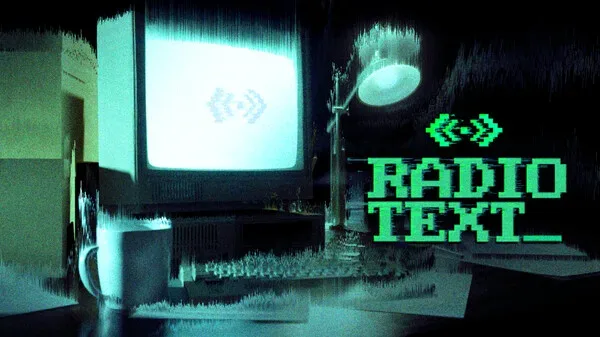
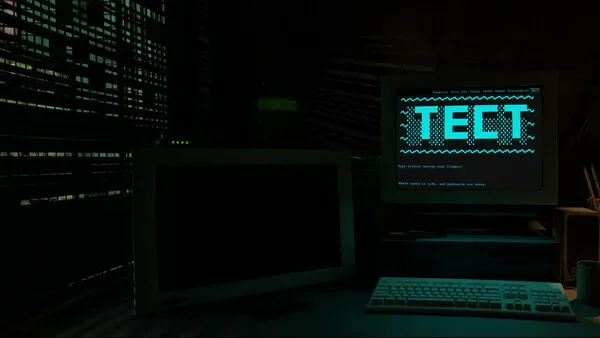
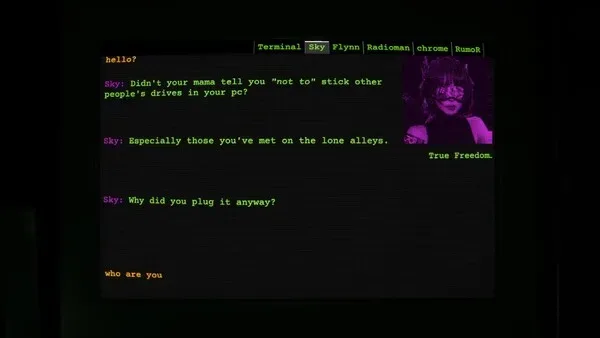
Radiotext, a cyberpunk hacking RPG built around conversations, investigation, and an old communications network, has launched on Steam. The game begins with a compact but intriguing premise: a stranger approaches the player in a quiet alley and hands over a USB stick. What appears to be an ordinary piece of storage hardware instead contains access to a communication system that has been abandoned since the 1990s.
From there, Radiotext asks players to explore the remnants of that network, speak with people through its long-forgotten channels, and gradually assemble the truth behind what they find. The central mystery ultimately leads to a cyber-activist uprising that was conducted entirely across the airwaves, positioning dialogue and careful interpretation as the heart of the experience.
An investigation conducted through words
Radiotext's setup places players less in the role of a conventional action hero and more in that of a digital investigator. The USB stick is the point of entry, but the old network is where the game's larger story unfolds. Its channels are not simply a backdrop for a cyberpunk setting; they are the space in which players learn, question, persuade, and decide how to move forward.
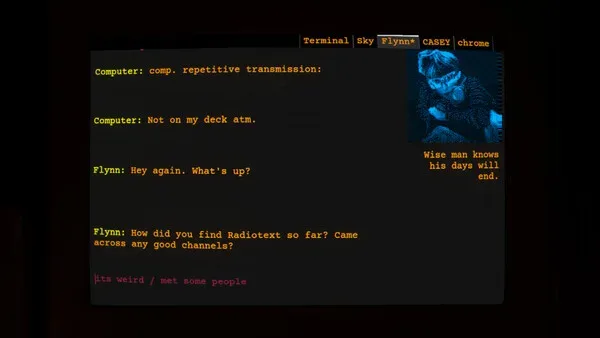
The game emphasizes choosing words carefully when talking through those channels. That detail suggests that communication is intended to be more than flavor text. Players will need to consider their responses as they work their way through the network and try to understand the people, events, and motives connected to it.
For useful background on this topic, read The House of Tesla: Definitive Edition Sets October Mobile Launch.
That approach fits the premise particularly well. A buried communications system carries the possibility of incomplete information, conflicting accounts, old grudges, and messages whose importance may not be immediately clear. Rather than presenting the mystery as something solved by a single breakthrough, Radiotext frames it as a process of piecing together a larger picture from exchanges taking place inside a forgotten technological space.
A 1990s network beneath a cyberpunk future
The contrast between cyberpunk fiction and a long-abandoned 1990s communications network gives Radiotext a distinctive hook. Cyberpunk stories frequently focus on cutting-edge systems, corporations, surveillance, and digital identity. Here, the route into that world comes through technology that has been left behind rather than technology at the forefront of the setting.
An obsolete network can feel unusually personal. It is a preserved layer of communication from another time, carrying the traces of people who used it before it fell silent. Radiotext leans into that sense of digital archaeology: players are not merely logging into a new service or accessing a polished futuristic interface. They are entering something that has endured out of sight, waiting for someone to reconnect the fragments.
For another perspective on this story, read Radiotext Launches on Steam With a Cyberpunk Mystery Hidden in Old Airwaves.
The 1990s angle also gives the mystery a specific kind of texture. The period is associated with a rapidly expanding public relationship with digital communication, when networks could feel simultaneously intimate, experimental, and difficult to navigate. Within Radiotext's cyberpunk framework, that older infrastructure becomes a pathway to secrets that have not disappeared simply because the system carrying them was abandoned.
It is an effective premise for a narrative RPG because the technology itself can reinforce the investigative mood. Every channel can potentially serve as a lead, every contact can represent a different perspective, and every exchange can contribute to a wider understanding of the uprising at the story's center.
The stakes lead to a cyber-activist uprising
Radiotext's mystery does not remain confined to the question of why the network exists or who left it behind. The story builds toward the discovery of a cyber-activist uprising that was fought through these airwaves. That description gives the game's dialogue-driven structure a larger political and social dimension.
The idea of an uprising carried out through communications channels places information at the center of the conflict. Messages, access, coordination, and trust can all become powerful tools in a story where the battleground is not a street, a battlefield, or a traditional virtual arena, but a network of voices and text-based exchanges. The game's title itself points toward that focus: the signal matters, but so does the meaning carried through it.
Players are therefore working backward through a history that has been buried inside the system. The destination is known in broad terms--an activist revolt exists at the core of the mystery--but the route toward understanding it depends on navigating the channels and speaking to the people still connected to them. What happened, why it happened, and what its consequences mean for the player's present are questions the game asks players to pursue.
That structure leaves room for uncertainty and discovery. A long-abandoned network is unlikely to provide a complete, orderly record, and Radiotext's focus on talking one's way through its channels indicates that knowledge must be earned through interaction. The player is not simply retrieving a file; they are trying to make sense of a living, if hidden, communications environment.
A hacking RPG without a stated emphasis on combat
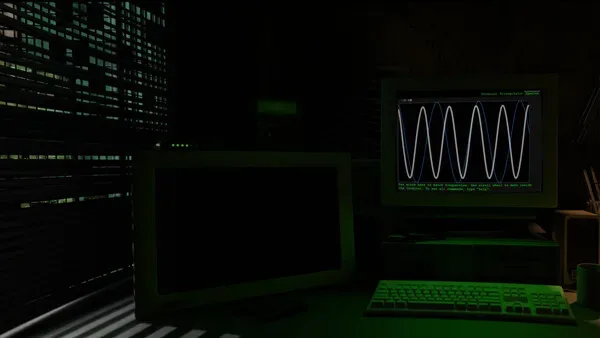
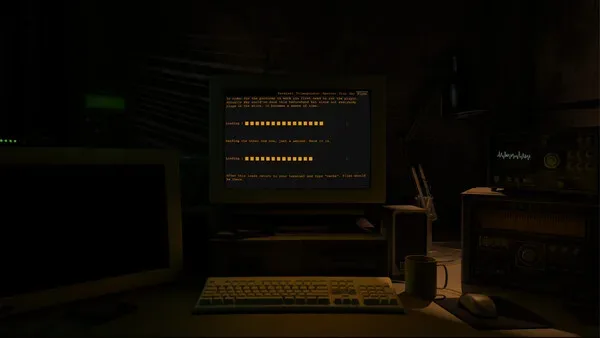
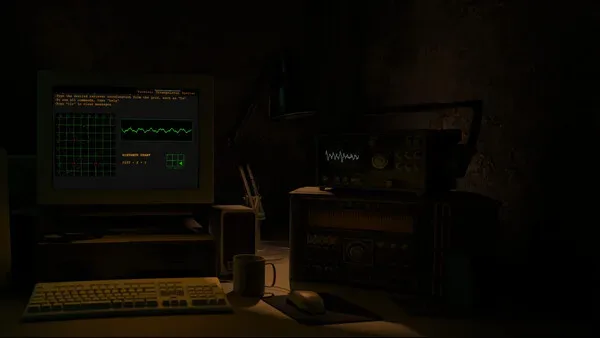
Radiotext is described as a hacking RPG, though its announced premise highlights investigation and conversation rather than combat. The available details focus on the player's access to the network, the choices made in dialogue, and the gradual uncovering of the larger story. As a result, the game appears positioned around role-playing through communication and deduction.
That does not make the stakes any less significant. In many cyberpunk stories, hacking is presented as a way to cross boundaries that would otherwise be closed: private systems, concealed histories, guarded communities, or networks designed to keep outsiders away. In Radiotext, the USB stick acts as the key that lets the player step across one of those boundaries. Once inside, the challenge becomes understanding what is being uncovered and deciding how to respond to those on the other side.
The emphasis on wording also makes the player's role feel consequential. A mystery game can ask players to find clues, but a game centered on exchanges can ask them to interpret people as well as evidence. The difference matters. The former is about locating information; the latter is about deciding whom to believe, how much to reveal, and what kind of relationship to build with contacts in an uncertain digital environment.
Radiotext's RPG label suggests that these interactions are central to the player's progression through the narrative. The game's premise makes a case for a form of role-playing in which the player's most important tools are access, curiosity, and language.
Now available for PC players on Steam
Radiotext is available now on Steam for PC. No other platform releases were announced alongside the launch information. Players interested in cyberpunk fiction, hacking-themed games, and narrative mysteries built around communication will find a premise that puts those ideas at the front of the experience.
The launch arrives with an official trailer and press materials accompanying the game's announcement, offering a closer look at its world and presentation. The core pitch remains deliberately focused: an unexpected handoff in an alley leads to a discarded communications network, and the player must follow its conversations toward the truth.
For a genre often defined by overwhelming systems and sprawling futuristic cities, Radiotext takes a more intimate starting point. One USB stick, one dormant network, and one carefully chosen response may be enough to begin exposing a conflict that was never truly gone. Its Steam release now gives players the opportunity to tune into those forgotten channels and discover what remains on the line.
Community
Discussion
Start the conversation.
No comments have been posted yet.