

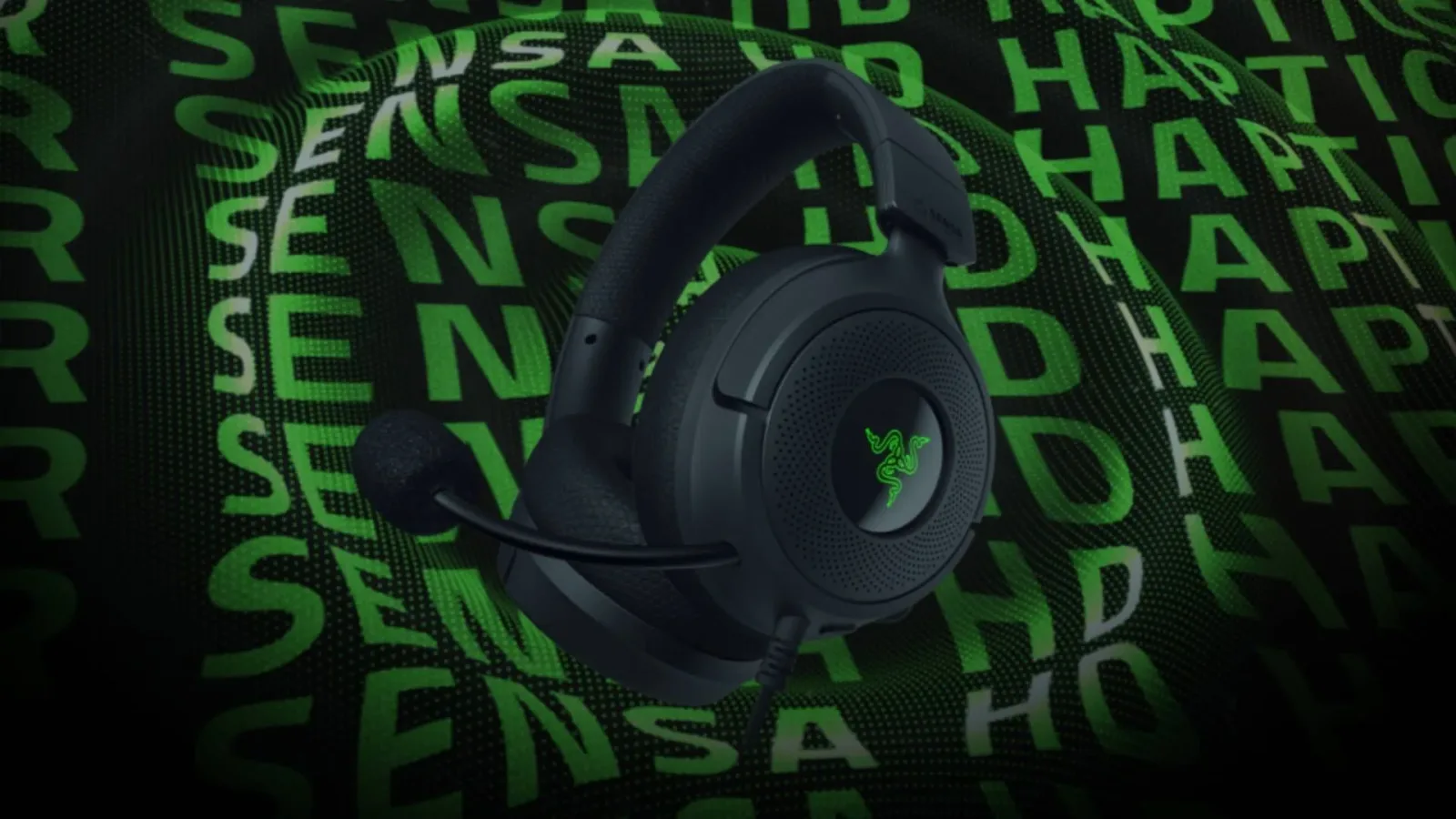
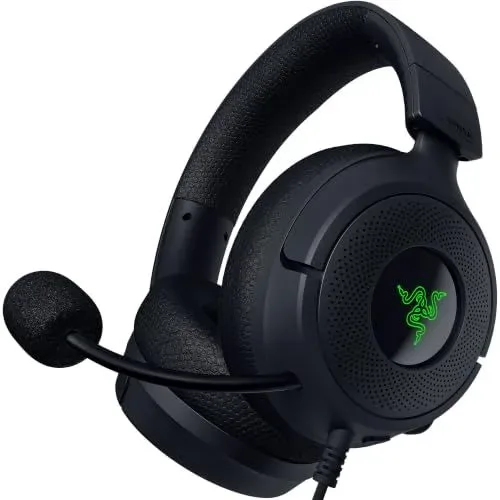
Razer has expanded its haptics-equipped hardware lineup with the Kraken V4 X Sensa HD Haptics, a wired gaming headset designed to add physical feedback to PC game audio. The new model is listed at $119.99 / £99.99, placing Razer's Sensa HD Haptics technology in a notably more affordable headset tier than several other haptic-focused gaming audio options.
For PC players in the UK, the Kraken V4 X Sensa HD Haptics is available now through Razer's online store and Amazon for £99.99. Razer detailed the headset in a September 15 blog post, while the product's announcement arrived amid a wider push to bring the company's tactile-feedback technology to more categories of gaming gear.
Sensa HD Haptics has previously appeared in products including the Razer Wolverine V3 Pro controller and the Razer Freyja gaming chair. In the Kraken V4 X Sensa HD Haptics, that technology is focused around the player's audio experience: game sound is translated into vibrations with varying intensity, allowing effects such as movement, combat, weapons, and abilities to have a physical component beyond what players hear through the headset.
What Sensa HD Haptics Adds to the Kraken V4 X
Haptic feedback has become familiar to console players through features such as the PlayStation 5 DualSense controller, where vibrations and resistance are used to reinforce what is happening on screen. A headset approaches the same idea from another direction. Rather than sending feedback through a controller held in the hands, the Kraken V4 X Sensa HD Haptics uses the sounds reaching the player's ears as the basis for tactile sensations.
For useful background on this topic, read Open-Box ROG Xbox Ally Deals Highlight How Difficult Affordable Handheld PCs Have Become.
The intended result is not simply louder bass. Razer is positioning Sensa HD Haptics as a way to give particular in-game moments additional weight and texture. An explosion, a burst of gunfire, a powerful ability, or the rhythmic pulse of a soundtrack can potentially be felt as well as heard. For players who value immersion, that extra layer could make familiar audio cues feel more immediate.
Razer describes two approaches used by the headset. The first is Dynamic Haptics, which consists of effects specifically designed by developers and associated with events in a game. Those authored effects can be mapped to elements including player movement, weapons, and abilities. In other words, where developers have implemented support, haptic responses can be tailored to gameplay actions rather than relying only on a broad audio analysis.
The second approach is Audio-to-Haptics, also called A2H. This feature creates additional physical feedback from a game's existing audio and works alongside the authored effects. That distinction matters because dedicated developer tuning can offer a more deliberately crafted response, while audio-derived haptics may help extend the sensation to sounds and games that do not have the same bespoke event mapping.
For consumers, the combination gives the Kraken V4 X Sensa HD Haptics a wider proposition than a headset whose tactile feature is limited to low-end rumble. The exact experience will naturally depend on the game, its sound mix, available haptic integration, and an individual player's preference for feedback intensity. Some may see vibrations as a compelling addition during action-heavy games, while others may prefer to keep the effect subtle during longer sessions, competitive play, or voice chat.
A More Accessible Entry Point for Haptic Headsets
The key part of this announcement is the price. At $119.99 / £99.99, the Kraken V4 X Sensa HD Haptics is considerably less expensive than certain haptic gaming headsets already on the market. Haptic audio has often been associated with premium hardware, making it a feature that can be difficult to justify for players who are otherwise shopping in the mainstream wired-headset category.
One recent point of comparison is the Skullcandy Crusher PLYR 720. That model uses the company's multi-sensory Crusher bass technology, which can produce a powerful physical response alongside bass-heavy game music and effects. During games with energetic soundtracks and intense combat, feedback of that kind can amplify the sense of adrenaline and spectacle. However, the Crusher PLYR 720 carries a $269.99 / £249.99 price, a substantial jump over Razer's new wired option.
That does not mean these products are identical in design or feature set. They are aimed at similar interests--players who want audio to feel more physical--but haptic implementations, connectivity, sound tuning, software options, and build choices can differ significantly. Still, the Kraken V4 X's lower listed price makes Sensa HD Haptics more relevant to buyers who may have previously viewed this sort of feature as exclusive to higher-end peripherals.
There is also a practical benefit to the wired format. Wireless headsets can offer freedom around a desk or living-room setup, but they introduce battery management and can command higher prices. A wired headset is a simpler proposition for a PC player who wants a direct, desk-based setup and wants to access haptic functionality without paying for premium wireless hardware.
Core Kraken Features Remain in Place
Outside of the haptic system, the Kraken V4 X Sensa HD Haptics follows the broader feature direction of Razer's Kraken headset line. It uses TriForce 40mm audio drivers, a driver design found across a range of Razer gaming headsets. Driver size alone does not define overall sound quality, but 40mm drivers are a familiar specification in the gaming headset space and are intended to handle the broad mix of dialogue, environmental detail, music, positional cues, and impactful effects that PC games demand.
The headset also includes advanced 7.1 surround sound. Surround processing can be especially useful in games where directional awareness matters, such as multiplayer shooters, battle royale titles, survival games, and large open-world adventures. As with any virtual surround mode, the benefit depends on the game's audio mix and the listener's own preference. Some players favor surround processing for spatial awareness, while others prefer a stereo presentation for a more straightforward soundstage.
For communication, Razer has included a HyperClear Cardioid microphone. A cardioid pickup pattern is designed to focus more heavily on sound from the speaker's direction while reducing some unwanted noise from other directions. That makes it a fitting feature for team chat, calls, and multiplayer sessions where a player needs to be understood without adding a separate desktop microphone to their setup.
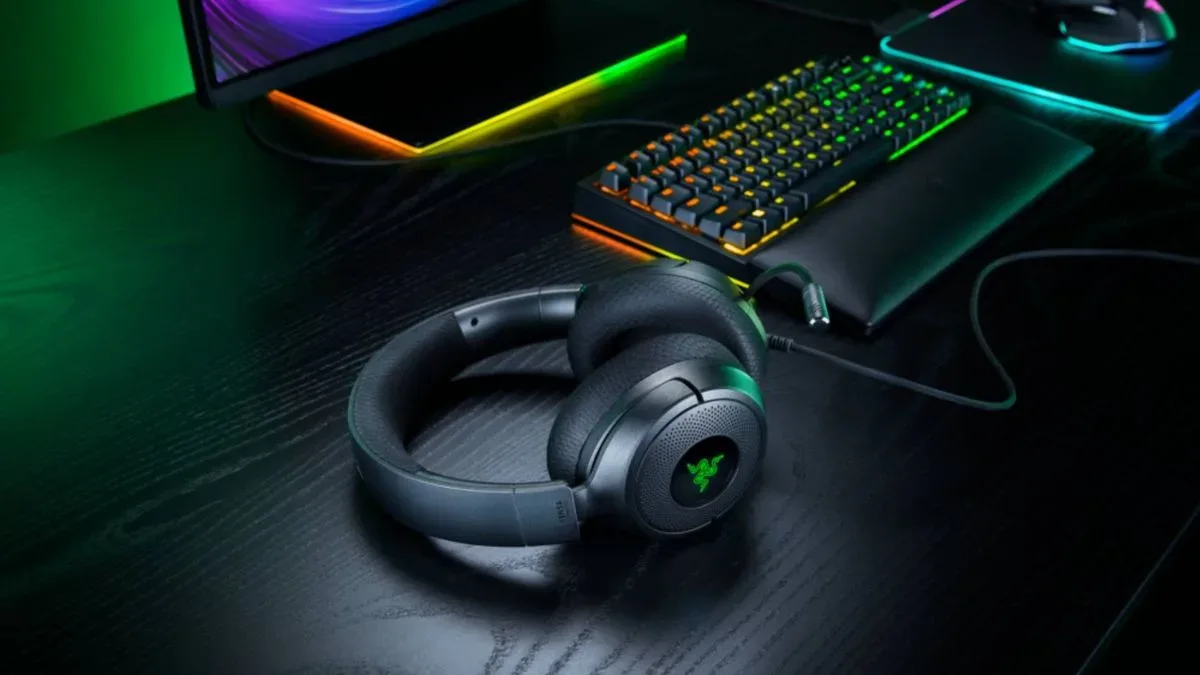
Razer Chroma lighting is part of the package as well. The headset has RGB-lit logos on both earcups, allowing it to visually match other Chroma-compatible accessories. While RGB does not affect gaming performance, synchronized lighting remains a popular option for players who build coordinated PC desks around Razer keyboards, mice, controllers, speakers, and other peripherals. The visual customization sits alongside the headset's central idea: not only can a player coordinate their gear aesthetically, but they can potentially bring more sensory feedback into the game itself.
How It Compares With the Kraken V4 Pro
Buyers looking for a wireless alternative within Razer's own range may instead consider the Kraken V4 Pro. That headset also supports Sensa HD Haptics, but it occupies a much more premium tier with an MSRP of $399.99 / £399.99. Its higher price brings a wireless form factor, battery life rated at up to 50 hours, THX Spatial Audio, a HyperClear Super Wideband microphone, and an OLED control hub.
The contrast between the two models clarifies the role of the Kraken V4 X Sensa HD Haptics. The Pro model is aimed at users seeking an expansive flagship-style feature set, including wireless convenience and additional control hardware. The V4 X, meanwhile, appears built around a more focused goal: make Razer's haptic headset experience available at a far lower entry cost while retaining the essential gaming features expected from a modern wired headset.
That makes the decision less about whether haptics are worthwhile in the abstract and more about a player's priorities. Someone who needs wireless operation, extended battery life, THX Spatial Audio, and a higher-end microphone may find the Kraken V4 Pro's feature list more compelling. A PC player who mainly wants a wired headset with virtual surround, a chat microphone, RGB, and tactile audio feedback may see the V4 X as the more sensible route.
Haptics Are Becoming a Broader Peripheral Trend
The Kraken V4 X Sensa HD Haptics also reflects a broader move toward gaming peripherals that engage more than sight and conventional audio. Controllers have long used vibration, and adaptive trigger technology has made tactile controller feedback more nuanced on current-generation hardware. Gaming chairs, wearable devices, and specialized audio equipment are now exploring ways to extend that sensation to other parts of a setup.
There are limits to how universal the appeal will be. Players sensitive to vibration may choose to reduce or disable the effect, and competitive users may prioritize comfort, microphone clarity, positional accuracy, and low-friction usability over cinematic physical feedback. But for single-player action games, music-driven titles, dramatic RPG battles, and any game built around booming effects, haptics can offer another avenue for atmosphere.
With a listed $119.99 / £99.99 price, Razer's new model makes that experimentation less financially daunting. The Kraken V4 X Sensa HD Haptics does not attempt to replace the company's flagship wireless headset; instead, it brings one of its most distinctive technologies into a conventional wired design. For PC players interested in feeling a little more of what is happening in their games, it could be one of the more accessible haptic headset options to watch.
Community
Discussion
Start the conversation.
No comments have been posted yet.