

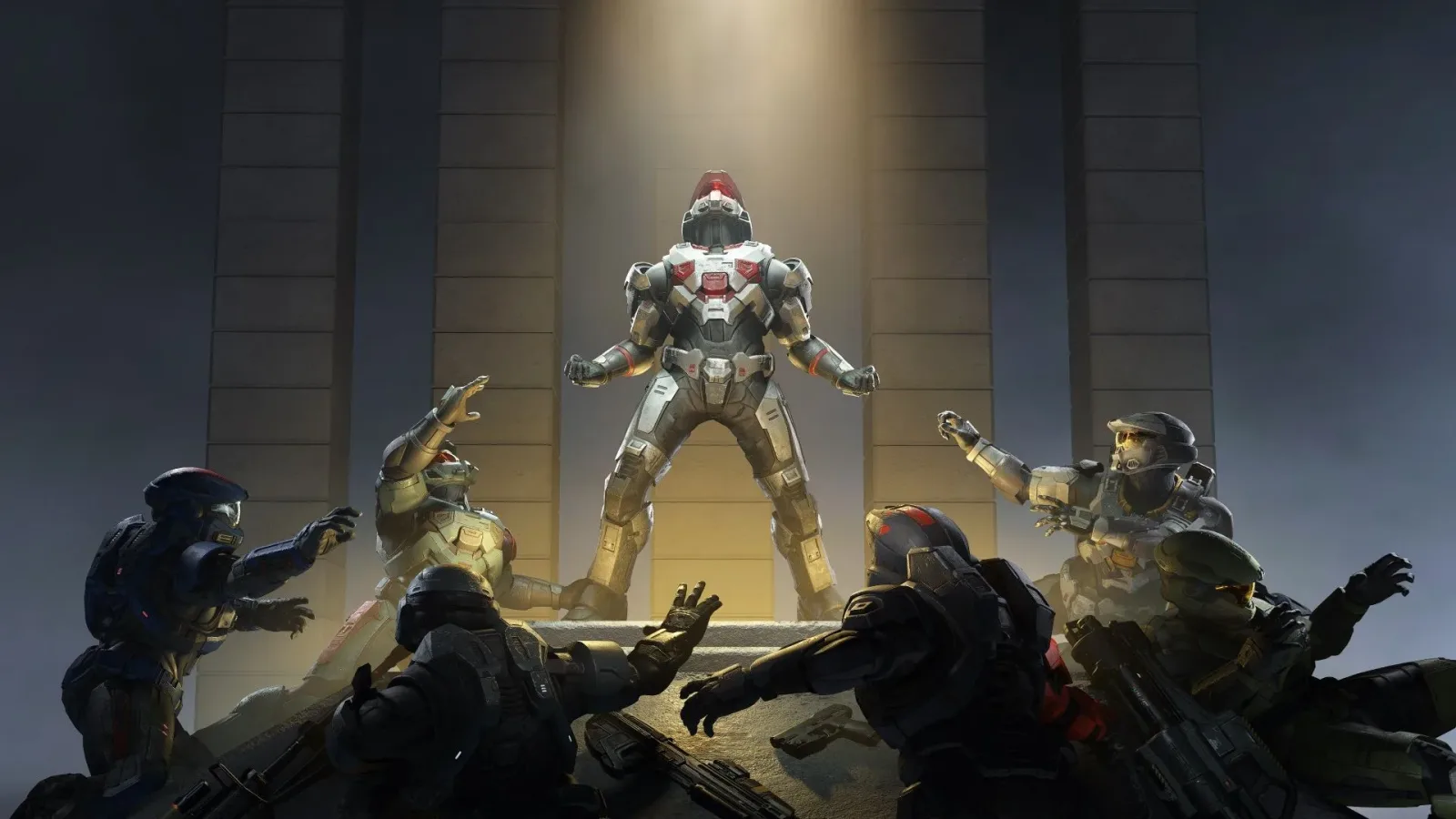
An ambitious multiplayer Halo project reportedly moved through several radically different forms before being shelved, with a new account describing a battle royale and extraction shooter hybrid that would have sent squads onto Zeta Halo to confront rival players, Flood-controlled territory and enormous shared threats. The game was reportedly known internally as Project Ekur, after beginning life as the earlier Project Tatanka.
The claims come from HiddenXperia, who cites anonymous people said to have been affected by the recent layoffs at Halo Studios. None of the reported details have been officially confirmed, and the project was apparently cancelled before it could be formally announced. Still, the outline paints a picture of one of the more unusual directions considered for the long-running Xbox shooter series.
Rather than simply adapting Halo's established arena multiplayer structure to a larger player count, Project Ekur was allegedly designed to blend familiar battle royale pressure with extraction shooter decision-making. It also reportedly sought to use one of Halo's most enduring enemies, the Flood, as both a mechanical hazard and a key piece of wider narrative setup.
From Project Tatanka to Project Ekur
The reported project initially carried the codename Project Tatanka and was said to have been conceived as a more straightforward battle royale during and after development on Halo Infinite. Its world was reportedly a huge playable area assembled from multiple recognizable Halo multiplayer locations, effectively turning elements of the franchise's competitive history into a substantially larger battlefield.
For useful background on this topic, read Battlefield 6 Team Addresses 'Secuty' Skin Typo and Five-Pistol Cosmetic Debate.
That premise alone would have represented a major change for Halo. The series has featured large-scale multiplayer modes, vehicle combat and expansive maps for decades, but it has not released a dedicated battle royale. Halo's sandbox of shields, precision weapons, equipment, vehicles and map pickups could have made for a distinctive take on the genre. At the same time, battle royale design would have required a different rhythm from the quick respawns and tightly structured matches associated with traditional Halo multiplayer.
Project Tatanka reportedly did not remain a pure battle royale for long. The concept was said to have evolved into Project Ekur, which would have folded extraction mechanics into the larger survival format. Multiple squads would drop onto Zeta Halo, the fractured ringworld that served as the primary setting for Halo Infinite, while the playable space contracted over time in the manner expected of battle royale games.
The reported shift is significant because extraction shooters place a premium on risk, escape and the choices players make before reaching an exit. A team can obtain valuable objectives or gear but still lose its haul if it cannot successfully leave the match. Combining that structure with a shrinking map could have produced matches where teams were forced together by the zone while also deciding whether to fight, flee or pursue an extraction.
Spartans, Banished Brutes and Flood Infection
One of Project Ekur's most striking reported features was the possibility of playing as either a UNSC Spartan or a Banished Brute. If accurate, the Brute option would have been a first for the Halo series in this form. The franchise has previously let players inhabit characters from opposing factions in selected modes and stories, but the alleged concept appears to have framed Spartans and Brutes as meaningful player choices within the same multiplayer ecosystem.
That setup could have opened the door to asymmetrical abilities, different movement or combat priorities, and faction-based strategies. However, the available account does not specify how the two sides would have differed, whether they would have been balanced around separate equipment sets, or whether players could freely form mixed squads. Those details remain unknown, as do the project's planned progression systems, match sizes and intended platforms.
The Flood reportedly formed another major component of the game. Rather than functioning only as background lore or a standard enemy encounter, the parasitic species would have occupied and infected portions of the map. This would have added a PvE layer to confrontations between player-controlled squads, potentially changing which routes were safe, what objectives were available and when temporary alliances made sense.
Flood encounters have often been central to Halo campaigns, particularly in stories such as Halo: Combat Evolved, Halo 2 and Halo 3. They have appeared less consistently as a major ongoing element of modern Halo multiplayer. Bringing them into a large, dynamic survival format may have given Project Ekur an identity beyond the familiar shrinking-circle formula, especially if infection zones altered as a match progressed.
The Flood outbreak was also reportedly intended to create a story connection to a future Halo 7. It is not clear what form that connection would have taken, how much canon material would have appeared in matches, or whether the multiplayer game would have launched before any next mainline entry. The claim does indicate that the project may have been considered part of a broader franchise plan rather than an isolated multiplayer experiment.
Shared Boss Battles Could Have Changed the Usual Rivalry
Project Ekur was reportedly not built entirely around squads eliminating one another. Players could supposedly choose to cooperate at certain points against a massive boss encounter on the map. The comparison given was to the large Invasion-style events associated with Gears of War: E-Day, suggesting a battle significant enough to encourage competing teams to set aside their conflict, at least temporarily.
That kind of event would have been a natural fit for Halo's longstanding emphasis on cooperative firefights against AI enemies. It could have created a tense social dynamic: teams might join forces to defeat a common threat, only to turn on one another when rewards, extraction routes or the final safe area came into play. Whether the design would have rewarded genuine cooperation, encouraged betrayal, or both is not known.
Large bosses also could have made vehicles matter in a different way. Halo's Warthogs, Ghosts, Banshees and heavier combat machines have traditionally supported chaotic team battles, but a sprawling extraction map could have turned them into essential transport, boss-fighting tools or high-value targets. No specific vehicles, bosses or rewards have been described, however, so any fuller picture of the game's loop remains speculative.
A Reported Change in Direction During Campaign Evolved
The alleged cancellation was tied to a period of changing priorities at Halo Studios. The studio recently released Halo: Campaign Evolved, a campaign-only remake of the original game, shortly before a major Xbox restructuring left only a smaller team in place to support ongoing Halo titles, events and an upcoming novel.
During the development of Campaign Evolved, Halo Studios reportedly considered pursuing a more conventional Halo multiplayer game built in Unreal Engine instead. That apparent pivot meant the extraction and battle royale hybrid fell away. The newer multiplayer effort was then reportedly shelved as well, with more developers needed to assist on the troubled production of Campaign Evolved.
If the account is accurate, it reflects a difficult sequence for the studio: an early battle royale concept transformed into a more distinctive hybrid, that hybrid gave way to a traditional multiplayer direction, and the latter effort was ultimately abandoned amid changing production demands. It also illustrates the challenge facing a franchise with a strong multiplayer legacy. Halo can draw from decades of beloved competitive design, yet expectations around live service support, battle royale scale, extraction gameplay and technical transitions can pull development in very different directions.
An Interesting Unreleased Branch of Halo History
Project Ekur may never become more than a reported cancelled project, and much of its design remains unclear. There are no confirmed screenshots, no official feature list and no indication that its systems will return in a future Halo release. The report nevertheless suggests that Halo Studios explored ideas far beyond a standard sequel or a direct continuation of Halo Infinite.
A Zeta Halo survival space stitched together with recognizable multiplayer arenas, playable Banished Brutes, invasive Flood zones, extraction stakes and temporary cross-squad boss cooperation would have been a bold experiment for the series. Such a project would have carried substantial risks, particularly for players protective of Halo's classic multiplayer identity. But it also could have used the franchise's weapons, vehicles, factions and co-op heritage in ways few other shooters can replicate.
For now, Project Tatanka and Project Ekur remain reported glimpses of paths not taken. With Halo Studios' role reduced following the restructuring and the reported cancellation of multiple multiplayer initiatives, there is no confirmed indication that this particular hybrid concept will be revived. Its ideas, however, demonstrate how expansive the internal conversation around Halo's future may have been before those plans changed.
Community
Discussion
Start the conversation.
No comments have been posted yet.