


Major spoilers for Resident Evil follow.
Resident Evil is heading to theaters on September 18, and Zach Cregger's take on Capcom's long-running horror series is not positioned as a scene-for-scene retelling of one game. Instead, it appears built as a new story that borrows the series' creatures, locations, visual language and famously anxious approach to resource management. That gives the movie room to surprise viewers while still rewarding people who have spent decades opening inventory screens, combining herbs and wondering whether a suspiciously placed typewriter means they are finally safe.
The film moves quickly, but it leaves a substantial trail of references behind. Several are immediately recognizable: an Umbrella facility and a typewriter are hardly subtle within the context of Resident Evil. Others are much smaller details, including a particular decorative pot, a brand of shotgun ammunition and design traits taken from more than one version of the franchise's infected dogs.
Its focus is largely on the earlier games, while Resident Evil 4 receives an especially notable share of affection. Here are 10 Resident Evil game Easter eggs found throughout the new movie, and why each one matters to the franchise's history.
For useful background on this topic, read Resident Evil Movie Spoilers: Are Leon and Claire in Zach Cregger's Film?.
1. A medical delivery bag doubles as a First Aid Box reference
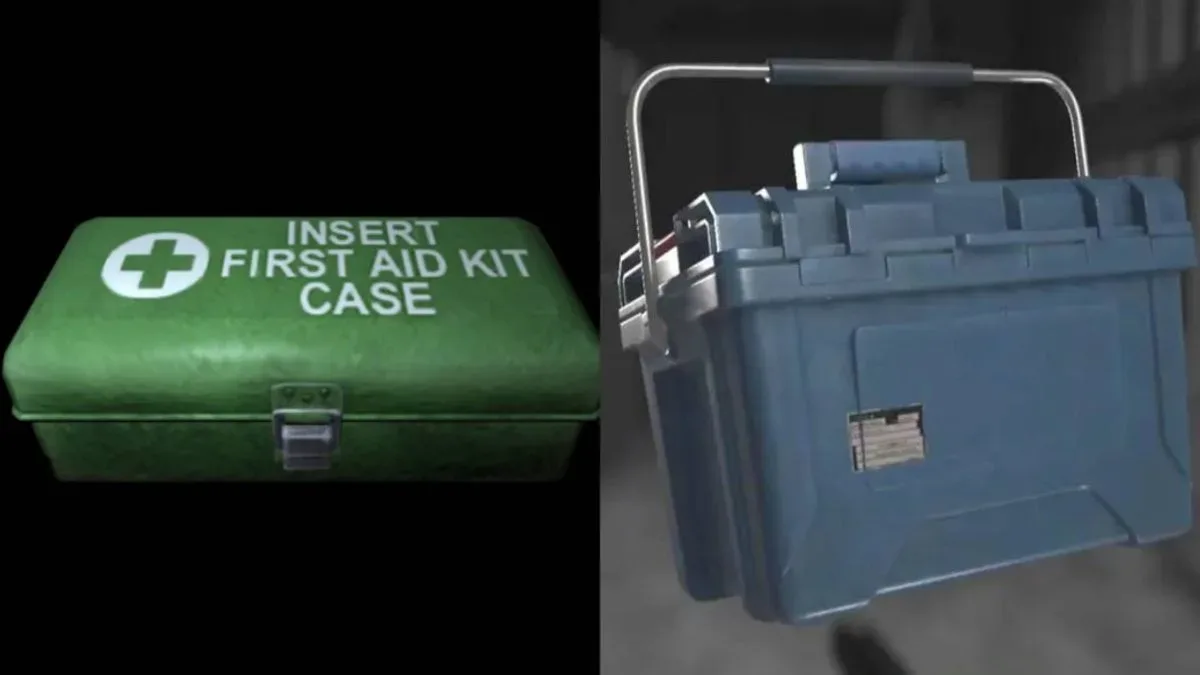
The story follows Bryan, a medical courier responsible for transporting organs between hospitals. Early on, the bag he handles is a conventional red container marked with a white cross. But the situation changes when he is handed a far more unusual green version for a pivotal delivery involving Raccoon City.
That green bag recalls the First Aid Box from the Resident Evil remake. In that game, the container can hold useful recovery items, fitting neatly into a series built around treating injuries with herbs, sprays and limited medical supplies. The distinction matters because First Aid Box appearances have changed between entries. Resident Evil 3, for example, uses a gray version rather than the recognizable green presentation evoked here.
The movie's organ-delivery angle also creates a connection to Resident Evil Requiem. An Organ Transplant Box appears as a puzzle item there, with players needing to open it to locate organs required for a disturbing body-related examination-room puzzle. It is a clever double reference: one visual callback rooted in the remake, paired with an object concept that has relevance in a newer game.
2. The typewriter brings the save-room ritual to the screen
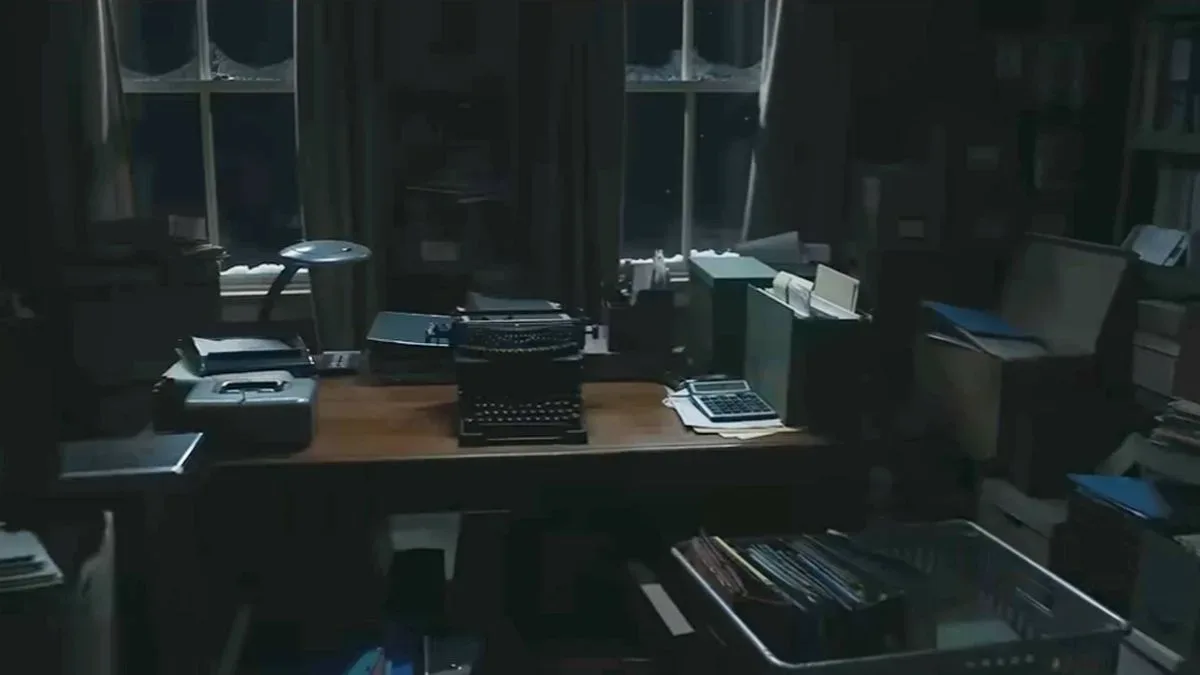
When Bryan enters what looks like an abandoned house, he works through its rooms and switches on a light in an upstairs office. There sits one of the movie's clearest callbacks: a typewriter.
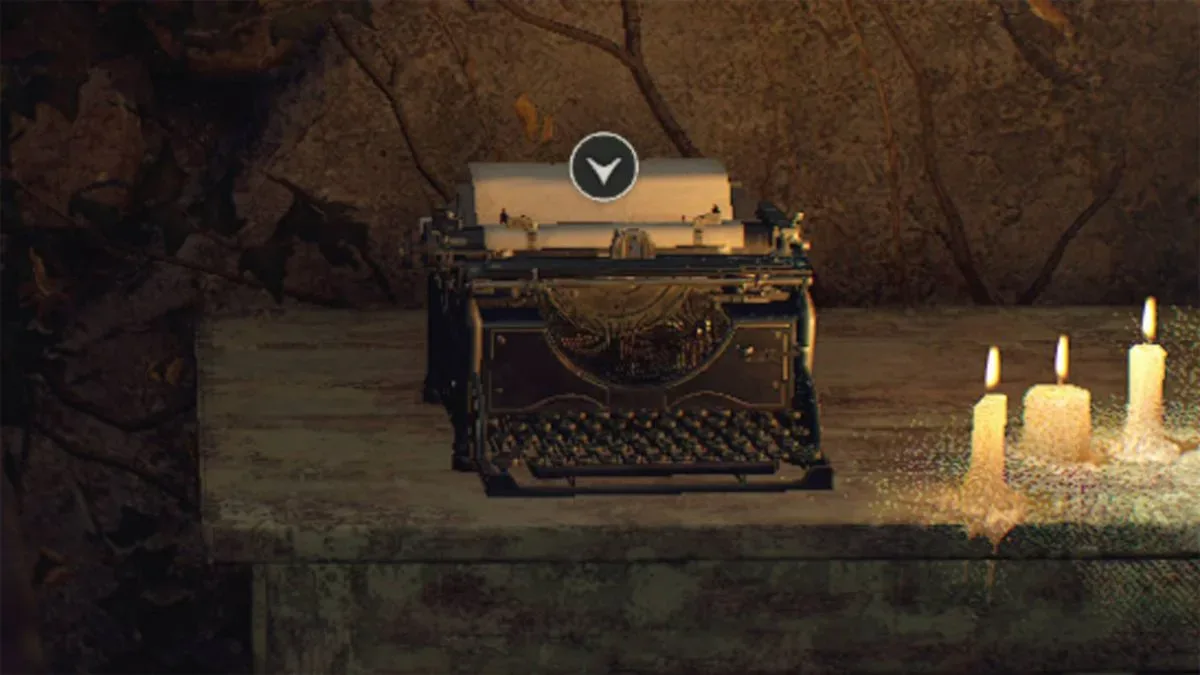
For players of the older Resident Evil titles, typewriters are synonymous with saving progress. In several classic entries, using one requires an ink ribbon, turning even a save into a choice. Ink ribbons are limited, so players must decide whether their current progress is worth preserving or whether it is better to push ahead and risk losing everything after the next monster encounter.
That mechanic made typewriters emotionally important objects rather than mere background furniture. Finding one commonly meant entering a relatively secure room, taking a breath and organizing an inventory. The film knowingly flips that expectation. Bryan's discovery is visually reassuring for anyone familiar with the games, but he is not truly protected, and he does not remain in the room long enough for the usual save-room comfort to set in.
3. Bryan takes a shotgun from the wall
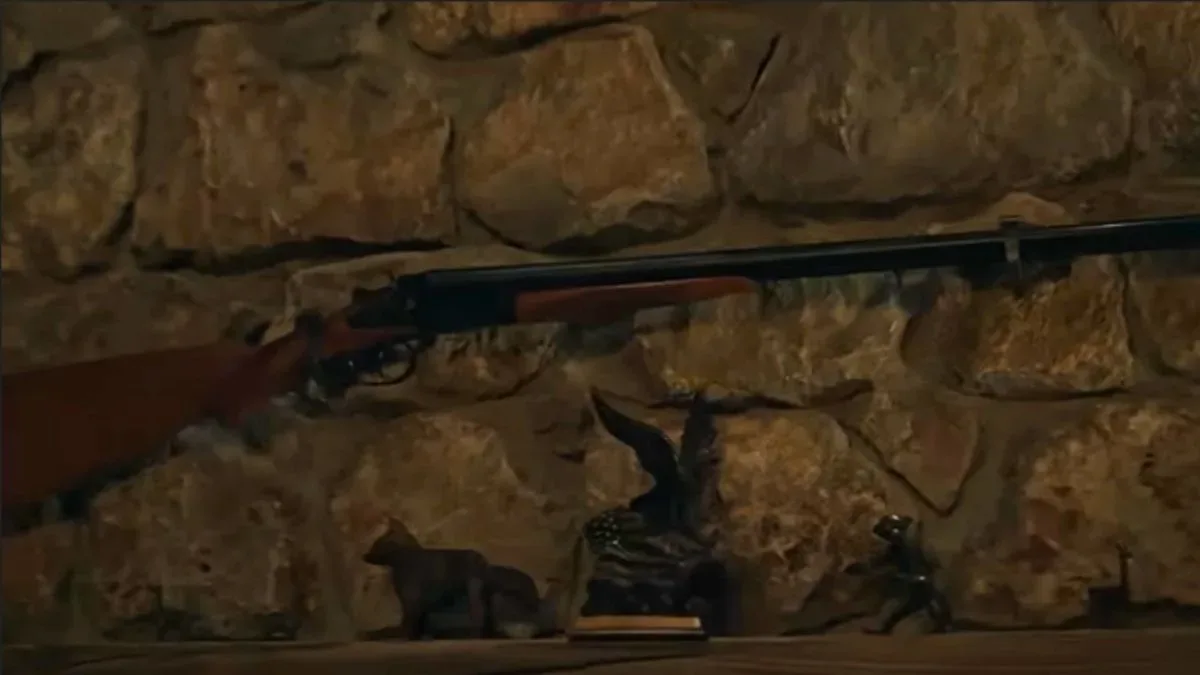
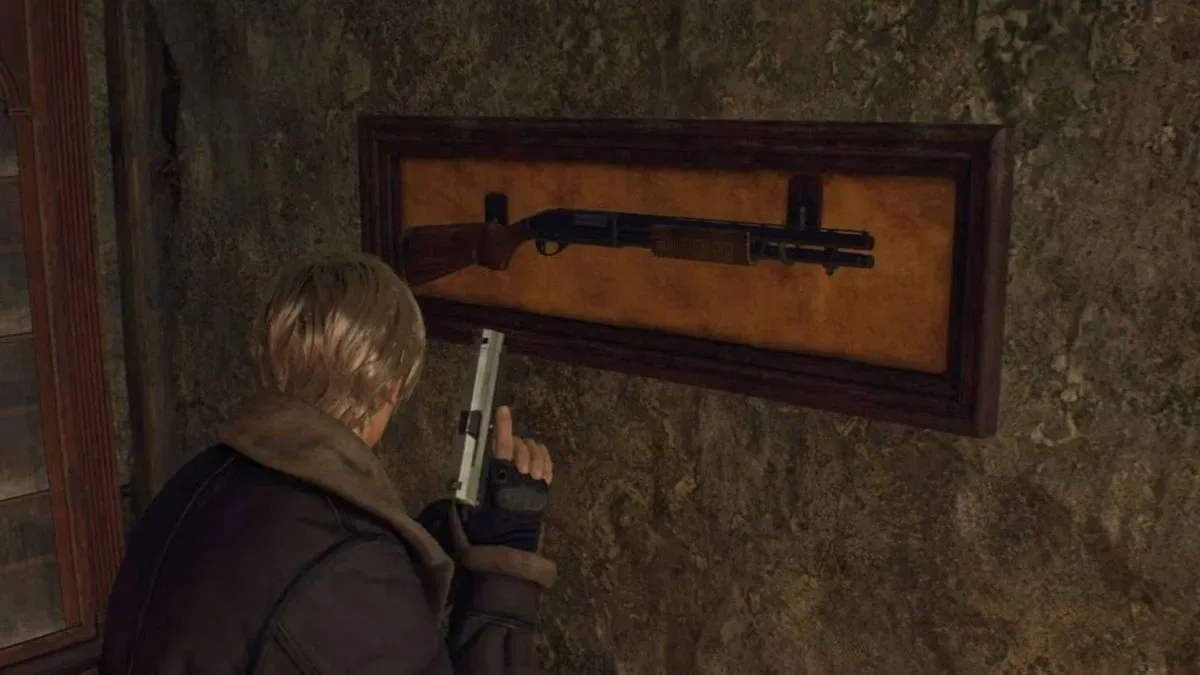
The house also includes a shotgun mounted on a wall, which Bryan grabs while desperately searching for protection. The image calls back to a recurring Resident Evil habit: putting extremely useful weapons in locations that look almost too convenient to trust.
In the original Resident Evil, a shotgun positioned within a framed display can become a deadly trap. Taking it without solving the room's puzzle triggers a descending ceiling, threatening to crush the player. In Resident Evil 4, a shotgun can be found in a frame in the Village Square, where the player is incentivized to grab it quickly amid one of the most memorable early-game attacks in the series.
The movie does not simply recreate either sequence, but the decision to arm its ordinary, overwhelmed protagonist using a wall-mounted shotgun taps into that shared memory. A Resident Evil player has learned to inspect the room, look for a catch and prepare for something terrible to happen once the weapon is taken.
4. Heavyfield shells make the ammunition search specific
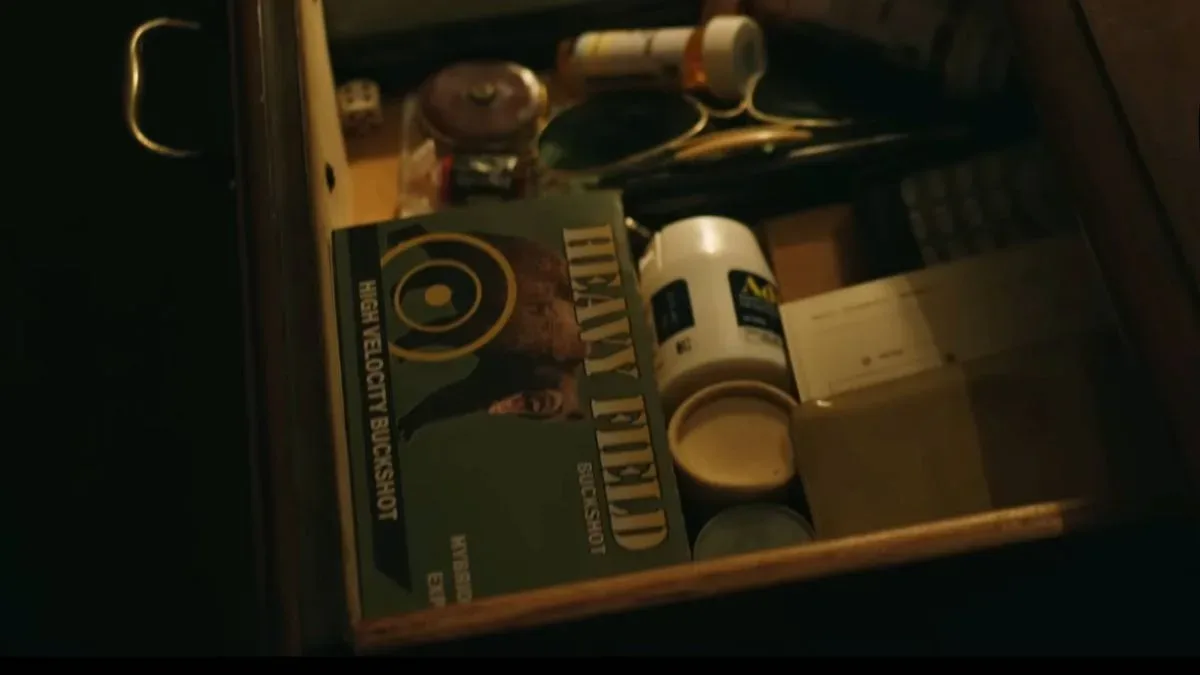
After taking the shotgun, Bryan frantically rummages through drawers in search of ammunition. One drawer contains Heavyfield shotgun shells, a direct visual reference to the ammo boxes seen in Resident Evil 4.
It is a small prop choice, but it captures a fundamental part of Resident Evil play: every drawer, cabinet and breakable container might contain the item needed to survive the next few minutes. In the games, obtaining a new weapon is only half the victory. The next question is whether the player has enough shells to make it useful.
There is also a contrast in expertise. Leon S. Kennedy is an unusually capable agent by the events of Resident Evil 4, while Bryan is not a battle-tested protagonist with an arsenal and a merchant nearby. He struggles to get the weapon functioning before firing at a mutated man inside the house, emphasizing the vulnerability that the series has often used to fuel its horror.
5. A green herb grows in a Resident Evil 4-style pot
One of the easiest Easter eggs to overlook appears while Bryan makes a phone call to his girlfriend, Michelle, in the kitchen. Behind him sits a green herb in a dark pot decorated with a horizontal gold or copper-colored stripe.
Green herbs are among the most enduring symbols in Resident Evil. Across the games, they restore health and can often be mixed with differently colored herbs for stronger or more specialized healing effects. Their designs and uses vary from game to game, but this particular plant and container are closely modeled after the green herb presentation in Resident Evil 4.
Cregger has confirmed the intentionality behind the detail in comments to IGN. He explained that he replicated the Resident Evil 4 herb and its pot closely, even though the movie's broader setting may feel closer to the world of Resident Evil 2. He also called Resident Evil 4 his favorite entry and indicated that other objects from that game are scattered through the film. That makes the seemingly ordinary kitchen decoration one of its most purposeful bits of fan service.
6. The cuckoo clock may point to Ashley's puzzle
A cuckoo clock in the house startles Bryan, and it may be another Resident Evil 4 nod. During Ashley Graham's playable section in that game, players encounter a clock puzzle that requires entering the correct time to reveal a path forward.
This is one of the less certain references. Cuckoo clocks are common horror-movie dressing, and their sudden sounds are ideal for a quick scare. Still, the film's repeated use of Resident Evil 4 imagery makes the connection plausible. Even if it is only an atmospheric flourish, it feels appropriate for a franchise where ornate clocks, strange emblems and seemingly decorative household objects routinely conceal keys, passageways and mechanisms.
7. Umbrella's high-rise lab evokes the series' secret facilities
At one point, Umbrella scientist Paul and Umbrella enforcer Maxine reveal that Bryan is not transporting an organ at all. The item in his bag is an ingredient needed for a cure, and it must be brought to a laboratory on the hospital's 28th floor. An intercom message in the parking garage urges him onward after he nearly gives up.
The laboratory's appearance is a major franchise callback. Umbrella facilities have long served as the places where corporate ambition, biological experimentation and catastrophic secrecy meet. The movie's lab resembles the clinical underground complexes familiar from the games, though its brighter presentation separates it somewhat from the darker, more oppressive spaces players may remember.
That visual difference does not make it feel safer. In Resident Evil, gleaming surfaces, medical equipment and access-controlled doors are often signs that something much worse is hidden nearby. The film uses the iconography of an Umbrella lab to establish that same immediate suspicion.
8. A sewer escape channels Resident Evil 2
Bryan's escape route eventually takes him into the sewers as mutated Raccoon City residents pursue him. The sequence includes a bloated corpse filled with rats and a frightening multi-person mutation created specifically for the film.
While that particular creature does not have a direct game equivalent, the location is unmistakably tied to Resident Evil 2. Both Leon and Claire traverse the city's sewers in the game, facing enemies, solving puzzles and pushing through one of the series' more hostile environments. The area is also associated with grotesque G-Virus mutations, reinforcing the sense that Raccoon City's infrastructure has become another extension of its biological nightmare.
Bryan does not stay underground for as long as either game protagonist, but the moment efficiently invokes a level type many players remember for its maze-like layout and relentless discomfort.
9. The attacking dog appears to be a hybrid of later monsters
A Doberman attacks Bryan at the house, initially suggesting a straightforward callback to the zombie dogs of the first Resident Evil. But the creature's transformation points elsewhere. After smashing through the wooden barn, it opens its mouth to reveal tentacles and multiple rows of serrated teeth.
Those features appear to blend ideas from two later games. The tentacle-like mutations resemble the Colmillos from Resident Evil 4, infected dogs whose parasites can erupt in horrific fashion. The rows of vicious teeth recall the Adjule from Resident Evil 5, another mutated canine threat.
The result is not a one-to-one recreation of Cerberus, Colmillos or Adjule. It is better understood as a new movie creature assembled from recognizable Resident Evil traits. That approach reflects the film's larger relationship with the games: it is willing to combine familiar pieces into something designed for its own story.
10. The real Easter egg is the film's survival-horror mindset
Individual props and monsters are fun to spot, but the movie's most meaningful connection may be its overall perspective. Bryan is not introduced as a polished action hero. He is a courier trying to complete an impossible delivery while navigating a city, house and hospital that increasingly resemble hostile game spaces.
His search through drawers, uncertainty around firearms, brief encounters with recognizable supplies and movement through labs and sewers all echo the rhythm of classic Resident Evil. The film is not asking viewers to identify every object to understand the plot, yet it is clearly designed with the series' history in mind.
For longtime fans, that means a second viewing may be worthwhile once the immediate scares are no longer the only focus. The typewriter, herb pot, ammunition box and clock suggest that Cregger's Resident Evil is filled with more than broad franchise branding. It is engaging with the details that helped make the games memorable in the first place.
Community
Discussion
Start the conversation.
No comments have been posted yet.