

Major spoilers for the ending of Resident Evil follow below.
The newest Resident Evil movie has arrived in theaters with a different approach to Capcom's survival-horror universe. Rather than retelling the exact plot of a familiar game, director Zach Cregger's film tells an original story that exists alongside the games' mythology. That distinction matters for longtime fans: the movie can draw upon the franchise's monsters, corporations, outbreaks, and ominous scientific experiments without simply reenacting the events players already know.
It also raises a very modern theatrical question. In an era when enormous franchises regularly attach teases, jokes, and sequel setups after the credits, should viewers remain in their seats once the main story ends?
The straightforward answer is no. Resident Evil does not have a mid-credits scene or a post-credits scene. Once the movie reaches its closing moments, audiences will not miss a hidden additional sequence by leaving before the credits finish.
For useful background on this topic, read Marvel's Wolverine Sparks Debate Over How Far Familiar X-Men Characters Can Change.
That does not mean the ending is tidy, cheerful, or devoid of material that could lead into another film. In fact, the final stretch gives the central crisis an especially grim conclusion and leaves the fate of its protagonist hanging in a way that could support further stories. The lack of a traditional stinger appears to reflect the movie's self-contained design rather than an attempt to close the door on future installments.
Does Resident Evil have a post-credits scene?
No. There is no extra scene during or after the credits of Resident Evil.
Moviegoers who have made it through the final scene are free to head home rather than waiting for an additional Umbrella Corporation reveal, a surprise character appearance, or a final monster attack. There is no last-second sequel title card, no hidden video-game reference placed after the credit roll, and no epilogue that changes the immediate meaning of the ending.
That choice stands apart from a format popularized by superhero cinema and increasingly used across major genre releases. Post-credit material can provide a reward for patient viewers, establish the next threat, or announce that a larger connected universe is on the way. It can also leave a film feeling incomplete if a key piece of story information is withheld for the people who stay to the end.
Resident Evil avoids that issue. Everything essential happens before the credits. The movie's climactic outcome is delivered within the main narrative, and viewers do not need to search online afterward to make sure they skipped an important final chapter.
An original story adjacent to the games
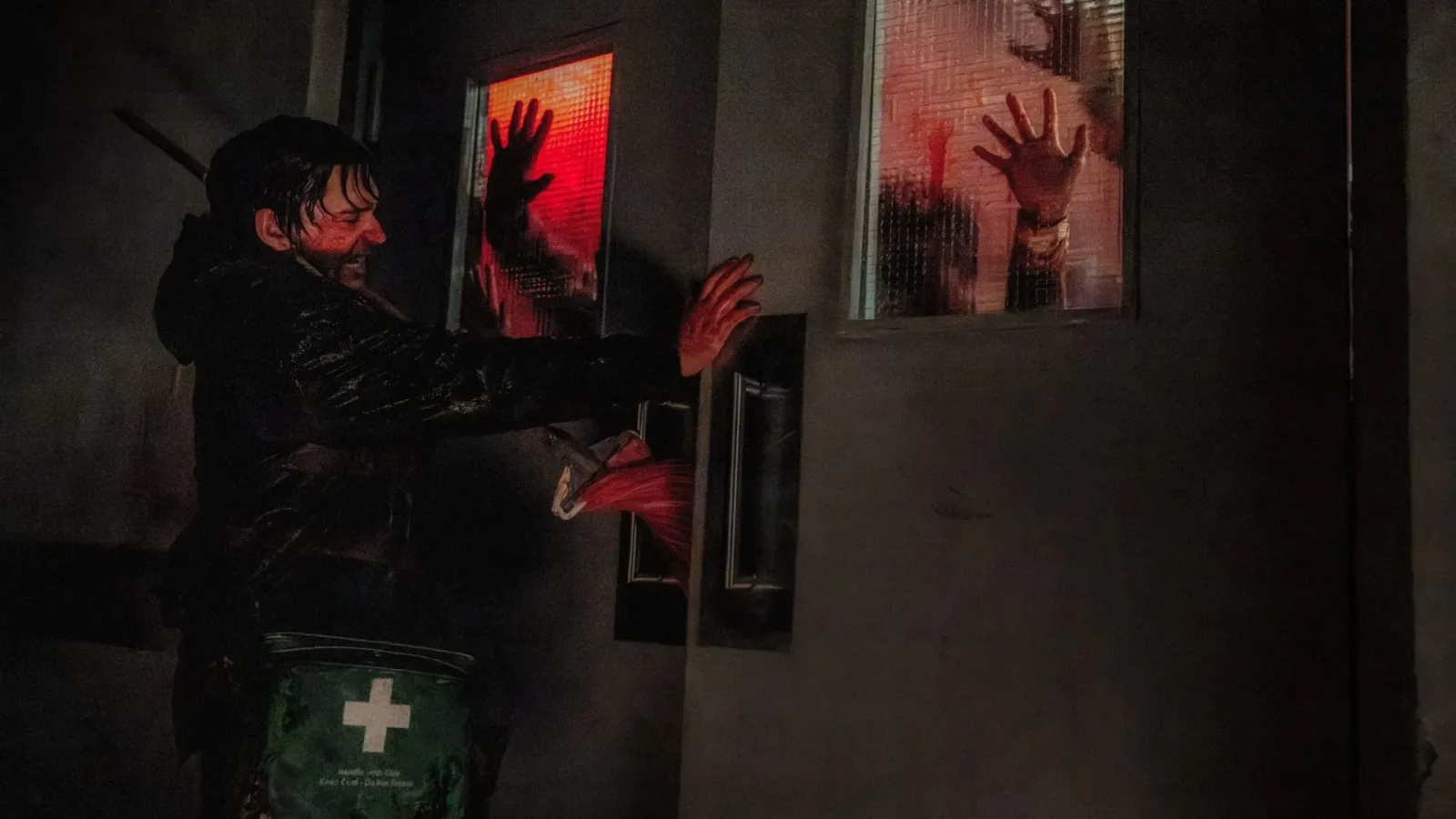
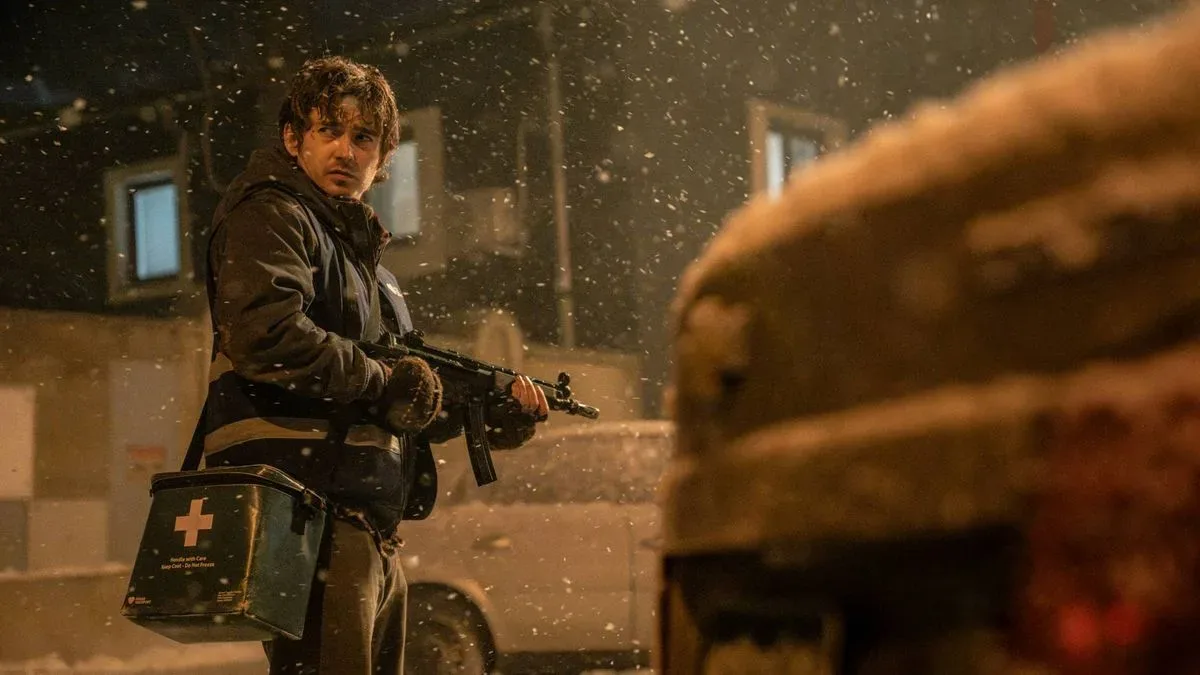
Cregger's take is not positioned as a direct adaptation of one particular Resident Evil game. Instead, it follows Bryan, a medical courier whose assignment becomes an escalating nightmare. The story sends him into a catastrophic situation connected to the kind of biohazard threats and corporate experimentation that define the larger franchise.
This is a useful framework for a property with decades of games, multiple protagonists, and many intersecting outbreaks. A strict adaptation can face difficult choices over which events, locations, and characters to include. By centering a new character, the movie has space to construct its own route through the franchise's world while still using familiar thematic foundations.
That approach also helps explain why there is no mandatory post-credits tease. Bryan's ordeal functions as the core of a complete movie rather than merely the first episode in a pre-announced serialized plan. The ending is intentionally open in some respects, but it is not interrupted by an extra scene that insists audiences wait for the next chapter.
Resident Evil ending explained
After surviving the brutal journey to Raccoon City General, Bryan finally reaches the hospital carrying the sample that could offer a cure. His destination is the Umbrella Corporation laboratory on the building's 28th floor. With the National Guard approaching, the lab staff begins working urgently on the cure.
At first, this seems like the moment when Bryan's nightmare may finally turn around. He has endured extraordinary danger to make the delivery, and the sample is intact when he gets to Umbrella's facility. Yet the movie makes clear that reaching the lab does not mean he has escaped the consequences of the outbreak.
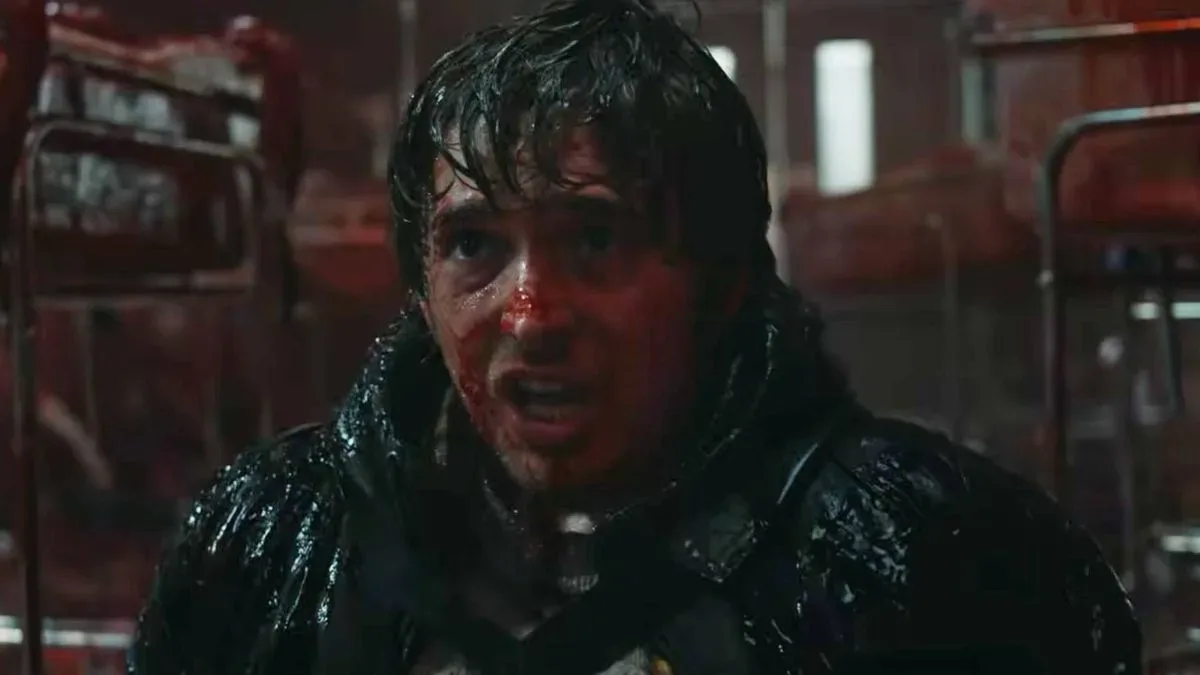
Bryan was bitten earlier in his journey, and the infection has continued spreading through him. Its effects become impossible to contain. Rather than receiving the cure in time, he begins transforming into a B.O.W., or Bio-Organic Weapon. The change turns the character into a horrifying creature and triggers a final wave of violence inside the laboratory.
As he mutates, Bryan kills laboratory technicians and absorbs them into his growing body. The resulting monster has been compared to Nyx, the grotesque Bio-Organic Weapon from Resident Evil Outbreak: File #2. That resemblance is a notable point for fans of the games, particularly because Nyx represents the franchise at its most extreme: a shifting, consuming biological nightmare rather than a simple zombie or animal mutation.
The ending retains an element of tragedy because Bryan is still trying to get to the cure. His fight is not simply the rampage of a disposable monster; it is the collapse of someone who has spent the entire film trying to survive and fulfill a crucial delivery. During the confrontation with the final remaining technician, however, Bryan fails to secure the injection.
The decisive moment takes place on the hospital sky bridge. Bryan kills the technician, but the needle containing the cure falls away to the ground. With the treatment lost, the possibility of restoring him is left unresolved at best. The National Guard then surrounds the transformed Bryan from helicopters as the movie cuts to credits.
What the final image means
The ending does not provide a clean answer about what happens to Bryan next. He is alive when the National Guard encircles him, but he is also fully transformed and positioned as an immediate threat. The missing cure makes the situation even more bleak. There is no confirmation that another dose exists, that Umbrella can create one in time, or that Bryan can retain enough of himself to be saved.
That ambiguity is doing much of the work that a post-credits scene might normally do. The movie has already created a major unresolved situation: a powerful B.O.W. is loose at the center of a biohazard emergency, authorities have arrived, Umbrella's laboratory has been devastated, and the person who carried the potential solution has become part of the disaster.
It is a conclusion that can be read as the final tragic note of a standalone horror story. Bryan's mission succeeds only partly, while his personal fate becomes horrific. At the same time, it leaves enough room for another movie to examine the aftermath, the National Guard's response, Umbrella's role, and whether any path remains for Bryan.
Could there be another Resident Evil movie?
There is no post-credits announcement confirming a sequel. However, Cregger has indicated that he has considered where the story could go beyond this installment. He has said he has ideas for other directions, while also stressing that the first film's reception and performance must come first.
That is a measured position for a film built as an original story rather than the opening chapter of a guaranteed sequence. The franchise itself contains an enormous amount of territory for future films, from further Umbrella plots to different outbreaks, experimental creatures, and entirely new survivors. Bryan's predicament is one possible thread, but the broader setting offers many routes without requiring the next movie to duplicate the first.
For now, the key information for theatergoers is simple: there is no Resident Evil post-credits scene, but the main ending deliberately leaves the world in a dangerous and unresolved state. Anyone hoping for every story beat should watch through the final scene, but there is nothing else waiting once the credits begin.
Community
Discussion
Start the conversation.
No comments have been posted yet.