

Marvel's Wolverine is putting a familiar question at the center of a very unfamiliar mutant story: when does a fresh interpretation of beloved comic-book characters remain an adaptation, and when does it become something else wearing recognizable names?
Insomniac's Wolverine draws from decades of Marvel history, but it does not simply recreate the traditional pillars of the X-Men mythos. The game reshapes histories, alliances, rivalries, and romances around Logan's journey, using characters whose relationships have been established in radically different ways across comics, animation, films, and games. That approach has produced a divided reaction. Some players see a bold remix that fits a medium built on alternate timelines and reinventions. Others believe the changes remove crucial elements of what made these characters matter in the first place.
The conversation has also been muddied by bad-faith online reactions. But beyond that noise lies a more worthwhile discussion about fidelity, character identity, and the unusual pressures attached to adapting Marvel's most frequently reinterpreted heroes.
A controversy fueled by missing context
One of the loudest reactions surrounding Wolverine has focused on comments about Logan and Sabretooth's shared past. Narrative director Walt Williams described the emotional state between the two former allies in an interview with The Washington Post, saying they feel a sense of "yearning" after the collapse of their Team X family. In Williams' explanation, Logan responds to that feeling by withdrawing, while Sabretooth turns his pain outward and lashes out.
For useful background on this topic, read Call of Duty: Modern Warfare 4 Is Being Framed as an 'Epic Conclusion'.
That language was seized upon by culture-war accounts attempting to frame the game as a romantic story between Logan and Sabretooth. Insomniac community director James Stevenson directly rejected that characterization. The argument also strips the word "yearning" of its obvious broader meaning: longing for a lost connection, former belonging, or a time before an intense personal rupture.
Within the game's setup, the dynamic is rooted in the disintegration of Team X. Logan, Sabretooth, Mystique, and the telepathic Nathanial Essex were once connected through that group. Their history is not the same one many fans associate with the X-Men, the Brotherhood of Mutants, or the long-running enmity usually defining Logan and Sabretooth. The game instead begins from the premise that these people had once been comrades, then allows their fractures to harden as the story progresses.
That context gives a line such as Sabretooth calling Logan "my Wolverine" a different meaning than the clips and outrage posts might suggest. The line reflects someone searching for evidence that their old bond was not entirely destroyed. It is still a striking choice for viewers accustomed to a relationship defined overwhelmingly by violence, mutual hatred, and rivalry. But it is a story choice, not proof of the narrative some critics tried to manufacture.
For another perspective on this story, read Marvel's Wolverine Is Testing How Far a Familiar Mutant Can Be Remixed.
Team X changes the foundations of the conflict
The more substantive criticism starts with the game's altered continuity. In many versions of Marvel's mutant fiction, the paths of Wolverine, Sabretooth, Mystique, and Essex are shaped by their respective connections to opposing mutant factions and to the broader X-Men world. Wolverine deliberately departs from that familiar architecture. There is no conventional X-Men team at the center of this story, even though the cast includes figures closely associated with that legacy.
Instead, Team X acts as the key shared institution in these characters' lives. It gives them common ground that their traditional versions may not have had, and it makes their later conflicts feel like betrayals within a damaged family rather than clashes between natural enemies. The game eventually pushes Logan and Sabretooth into a grand confrontation, while its post-credits material strongly signals a larger version of that rivalry could follow in a potential sequel.
Even those later developments are not straightforward recreations of classic continuity. Sabretooth has not traditionally been one of Apocalypse's Horsemen in Marvel continuities, yet Wolverine's story plays with that imagery and concept. Logan's own past is also rewritten around Apocalypse: before his time with Essex and Team X, he was the Horseman of Death.
For supporters of the game's approach, this is exactly what a new adaptation should do. Wolverine has appeared in countless stories, and simple repetition is not automatically reverence. A new origin can produce new emotional stakes, unexpected alliances, and a version of a conflict that does not rely on audiences already knowing every major comic storyline.
For detractors, however, the issue is not merely that facts have changed. It is that the changes may replace formative experiences that explain why these characters behave as they do. If the history is altered enough, familiar names and powers can begin to feel like surface-level markers rather than evidence of a true continuation of the characters people recognize.
Jean Grey and the cost of centering Logan
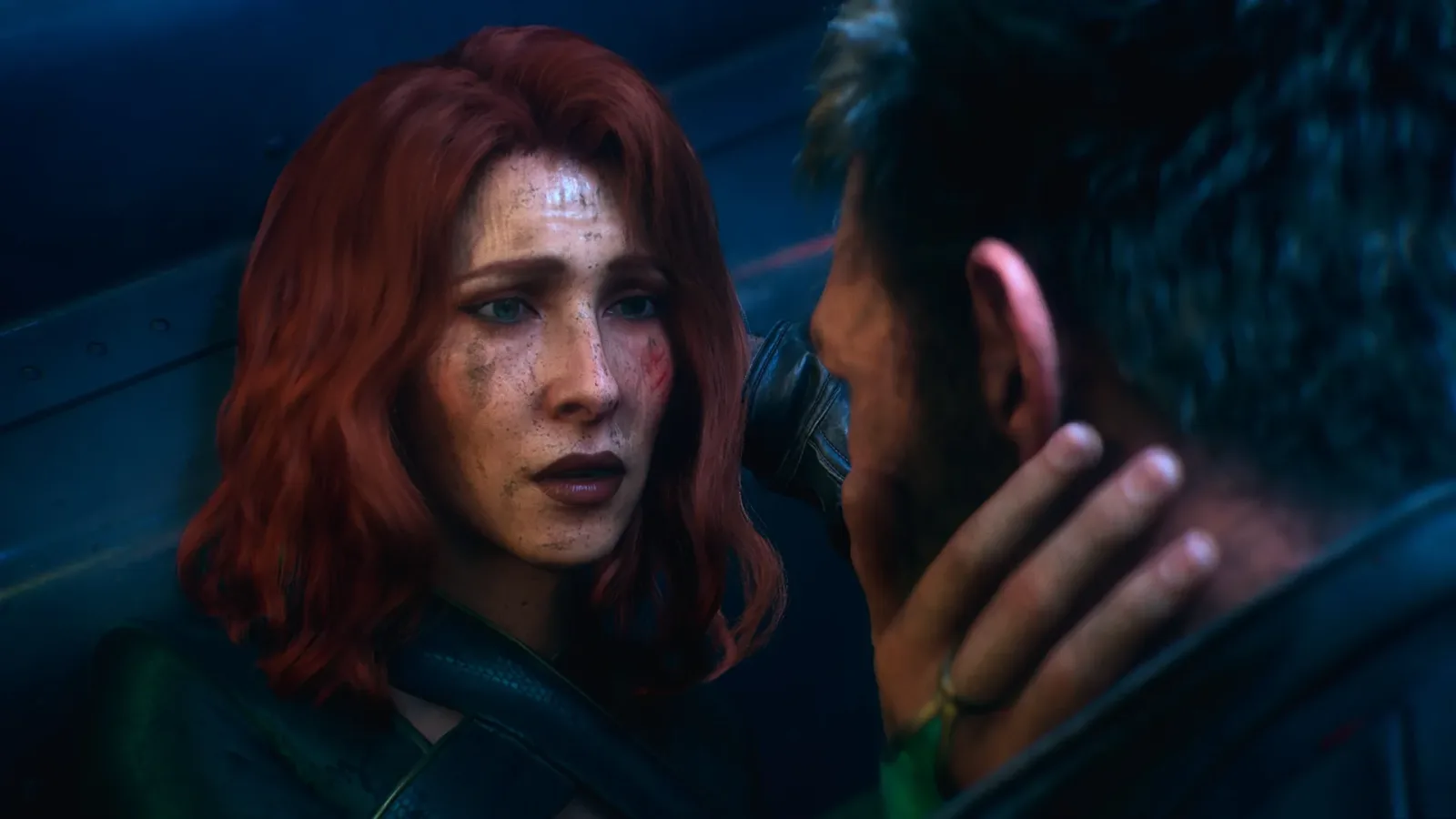
Jean Grey has become one of the clearest flashpoints in that debate. Traditionally, Jean's relationship with Logan is entangled with Scott Summers and the wider X-Men family. The tension among Jean, Scott, and Logan has been revisited in numerous forms, and Jean's own importance extends far beyond any romantic pairing. She is one of Marvel's most consequential mutants, particularly through her connection to the Phoenix.
Without the conventional X-Men framework, Wolverine takes a different route. Jean and Scott apparently never met in this version of events, removing Cyclops from the familiar relationship dynamic. Jean and Logan's romance is therefore presented more directly, although their connection is complicated by a much more fantastical and tragic history. Logan's immortality and Jean's repeated rebirths allow the relationship to span centuries.
In one of Jean's lives, Logan is manipulated into killing her. The trauma ultimately contributes to his descent into madness before his memories are erased. It is dramatic material with the heightened, melodramatic energy that has always been part of superhero storytelling. A tragic love story between an immortal mutant and a repeatedly reborn telepath has undeniable pulp appeal.
Yet many fans have questioned what Jean loses in the process. The concern is that a character with her own enormous history is reduced too heavily to the source of Logan's suffering. Jean can still be more than a plot device in theory, but the premise invites a familiar criticism: that a powerful woman is being used primarily to intensify a male protagonist's emotional damage.
That reaction is especially understandable given Jean's status. The Phoenix is not a minor piece of X-Men lore, and Jean Grey is not simply Wolverine's tragic romance. A story can reinterpret her, of course, but it has to contend with the expectations attached to a character who has long been central to stories of power, sacrifice, fear, death, resurrection, love, and agency.
Does this still feel like Wolverine?
Logan himself has received scrutiny, though the game gives clear reasons for some of his differences. His memories have been removed, his life was shaped by Team X, and his rage is gradually connected to recovered fragments of his past. His time as Apocalypse's Horseman of Death establishes another source for the violence and trauma associated with him.
Still, the game retains a core trait many fans see as essential: Logan's capacity for tenderness. Wolverine can be blunt, hostile, brutal, and emotionally guarded, but he is also often portrayed as protective of younger or more vulnerable people. His mentorships of Kitty Pryde and Laura Kinney are prominent comic examples. Film versions have similarly highlighted his relationships with Rogue and Laura.
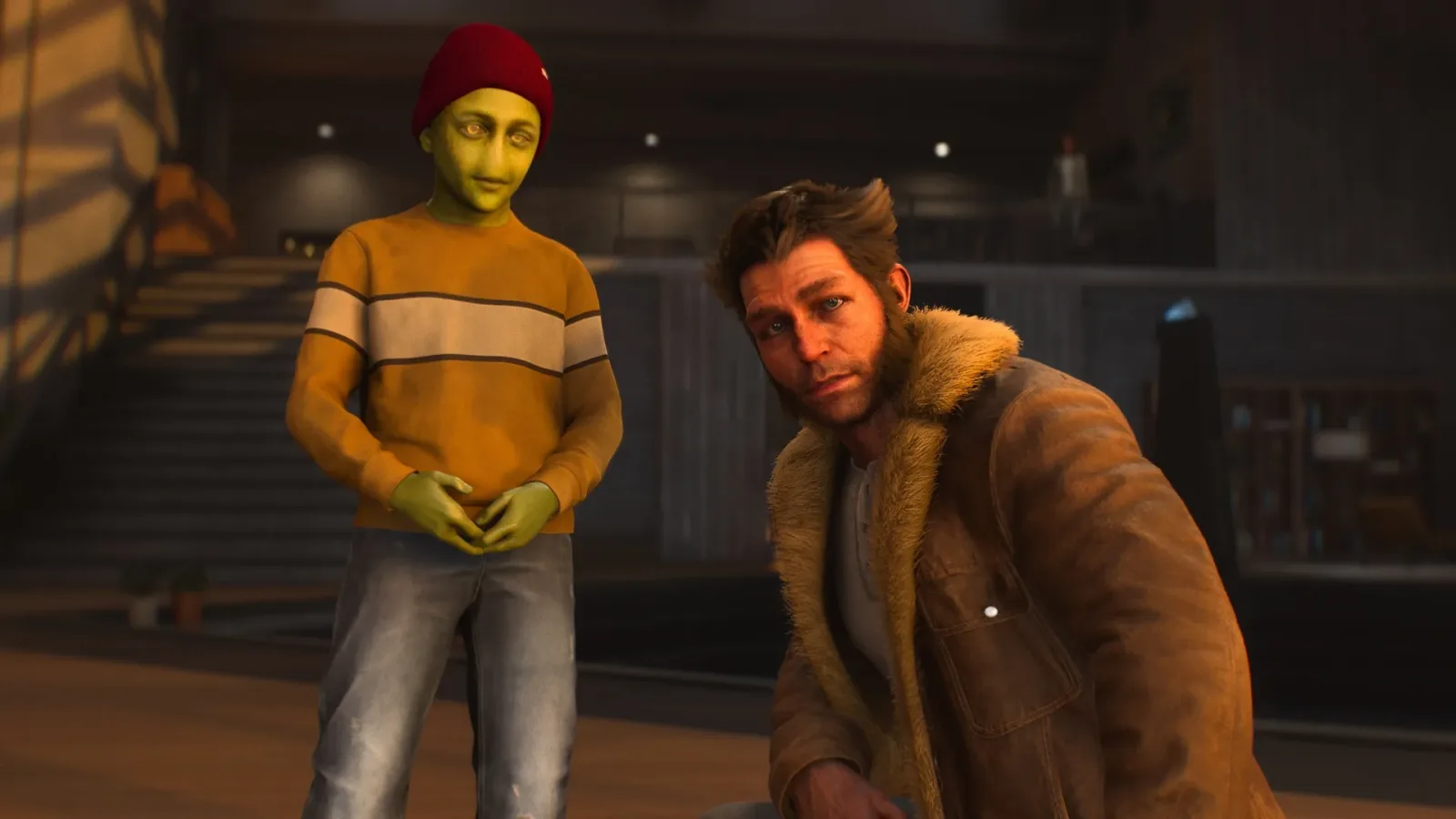
His gentler interactions with young characters such as Leech therefore matter. They suggest Insomniac has not discarded the "monster with a heart of gold" element that makes Logan more than a berserker with claws. A Wolverine who is never capable of empathy can become one-note; a Wolverine who is only soft loses the hard-edged tension that defines him. The balance between those sides is often the real test of any version of the character.
Comic books make the line harder to draw
There may be no clean answer to whether Wolverine changes too much. Comic books are uniquely prepared for reinvention. Their histories include reboots, alternate universes, retcons, resurrections, rewritten origins, swapped allegiances, and reality-altering events. Fans can reasonably disagree over which traits are non-negotiable because they may have encountered a character through entirely different eras or media.
For one player, Wolverine's defining trait may be his hatred of Sabretooth. For another, it may be his protective instincts. Jean Grey may be inseparable from the Phoenix to some readers, while others may prioritize her role in the X-Men or her relationship with Scott. These differing perspectives do not make every change equally successful, but they explain why an adaptation can provoke such intense disagreement.
Insomniac's game is clearly not aiming to deliver a standard X-Men retelling. It is using Marvel history as material for a new arrangement: Team X replaces key old affiliations, old enemies begin as damaged allies, Apocalypse mythology is assigned in unexpected ways, and Logan's romance with Jean becomes a defining piece of his personal history.
Whether that arrangement works will depend on what each player believes must survive a rewrite. Being different is not automatically disrespectful, and being faithful to isolated facts does not guarantee that a character's spirit has been preserved. The strongest debate around Marvel's Wolverine is not the manufactured controversy over a misunderstood word. It is the far more interesting question of whether these remixed mutants still feel emotionally true to the reasons people cared about them in the first place.
Community
Discussion
Start the conversation.
No comments have been posted yet.