

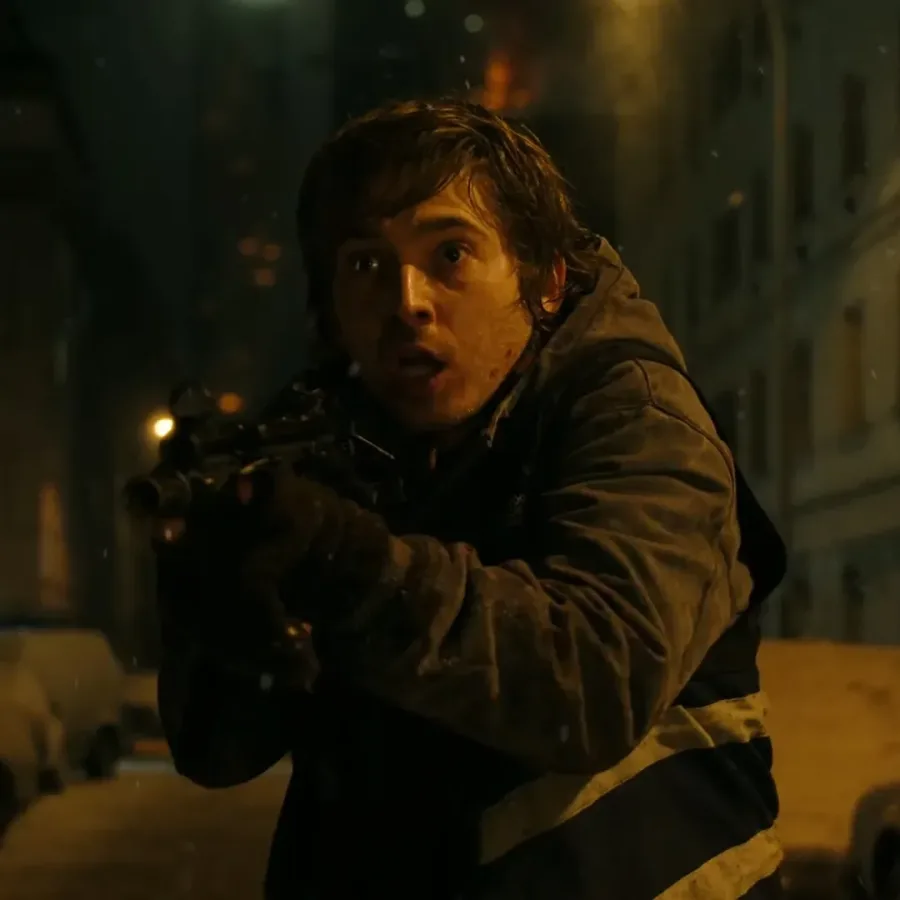
Zach Cregger's Resident Evil has arrived with a notably strong critical reception, opening with a 96% critics score on Rotten Tomatoes at the time of publication. That places the new survival-horror film ahead of every other video game adaptation currently listed on the review aggregator, giving Capcom's long-running franchise a major movie milestone.
The result is especially striking because Resident Evil has not taken the most obvious route to adapting the games. Rather than retelling a familiar story featuring Leon S. Kennedy, Jill Valentine, Chris Redfield, or another established series lead, Cregger's film centers on Austin Abrams as Bryan, an original character. It also presents a live-action Raccoon City that deliberately does not aim to reproduce every detail fans may know from the games.
That creative decision has generated skepticism among portions of the fan community. But the film's early numbers indicate that critics, and thus far many viewers as well, have responded positively to Cregger's effort to capture the tension and atmosphere of the games without simply recreating their plots.
A new benchmark for game adaptations
With its 96% critics score, Resident Evil has moved ahead of several video game films that had previously stood among the best-reviewed examples of the format. Sonic the Hedgehog 3 sits at 86%, alongside Werewolves Within, while The Angry Birds Movie 2 has a 72% score.
For useful background on this topic, read Toys 'R' Us Plans 120 New US Stores for the Holiday Season.
Review-aggregation rankings can always change as more critics submit reviews, particularly during a film's opening days and weeks. A 96% score at launch is nonetheless an unusually high bar for a live-action adaptation of a video game property. The genre has spent decades fighting the perception that games are difficult to translate into films, whether because of their interactive nature, their dense mythology, or the challenge of satisfying players while still making a movie that works for newcomers.
There have been clear signs of progress in recent years, especially as studios have approached game adaptations with greater confidence in the source material's identity. Even so, critical results have remained inconsistent. Audience-friendly hits do not always become critic favorites, and projects with recognizable characters or major budgets have still struggled to find the right balance between franchise references and a coherent standalone story.
The Resident Evil series itself illustrates that complicated history. Capcom's survival-horror games have inspired numerous live-action films, animated projects, and other screen adaptations. Yet the new movie arrives carrying expectations shaped both by affection for the games and by viewers' varied reactions to the franchise's previous onscreen incarnations.
For another perspective on this story, read Zach Cregger's Resident Evil Opens With a 96% Critics Score, Taking Video Game Movie Record.
Cregger's approach favors survival-horror feeling over a direct retelling
The central point of debate around Cregger's film has been its use of Bryan rather than a familiar game protagonist. Fans who wanted a film built around Leon, Nemesis, or a specific storyline from the games have had reason to question why the adaptation would step away from some of its most recognizable elements.
Cregger has acknowledged that disappointment directly. He explained that he understands why some fans have been waiting to see particular stories receive a faithful live-action treatment, while also recognizing that he personally struggled to connect with earlier Resident Evil movies because they did not resemble the version of the franchise he loves.
"I did not really appreciate the sentiment that, 'We've been waiting forever for Leon's story,'" Cregger said. "And I appreciate that, and I'm sorry that's not the story I'm bringing."
Rather than presenting his movie as an attempt to replace the games' established narratives, Cregger has framed it as a new Resident Evil story driven by the sensation of playing them. The focus is on putting its protagonist through an escalating nightmare: a survival-horror setup where pressure, danger, uncertainty, and an oppressive setting matter as much as lore recognition.
That distinction may be essential to understanding why the film's reception has been so favorable. A direct adaptation is often measured scene by scene against the original, with every altered character, missing creature, or changed setting becoming a point of contention. An original narrative has its own risks, especially in a franchise as recognizable as Resident Evil, but it can give filmmakers room to build suspense around a character whose fate is not already known to longtime players.
Cregger's previous horror work helped establish expectations that he would bring a distinct sensibility to the material. The early reviews suggest that this sensibility has translated effectively to the franchise, emphasizing a leaner survival-horror experience rather than treating the brand only as a vehicle for familiar names and iconography.
Audiences are also responding positively in the opening window
The initial audience response is nearly as impressive as the critics score. After more than 500 verified ratings, the film holds a 91% audience score on Rotten Tomatoes. That does not erase the online criticism from viewers who wanted a closer connection to the games' canonical characters and stories, but it does suggest the objections have not become the dominant reaction among people who have actually seen the movie.
For a property with such an established fan base, that audience result matters. Resident Evil players have different entry points into the series: some know the original survival-horror releases, others came in through the action-focused middle era, and many have embraced the newer games that returned the franchise to a more intimate and frightening perspective. Any movie attempting to represent the series has to navigate those different expectations.
Cregger's stated hope is that skeptical fans will still recognize the affection for the games embedded in the film, even if the plot is not a recreation of a specific installment.
"My only hope is that they'll see the movie regardless of their skepticism or their disappointment that I'm not telling some of the stories that the games tell so well, and they will feel seen when they do watch the movie," Cregger said. "This is me telling a Resident Evil story."
That is a significant claim for an adaptation that has chosen an original lead and a modified version of its famous setting. It asks audiences to judge the movie by its understanding of the franchise's core identity rather than by a checklist of plot points. Based on the early critic and viewer scores, many have found that argument convincing.
A strong start, but an evolving record
It is important to view the record with the usual opening-week caution. Rotten Tomatoes scores are snapshots, not permanent verdicts. More reviews could raise or lower the critics percentage, while the audience rating can shift as the film reaches a broader group of moviegoers. Long-term reputation will depend on more than a launch score: repeat viewings, word of mouth, box-office performance, and the reaction of dedicated fans will all shape where this version of Resident Evil ultimately lands.
Still, the opening is difficult to dismiss. The film has surpassed the 86% marks held by Sonic the Hedgehog 3 and Werewolves Within by a substantial margin, and it has done so while facing unusually close scrutiny over its departures from expected franchise material. The movie is also projected to challenge the box-office record for the wider Resident Evil film franchise, adding commercial momentum to its critical success.
One published review awarded the movie an 8 out of 10, describing it as a straightforward but exciting survival-horror story that gains strength from Cregger's directorial instincts and its concentrated focus on an increasingly terrible night for its hero. That assessment aligns with the broader impression conveyed by the initial reception: this is a film that appears most interested in urgency, dread, and survival rather than exhaustive universe-building.
For video game movie fans, the bigger story is not simply that one title has temporarily claimed the highest score. It is that the record holder is a horror film built around an original character within a beloved game universe. That outcome suggests there may be more than one viable path for adaptations. Faithful recreations can work, but so can new stories that respect a game's tone, mechanics, and emotional experience.
Resident Evil now has time to prove whether its opening reception will hold. For the moment, though, Cregger's adaptation has achieved something rare: it has turned a controversial creative gamble into the best-reviewed video game movie on Rotten Tomatoes, while earning strong early approval from audiences who entered Raccoon City expecting to be scared.
Community
Discussion
Start the conversation.
No comments have been posted yet.