

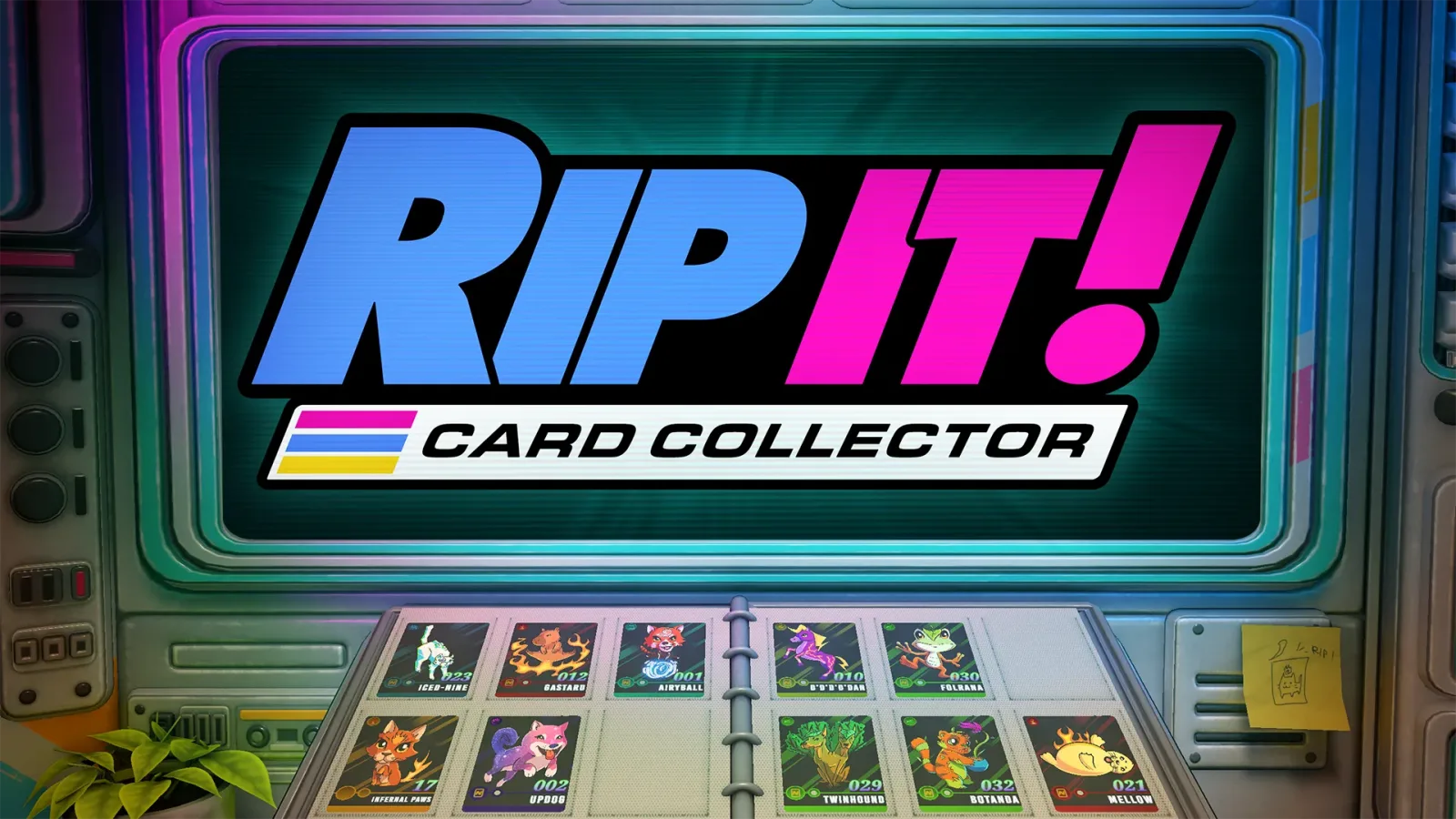
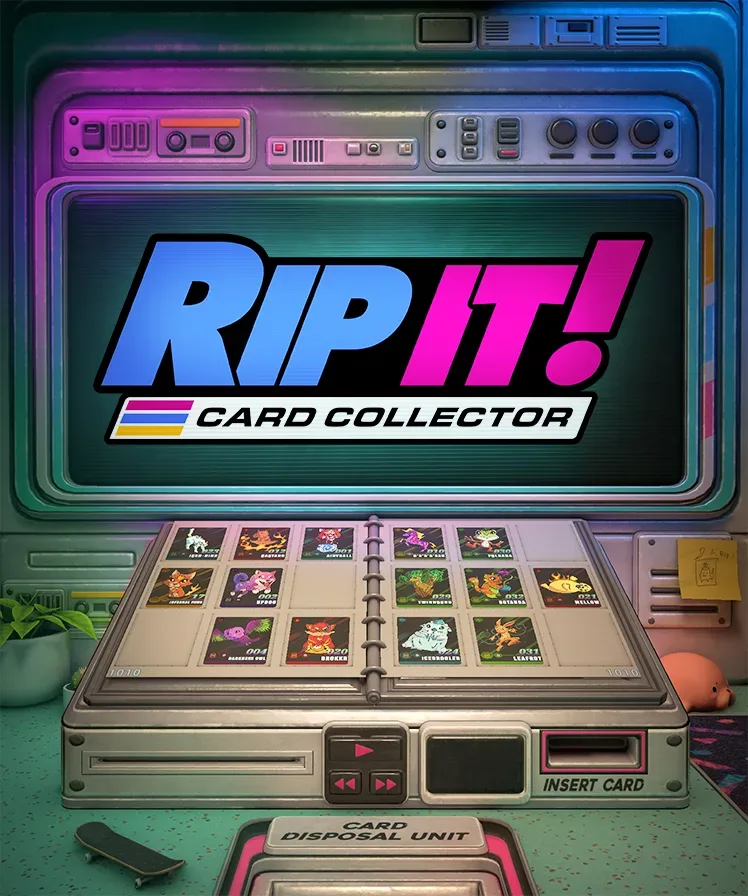
Rip It! Card Collector, a card-collecting incremental game from Cybernetic Walrus, is preparing for a full Steam release on October 30, 2026. Before then, players can try its core loop through a free demo available now on Steam.
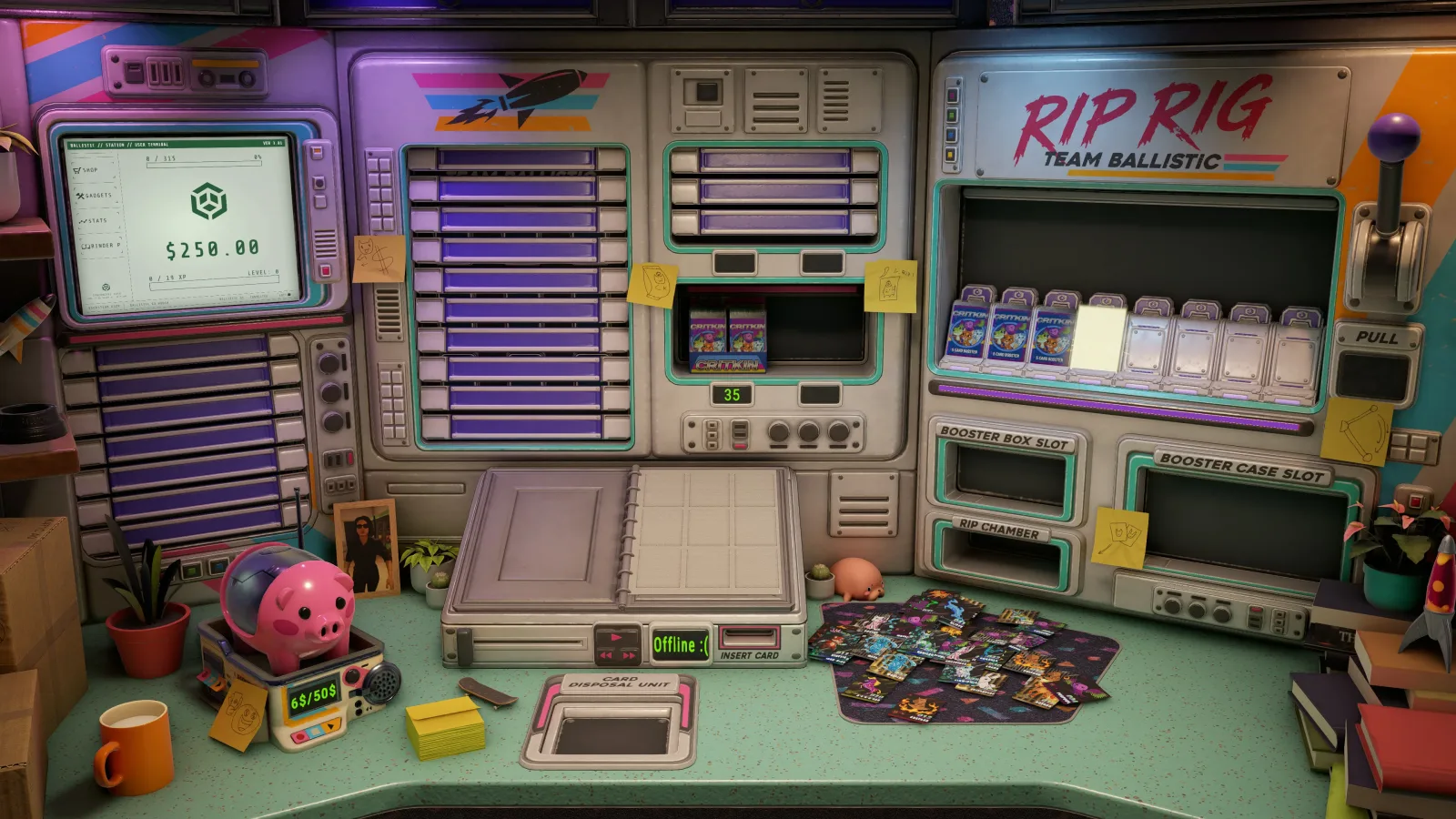
The game is built around a deliberately hands-on take on the familiar thrill of opening collectible card packs. Rather than presenting card acquisition as a background menu process, Rip It! Card Collector turns each stage into part of the experience: packs are fed into a workstation, mechanisms are operated, cards emerge, and pulls can then be sorted, stacked, filed, sold, or kept. The goal is ultimately to build a complete collection while steadily transforming a small manual setup into a much larger processing operation.
A newly released trailer focuses on that rhythm of ripping and organising packs. Its central appeal is not simply the possibility of a rare pull, but the repetition surrounding it: the physical-seeming actions of flicking switches, pulling levers, feeding packs into equipment, and dealing with the growing pile of cards that results. For collectors who enjoy cataloguing and optimising just as much as chasing an elusive card, that structure is likely to be the heart of the game.
A demo with 369 cards to hunt
The free demo offers 369 cards
For useful background on this topic, read STARDUST: Wish of Witch Heads to PS5 and Nintendo Switch 2 With Physical Edition Planned.
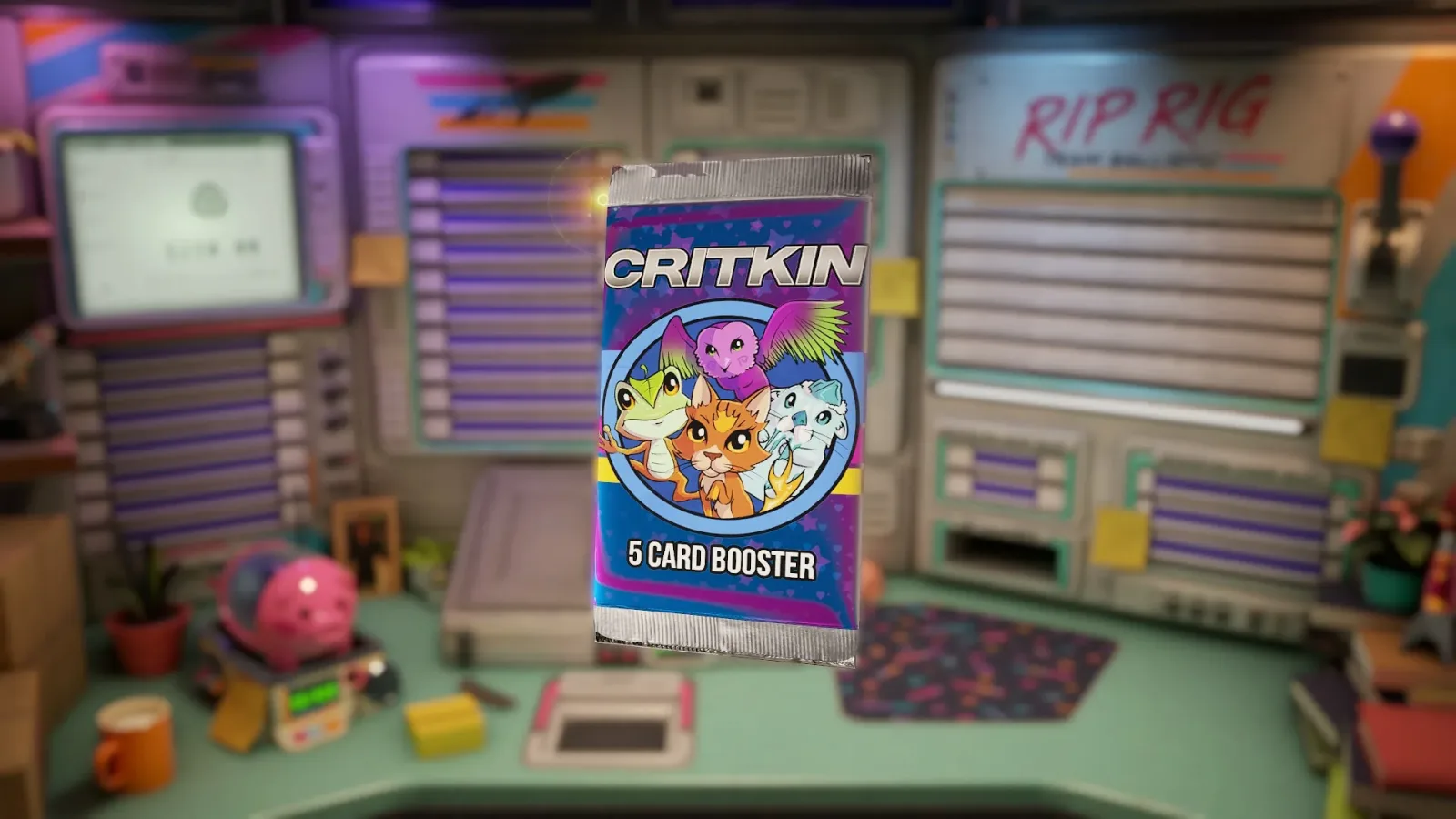
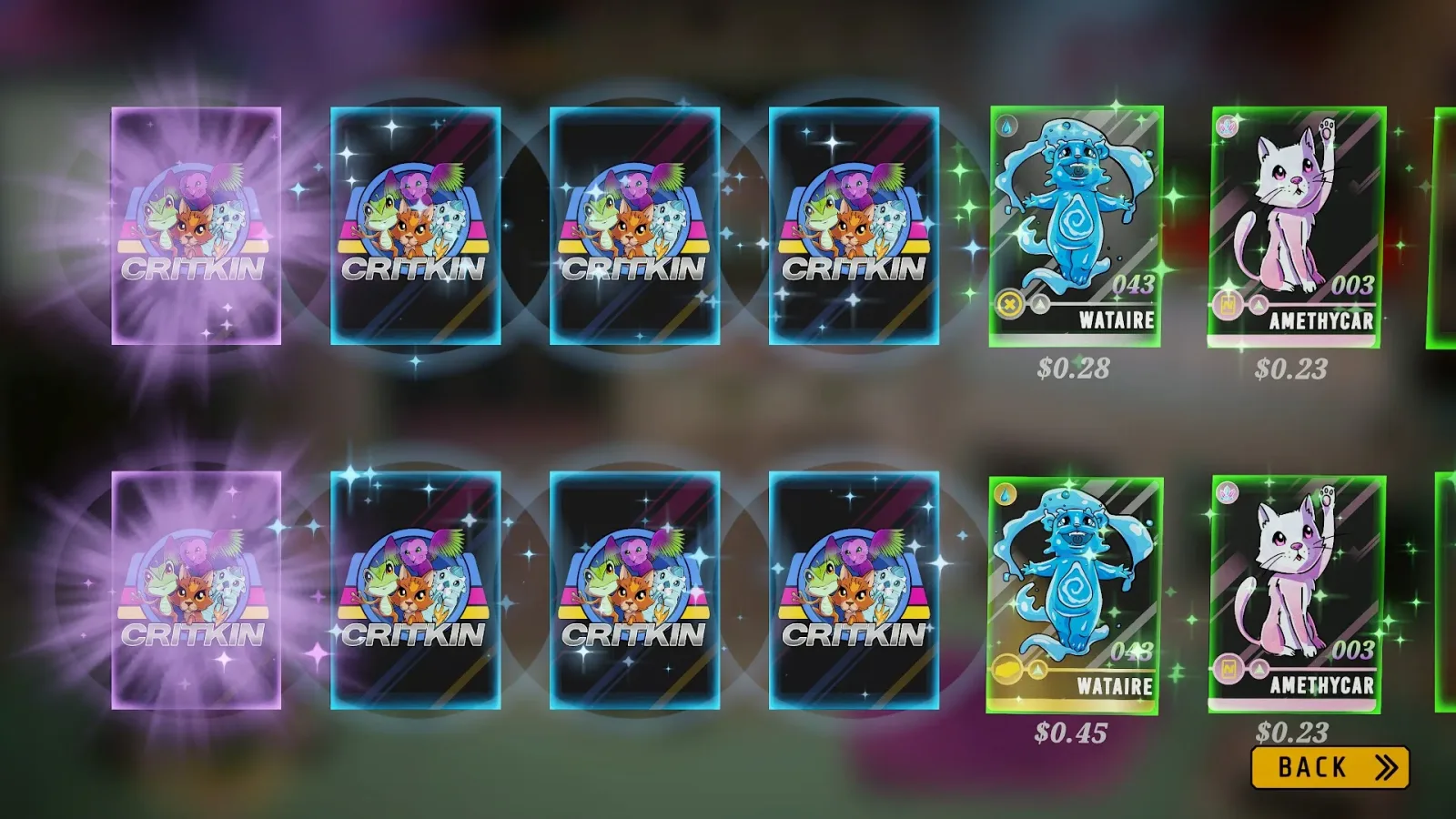
Rarity is a key part of the chase. Players can open pack after pack in search of common, rare, and mythic cards, with promotional cards and special finishes also forming part of the broader collecting proposition. That means a collection is not merely a checklist of card names. Finishes and unusual pulls can matter too, reinforcing the sense that one more pack might produce something different.
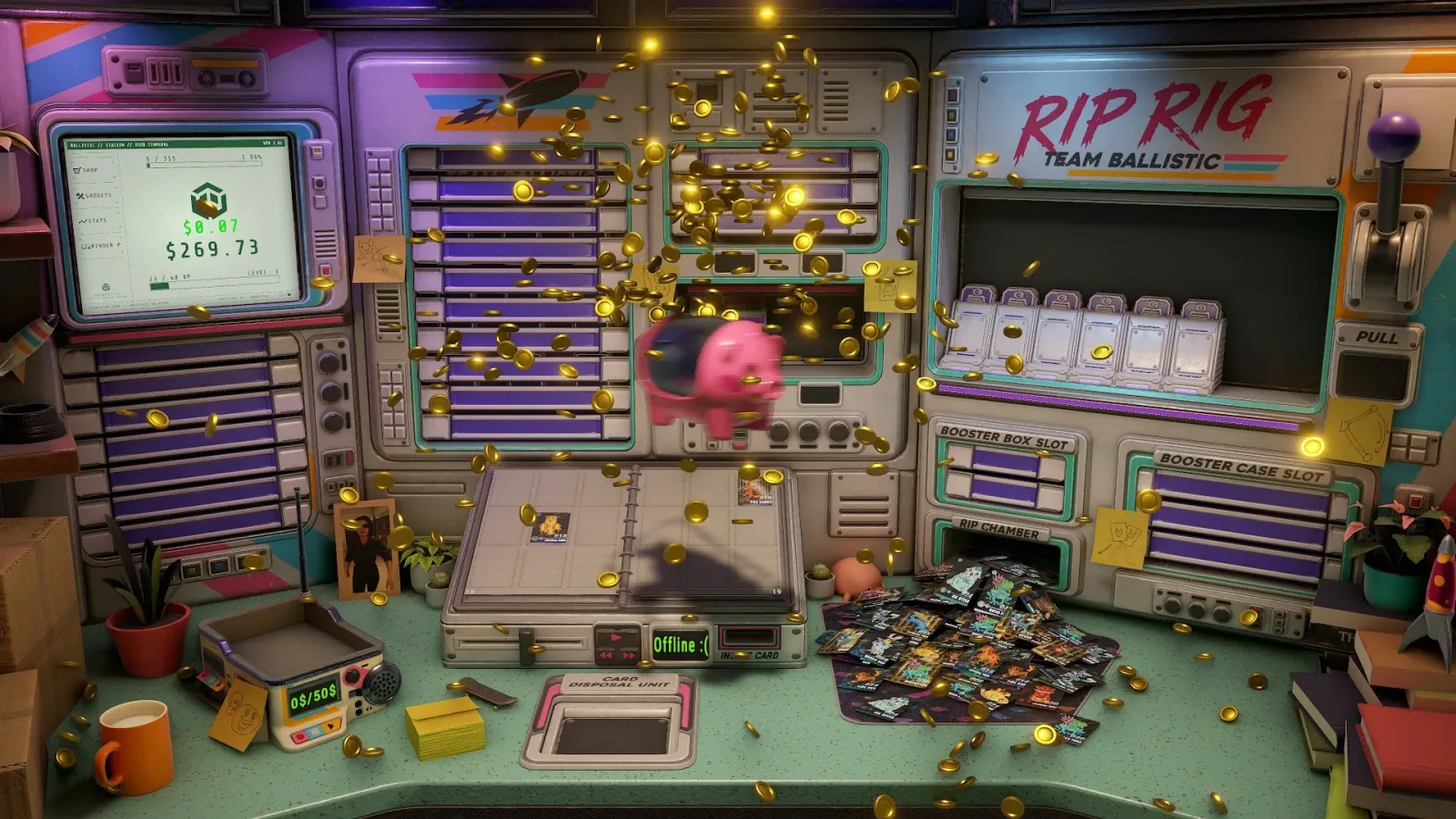
The demo also provides an early opportunity to experiment with the game's equipment progression. Players begin with a retro-futuristic pack-ripping workstation, a compact setup suited to the first steps of a growing collection. As cards accumulate and duplicates begin to pile up, the process can become more elaborate through gear upgrades.
From manual opening to a mechanised Rip Rig
At the start, opening packs is comparatively manual. The player is expected to interact with the machinery and then handle the cards that come out. Over time, however, Rip It! Card Collector shifts toward a more industrial workflow. The workstation can be developed into what the game calls a mechanised Rip Rig, expanding the capacity to process packs and helping turn a modest collecting table into a dedicated command centre.
For another perspective on this story, read Rip It! Card Collector Demo Is Live Before October 30 Steam Launch.
That upgrade path gives the game its incremental framework. Duplicate cards can be sold, generating money that can be reinvested in new equipment. Better gear supports a more efficient workflow, which in turn allows more packs to be processed. More packs mean more chances at missing cards, premium finishes, rare pulls, and other collection targets.
It is a simple loop on paper, but its presentation appears designed to make the process feel more tangible than an ordinary number-driven incremental game. Instead of reducing every upgrade to a click in a static interface, the game emphasizes a workbench full of moving parts and direct actions. Packs tumble through machinery. Cards need to be pulled out and organised. Filing away a successful pull is positioned as part of the reward rather than a task to skip past.
The retro-futuristic visual direction also supports that concept. The player is not just buying abstract production multipliers; they are building out a stylised card-processing setup. As the collection grows, so does the apparent scale and sophistication of the equipment used to keep it under control.
The satisfaction of sorting is part of the point
Many card games focus on deckbuilding, competitive play, trading, or battling. Rip It! Card Collector instead puts the collecting ritual at the centre. Its gameplay description highlights pulling, sorting, stacking, and filing cards, all in service of moving toward a complete set.
That distinction may appeal to players who like the structure of a collection without needing a competitive metagame attached to it. The tension comes from what a pack might contain and from deciding how to manage the results. A duplicate can be disappointing when it is first revealed, but it also has a practical use if selling it helps finance the next upgrade. A standard pull may fill a gap in the binder, while a foil or gold version adds another layer to the pursuit.
There is also an organisational element that could become increasingly important as the catalog expands. A few dozen cards can be handled easily, but a collection numbering in the hundreds or thousands naturally creates a need for systems. The game's mechanics appear to embrace that escalation rather than treating it as a nuisance: players will be expected to optimise their setup as the volume of cards and packs rises.
For some players, that can be as satisfying as the discovery itself. The appeal of collectible cards often includes the orderly afterglow after an opening session: arranging cards by type, rarity, or finish; spotting what is still missing; and seeing a binder or storage space gradually become more complete. Rip It! Card Collector turns that feeling into its main progression model.
More than 1,800 cards in the full game
Cybernetic Walrus plans for the full release to feature more than 1,800 cards
The final card total also gives greater context to the game's duplicate economy and machinery upgrades. With a catalog of that size, the player will presumably need to process a considerable number of packs on the way to a full collection. The ability to sell extra cards and improve the Rip Rig is therefore not just a convenience; it is the engine that supports the ongoing hunt.
The game's feature set specifically highlights three connected goals:
- Collecting and organising a library of more than 1,800 cards.
- Building up a pack-opening command centre, progressing from manual ripping to the mechanised Rip Rig.
- Searching for rare pulls, promotional cards, and special card finishes.
Together, those systems suggest a game structured around both immediate and long-range rewards. Each pack can create a quick moment of anticipation, while each sale, upgrade, and newly filed card pushes the overall collection forward. Players who reach a temporary dry spell in rare pulls still have equipment progression to pursue, and players focused on upgrades still have reasons to inspect each new batch of cards closely.
A focused preview ahead of October 30
The current demo provides a relatively contained version of that loop. Its 369 cards and multiple finishes offer enough room to test the hunt for variants, while the included upgrading systems show how the player's modest starting workstation begins its journey toward a larger operation.
It is also a chance to see whether the game's tactile approach lands as intended. The premise depends on the opening process feeling enjoyable even when the results are not extraordinary. If feeding packs through machinery, retrieving cards, and arranging the results has the satisfying rhythm the game is aiming for, then routine openings may remain engaging between major rare finds.
That tactile focus is particularly notable in an incremental format. Incremental games often thrive on automation, efficiency, and the satisfaction of watching a system grow beyond its early limitations. Rip It! Card Collector uses those ideas, but grounds them in a hobbyist fantasy: the dream of having an increasingly elaborate personal machine dedicated to opening, processing, and organising collectible card packs.
Players can now see the early version of that idea for themselves through the free Steam demo. The full version of Rip It! Card Collector is scheduled to arrive on Steam on October 30, 2026, bringing its complete collection of more than 1,800 cards, additional finishes, and the full journey from a small pack-ripping station to an upgraded Rip Rig.
Community
Discussion
Start the conversation.
No comments have been posted yet.