

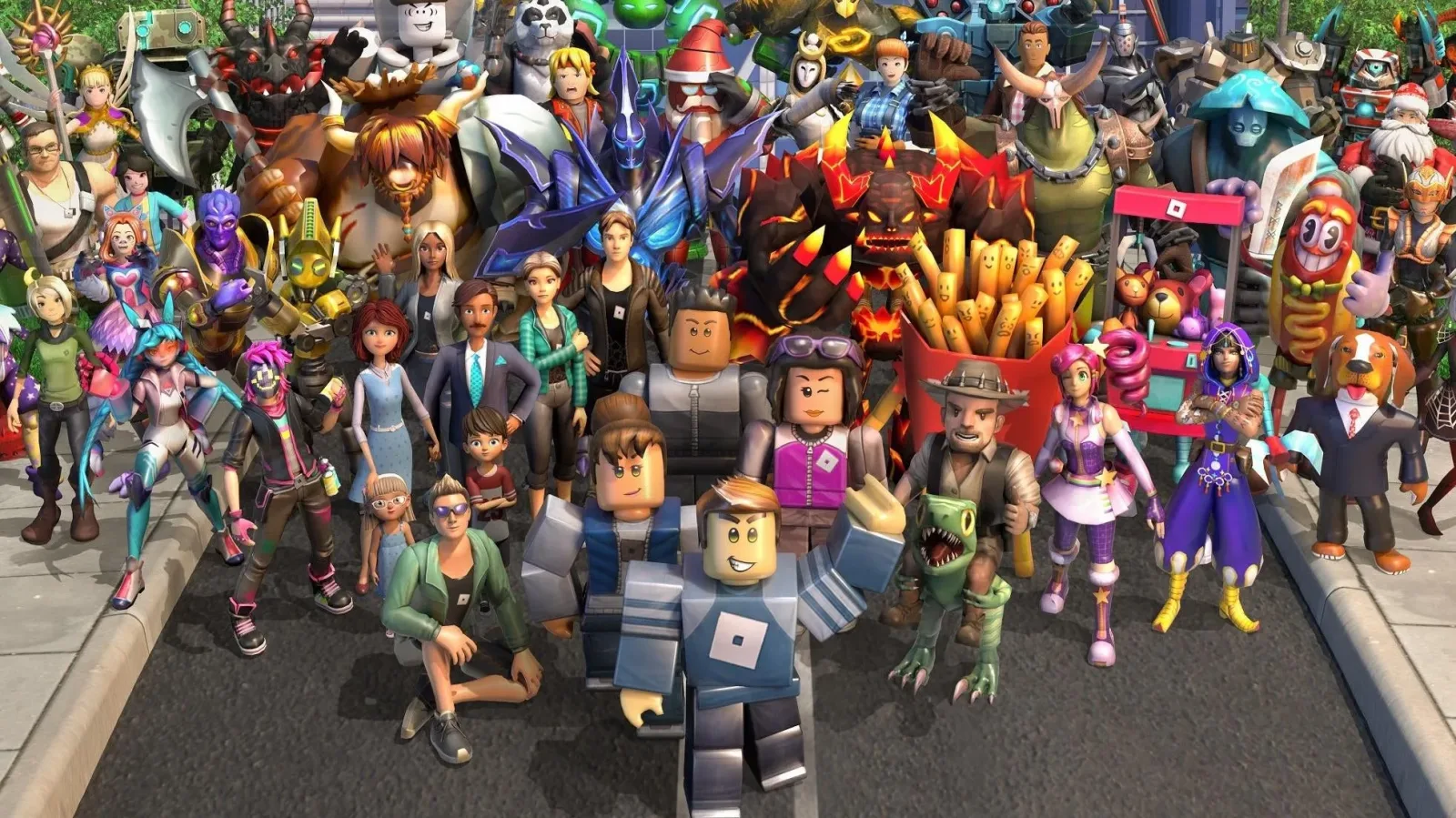
Roblox is making no secret of its belief that generative AI will dramatically accelerate game development on its platform. In its third-quarter earnings materials, the company described what it sees as a major turning point for AI adoption, saying AI-assisted creation, automated coding, and supported asset generation are reducing the time between an idea and a playable game. It also expects those tools to make it faster to adapt games for additional devices.
That vision is ambitious, but it also raises a difficult question for players and developers: what happens when an already crowded platform makes it even easier to produce and publish games at extreme speed?
Roblox reported that more than 80% of its top 100 experiences, ranked by hours engaged, used AI tools to speed up their development during the previous month. It also said daily asset uploads to the Roblox cloud tripled month over month. Those figures underline the scale of the company's AI push. They also point toward a potentially enormous increase in games, updates, objects, and other material competing for players' attention.
More choice is not automatically a problem. Roblox has been home to inventive projects for years, and its accessible tools have helped many people take their first steps into game creation. For younger creators in particular, making a simple multiplayer experience, learning basic logic, and sharing a project with friends can be a meaningful entry point into development.
For useful background on this topic, read Bungie Says Destiny 2 Plans Are Not Dependent on Marathon's Success.
But the platform's immense scale has long created a discovery problem. Finding thoughtful, original work can be difficult amid an endless stream of clones, short-lived trends, monetization-heavy experiences, and hastily assembled projects. AI tools may help creators iterate, prototype, or handle repetitive tasks. Yet they can also lower the effort required to release something that is barely finished, derivative, or designed solely to chase a current engagement trend.
From Roblox creation to a wider ecosystem
The concern is not limited to the Roblox app itself. The company's earnings report highlighted two broad initiatives: Roblox Everywhere and The Universal Player. Together, they suggest Roblox is pursuing a future in which content can move both into its ecosystem and outward from it across a far wider range of devices and storefronts.
The Universal Player initiative includes a stated goal of allowing existing console, PC, and mobile games to be imported into Roblox. Roblox describes AI as a key part of that process, with the technology intended to bring games into its cloud platform and transform them for multiplayer use, broad device support, instant joining, user-generated-content updates, local 3D functionality, and access to the company's discovery, safety, communication, and monetization services.
In theory, that proposition could appeal to some smaller developers. Reaching Roblox's reported audience of 138 million daily active users is an attractive possibility, particularly for teams struggling to get noticed on conventional PC and mobile storefronts. An additional route to players can be valuable in an industry where releasing a good game is only one part of the challenge; persuading people to find it is often just as hard.
At the same time, importing a game into an ecosystem with millions of experiences does not solve discoverability by itself. It may simply relocate the problem. A small developer could gain access to a huge audience, but that audience is also being offered an ever-growing catalogue shaped by recommendation systems, trends, advertising, social networks, and rapid-fire releases. If AI makes it possible for more creators to publish more quickly, the competition for attention may become still more intense.
There are additional unanswered practical questions. The company's language outlines an objective rather than a fully detailed, publicly demonstrated workflow. It remains unclear how broadly the import process could apply across different game engines, technical requirements, control schemes, multiplayer designs, business models, and platform-holder rules. A complex PC or console game is not necessarily easy to convert into a form that works smoothly across phones, lower-powered hardware, and Roblox's existing services.
"Build once, publish anywhere" remains a major unknown
Roblox Everywhere points in the other direction. Roblox has previously discussed pathways that would allow creators to build games through Roblox and publish them on other app stores. The company's earlier outline referenced mobile, PC, and consoles, while its latest plans indicate it expects the initiative to gain momentum early next year.
The broad pitch is straightforward: creators could make a game once and distribute it more widely. If realized, that could mean Roblox-made games appearing beyond the familiar Roblox client, potentially across PC, mobile, and console storefronts. Steam, the App Store, Nintendo's eShop, Xbox's Microsoft Store, and PlayStation's digital store are obvious examples of the kinds of destinations players may wonder about.
However, Roblox has not specified exactly which stores are participating, if any agreements have been finalized, or what requirements creators would need to meet before a game could be listed elsewhere. Platform holders each maintain their own certification processes, technical standards, content policies, age ratings, monetization rules, and submission procedures. "Build once, publish anywhere" is an appealing slogan, but the details will determine whether it becomes a genuinely open distribution option or a more limited arrangement.
For players, the prospect has mixed implications. A wider release model could let polished Roblox projects reach people who would never otherwise install or use Roblox. That could be especially useful for standout social games, inventive co-op experiences, or ambitious projects that began life within Roblox's toolset. The platform has produced genuinely notable work over the years, and a better route for the strongest games to find a broader audience would not be a bad outcome.
The risk is that external storefronts receive not merely a curated selection of the best Roblox projects, but another mass of cheaply produced games competing in already overwhelmed digital catalogues. PC storefronts in particular have faced ongoing complaints over low-effort releases, confusingly similar titles, asset flips, and projects built to exploit recommendation algorithms or fleeting trends. A frictionless pipeline from a platform embracing AI-assisted volume could compound those pressures.
Browser access could make the ecosystem even more immediate
Roblox is also preparing a feature meant to let people play Roblox experiences directly through Chrome without first downloading the Roblox client or installing separate software. The company expects that capability to be available by the end of the year.
Reduced installation friction has obvious advantages. A browser-play option could make it easier to share a game, invite friends, test an experience, or reach users on devices where installing an app is inconvenient. For creators, it could remove a significant barrier between a link and a potential new player.
Yet ease of access also increases the importance of quality controls, transparent labeling, safety measures, and reliable discovery tools. Roblox presents its services as including safety and communication features, but an expanded browser pathway and a larger publishing footprint will put those systems under further scrutiny. This is particularly significant because Roblox has historically been strongly associated with younger audiences, even as it now seeks to broaden its appeal.
The earnings report is explicit about the company's interest in the over-18 audience. Roblox wants to repeat among older users the kind of growth it has achieved with younger cohorts. That is a logical business goal for a platform looking to expand engagement and revenue, but it creates an unusual tension if much of the incoming content is made quickly by inexperienced creators using increasingly powerful automation tools.
Older players may welcome more sophisticated experiences and better access across devices. They are less likely to be persuaded, however, by a catalogue dominated by rushed, repetitive, or aggressively monetized projects. The challenge for Roblox will not be generating supply. Its own figures suggest supply is already accelerating. The difficult task is ensuring that players can identify worthwhile games without having to sift through an even larger pile of noise.
AI can assist creativity, but volume is not a quality strategy
AI-assisted development is not inherently opposed to creative work. Developers can use automation for testing, scripting support, asset organization, localization, accessibility work, and iteration. Used carefully, such tools could help small teams spend more time on design decisions that only people can make: mood, pacing, mechanical depth, community management, and a distinct artistic point of view.
But Roblox's emphasis on an "explosion" of content reflects the industry's most troubling AI sales pitch: that faster output is automatically a sign of progress. Games are not improved simply because more of them can be generated, converted, updated, or distributed. Players already have more games than they can reasonably browse. Developers already face a punishing struggle to stand out. Storefronts already have imperfect systems for surfacing quality work and limiting abuse.
Roblox's plans could still produce real opportunities, especially if the company builds strong editorial, curation, moderation, and discovery systems around them. A carefully managed route for excellent Roblox projects to reach PC, mobile, Nintendo, PlayStation, and Xbox audiences could benefit creators and players alike. Likewise, tools that help developers handle tedious production work without replacing creative judgment can be useful.
For now, though, the company's announcements leave major questions unresolved. Which games will be imported? Which external stores will accept Roblox-published projects? How will technical and policy hurdles be handled? Most importantly, how will worthwhile games remain visible when AI-assisted production is explicitly being encouraged to grow at breakneck speed?
The next phase of Roblox may be defined less by whether it can create an enormous amount of content than by whether it can help players find the work that deserves their time. In a marketplace already saturated with games, an even bigger firehose is not, by itself, a compelling answer.
Community
Discussion
Start the conversation.
No comments have been posted yet.