

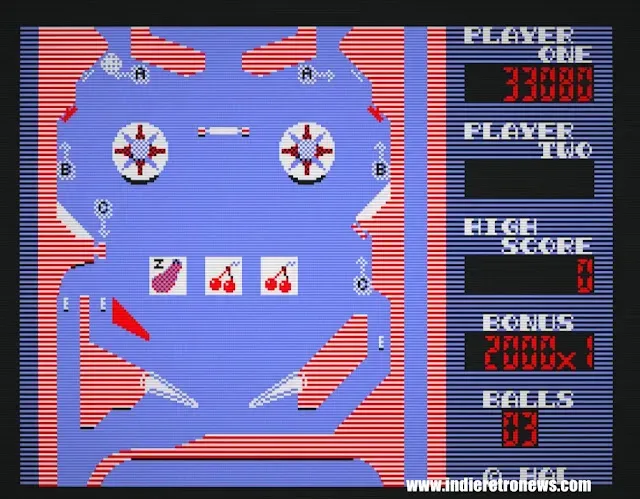
Rollerball CPC has arrived as a new Amstrad CPC homebrew release, bringing HAL Laboratory's 1984 MSX pinball game to another defining machine of the 8-bit computer era. The conversion is notable not simply because it recreates an older game on different hardware, but because its developer says it runs Rollerball's original code directly on the CPC. That approach is intended to preserve the game's established physics, scoring behavior, and distinctive multi-screen table design while giving the presentation a substantial CPC-focused overhaul.
Released on September 28, 2026, Rollerball CPC is designed for players with an Amstrad CPC 6128, or an Amstrad CPC 464 or 664 fitted with a 128K memory expansion. Both keyboard and joystick control options are supported. For retro-computing enthusiasts, the project represents the kind of technical preservation effort that can make homebrew releases especially interesting: it is both a playable adaptation and an attempt to retain the character of the original software as closely as possible.
An MSX Pinball Game Reaching a New 8-Bit Platform
The original Rollerball was released for MSX in 1984 by HAL Laboratory, a company whose long history in games would later become closely associated with Nintendo franchises and characters. In its original form, Rollerball was a pinball game built around a vertically arranged table that moves between sections rather than presenting the entire playfield at once. The design includes familiar pinball elements such as bumpers, bonus lanes, score systems, and the constant need to keep the ball in play.
Pinball video games can appear deceptively straightforward to convert. A table, a ball, flippers, targets, and score counters may sound universal, but the exact feel of a digital pinball game depends on a long list of small interactions. How quickly the ball falls, its response to bumpers, the timing of flipper input, scrolling behavior, and the way scoring events are triggered all contribute to the final experience. A version that only resembles the original visually can still play very differently.
For useful background on this topic, read Ayaneo's Konkr Pocket Block Is a $79 Vertical Retro Handheld With Game Boy-Inspired Design.
That is why the decision to use original game code is central to Rollerball CPC's identity. Rather than building a loose reinterpretation of the MSX game, the project aims to bring its gameplay logic to the CPC in a form that remains true to the 1984 release. The stated result is the same ball physics and the same gameplay systems that made the MSX version memorable, now operating on Amstrad hardware.
Original Code, Reworked Presentation
While Rollerball CPC is intended to preserve the game's behavior, it is not presented as a completely untouched technical transplant. The developer has reworked the audiovisual side of the game to suit the Amstrad CPC's architecture. This is an important distinction: compatibility with original code does not mean every part of the original production can simply be moved over unchanged.
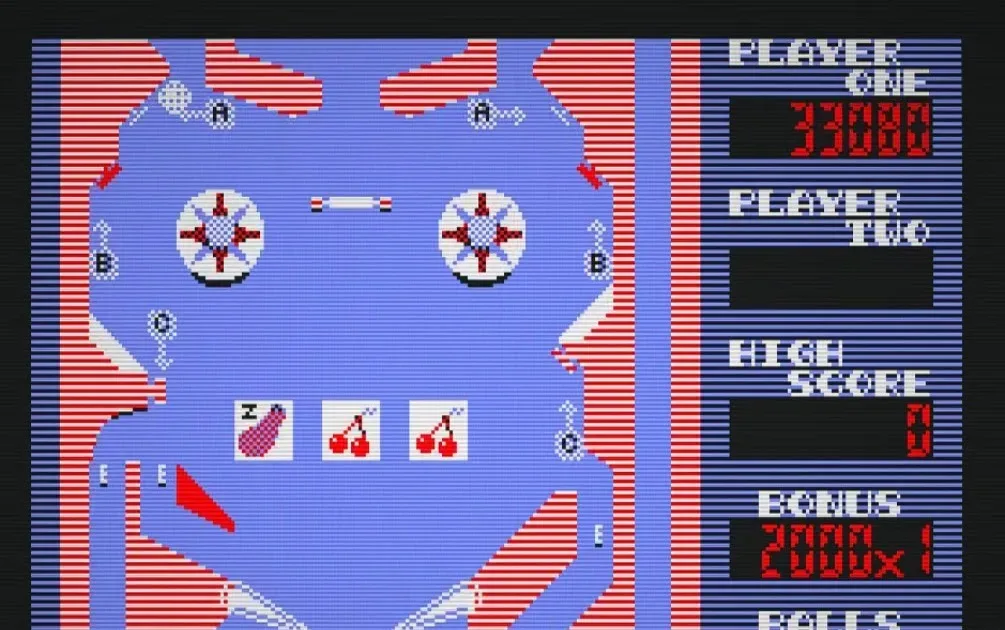
The CPC edition replicates the MSX version's native 256 × 192 resolution. It uses Mode 1 dithering to recreate the original color look within the capabilities of the Amstrad system. Dithering is a technique that arranges pixels or patterns of colors together to suggest shades and visual detail that may not be available as a single direct color choice. On period hardware, thoughtful use of dithering can make a major difference, particularly when a conversion is trying to maintain the identity of art created for a different machine.
Vertical scrolling has also been implemented to accommodate Rollerball's multi-section table. This feature is essential to the game's structure rather than being a cosmetic extra. The playfield extends beyond one static screen, so the display needs to follow the ball as it moves through the table. A successful scrolling system needs to stay readable and responsive during the rapid, unpredictable action of a pinball game, where players must quickly react to the ball's position and the status of nearby flippers or targets.
Rollerball CPC additionally uses a double-buffered display. In simple terms, double buffering allows one image to be prepared while another is shown, then switches between them at the appropriate moment. The release uses this method to avoid screen tearing. That is particularly welcome in a game with frequent vertical movement, bouncing ball action, and a scrolling playfield, since visible display artifacts could otherwise distract from precise timing.
Sound Rebuilt for the CPC
The conversion's work extends beyond the screen. Rollerball CPC retains the original soundtrack and effects in rearranged form for the Amstrad CPC sound chip. Audio adaptation is often one of the more visible challenges in cross-platform projects from this era. Different systems have different sound hardware, which means compositions and effects may need to be restructured to preserve their rhythm, texture, and purpose.
For a pinball game, sound does more than provide background atmosphere. Effects communicate contact with bumpers and other table features, while musical cues can help establish the pace of play. The goal in this case is not merely to add new CPC audio, but to carry over the recognizable material of Rollerball in a version tailored to the machine that is running it.
Together, the graphics, scrolling, double buffering, and sound work illustrate the balancing act at the center of the project. Rollerball CPC seeks authenticity in the gameplay layer while accepting that visual and audio output require careful platform-specific treatment. That combination makes the release more ambitious than a basic port that only targets functional playability.
Hardware Requirements and Control Options
Players intending to run Rollerball CPC need to account for its memory requirements. The game supports the Amstrad CPC 6128 as standard. Owners of the earlier CPC 464 and CPC 664 models can also use it, provided those machines have a 128K memory expansion. The need for expanded memory reflects the scale of the conversion work, including its presentation and the resources needed to support the game on its new hardware home.
Keyboard and joystick options are both available. Offering both is especially fitting for an Amstrad release, since CPC owners have long used a mixture of keyboard input and joystick hardware depending on their setup and preferences. Pinball is a genre where controls can strongly affect comfort: players need quick, repeated flipper presses and the confidence that an input will register at the exact moment it is needed.
The release is therefore aimed squarely at real-hardware users with compatible systems, while also being of interest to the broader preservation and retro-development community. Projects such as this can encourage renewed attention for software that was once limited to one computer family, giving another platform's enthusiasts an opportunity to experience it in a form built specifically for their machine.
A Homebrew Project With an AI Assistance Disclosure
The developer describes Rollerball CPC as a project developed with AI assistance and specifically discloses AI involvement across code, graphics, sound, and text. The disclosure provides useful context for how the conversion was assembled, while the technical claims around the port remain the more immediate point of interest for players: original Rollerball code is said to be running on the CPC, with its graphics and audio adapted for the target computer.
AI-assisted work has become an increasingly visible subject across game development, including in homebrew circles where individual creators and small teams can take on projects that require a wide range of disciplines. In Rollerball CPC's case, the disclosure is clear about the areas in which assistance was used. The finished release can consequently be considered on its own technical and playability merits, including how it preserves the older game's behavior while addressing the very different design constraints of the CPC.
Why Rollerball CPC Matters
Rollerball CPC is a reminder that the retro scene is not only interested in new games made in an old style. It also continues to explore the relationships between classic machines, revisiting titles that were exclusive to one format and finding ways to make them work elsewhere. A direct-code conversion of a 1984 MSX game to the Amstrad CPC is an unusually specific undertaking, but that specificity is exactly what gives it value.
For fans of HAL Laboratory's early catalogue, it offers a new way to approach a lesser-known piece of the company's history. For Amstrad CPC owners, it adds a pinball game built around authentic legacy behavior but enhanced with CPC-targeted visuals, sound, and display handling. And for technical retro fans, the combination of original code execution, 256 × 192 output, dithering, scrolling, and double buffering makes Rollerball CPC a project worth examining beyond the score chase itself.
Nearly four decades after Rollerball first appeared on MSX, its arrival on the Amstrad CPC demonstrates the continued energy of the homebrew community. The game's new version does not treat the original as a loose template. Instead, it aims to retain its foundation while translating the experience into the language of another beloved 8-bit computer.
Community
Discussion
Start the conversation.
No comments have been posted yet.