

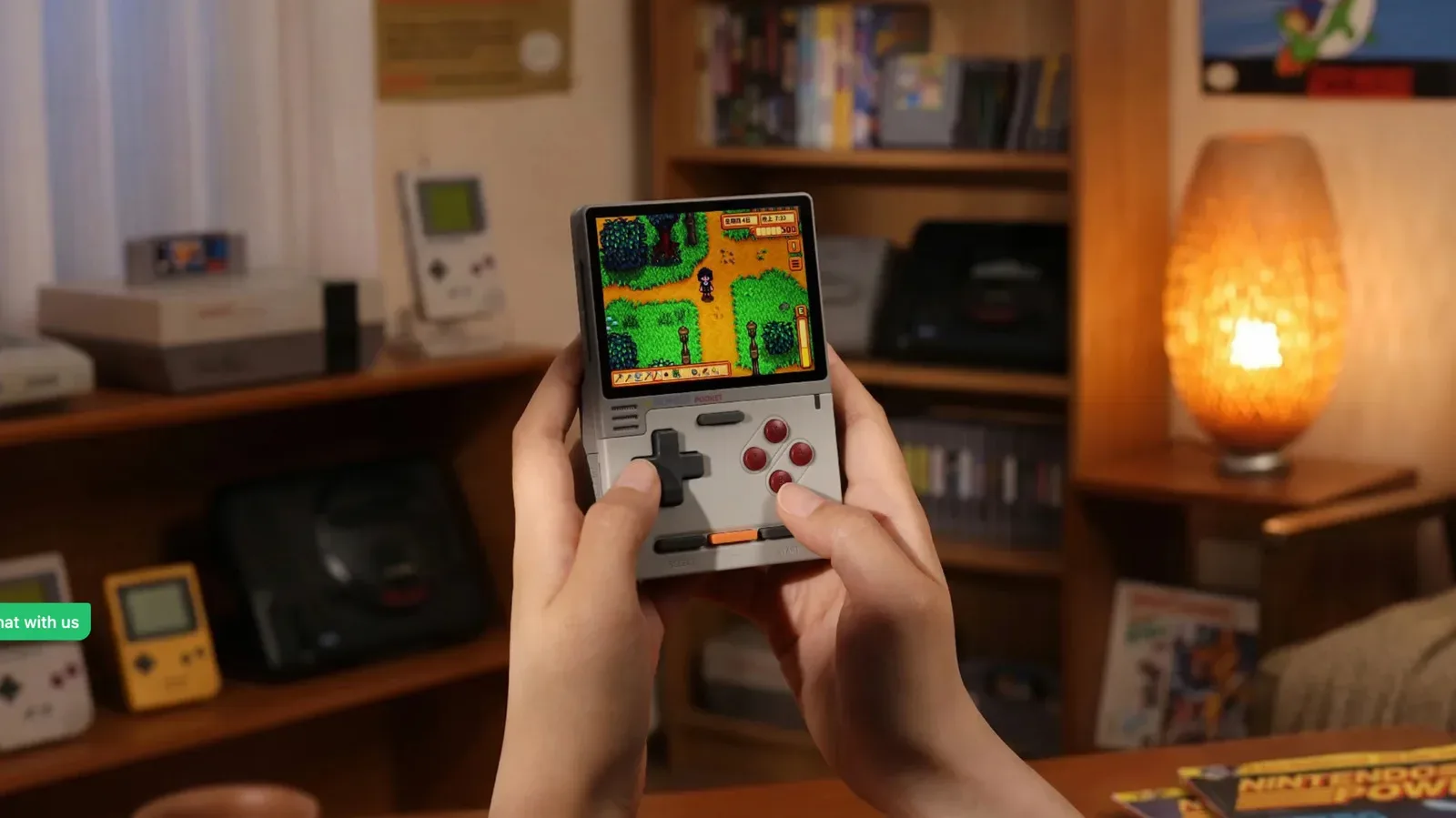
Ayaneo is expanding its handheld lineup in a notably more affordable direction with the Konkr Pocket Block, a compact vertical gaming device built around the familiar proportions of classic portable consoles. The handheld has entered preorder availability with an introductory price of $79, below its stated $89 starting price, and Ayaneo says it expects to begin shipping units by the end of October.
The Pocket Block arrives through Ayaneo's Konkr sub-brand, which has increasingly served as the company's lower-cost alternative to its typically premium handheld hardware. Rather than chasing the large widescreen layouts and high-end PC specifications associated with many modern portables, this model is aimed squarely at players who want a small device for older games and emulation.
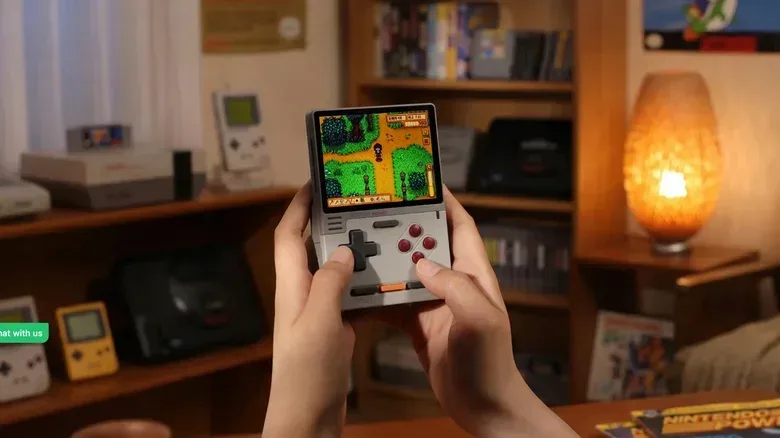
Its vertical shape, compact screen and button-focused front design make the inspiration immediately clear: this is a modern device created for the kinds of games that were originally played on Game Boy-era and other classic handheld hardware. It is not a literal recreation of any single vintage machine, however. The Pocket Block includes contemporary connections, expandable storage and wireless support intended to make it a more flexible everyday retro-gaming device.
A 4:3 Display Built for Older Games
The Konkr Pocket Block uses a 3.3-inch LCD display with a resolution of 960 x 720. That results in a native 4:3 aspect ratio, an important detail for a device primarily intended to run games designed before widescreen displays became standard.
For useful background on this topic, read Dragon Con 2026 Cosplay Showcase Celebrates Gaming Icons and Wild Crossovers.
For retro players, a 4:3 panel can be a more natural fit than the 16:9 screens common in many current handhelds. A substantial number of console and arcade games from the 8-bit, 16-bit, 32-bit and early 3D eras were designed around near-square displays. On a widescreen device, those games are often presented with unused space at the sides or stretched beyond their intended proportions. The Pocket Block's screen is designed to reduce that compromise and keep the original framing closer to what developers expected.
The 960 x 720 resolution also gives the system enough density to present older pixel-based games cleanly while leaving room for scaling options in compatible emulation software. Screen preferences can be highly personal among retro enthusiasts, particularly when it comes to integer scaling, filters and display borders, but the panel's format is clearly one of the Pocket Block's central selling points.
Just as important, the 3.3-inch size keeps the hardware small. That may appeal to players seeking something easier to slip into a pocket or bag than a larger horizontal handheld. The trade-off is that text-heavy games, strategy titles and some later 3D releases may be less comfortable to view than they would be on a bigger screen. Ayaneo is positioning the Pocket Block as a miniature system, and its display size reflects that goal.
Helio G85 Hardware Targets Earlier Console Generations
At the heart of the Konkr Pocket Block is a MediaTek Helio G85 processor. The chip is expected to be suitable for emulating games through the original PlayStation and Nintendo 64 generations. That makes the device relevant for a wide spread of libraries, including classic handheld systems, 8-bit and 16-bit home consoles, arcade platforms and many early 3D games.
Performance expectations should remain realistic, though. The Helio G85 is not being presented as a solution for demanding sixth-generation systems. PlayStation 2 and GameCube emulation may be difficult for the Pocket Block, particularly for games that require more CPU or graphics performance. Compatibility within emulation is rarely a simple generational divide in any case: results can vary between games, emulator builds, settings and the amount of tweaking a player is willing to do.
That limitation does not undermine the machine's purpose. At its price point and size, the Pocket Block is targeted at the enormous catalog of games that came before the PlayStation 2 and GameCube era. For players whose interests center on 2D classics, portable libraries, older arcade releases and selected Nintendo 64 or original PlayStation titles, the hardware could represent a more economical entry point than Ayaneo's more expensive products.
Buyers should view it as a device designed around a specific emulation range rather than an all-in-one portable capable of running every generation. The distinction matters because the handheld market now covers everything from inexpensive retro machines to Windows-based systems built to run modern PC games. The Pocket Block belongs firmly in the former category, with a focus on compactness and accessible pricing over maximum horsepower.
Memory, Storage and Color Options
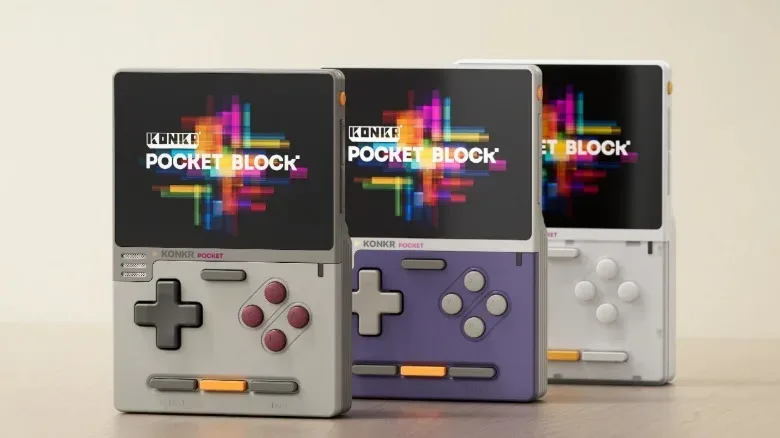
Ayaneo plans to offer two main configurations. The entry model includes 2GB of memory and 32GB of storage. This version is limited to a gray finish and carries the $89 regular starting price, with the current preorder offer reducing it to $79.
A step-up model increases the specifications to 3GB of memory and 64GB of storage. It starts at $99 and will be available in gray, purple and white. The color choices help reinforce the Pocket Block's playful retro identity, especially for buyers who prefer a handheld that looks less like contemporary consumer electronics and more like a tribute to portable gaming's earlier decades.
Neither built-in storage option is especially large by current standards, but the system includes a microSD card slot for expansion. That is a practical feature for retro-focused hardware. ROM collections, artwork, save files and multiple emulator installations can quickly occupy available space, even when the original games themselves are comparatively small. Removable storage also allows users to organize libraries separately or move their data between compatible devices more easily.
The added memory in the higher-tier model may be worth considering for users who want more room for multitasking and potentially smoother operation in Android-based software environments. Still, Ayaneo has not framed the Pocket Block as a high-spec performance handheld, so the best configuration will depend on budget, preferred color and the type of games a buyer plans to use it for.
Modern Essentials in a Classic Shape
Despite its deliberately old-school form factor, the Konkr Pocket Block includes several modern connectivity features. The hardware has a USB-C port, a 3.5mm audio jack, and support for both Wi-Fi and Bluetooth.
USB-C provides a current standard for charging and data connections, while the 3.5mm port remains particularly welcome on handhelds intended for personal play. Wired headphones are still useful for travel, latency-sensitive rhythm games and players who simply prefer not to manage another wireless device. Bluetooth expands the options further, potentially supporting wireless headphones and compatible accessories.
Wi-Fi support can be useful for downloading applications, transferring files through supported methods, updating software and accessing network functionality where available. As always, the overall experience will depend on the operating system, installed applications and future software support. Ayaneo has outlined the core hardware features, but prospective buyers should wait for fuller software impressions if interface design and setup simplicity are major priorities.
The Unclear AI Handheld Claim
When Ayaneo first revealed the Konkr Pocket Block, the company described it as the world's first AI handheld. So far, however, it has not explained which AI-driven capabilities will actually be included or how they will affect the everyday experience of using the device.
That leaves the AI label as an open question rather than a confirmed feature set. It could eventually refer to software tools, system assistance, game-related functions or other capabilities, but no detailed explanation has been provided. Until Ayaneo clarifies the feature list, the Pocket Block is best judged on the hardware details that are known: its screen, processor, storage expansion, connectivity, form factor and price.
For many potential buyers, those basics may be more important anyway. A low-cost vertical handheld with a 4:3 screen and support for a broad range of older systems has a straightforward appeal. The AI branding may become meaningful later, but it is not yet possible to assess whether it will be a major practical advantage.
A Lower-Cost Alternative in Ayaneo's Handheld Range
The Pocket Block is not Ayaneo's only vertical handheld option. Players seeking a more upscale design can look to the company's Pocket Vert, which occupies the more premium end of its vertical lineup. The existence of both devices gives Ayaneo a clearer split between customers who prioritize price and those looking for higher-end hardware or materials.
At $79 during preorder, the Konkr Pocket Block stands out as an attempt to make Ayaneo's ecosystem more attainable. The company has built a reputation around devices that can be costly, especially compared with entry-level retro handhelds from other manufacturers. Konkr appears intended to address that gap without abandoning the design polish and feature set associated with the larger brand.
The most compelling audience for the Pocket Block will likely be players who want a portable companion for older games rather than a machine for recent releases. Its compact profile, 4:3 LCD, microSD support and expected PlayStation/Nintendo 64-level ceiling align with that audience. Buyers interested in PlayStation 2, GameCube or newer platforms should temper expectations and consider more powerful alternatives.
For everyone else, the Pocket Block's appeal is simple: a small, vertically oriented retro gaming handheld at a comparatively low price, with preorder availability now open and shipments expected by the end of October. Whether its unexplained AI ambitions amount to anything substantial remains to be seen, but its purpose as a pocket-friendly machine for classic gaming is already much easier to understand.
Community
Discussion
Start the conversation.
No comments have been posted yet.