

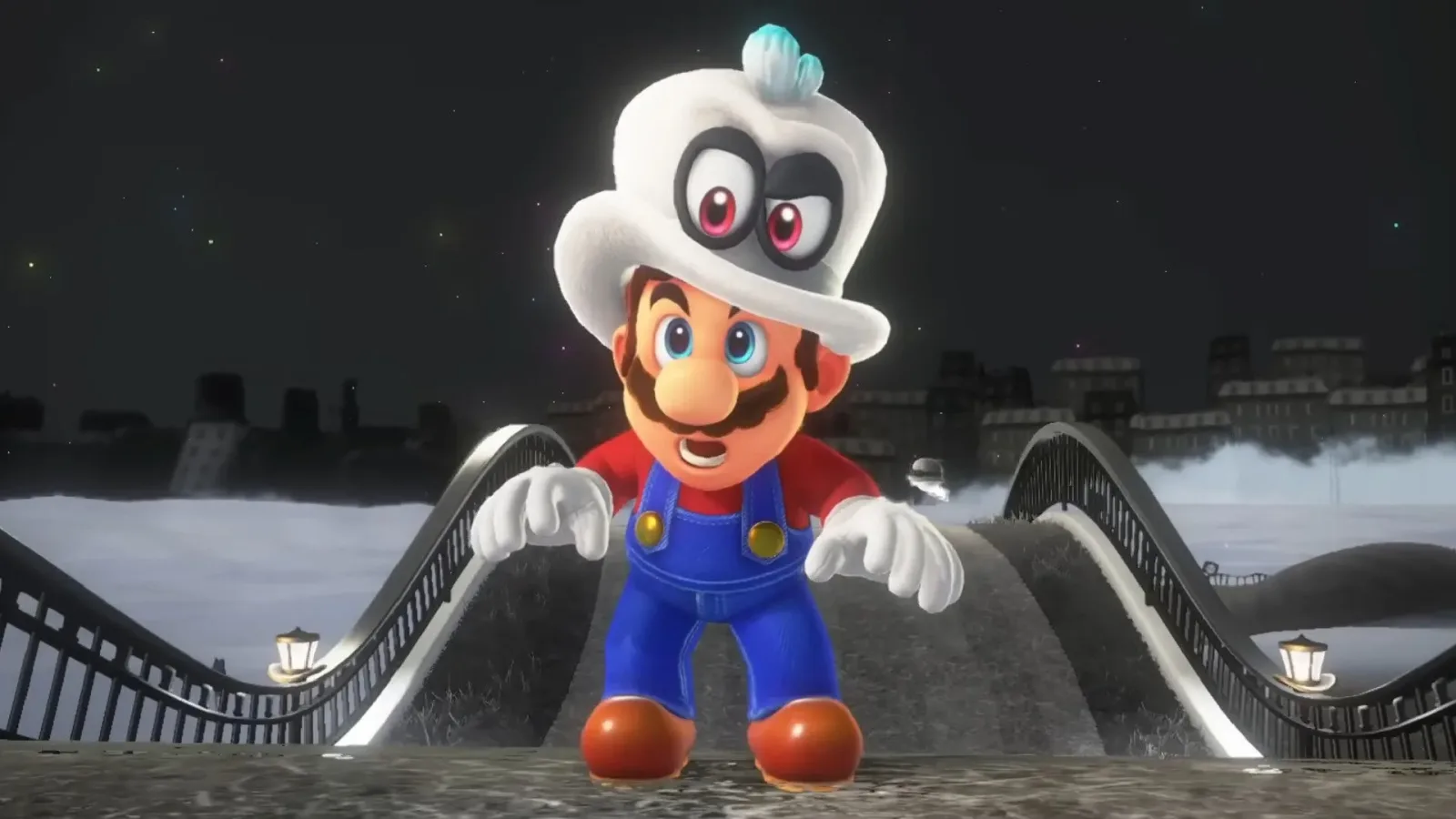
Nintendo's most celebrated modern releases often arrive with the feeling of an event. A new 3D Mario is not merely another entry in a long-running platforming series, while a major Zelda can redefine expectations for what an adventure game from the company looks like. Super Mario Odyssey transformed Mario's movement and possession mechanics into the foundation for an exuberant globe-trotting adventure. The Legend of Zelda: Breath of the Wild rebuilt the series around open exploration, physics-driven problem-solving, and player freedom.
That pattern did not happen by accident. Long before the Nintendo Switch era, former Nintendo president Satoru Iwata articulated a view of sequels that stressed responsibility to established fans without allowing familiar brands to become an excuse for creative caution. In a 2006 interview with Stephen Totilo, Iwata explained that a company devoted only to repeating its biggest hits would become conservative in the eyes of players and unwilling to pursue new initiatives or adventures. He made clear that this was not the kind of company he wanted Nintendo to become.
It is a statement that remains especially revealing because Nintendo has always relied on a recognizable collection of franchises. Mario, Zelda, Pokémon, Animal Crossing, Kirby, Metroid, Donkey Kong, Fire Emblem, and others have each helped define generations of Nintendo hardware. The company has a huge audience that wants more installments in those worlds. Yet Iwata's remarks show that Nintendo's leadership did not see that audience as a reason to produce sequels on autopilot.
A sequel philosophy built around change
Iwata acknowledged the basic reality of the business: Nintendo's fanbase expects follow-ups to major games. Meeting those expectations mattered. But the company's stated goal was to look for innovation inside each returning franchise rather than treating the name alone as sufficient. That distinction helps explain why Nintendo sequels can sometimes feel more like reinventions than modest extensions of the game before them.
For useful background on this topic, read FPGB Mini Restock Could Arrive in Around 20 Days, but Supply May Remain Tight.
For Mario, that has meant frequent shifts in structure and movement. Super Mario 64 established a landmark template for 3D platforming, but Nintendo did not simply repeat it unchanged forever. Super Mario Sunshine added the FLUDD water device and a tropical setting built around it. Super Mario Galaxy made gravity and miniature planetoids central to its design. Later, Super Mario Odyssey introduced Cappy and the ability to take control of enemies and objects, making transformation the core of its puzzles and exploration.
Zelda provides an equally clear illustration. Ocarina of Time set a standard for 3D action-adventure games, while The Wind Waker chose a dramatically different visual identity and a sea-spanning world. Years later, Breath of the Wild changed the formula more radically still, placing players in a vast open Hyrule where climbing, weather, weapons, cooking, and emergent interactions could shape nearly every journey. Its successor, The Legend of Zelda: Tears of the Kingdom, returned to that version of Hyrule but made building, fusing, and vertical exploration the centerpiece of a different kind of player expression.
None of that means Nintendo avoids familiar elements. Mushroom Kingdom imagery, iconic enemies, recurring characters, recognizable music, and established control ideas give these series continuity. The strategy instead appears to be one of balancing comfort with surprise: make a game recognizably Mario or Zelda, while giving players a compelling reason to experience this particular Mario or Zelda rather than replay an older favorite.
The context of 2006 mattered
Iwata's comments came at a pivotal moment. Nintendo was preparing for the hardware then known by its codename, Revolution, which would later launch as the Wii. The company had already found rapid momentum with the Nintendo DS, a dual-screen handheld that invited developers and new players to think differently about input, interface, and audience.
At the same time, Nintendo's recent home-console history had been complicated. The Nintendo 64 and GameCube earned beloved games and critical acclaim, including Super Mario 64, The Legend of Zelda: Ocarina of Time, Super Mario Sunshine, and The Wind Waker. However, those systems trailed their major competitors in the broader console market. PlayStation and Xbox had become increasingly significant forces, and Nintendo needed a response that could not simply be "more of the same."
The Wii and DS represented that response. Rather than pursuing a straightforward technical arms race, Nintendo sought to make play more approachable and immediately understandable. Motion controls on Wii, touch controls on DS, and software aimed at people outside the traditional enthusiast audience were central to that plan. Games such as Nintendogs and Brain Age showed the company's interest in attracting people who had not previously considered themselves game players, including those who might play for only brief periods each day.
Iwata said Nintendo would continue serving people who wanted classic Mario and Zelda experiences while also creating entirely different styles of play for newcomers.
That balance was not universally greeted with confidence at the time. Some longtime players worried that Nintendo's broader-audience strategy could come at the expense of its most dedicated fans. Iwata's explanation addressed that concern directly. Nintendo did not need to choose between classic franchises and new audiences, in his view. It could support both, provided it was willing to design games and hardware around different kinds of experiences.
Risk, success, and difficult transitions
In retrospect, the Wii and DS became two of the most successful gaming platforms ever made. Their popularity vindicated much of Nintendo's effort to expand gaming beyond its conventional boundaries. Wii Sports, touch-focused DS software, and a wide range of accessible games brought many new people into the medium, while established series continued to receive major releases.
The road was not consistently smooth. The Nintendo 3DS had a difficult start before recovering, and the Wii U struggled far more severely. Those setbacks demonstrate that innovation does not automatically result in commercial success. A new interface, a distinctive machine concept, or a willingness to challenge old design habits still needs clear communication, attractive software, and an audience ready to understand why the change matters.
Still, Nintendo's later success with Switch made the longer-term strategy easier to see. Switch combined home and portable play in a format that immediately communicated its premise. It also became the home of games that paired broad accessibility with bold reinterpretation, including Breath of the Wild, Super Mario Odyssey, and Animal Crossing: New Horizons. The result was not a rejection of Nintendo's legacy but an example of that legacy being continually reworked.
Why Iwata's words still resonate
Many major game franchises face pressure to return frequently, especially when a familiar name carries enormous commercial value. Players often want more of the games they love, but they can also become frustrated when sequels feel overly predictable. Iwata's 2006 perspective identifies the difficult space between those two expectations. A sequel should honor the audience that made a series important, while also seeking an idea substantial enough to justify its existence.
That does not require every installment to tear down everything that came before. Innovation can be mechanical, structural, artistic, technological, or social. It can mean a new way to move through a world, a new perspective on multiplayer, a transformed control method, or a broader invitation to people who have not traditionally played games. What matters is that a returning franchise still has room to surprise.
For Nintendo, that principle has helped make the gaps between certain flagship releases part of their appeal. A new mainline Mario or Zelda may take time, but that time can create anticipation that an annual release schedule rarely matches. When the game finally arrives, players expect more than a fresh set of levels or another map. They expect Nintendo to have found a new angle on an enduring idea.
Iwata's legacy reaches beyond individual products or hardware cycles. His comments describe a creative standard: familiar characters and worlds should not become barriers to new thinking. They should be foundations from which developers can take risks. Nintendo's history includes missteps as well as extraordinary successes, but its biggest modern games show how enduring that standard has been. The company remains built around famous names, yet its most memorable sequels are often the ones that refuse to behave like simple repetitions.
Community
Discussion
Start the conversation.
No comments have been posted yet.