

Warning: This article contains major spoilers for The Blood of Dawnwalker's optional Home Sweet Home quest, including details of Coen's family history and potential outcomes.
Optional quests often provide an RPG's richest character work, but few make their emotional point as forcefully as The Blood of Dawnwalker's Home Sweet Home. Hidden behind an apparently routine investigation into an alchemist and the gargoyles troubling Svartrau, the mission becomes a nightmare excursion into protagonist Coen's childhood, guilt, and self-destructive conviction that he must save everyone around him.
It is also deliberately exhausting. Home Sweet Home removes the player's hard-earned advantages, sends them through encounters built to overwhelm an under-equipped Coen, asks them to recognize the logic of a hostile dream, and eventually loops them back to its opening scene. The result may be one of the least inviting quests to immediately replay, yet it is also a remarkably cohesive piece of writing and level design. The discomfort is not separate from the story. It is the story.
A Detour Inside the Alchemist's Tower
The route into Home Sweet Home is easy to mistake for a minor diversion. While investigating the clay-baked gargoyles affecting Svartrau, Coen fights his way into an alchemist's tower. The immediate objective is to take the alchemist's notes back to Marat, but a climb up the tower's spiral staircase presents another possibility. At a closed door, Coen identifies the alchemist as being inside and can choose to enter.
For useful background on this topic, read PC Gaming Show Tokyo Direct 2026: Start Time, Viewing Options and Confirmed Games.
That choice does not lead to the expected confrontation with a dangerous artificer. Instead, Coen crosses the threshold and finds himself in his family home. He wakes at a breakfast table with his relatives gathered around him. His mother Esme asks what he would like on his oladkas, and the ordinary domesticity immediately feels wrong. Coen knows this cannot be real, yet hearing Esme's voice again visibly shakes him.
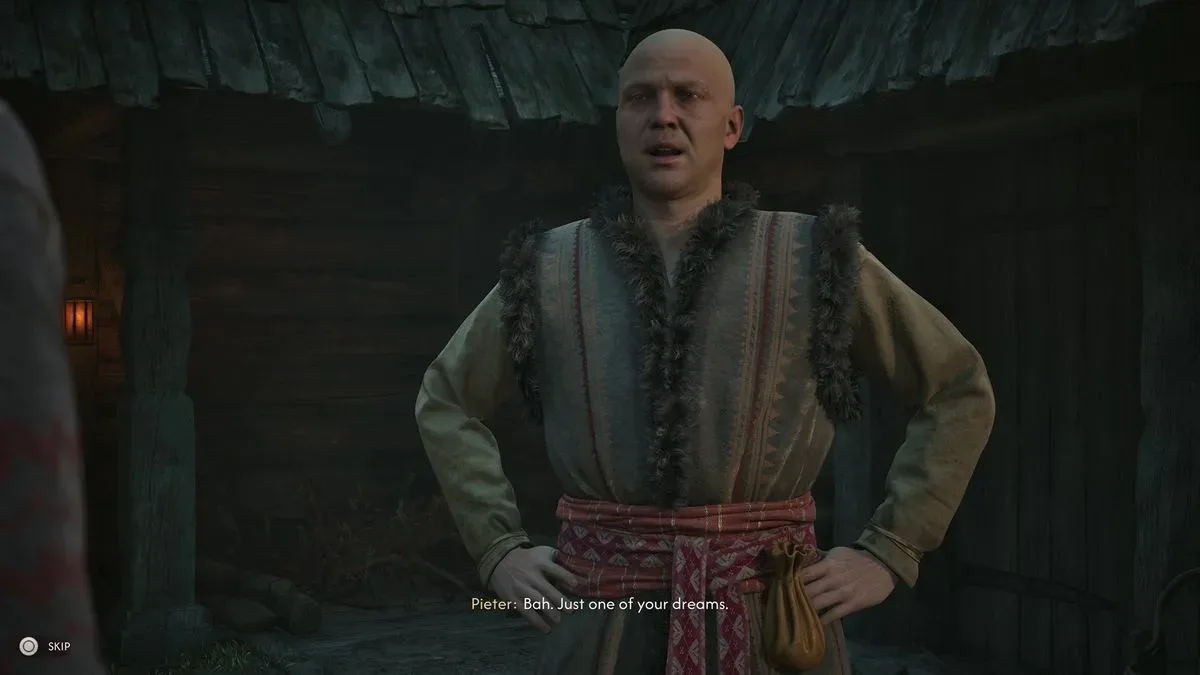
By this point, the game has already suggested that Coen's family life was marked by devastating loss. His father Pieter's background has surfaced in fragments, while Esme's past mental collapse and the death of Coen's younger brother Alin remain painful subjects that Coen struggles to confront directly. Home Sweet Home turns those hints into the foundation of an interactive nightmare.
The Nightmare Takes Away Everything
The first major mechanical statement comes as monsters assault the homestead and Coen's family scatters. Once control returns, the usual comforts of a developed character build are gone. High-level gear, weapons, potions, equipped trinkets, and powerful vampire abilities disappear. Coen is left with a common sword dealing only 40 damage per hit and little meaningful protection.
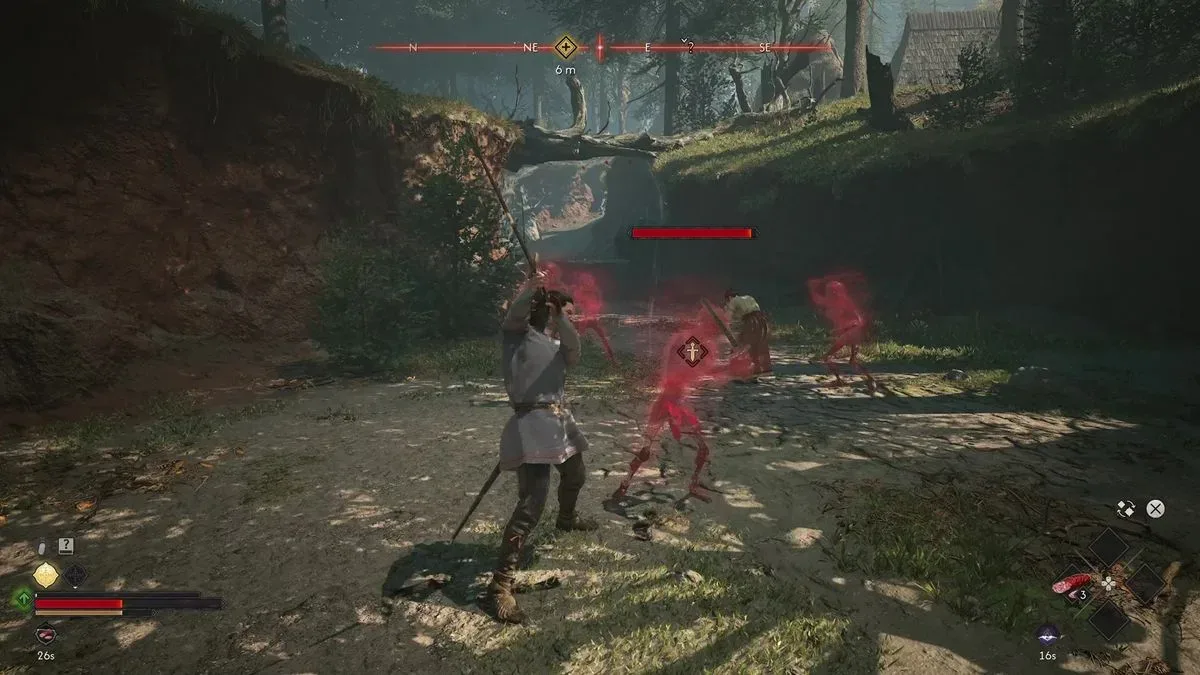
That reset is harsh in practical terms. Enemies that would be routine in the real Vale Sangora become serious threats because Coen is not operating with the tools the player has spent hours assembling. A group of ghoulish specters attacks Esme, and each enemy absorbs far more punishment than expected. Meanwhile, a missing armor set leaves Coen vulnerable enough that a single hit can remove a huge portion of his health.
The fight communicates panic before the mission has even explained its larger purpose. The player is not simply watching Coen feel powerless; they are being made to endure that powerlessness. Directional blocks and parries become essential, while every failed response carries an unusually high cost. It is an effective, if punishing, way to make a familiar combat system feel alien again.
After the battle, Esme thanks Coen and the player is given a small but revealing choice. Coen can direct her toward the church and continue treating the dream as something to escape, or he can speak to her as though she is genuinely present. The dialogue options invite the player to linger with the family history, but the quest's unnerving quality makes emotional distance understandable. Even the act of declining a conversation has weight when a frightened, confused Esme is left wondering why her son seems so cold.
A Town Square Built Around Desperation
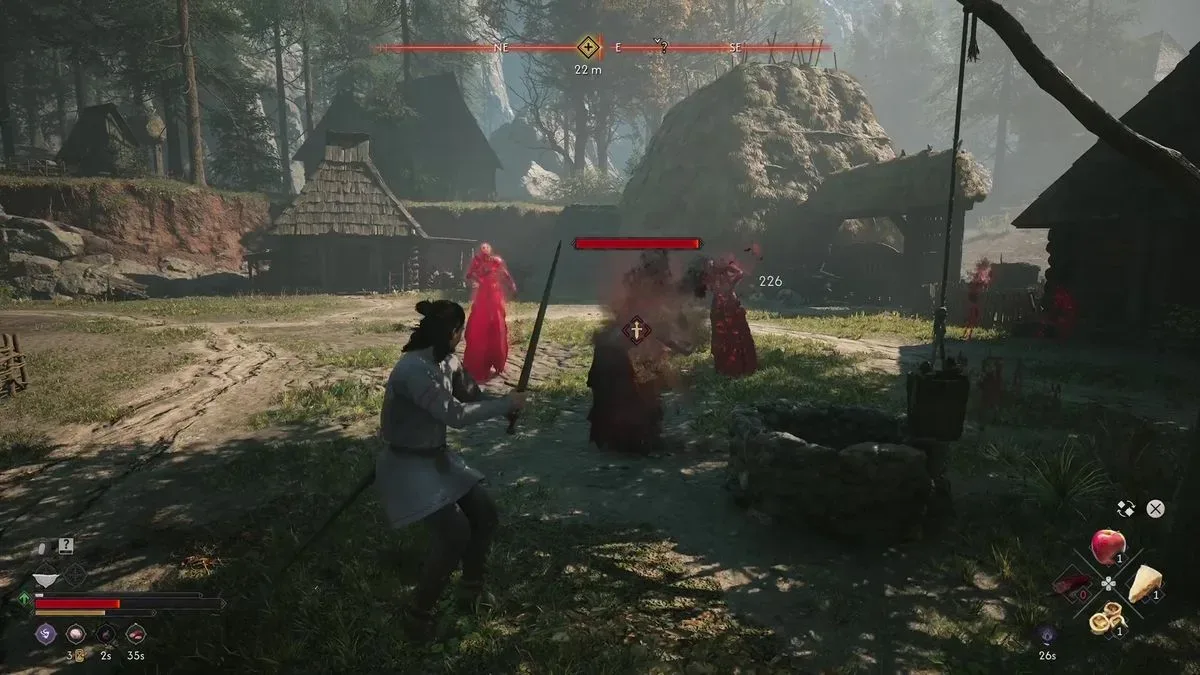
The next phase expands the nightmare into a locked-down village square. Consumables are scattered around the area--healing salves, food, and even an ironic clove of garlic--but the supplies only underline how stripped back Coen has become. Wraiths begin appearing across the square, and the encounter is built around being overwhelmed.
These enemies are fast, numerous, and hard to kill with the mission's weakened equipment. More importantly, one red-highlighted spirit is the key to the fight. As with other haunting-site battles in the wider game, the red wraith sustains the group, drawing health from its allies and replacing defeated enemies. Ignoring it turns the sequence into a nearly hopeless war of attrition; identifying and prioritizing it transforms the encounter into a manageable challenge.
That design mirrors the quest's themes with unusual precision. Coen is facing a mass of threats and throwing himself into danger to protect others, but the real problem lies beneath the visible chaos. He cannot solve everything by attacking whatever is closest. He has to identify the central wound he has avoided for years.
After rescuing his siblings and moving toward the church, Coen faces a gargoyle. Compared with the wraith swarm, the creature is almost a relief: a single, legible opponent that can be handled through timing and parries. It feels like a final obstacle before safety. Then the mission denies that clean resolution.
The Loop Reveals What Coen Cannot Escape
Entering the church does not wake Coen. It sends him back to the beginning, once again seated in the family home as breakfast waits. The dream has looped, though a brief image of a well in the village square offers the first clue that there is a path beyond repetition.
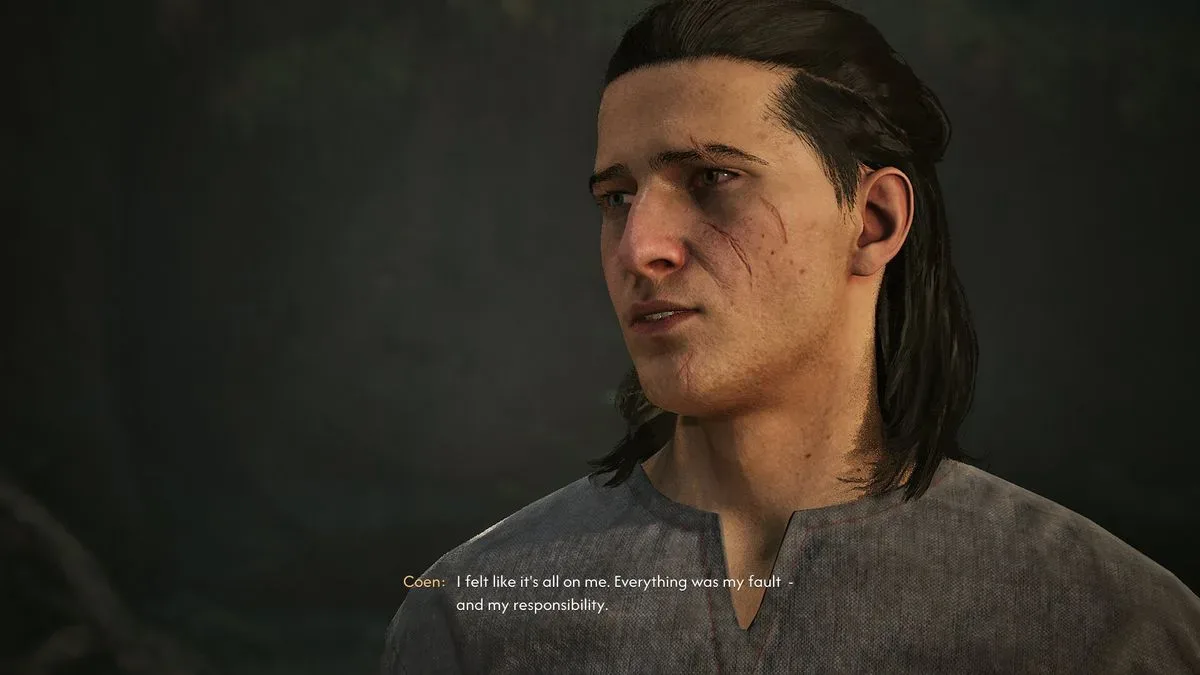
The second trip through the nightmare opens more dialogue and gives Coen room to say what he initially avoids. He tells Esme that he has missed her, but also admits the resentment he carries over her withdrawal from the family. He speaks of Alin in hesitant fragments, circling the name and the event at the center of his pain. Those conversations uncover the source of Coen's savior complex: a child's belief that he failed at the one moment he should have been able to protect someone.
There is no easy catharsis in this version of the family reunion. Esme's presence cannot erase the damage, and Coen's guilt is not resolved by simply performing heroics inside a dream. The loop itself is a statement that he will remain trapped if he keeps repeating the same avoidance patterns--rushing from crisis to crisis while refusing to name the loss that defines him.
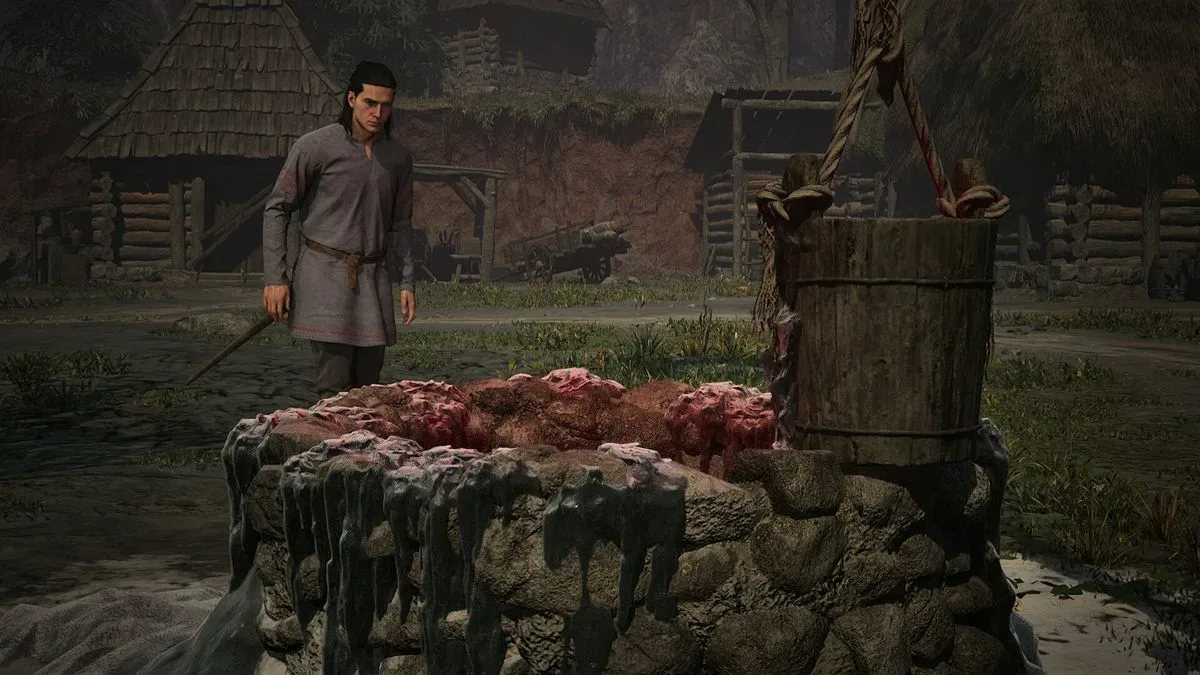
Returning to the town square and interacting with the well produces the quest's decisive confrontation. Coen sees his own reflection, and it is furious. It calls him a coward for refusing to face what happened to Alin and for denying the role guilt has played in shaping his life. The dream only begins to break when Coen screams his brother's name: Alin.
A Secret Ending for Refusing the Truth
The well is more than a thematic flourish; it is essential progression. If the player ignores it and continues the loop, Home Sweet Home can lead to one of the game's secret, deeply bleak endings. That possibility makes the mission's structure feel even more purposeful. The game does not merely tell players that recognition matters. It makes recognizing the truth the condition for leaving the nightmare.
Once Coen confronts the reflection, his missing powers return. He can shadowstep up an icy cliff and move through a maze assembled from memory. The shift is significant: the route forward becomes available only once he stops treating his trauma as something external to defeat. His vampire abilities returning does not make the sequence emotionally easier, but it signals that facing the truth has restored a form of agency.
The final revelation concerns Alin's death. When the brothers were children, they were playing on a frozen lake. Alin was there one moment and gone the next. Coen has spent years believing that he should have acted, should have noticed, should have somehow prevented the accident. The mission carefully avoids turning that feeling into a simple factual verdict. Its concern is the unbearable burden Coen has placed on himself, not an attempt to neatly litigate childhood tragedy.
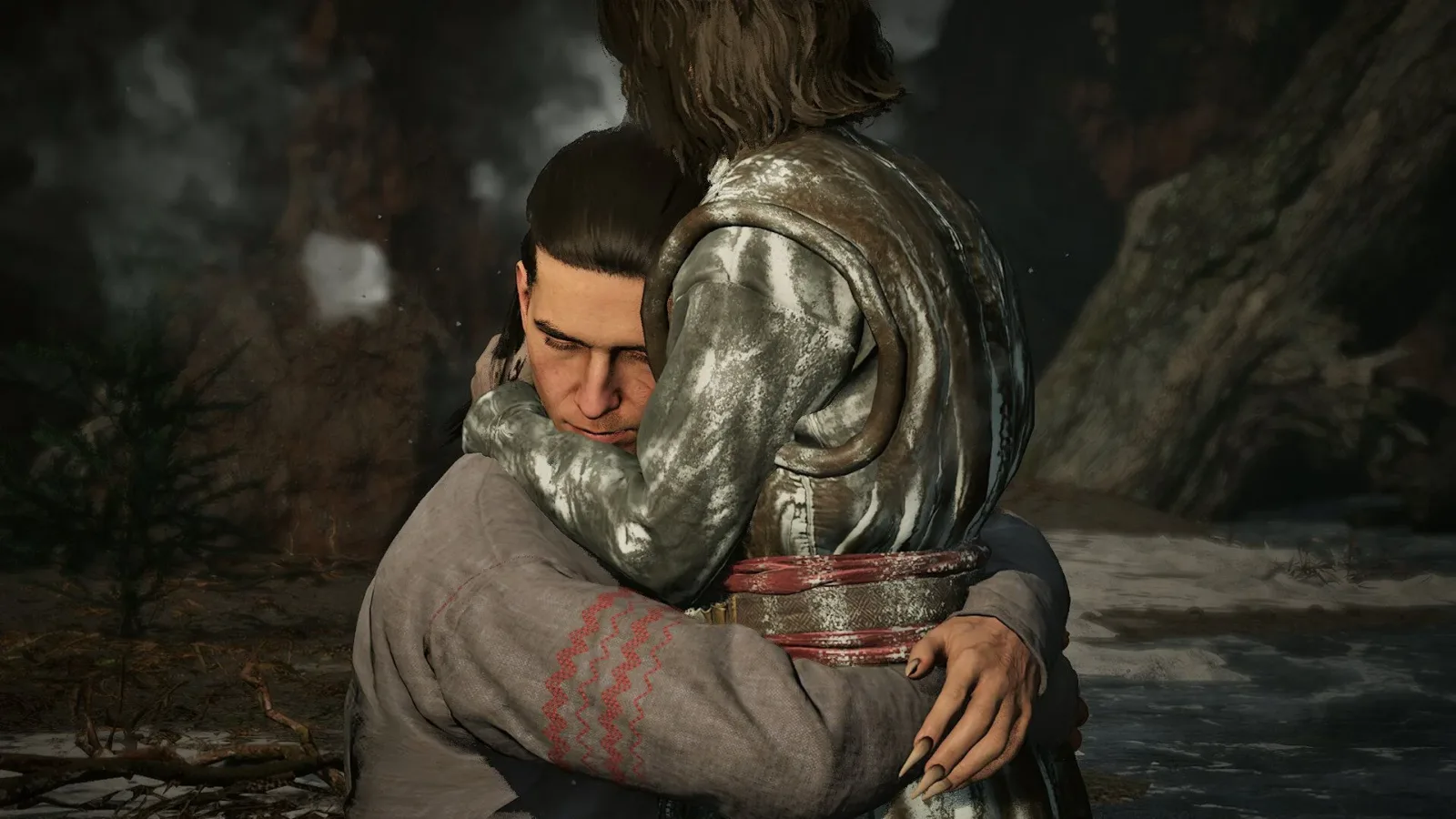
When Alin appears, he gives Coen the forgiveness that his older brother has been unable to grant himself. He tells Coen that the most painful failure was not the accident, but Coen's refusal to visit him at the place where he died. Alin has been waiting for him. Coen finally breaks down, holding his brother before the vision says goodbye and pushes him out of the dream.
When Difficulty and Story Serve the Same Goal
Home Sweet Home succeeds because its worst qualities as a conventional comfort-play mission are inseparable from its best narrative qualities. The lost equipment, hard-hitting enemies, repeated deaths, looping layout, and oppressive uncertainty all create a pressure that reflects Coen's internal life. The player feels forced to carry impossible responsibility with inadequate resources, much as Coen has done since Alin's death.
That does not mean every player will enjoy the combat gauntlet. Dream levels are inherently divisive, especially when they remove progression and demand adaptation to altered rules. But the quest gives its frustrations purpose. The discomfort is not arbitrary punishment designed to pad out a side story. It is a sustained attempt to place the player inside the emotional logic of guilt.
There is an additional surprise in how easily the whole episode can be missed. After Coen wakes and deals with the alchemist, the mission log identifies Home Sweet Home as a branching side quest tied to Xanthe, the long-dead boyaress and one of Brencis' lieutenants. A storyline with some of the game's most intimate character material is therefore not guaranteed to appear in every playthrough.
For players willing to follow the tower's extra staircase, Home Sweet Home offers more than an answer to a few lingering questions about Coen's past. It provides a vivid explanation for the character's need to intervene, protect, and take responsibility even when the cost is crushing. It may be a nightmare in every mechanical sense, and not a mission many will be eager to revisit, but it is precisely that oppressive design that makes its eventual act of forgiveness land so hard.

Community
Discussion
Start the conversation.
No comments have been posted yet.