

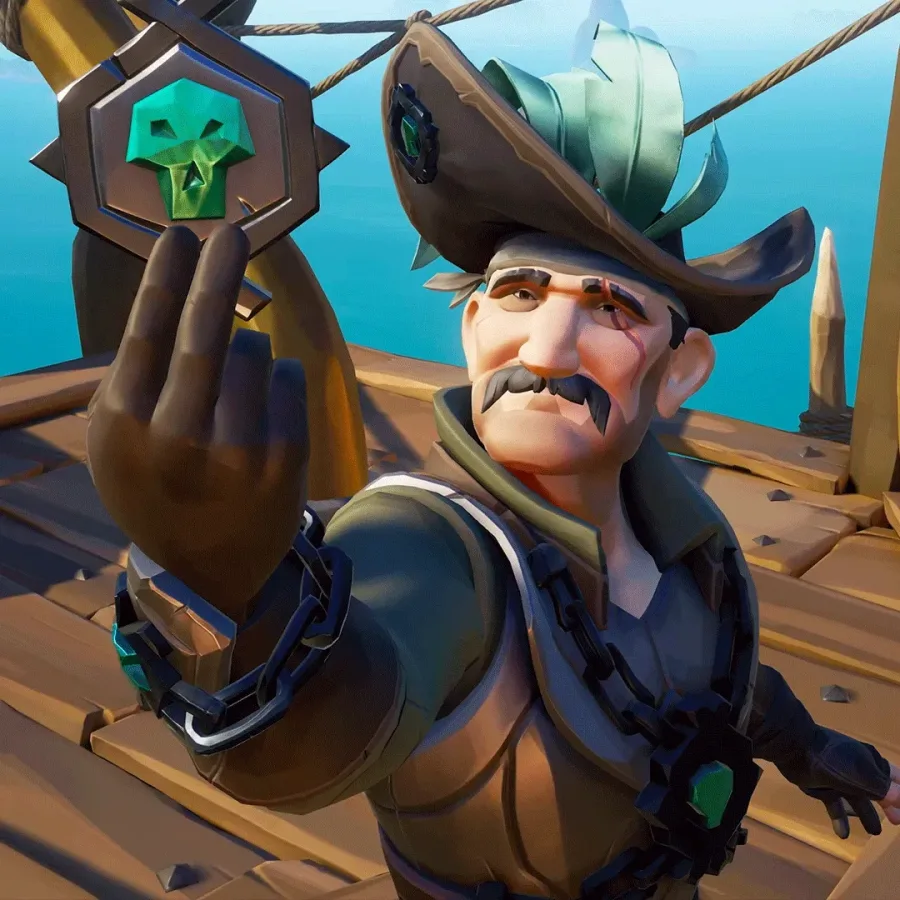
Rare's place within Microsoft's game business is once again under a microscope after the Sea of Thieves developer was moved beneath Activision in a major Xbox restructuring. The change arrives alongside layoffs and broader consolidation across Microsoft's first-party operations, and it has left many players wondering what role one of the company's most historic studios will have in the years ahead.
For the moment, there is no announced change to Sea of Thieves itself and no public outline of a new game for Rare. That lack of detail is a major reason the news has sparked anxiety. Sea of Thieves has become Rare's defining modern project, but the studio's move under an Activision-led structure has encouraged fans to speculate about whether Rare will remain able to lead its own work or be shifted toward supporting larger franchises.
Activision is set to take on a much larger role in Xbox's organization, including responsibility for leading the next Halo game. Rare joining that umbrella means a studio known for eccentric platformers, adventure games, and the shared-world piracy sandbox now sits closer to some of the industry's biggest annualized series. For players who value Rare's distinctive identity, that is a difficult contrast to ignore.
Why the reorganization has Sea of Thieves fans worried
The concern is rooted less in a confirmed plan for Rare than in Activision's history of concentrating development resources around Call of Duty. Over the years, several studios associated with Activision have been reassigned to help make maps, provide technical assistance, or otherwise contribute to the Call of Duty pipeline. Neversoft is frequently invoked in conversations about that history: a studio celebrated for games such as Tony Hawk's Pro Skater and Guitar Hero that ultimately became part of the Call of Duty support machine before being absorbed.
For useful background on this topic, read Neo Geo AES+ Saved From Cancellation by Flash Memory Workaround.
That precedent has led some players to fear a similar outcome for Rare. On social media and community forums, the most pessimistic responses imagine the studio becoming another support team on Call of Duty or Halo rather than creating its own games. The concern is not based on an announced assignment, but it reflects a long-running distrust of what happens when large publishers prioritize their biggest franchises above everything else.
For many fans, the worry is that Rare's unusual strengths could be redirected into supporting work instead of being used to build another original game.
Others are focused on Sea of Thieves. The game has undergone years of expansion since its 2018 launch, evolving from a divisive release into one of Xbox's most enduring live-service successes. It has also broadened its audience beyond Xbox and PC with a PlayStation 5 version. A more heavily Activision-influenced structure, players argue, could create pressure for more aggressive monetization or a tighter content cadence built around business targets rather than Rare's own priorities.
Critics of Activision have regularly raised concerns about microtransactions, generative AI, layoffs, and franchise fatigue surrounding Call of Duty. Those criticisms are now being applied to the prospect of Activision having authority over Rare. It is important, however, to separate those concerns from confirmed changes: Microsoft has not said that Sea of Thieves will alter its business model, that Rare will work on Call of Duty, or that the studio will stop making its own projects.
Rare's unusual history makes this moment feel familiar
This is not the first time players have worried that Rare's talents might be used in ways that do not suit the studio. Rare established itself as one of the most celebrated developers of the 1990s and early 2000s, producing major games and series with a personality unlike much of the rest of the industry. Its work ranged from Donkey Kong Country and GoldenEye 007 to Banjo-Kazooie, Perfect Dark, Viva Piñata, and many other projects that helped define different eras of console gaming.
Its years under Microsoft have been more uneven. During the early 2010s, Rare spent substantial time working on Kinect-focused releases. That period remains a sore point for many longtime followers, who felt a studio capable of making ambitious worlds, character-driven platformers, and inventive multiplayer experiences had been placed on projects that did not fully reflect its strengths.
Sea of Thieves changed that perception. The pirate adventure gave Rare a long-term platform to develop a social world full of emergent stories, cooperative voyages, naval battles, seasonal updates, and crossover events. Its early shortcomings were real, but the game's longevity and dedicated player base demonstrated that Rare could still make something with a strong identity while operating inside Microsoft's broader ecosystem.
That history explains why the current reorganization has hit a nerve. Fans have seen Rare shifted toward corporate priorities before. The prospect of the team being folded into a structure led by Activision raises the fear that the studio could lose the room it needs to make the next Sea of Thieves-sized idea.
Everwild's cancellation hangs over the discussion
The uncertainty around Rare has been intensified by the cancellation of Everwild, the studio's long-in-development project. Rare had spent around a decade on the game, which was publicly revealed years ago but remained elusive. It was shown in visually striking trailers, yet details about how it would actually play stayed scarce. The project reportedly struggled to find a clear path forward, and it was canceled last year.
That cancellation matters because it leaves Sea of Thieves as Rare's only clearly established modern pillar. It may also influence how Microsoft and Activision assess the studio's future. A publisher looking at a team with a highly successful live-service game on one hand and a lengthy canceled project on the other could conclude that Rare is best positioned to maintain an existing success. Fans instead hope the lesson will be that the studio needs stable direction and enough freedom to pursue another original project properly.
Neither outcome has been confirmed. The organization could preserve Rare's leadership over Sea of Thieves while giving it the chance to prototype new ideas. It could also place more emphasis on collaboration with Activision teams, Halo, or other Xbox projects. Until Microsoft provides specifics, the debate will remain driven by a mix of past experience, reasonable caution, and worst-case speculation.
Could Rare revisit its platforming roots?
Not every reaction has been negative. A smaller but vocal group of players sees the Activision connection as a possible route to projects that align with Rare's legacy. Since Activision holds Crash Bandicoot, some fans have imagined Rare taking on a new Crash game. Others continue to ask for a return to Banjo-Kazooie, the Nintendo 64-era series that has remained dormant outside of appearances such as Banjo and Kazooie joining Super Smash Bros. Ultimate.
Those ideas are entirely fan speculation. There is no indication that Rare is making a Crash Bandicoot title, that a new Banjo-Kazooie game is in production, or that the reorganization is intended to revive older platforming series. Still, the discussion reflects a desire for Rare to be assigned work that plays to its history rather than simply being treated as additional manpower for an established shooter franchise.
A successful revival would not be simple. Modern platform games require a clear creative hook, and nostalgia alone cannot carry a major release. Yet Rare's history is a reminder that the studio has repeatedly succeeded when allowed to create colorful worlds, memorable characters, and systems that invite players to experiment. Those are qualities many would like to see protected regardless of where the studio sits on Microsoft's organizational chart.
What this means for Sea of Thieves now
For players currently sailing in Sea of Thieves, the immediate picture is much less dramatic than the organizational news may suggest. The game remains Rare's active flagship, and its established community gives Microsoft a strong reason to continue supporting it. Sea of Thieves has proven it can attract and retain players over many years, including after its expansion onto PlayStation 5.
At the same time, a live-service game's future is shaped by leadership priorities, staffing, budgets, and the philosophy behind updates. Fans will be watching for practical signs of what Rare's new reporting structure means: whether the development team's size changes, whether content plans shift, whether the game's monetization evolves, and whether Rare announces a second project. Those indicators will offer more meaningful answers than the initial headline alone.
It may take years to understand the full effect of the Xbox reset. Large corporate reorganizations often look decisive on paper but unfold gradually in practice, especially across studios managing ongoing games. Rare was not shut down or sold, a fact some fans see as a meaningful relief given the uncertainty surrounding other Xbox-owned teams. But remaining open is not the same thing as having a clearly defined creative future.
Rare's next chapter is still unwritten. The studio's placement under Activision has understandably alarmed players who fear further consolidation around Call of Duty and Halo. Yet there is currently no official confirmation that Rare will become a support developer, abandon Sea of Thieves, or lose the ability to develop original games. Until Microsoft reveals more, the central question remains whether this reorganization will give Rare greater resources and stability--or reduce one of gaming's most distinctive studios to a supporting role.
Community
Discussion
Start the conversation.
No comments have been posted yet.