

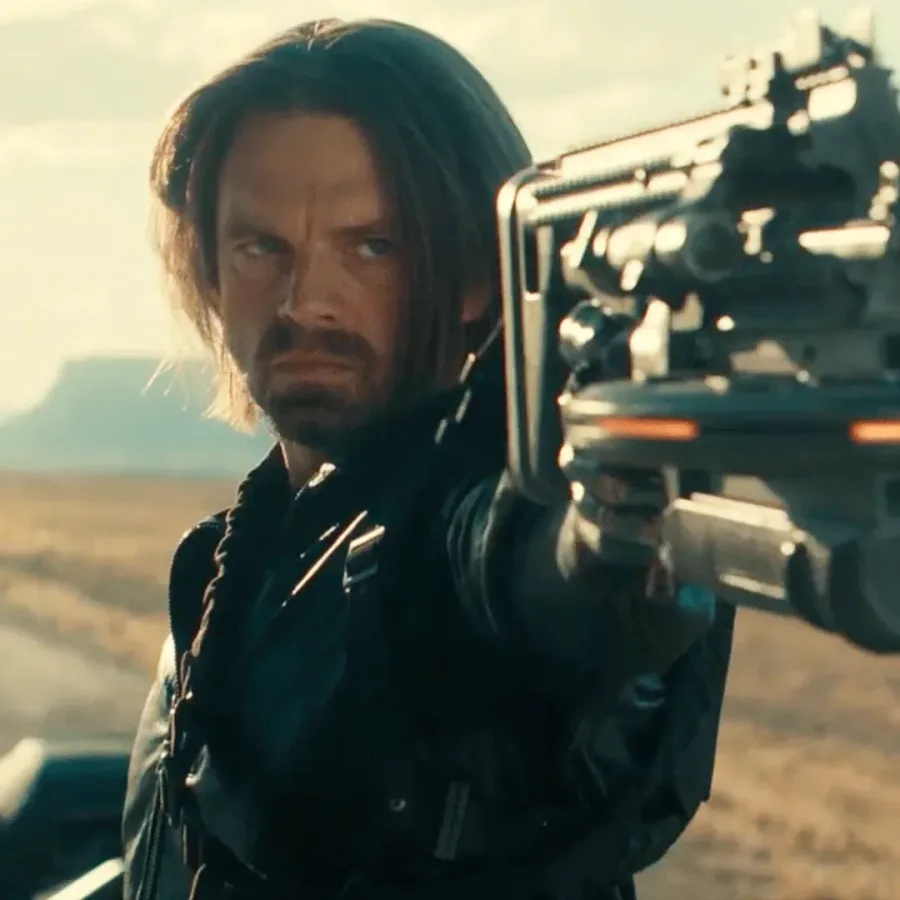
Sebastian Stan has offered a candid defense of Thunderbolts*, arguing that the Marvel Cinematic Universe ensemble felt like a success to the people who made it even as its theatrical performance fell short of the franchise's usual commercial expectations.
Stan, who returned as Bucky Barnes in the film, pointed to what he saw as a greater degree of emotional complexity than in some recent MCU releases. For the actor, the value of the project was not simply tied to a worldwide ticket-sales total. It was in the care taken with the characters, the unusual chemistry of its cast, and the decision to confront subjects including mental health and depression within a superhero story.
That perspective arrives as Thunderbolts* continues to occupy an interesting place in Marvel's larger history. The film was received warmly by many critics and audiences, but its reported theatrical gross of $382.4 million has been widely viewed as disappointing in the context of Marvel's biggest hits. A total in that range would be substantial for many films, yet the MCU is judged against a history filled with billion-dollar releases and vast global event movies.
A Success Beyond the Box Office
Speaking during an appearance on the Next Best Picture podcast, Stan acknowledged how expectations can reshape the perception of a movie's outcome. He noted that Marvel had spent years delivering enormous commercial successes, making a global result in the mid-$300 million range seem small by comparison, even though it remains an extraordinary amount of money in absolute terms.
For useful background on this topic, read How to Safely Remove a Stuck Disc From a PS5.
"I still felt like, for us, it felt like a success," Stan said, stressing that a great deal of care went into the production.
He specifically identified nuance as a defining strength. In his view, the film was willing to approach "real issues," including mental health and depression, rather than relying exclusively on spectacle, comic banter, or uncomplicated heroic triumph. That tonal direction made sense for a team made up of characters who have often operated in Marvel's moral gray areas.
Thunderbolts* brings together a collection of misfits, veterans, and former operatives whose histories include trauma, manipulation, political exploitation, and personal loss. Alongside Stan's Bucky Barnes, the lineup includes Yelena Belova, played by Florence Pugh; Alexei Shostakov/Red Guardian, played by David Harbour; and John Walker/U.S. Agent, played by Wyatt Russell. Rather than presenting a traditionally polished Avengers-style unit from the outset, the movie frames its central group as people carrying damage and uncertainty into a dangerous shared mission.
That setup gave the film room for a somewhat more mature emotional texture. Marvel projects have long balanced humor with danger, but Thunderbolts* was especially associated with characters attempting to find purpose after being used, discarded, or overwhelmed by institutions and events much larger than themselves.
The Difficult Math of a Marvel Release
The commercial conversation surrounding Thunderbolts* is inseparable from the scale of its reported costs. The film earned $382.4 million worldwide, while its production budget was reported at $180 million, with marketing spending estimated at another $100 million. Those figures do not automatically provide a complete picture of a movie's profitability, since theatrical revenue is divided among distributors and cinemas and films can continue earning through home entertainment, streaming, licensing, and other channels. Still, they help explain why the theatrical run has commonly been described as a box office disappointment.
Marvel's scale creates a uniquely punishing benchmark. The MCU has produced some of modern cinema's defining blockbusters, and its most successful installments have generated more than $1 billion each. A movie that performs respectably by conventional standards can therefore look weak when set next to the franchise's tallest peaks.
Stan's comments make the distinction between financial performance and creative accomplishment particularly clear. A film can fail to meet a studio's hoped-for return while still resonating with its cast, viewers, and critics. That does not erase the financial reality, especially for a blockbuster carrying a large budget, but it does complicate an all-or-nothing verdict.
For Marvel, that distinction matters. The studio's interconnected format has increasingly made audience confidence, character attachment, and long-term narrative relevance as important as the opening-weekend discussion. Even projects that do not dominate cinemas can help establish characters and relationships that pay off in later crossover stories.
Critical and Audience Support
On the reception side, Thunderbolts* has encouraging numbers. Rotten Tomatoes lists an 88% score from critics and a 93% audience score. Those results suggest that, while the movie did not draw the massive crowds associated with Marvel at its commercial height, much of the audience that did see it responded positively.
The broad praise has often focused on the ensemble and the film's willingness to give its troubled characters space to be vulnerable. That response aligns closely with Stan's description of the project. His comments were not simply that the group had fun making a Marvel movie; they were that the story tried to address weightier material through the framework of a comic-book team-up.
The balance was not necessarily simple. The movie still contains the action, heightened personalities, and franchise connections expected from the MCU. But it also asks what happens to people who have survived extraordinary violence, manipulation, and isolation. For Bucky in particular, that territory is familiar. The character has spent much of his MCU history confronting the legacy of being turned into the Winter Soldier, recovering agency, and trying to decide what kind of life follows survival.
That experience makes Stan a fitting voice for the film's emotional goals. Bucky is no stranger to Marvel's darker material, but placing him in a group built from similarly compromised figures changes the dynamic. Instead of functioning as the lone haunted veteran among more straightforward heroes, he becomes one part of a team where nearly everyone has reasons to question themselves and the structures they have served.
The New Avengers Have More Story Ahead
Whatever the debate around its theatrical result, Thunderbolts* has clear importance to the MCU's next phase. Its team eventually becomes the cinematic universe's New Avengers, positioning the characters for a larger role in the conflict to come.
Yelena, Bucky, Red Guardian, U.S. Agent, and other members of the group are set to return in Avengers: Doomsday, scheduled to premiere on December 18, 2026. The trailers released so far indicate that the team will have a meaningful part to play against Doctor Doom. That gives Marvel an opportunity to test whether the connections forged in Thunderbolts* can become a foundation for a larger-scale event.
The next Avengers film may also change how viewers assess the earlier movie. Franchise chapters are frequently re-evaluated after later entries build on their characters or plot points. If the New Avengers become central to the fight against Doctor Doom, Thunderbolts* could gain additional significance as the story that defined their identity before they were pushed onto Marvel's biggest stage.
There is currently no confirmation that the Thunderbolts team will receive a direct sequel of its own. That uncertainty makes the upcoming crossover appearance more important. The group's future may depend less on a conventional follow-up and more on how well it fits into the MCU's expanding Avengers narrative.
Creative Talent Moving Forward
The film's influence may extend behind the camera as well. Director Jake Schreier remains attached to Marvel's planned X-Men reboot, currently expected in 2028. Schreier has already discussed comic-book inspirations he is bringing into that production, suggesting that Marvel sees value in continuing to work with the filmmaker after Thunderbolts*.
That decision is notable in light of Stan's praise for the movie's sensitivity and detail. Directors bring different instincts to superhero material, and Schreier's work on a character-driven team film could offer clues about the tone he may pursue with the X-Men. The mutant franchise has historically thrived when it treats superpowers as a lens for identity, prejudice, family, and alienation, themes that could benefit from a similarly thoughtful approach.
Marvel is also continuing work on Avengers: Secret Wars, which is currently slated for December 17, 2026. With both Avengers projects on the horizon and the New Avengers now part of the MCU's evolving hierarchy, the full impact of Thunderbolts* remains unsettled.
For now, Stan's view offers a useful reminder that a blockbuster's legacy is not settled by one number. The reported box office total remains a serious concern in the business conversation, particularly against the film's substantial costs. Yet the strong response from those who connected with its themes, and the continued presence of its characters in Marvel's future plans, mean Thunderbolts* still has room to be reassessed. To Stan, its success was in the humanity it found within a team of broken people. The MCU's next chapters will show whether that humanity becomes an enduring part of the New Avengers' story.
Community
Discussion
Start the conversation.
No comments have been posted yet.