

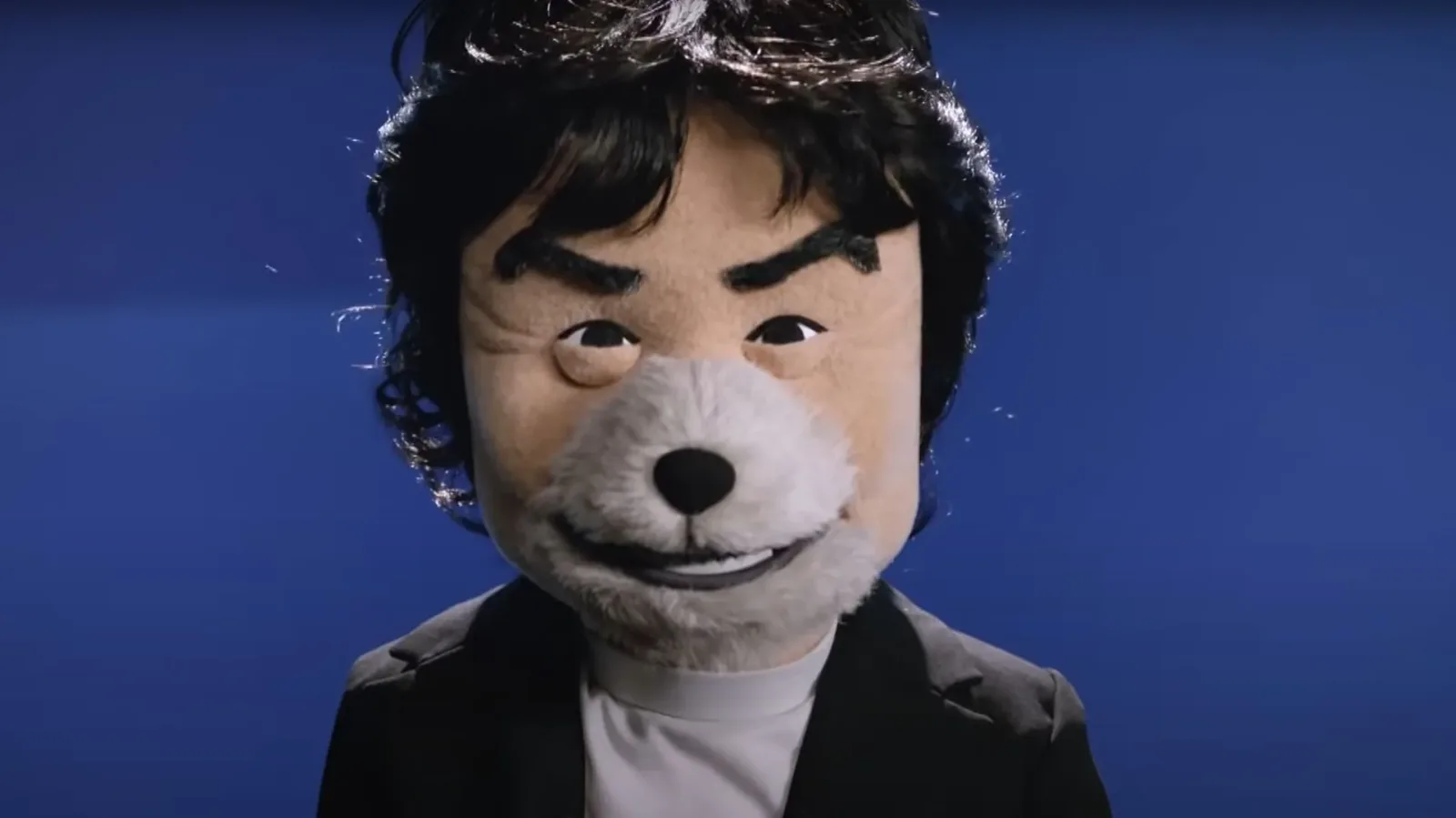
Shigeru Miyamoto has offered a cautiously optimistic view of generative AI's potential place in game development, arguing that the technology could help creators concentrate on the decisions that give a project its lasting identity. The longtime Nintendo creative leader does not present AI as a substitute for human imagination. Instead, he sees it as another step in the ongoing evolution of creative tools--one that may force developers to examine the difference between meaningful creation and the labor that often surrounds it.
Miyamoto, Nintendo's representative director and executive fellow, discussed the subject during a press conference in remarks originally delivered in Japanese. His comments arrive while generative AI remains one of the games industry's most divisive subjects. Developers, artists, performers, players, and publishers have all raised concerns around issues including jobs, training data, authorship, quality control, and the possibility of work losing its individual character.
Rather than dismissing those concerns outright, Miyamoto's perspective frames AI through the history of changing technology. For him, the key question is not simply whether a tool can speed up a task. It is whether creators retain the intention, judgment, and sense of purpose that turn a collection of tasks into a distinctive work.
Technology changes the work, not necessarily the need for creators
Miyamoto looked back at an era of rapid advances in personal computing, describing a period when everyday creative processes moved from typewriters and more manual methods toward word processors and increasingly capable digital tools. He used design and lettering as an example of how changing technology can alter which skills are most visible and valuable.
For useful background on this topic, read Shigeru Miyamoto to Receive Japan's Order of Culture, a First for Game Developers.
In his description, there was once a time when the ability to produce beautiful lettering for a poster could, on its own, define someone as a designer. He also pointed to the possibility of taking an overseas trend, adapting it with a Japanese-style touch, and receiving similar recognition. As computer technology improved, though, Miyamoto suggested that the more individual capabilities of designers became clearer.
His argument is that generative AI may represent a comparable transition. A tool can handle or accelerate portions of the process, but it cannot automatically supply the distinctive sensibility behind a project. That distinction is especially relevant to video games, where a finished product combines visual design, systems, controls, level construction, sound, writing, pacing, technical performance, and player feedback into a single experience.
For a creator, deciding what a game should feel like can be more important than merely completing every production step. The identity of a Mario game, a Zelda game, or any other major project is not just a matter of assets being made and features being checked off. It comes from the creative direction behind those elements: why they exist, how they work together, and what kind of response they are meant to create for players.
Creation and labor are not the same thing
A central part of Miyamoto's comments focused on the split between creating something and doing the labor involved in reaching the finished result. He described a process in which a broad structure is established first, followed by hands-on work such as filling gaps and refining details. Those tasks can be enjoyable, he acknowledged, and that enjoyment can be part of why people love making things.
However, Miyamoto warned that there is a risk in equating demanding or lengthy work with quality. Spending a great deal of time on a task does not guarantee that the final piece has become better, more memorable, or more purposeful. Someone can take satisfaction in the work itself and mistakenly believe that this satisfaction proves the result is high quality.
That is where he sees a potentially useful role for AI. If a tool takes on more of the repetitive, supporting, or detail-oriented work, creators may have greater reason to revisit the fundamentals. They may be pushed to ask what truly matters in the work, what the project is trying to communicate, and which choices require a person's specific insight.
"The more AI replaces these tasks, the more it provides an opportunity to reflect on what's really important, which I think is a positive thing," Miyamoto said.
This is not an argument that every task previously performed by a person is unimportant. In game development, execution can be inseparable from artistry. Animation timing, environmental detail, encounter design, interface layout, bug fixing, and sound placement may all demand expert human judgment. Miyamoto's point instead appears to be that creators should not mistake the amount of effort expended for the purpose of the work itself.
Intent is the crucial human contribution
Miyamoto also distinguished between work built around an individual's intention and work that simply repeats, copies, or assembles existing ideas. Looking back at past designs, he noted that some were made through what he characterized as copying and pasting. Such work, in his view, rarely lasts because it lacks a clear personal design intention.
That idea speaks directly to a persistent concern about generative AI. The technology can produce material quickly, but speed does not inherently create a coherent creative voice. Even a useful output still needs someone to decide whether it fits a game, whether it supports the intended player experience, whether it should be changed, and whether it should be discarded completely.
In Miyamoto's framing, the computer remains an assistant to the person who has that intent. The machine may help with labor, but the human still defines the goal. It is a notable distinction at a time when AI is frequently discussed in absolute terms: either as a revolutionary answer to production challenges or as an existential threat to creative work.
The reality of implementation is likely to be more complicated. Different studios will make different choices, and those choices may vary between concept work, programming assistance, localization, testing, art production, customer support, and other disciplines. The ethical and practical questions around consent, compensation, transparency, training data, and employment will remain important regardless of any technical advantages.
Still, Miyamoto's comments emphasize that a tool's value should be measured by whether it helps a team make better decisions, not only by whether it reduces the time required to complete a task. That is a standard particularly relevant to games, where a faster pipeline is of limited value if it results in experiences that feel generic or disconnected from a team's original goals.
"There will always be a role left for us to play"
Miyamoto ultimately rejected the idea that technological progress necessarily removes people from the creative process. Even if AI becomes capable of handling an increasingly broad range of work, he believes there will continue to be a role for humans.
"I believe that even as technology continues to evolve, and even if AI were to eventually handle everything, there will always be a role left for us to play," Miyamoto said.
That confidence reflects a career spent through multiple technological transitions. Miyamoto is closely associated with Nintendo franchises including Super Mario and The Legend of Zelda, series whose influence has endured not because they followed a single production formula, but because they repeatedly translated creative ideas into approachable, surprising play. New hardware and development tools changed what Nintendo could build, yet the need to identify a compelling interaction or a memorable sense of discovery remained.
For developers and players skeptical of AI, Miyamoto's position may not settle the broader debate. Concerns about creative labor and the use of generated material are not erased by the claim that people will retain an important role. Whether companies use AI responsibly will depend on concrete policies and decisions, not simply on optimistic language about tools.
But his remarks offer a useful challenge to the industry's tendency to treat production volume as an end in itself. If AI can remove some routine friction, the real opportunity is not merely to make more content. It is to give creators the space to better define why their games should exist and what only their own perspective can bring to them.
For Miyamoto, that human perspective remains the essential ingredient. Technology can evolve, workflows can change, and AI can take on more labor, but creative intent is what allows a game or design to stand the test of time.
Community
Discussion
Start the conversation.
No comments have been posted yet.