

Shuhei Yoshida has long had a reputation for paying attention to games that might otherwise struggle to break through the noise. That interest did not end with his departure from Sony in 2025. In a recent discussion of his Tokyo Game Show highlights, the former PlayStation executive pointed to a list that is characteristically broad, ranging from a Sonic the Hedgehog indie collaboration to horror and a decidedly strange simulation built around removing body hair.
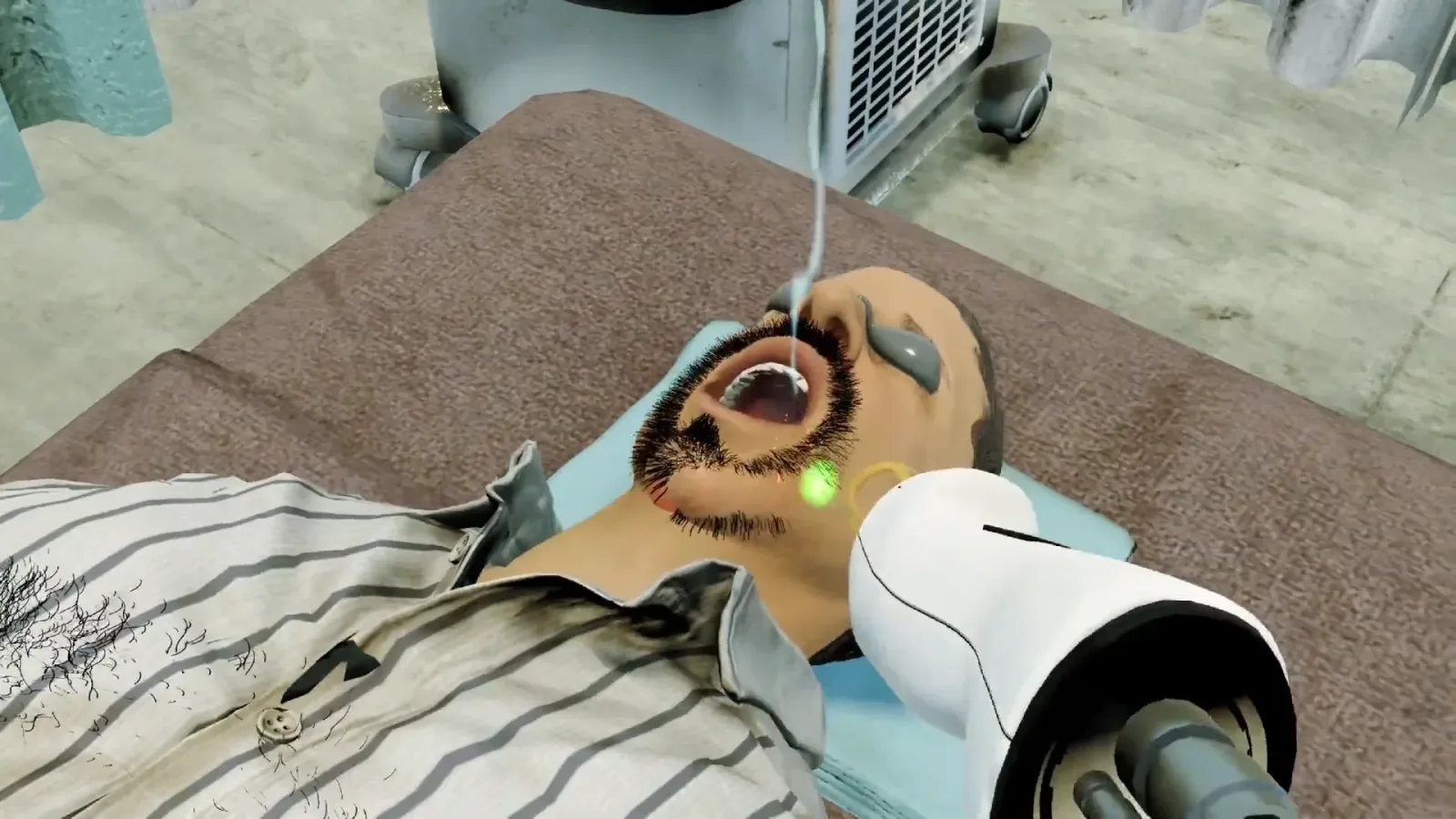
The title that earned Yoshida's most memorable praise was Hair Removal Salon Simulator, a game whose premise is exactly as direct as its name suggests. Players operate a salon and help a stream of male customers get rid of unwanted hair. The methods are far from ordinary: sticky tape, swords, fire, and even a miniature goat are among the tools or approaches involved in the process.
It is a deliberately bizarre concept, but Yoshida identified an immediately understandable appeal underneath its grotesque presentation. He compared the game's sensation to PowerWash Simulator, describing the act of continually clearing away hair as creepy yet satisfying. For him, its unusual setting and exaggerated visual direction add a layer of absurdity to a basic cleanup loop that can be rewarding on its own.
A familiar satisfaction loop with an intentionally uncomfortable twist
Simulation games frequently turn routine tasks into their central attraction. Cleaning, sorting, restoring, organizing, repairing, and maintaining can all create a clear before-and-after rhythm. The player sees a problem, applies the right tool, and watches the mess disappear. That structure can be compelling even when the activity being represented would not sound especially exciting outside a game.
For useful background on this topic, read The Witcher 3: Wild Hunt - Remastered Debuts With a 94 Metascore on PC.
Hair Removal Salon Simulator appears to take that familiar formula in a much stranger direction. Rather than presenting a relaxing restoration project or a tidy workplace task, it leans into the discomfort of its subject matter. The men arriving at the salon, the focus on dense body hair, and the extreme removal methods make it difficult to confuse the game with a conventional beauty or management simulator.
That contrast is what makes Yoshida's response notable. The appeal is not simply that the game is weird. Its weirdness seems to be built around a loop that players already understand: make an unpleasant surface clean, keep working until the job is done, and take satisfaction from the transformation. The result may be unsettling, but the foundation is recognizably tactile and immediate.
There is also a comic quality to the idea of applying increasingly inappropriate tools to a salon problem. A sword or a goat is not what most people would expect to see in a grooming game. Those choices suggest that the developers are not attempting a realistic recreation of hair-removal work. Instead, the simulation label becomes a setup for physical comedy, visual exaggeration, and the question of just how far a simple task can be pushed before it becomes ridiculous.
Sonic Pico Park joins an eclectic group of recommendations
Yoshida's Tokyo Game Show selections were not limited to salon absurdity. He also highlighted Sonic Pico Park, the new indie collaboration involving Sonic the Hedgehog and the cooperative puzzle series Pico Park. Even without further details about the project, the pairing is an intriguing one. Sonic is defined by speed, momentum, and a long-running history as one of gaming's most recognizable mascots, while Pico Park is known for cooperative play built around communication and coordinated problem-solving.
The crossover stands out because it places an established character in an indie-minded context. Collaborations like this can introduce a large audience to a smaller series while also giving a famous property room to experiment outside its usual genre expectations. A Sonic project does not automatically need to be a high-speed platformer for the collaboration to be interesting; the attraction can come from seeing how an iconic character is reinterpreted through another game's systems.
It also fits Yoshida's broader history. During his years at PlayStation, he was associated both with major console releases and with outspoken support for independent creators. He regularly shared recommendations for smaller games, and that visibility made him a familiar figure in indie circles. His enthusiasm became prominent enough that Capybara Games included him as a playable character in Super Time Force Ultra.
That background gives added context to a recommendation list that can move comfortably between a Sonic collaboration and a game about aggressively removing hair. The common thread is not genre, budget, tone, or visual style. It is an interest in ideas that feel distinctive at a glance and, more importantly, have a specific playable hook behind them.
Horror and discovery round out the Tokyo Game Show favorites
Two other games mentioned among Yoshida's favorites were Finding Polka and the first-person horror game Haunted Streamer. Their inclusion reinforces just how varied the selection is. One is described as looking delightful, while the other belongs to a horror space that naturally contrasts with both colorful Sonic imagery and the grotesque comedy of a hair-removal simulator.
Haunted Streamer in particular points to the continuing flexibility of horror as an indie category. First-person horror can work through atmosphere, vulnerability, a confined setting, sudden shocks, or the slow realization that something is wrong. A title involving a streamer also has the potential to draw on contemporary online culture, though the available details do not establish exactly how its premise is structured. What is clear is that Yoshida saw enough appeal in it to place it among his event highlights.
Finding Polka, meanwhile, occupies a much lighter-sounding corner of the list. Its presence is a useful reminder that discovery at a large game show is not always about the loudest announcement or the most immediately marketable concept. A title can make an impression through charm, personality, art direction, or a premise that simply feels inviting. With so many games competing for attention, an appealing identity can be as important as a familiar brand.
Why Yoshida's recommendations still matter
Yoshida is no longer at Sony, but his voice still carries weight because of both his experience and his consistent enthusiasm for independent games. Earlier in his career, he produced several landmark games for the original PlayStation. In later years, he became particularly visible as an advocate for developers working outside the biggest-budget end of the industry.
That makes his recommendations useful less as a declaration of which games are objectively "best" and more as a glimpse at the kinds of ideas that can thrive when creators are willing to be specific. A hair salon game does not need to be broadly conventional if it understands why its cleanup mechanics are satisfying. A Sonic project can be compelling because it brings a global character into contact with a smaller series. A horror game can attract attention by filtering a recognizable modern activity through dread and uncertainty.
Tokyo Game Show is a natural setting for that kind of variety. Major publishers and established franchises command substantial attention at the event, but the show also provides a place where unusual projects can be seen beside them. The gap between a massive character brand and a bizarre simulator can look enormous on paper. In practice, both can benefit from the same thing: a clear concept that prompts players to stop, look, and wonder how it feels to play.
For Hair Removal Salon Simulator, the answer appears to be a combination of revulsion and satisfaction. Yoshida's reaction captures the contradiction neatly. The game is creepy, yet its repeated act of clearing away hair has a compelling quality. That may not make the salon premise appealing to everyone, but it does make it memorable.
An indie-focused outlook after Sony
Since leaving Sony in 2025, Yoshida has continued to speak positively about indie development in interviews and public appearances. His Tokyo Game Show picks suggest that his curiosity remains intact. Rather than concentrating only on polished blockbuster-style presentations or recognizable franchises, he is still drawn to games with unusual mechanical ideas and strong individual identities.
That is encouraging for creators whose games do not fit neatly into a standard marketing category. Some projects are easy to summarize because they resemble familiar hits. Others are difficult to explain without prompting a baffled laugh. The latter group can be risky, but it is often where games find their own voices. A simulator about hair removal using tape, flames, blades, and a tiny goat is unlikely to disappear into the background.
Yoshida's selections ultimately offer a small snapshot of what makes a game show valuable: unexpected discoveries. Sonic Pico Park brings an established icon into an indie collaboration. Haunted Streamer offers first-person horror. Finding Polka brings a more delightful note. And Hair Removal Salon Simulator turns a basic cleanup compulsion into something gleefully unpleasant. They may have little in common on the surface, but each appears designed to leave a distinct impression.
For Yoshida, that distinctiveness remains worth celebrating. Whether players are looking for cooperative puzzles, unsettling horror, cheerful discovery, or the strange satisfaction of clearing hair from virtual customers, his Tokyo Game Show favorites make a case for games that are willing to be different.
Community
Discussion
Start the conversation.
No comments have been posted yet.