

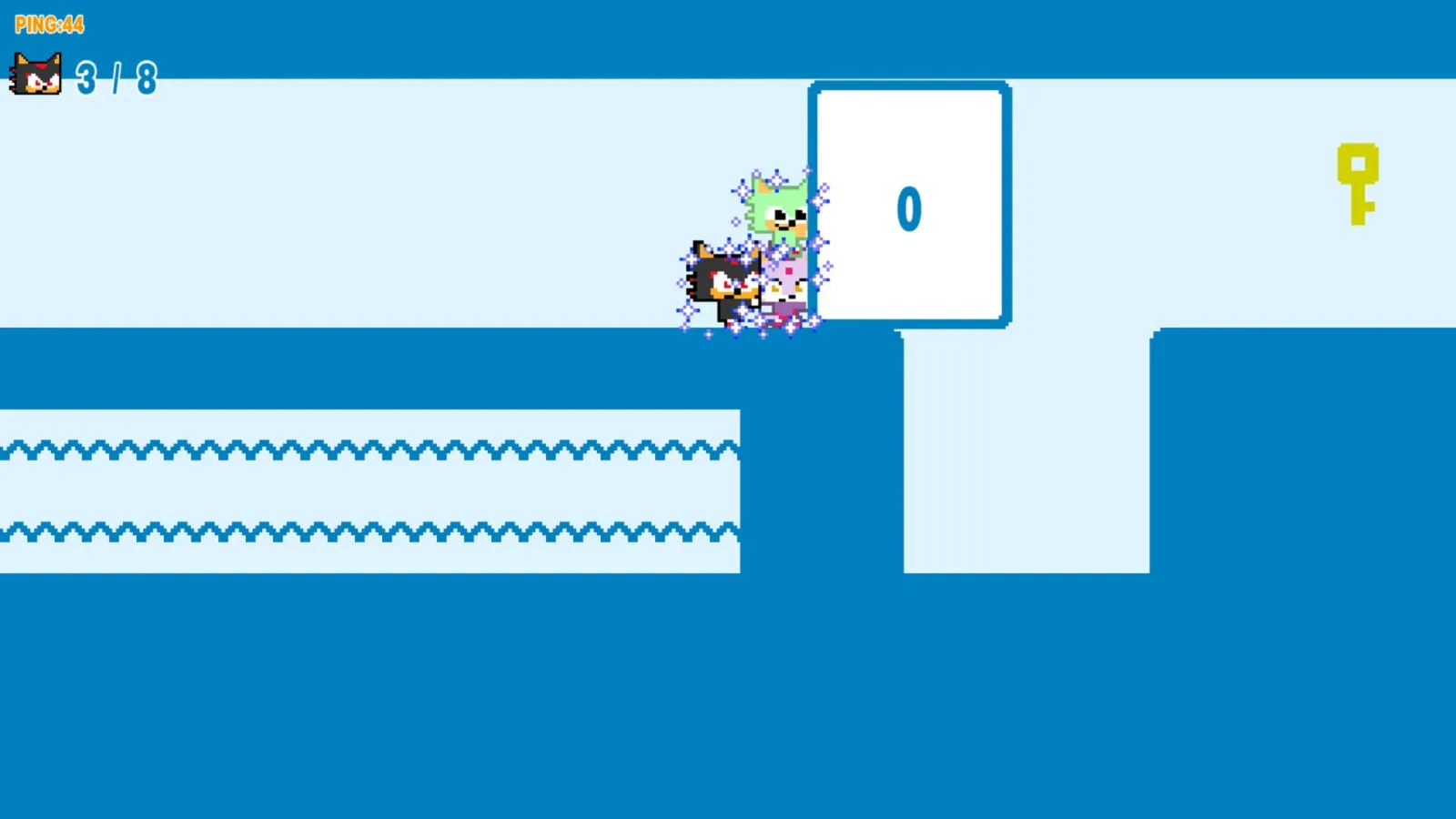
Sonic Pico Park is set to arrive on November 12, and its central idea is simple: take the tightly coordinated co-op puzzle-platforming of Pico Park and place it inside Sega's Sonic universe. In practice, that combination appears to be anything but simple. A complete playthrough can demand constant communication, precise movement, split-second reactions, and the patience to endure the fact that one player's small mistake can send an entire team back to the start.
That sounds punishing, but it is also the point. A recent three-hour session with a group of friends demonstrated why this kind of deliberately unruly cooperative game can be so effective. Sonic Pico Park creates an environment where every cleared puzzle feels earned, every failure becomes communal, and every character selection has the potential to become an ongoing joke. It is a game built to turn coordination into comedy.
A Sonic crossover that embraces Pico Park's strengths
The core of the experience remains rooted in the familiar Pico Park formula. Players work together through a series of compact stages, dealing with environmental hazards, switches, moving platforms, objects that must be passed between teammates, and challenges that require everyone to understand their role. Nobody can simply sprint ahead and carry the group. Even a player who technically knows the solution still needs everyone else to execute it.
That tension is especially amusing when applied to a series as associated with speed as Sonic. The game may feature hedgehogs, rivals, robots, and Sonic's wider cast, but progress is often about restraint rather than velocity. Some stages demand that players move slowly, wait for one another, or maintain careful formation. Going fast may be the franchise's most famous slogan, but Sonic Pico Park reportedly finds plenty of opportunities to make excessive momentum the exact reason a team fails.
For useful background on this topic, read Nintendo Says Switch 2 Price Will Not Rise Again Despite Sales Slowdown.
The result is a cooperative game where conversation is not optional. Voice chat can help groups explain plans in real time, but it cannot prevent distractions, impulsive button presses, or people interpreting the same instruction in completely different ways. The game includes preset text responses for communication, though the prospect of tackling its trickier puzzles without a live conversation sounds particularly daunting. Even with everyone speaking to one another, failure remains part of the expected rhythm.
Character choices become part of the comedy
One of Sonic Pico Park's clearest additions is its use of the franchise's expansive cast. Sonic, Blaze the Cat, Espio, Silver, Rouge, Vector, Charmy, Cream, Shadow, E-123 Omega, Big the Cat, and others provide much more personality than a typical set of color-coded cooperative avatars. That matters in a game where players spend long stretches watching one another fail. A frustrating mistake becomes more memorable when it is attached to a recognizable character falling into a hazard or accidentally ruining a careful plan.
The roster also appears to include alternate or unusual character looks. One player chose a green Sonic variant, immediately earning criticism from the rest of the group and becoming the subject of repeated visual jokes. That kind of low-stakes teasing is practically an additional game system in a co-op title like this. Every player has a role in solving the puzzle, but they also have a character identity that can be blamed whenever the plan collapses.
For another perspective on this story, read Sonic Pico Park Turns Co-Op Puzzle Solving Into a Character-Fueled Comedy of Errors.
There are small details that suggest the crossover is not merely a Sonic-themed coat of paint. Silver, for example, has an idle floating animation, a fitting flourish for the character. Such touches are minor in isolation, but they help the cast feel considered within the new format. They are also the sort of details that players notice during inevitable downtime between attempts.
The large-character levels change the rules
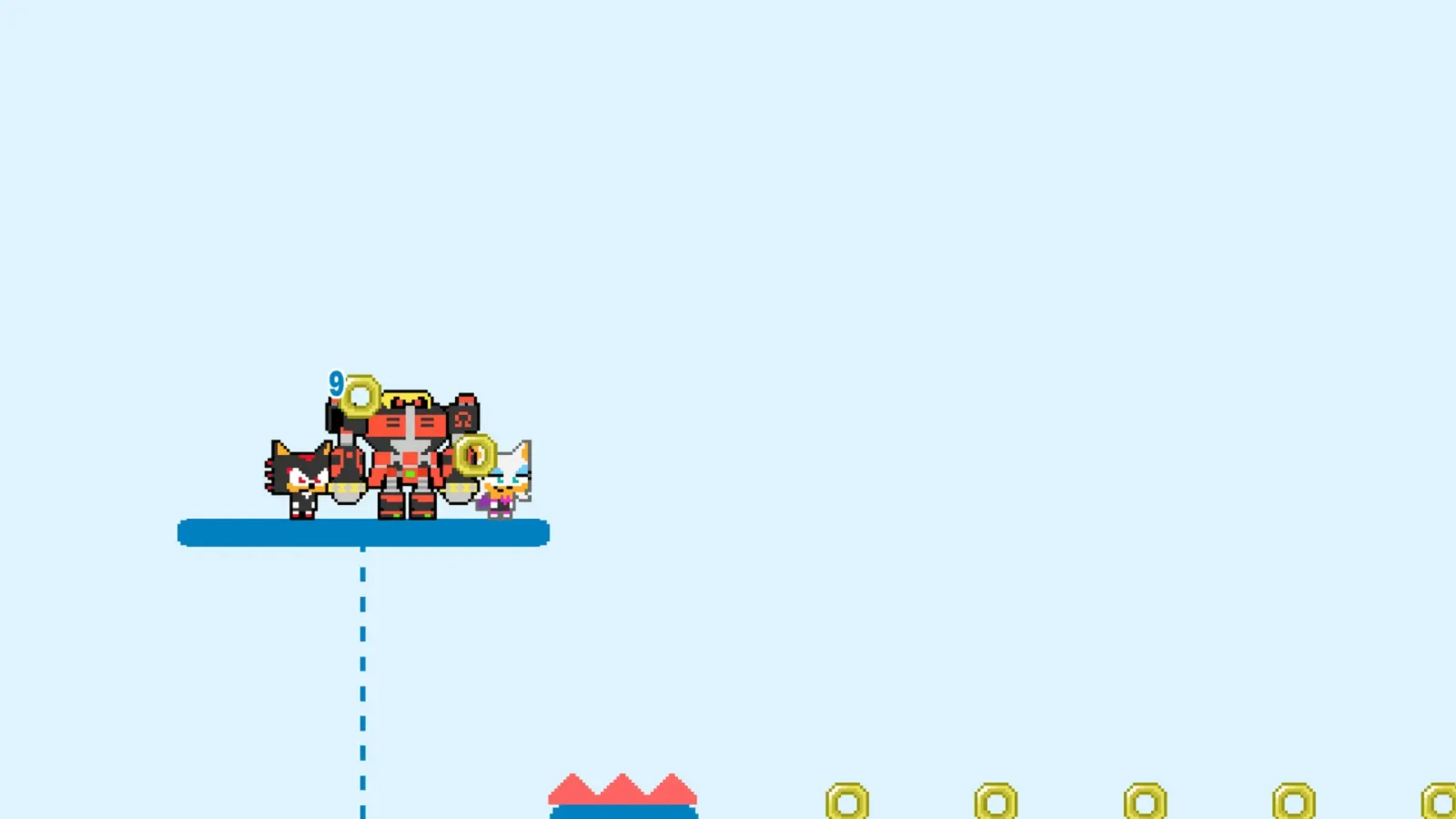
Among the most memorable stages are levels centered on much bigger characters. Big the Cat is not simply another face in the selection screen. His size makes him a physical danger to teammates, transforming him into a moving obstacle as much as a cooperative partner. Vector and Omega also enter this larger-scale style of level, giving the session a change of pace from the standard small-character puzzles.
These stages seem to be especially good at generating emergent chaos. Once players are given a towering character capable of accidentally hurting the rest of the group, movement becomes harder to predict and positioning gains another layer of importance. The oversized cast members create the kind of scenario where a successful run can feel like an organized stunt, while a failed run can look like an accidental slapstick routine.
They also provide a sense of anticipation as players make their way through the game. Reaching Big's stage became a goal in itself during the play session, while the arrival of Omega was met with excitement. That is a useful example of how Sonic Pico Park can make the roster part of its progression. Players are not only wondering what kind of puzzle comes next; they are also curious which character gimmick might change the nature of the next set of challenges.
Communication helps, but it does not guarantee success
Many of Sonic Pico Park's puzzles seem designed around an idealized version of teamwork: players call out a plan, follow it cleanly, and reach the exit together. Actual groups rarely operate that way for long. Someone may misunderstand a direction. Someone else may run ahead. Another person may be looking up an old cartoon episode instead of paying attention to a key instruction. The gap between what a group intends to do and what it actually does is where the game's personality emerges.
One hazard involved passing a ring among teammates to survive. Other challenges had players managing pinball flippers, traversing a grinding-themed stage, navigating traps, and using one another's heads as platforms. These are all ideas that sound manageable on paper. With several people controlling separate characters at once, though, each solution can become fragile. A player can press the wrong button, miss a cue, or react a fraction too late and undo a near-perfect attempt.
This is why blame becomes a recurring language in co-op games, even between friends. The important distinction is that Sonic Pico Park appears to make failures quick enough, bizarre enough, and frequent enough that irritation can loop back around into laughter. A player admits to zoning out while a level is underway. Someone rolls into spikes after being distracted by a completely unrelated conversation. Another spins off a teammate's head and immediately recognizes that nobody else was responsible. These moments are not side stories separate from the game; they are the experience the game is designed to produce.
A good fit for groups willing to get loud
Sonic Pico Park may not be the ideal game for a group seeking a quiet, methodical puzzle night. It asks players to stay alert, communicate clearly, and accept repeated resets. The same qualities that make it rewarding can also make it exhausting if even one person is disengaged. Yet for friends who enjoy games that turn failure into a shared spectacle, that volatility is a major selling point.
The session's running jokes grew far beyond any individual stage. Character names were repeated until they became catchphrases, the group kept returning to the oversized characters, and ordinary tutorial prompts were turned into increasingly ridiculous bits. That is the social value of a game like this. A strong co-op puzzle game does not just provide a sequence of obstacles. It gives a group a reason to develop its own language, grudges, celebrations, and stories about who did or did not "lock in" when it mattered.
There is even room for the game to create entertaining disagreement about what would make it more chaotic. One suggestion during the session was to award points based on who reached an exit first, while another player argued that the team hardly needed more competition layered onto an already unruly design. That debate gets at the balancing act behind Sonic Pico Park. Cooperation is essential, but a little friction between players is what makes the cooperation memorable.
More than a novelty crossover
Sonic Pico Park is undeniably a strange thing to exist. It brings a character-driven action-platforming universe into a genre defined by stop-and-start communication and repeated collective mistakes. But that strange fit may be exactly why it works. Sonic's cast supplies recognizable personalities and visual flair, while Pico Park's design gives those characters a new kind of stage on which to collide, cooperate, and cause trouble for one another.
For groups prepared to shout instructions, apologize for mistimed jumps, argue playfully about responsibility, and celebrate even the smallest breakthrough, Sonic Pico Park looks positioned to be a lively party game. It is not about proving who is the best Sonic player. It is about discovering whether a room full of friends can get through dozens of puzzles without completely losing patience with one another.
Judging by the three-hour run, the answer can be yes--provided everyone is willing to accept that getting along may involve a surprising number of traps, failed jumps, oversized cats, and claims that the fastest way forward is somehow always somebody else's fault.
Community
Discussion
Start the conversation.
No comments have been posted yet.