

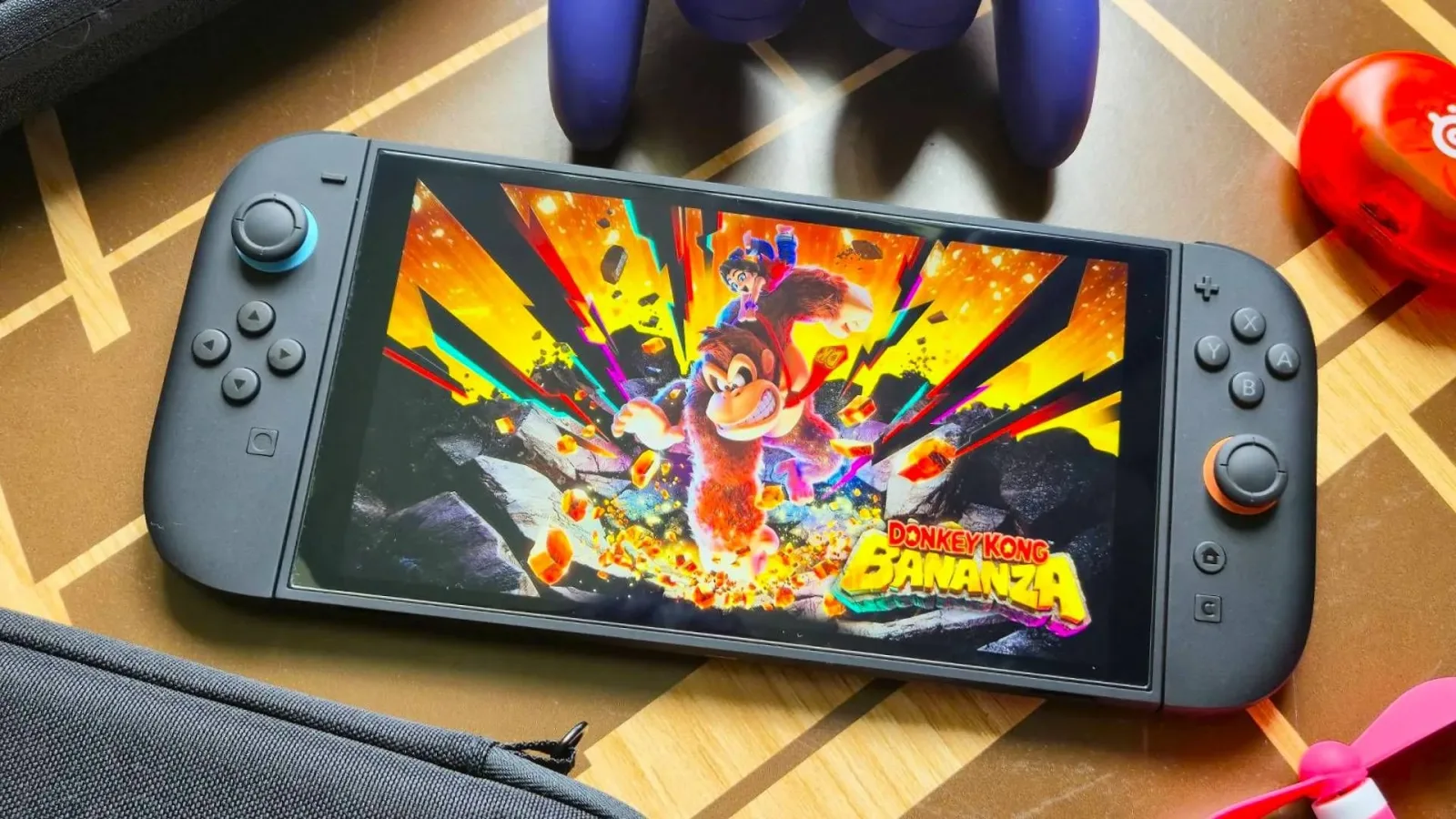
Former Sony Interactive Entertainment Worldwide Studios president Shuhei Yoshida believes Sony and Nintendo may be better served by making their current console generations last as long as possible. In comments made during a recent podcast appearance, Yoshida pointed to rising hardware costs, finite consumer budgets, and the continued capability of today's gaming devices as reasons not to rush toward a new round of machines.
Yoshida's view arrives at a particularly interesting point for the console business. Nintendo only launched Switch 2 last year and is still supporting the original Switch, while PlayStation 5 and Xbox Series X|S will each reach their sixth anniversary in November. Historically, six or seven years has often been enough time for Sony to introduce its next major console generation. But the economics surrounding components, manufacturing, and consumer spending could make that established rhythm less certain than it once was.
Rather than framing the situation as a need for a more powerful successor, Yoshida suggested that the installed base and player satisfaction surrounding current systems should carry substantial weight. His argument is simple: many people already own capable devices, and the incentive to replace them becomes much weaker when the cost of doing so rises sharply.
Current systems may already be enough for many players
Yoshida said Sony and Nintendo have already sold enough hardware that they could afford to delay the arrival of a fresh generation. In his view, the PS5 and Switch 2 remain systems that players are happy to use, which creates room for platform holders to keep building their libraries, services, and communities without immediately asking consumers to buy another expensive device.
For useful background on this topic, read Hades 2 Was Not an Automatic Sequel for Supergiant Games.
"People have [a] finite budget," Yoshida said, arguing that PC and console-specific components have risen in price more dramatically than other forms of entertainment.
That observation gets at a major challenge facing the industry. A console transition has traditionally promised a visible leap: cleaner image quality, faster loading, more ambitious game worlds, higher frame rates, and new technical features. Yet the cost of delivering that leap may be rising at the same time that the practical benefits are becoming harder for some consumers to notice. For players who already have a PS5, a Switch 2, or a sufficiently powerful PC, a replacement may not feel essential.
Yoshida suggested that owners of those systems will likely remain content to play the games available to them rather than actively look for an upgrade. That is not an argument that technical progress has stopped. It is instead an acknowledgement that purchase decisions are made around value, personal finances, game libraries, and perceived need--not only graphical capability.
For Sony, a longer PS5 cycle could mean more time to grow its audience and give developers a stable target platform. For Nintendo, the idea aligns naturally with its position: Switch 2 is still early in its life, and the original Switch continues to have a role in the market. Both companies could benefit from extending the period in which software teams can target a large, established audience.
Component prices could reshape the usual hardware calendar
The issue is not limited to consoles. Yoshida described his own experience shopping for a new gaming PC, explaining that he had purchased his previous machine five years ago and had been considering an upgrade more recently. By the time he was ready to make that move, however, a price increase had arrived. He said he had been late to replace his PC and wished he had upgraded a year earlier, before prices began to climb.
That personal example illustrates the wider concern. Enthusiasts may be interested in better performance, but interest does not automatically become a purchase when upgrades become substantially more expensive. The same calculation applies even more strongly to households that buy one machine for several people, parents weighing a console against other expenses, or players who already have years of games waiting in their libraries.
Yoshida expects many consumers to think in similar terms. If a current console still receives major releases and performs well enough, the higher cost of a successor could encourage them to wait. A company might technically be ready to launch a new platform, but that does not guarantee buyers will be equally ready to move.
The result could be a generation defined less by a rapid race to the next box and more by sustained support for the machines already in living rooms. That support could take many forms: larger cross-generation releases, continued operating-system updates, stronger backward compatibility, subscription libraries, remasters, and games designed to scale across several hardware configurations.
Developers may not be demanding a faster transition
Yoshida also questioned the assumption that developers are universally calling for another major increase in console power. He said he does not believe large numbers of players are demanding "more power," and he expressed similar doubt that developers broadly see better hardware as the urgent answer.
That matters because game production has become increasingly complex and expensive. More powerful hardware can unlock creative opportunities, but it can also raise expectations around art assets, animation, visual detail, and technical scope. A new generation is not simply a chance to make games prettier; it can also become a new production challenge for teams already facing long development cycles.
A stable platform can offer benefits. Developers gain a familiar technical environment, optimization knowledge improves over time, and the potential customer base grows as more systems are sold. In a market where many publishers are examining budgets and trying to reduce risk, the appeal of making games for a mature and widely owned platform is clear.
Of course, the desire for greater power will not disappear. Some genres and projects will always benefit from stronger CPUs, faster storage, additional memory, and more advanced graphics features. New hardware also creates excitement, gives manufacturers a fresh marketing moment, and can enable ideas that are difficult to deliver on older machines. Yoshida's point is not that future consoles lack a purpose, but that the business and consumer case for launching them may not be as immediate as previous generation timelines suggest.
Sony's next move is the big question
Sony's historical release pattern makes the PS5's age especially notable. Major PlayStation generations have commonly arrived around six or seven years apart. If that cadence were repeated exactly, discussion around a PlayStation 6 would be approaching a critical stage, with a launch potentially expected relatively soon.
Yet a release later than next November would be unusual under that historical pattern. The present market, however, is not necessarily suited to historical assumptions. Hardware prices, supply conditions, the rising cost of games, and changing player habits all make the current period different from earlier transitions.
There is also a distinction between having a successor in development and deciding when it makes commercial sense to release it. Sony can plan future hardware while continuing to support PS5 for years. The two ideas are not mutually exclusive. A longer generation does not mean there is no next PlayStation; it may simply mean Sony is more selective about the moment it asks players to make another major investment.
Nintendo's outlook is different because Switch 2 is newly released. Its challenge is less about whether to move on and more about establishing the new machine while navigating the enormous audience built by the original Switch. Continuing support for the older system could help preserve that audience, while Switch 2 titles and features provide a route forward for players ready to upgrade.
Xbox faces a different competitive calculation
Yoshida characterized Xbox as a company trying to change the competitive landscape, making its situation distinct from Sony's and Nintendo's. Microsoft has increasingly pursued a broader approach that spans console hardware, PC, subscription services, cloud access, and games released across multiple devices.
That strategy means Xbox's next hardware decisions may be judged by a different measure than a conventional generation change. Microsoft still has a console audience to serve, but its wider ambitions could influence how it thinks about hardware pricing, device design, ecosystem access, and the relationship between dedicated machines and other ways to play.
Yoshida acknowledged that this could make Xbox's path difficult, while also calling the period ahead exciting. The next year may offer a clearer picture of how each platform holder responds to a market where players want great games but may be increasingly cautious about expensive upgrades.
A longer generation would put games before boxes
If Yoshida's prediction proves accurate, the industry could spend the next several years focusing more on software and services than on an immediate hardware reset. PS5 and Switch 2 owners would have more time to build libraries without feeling that their systems are nearing obsolescence. Developers could continue working with proven technology. Platform holders could avoid putting a new premium-priced device in front of consumers before those consumers are ready.
There are no confirmed changes to Sony's or Nintendo's future hardware plans in Yoshida's comments. They represent the perspective of a prominent former PlayStation executive rather than an announced strategy. Still, his reasoning reflects a question that will likely define the coming years: when current machines remain capable and replacement costs rise, is a faster console cycle really the best answer?
For Yoshida, the answer appears to be patience. With players enjoying PS5 and Switch 2, and with budgets under pressure, he believes the current generation has plenty of life left.
Community
Discussion
Start the conversation.
No comments have been posted yet.