

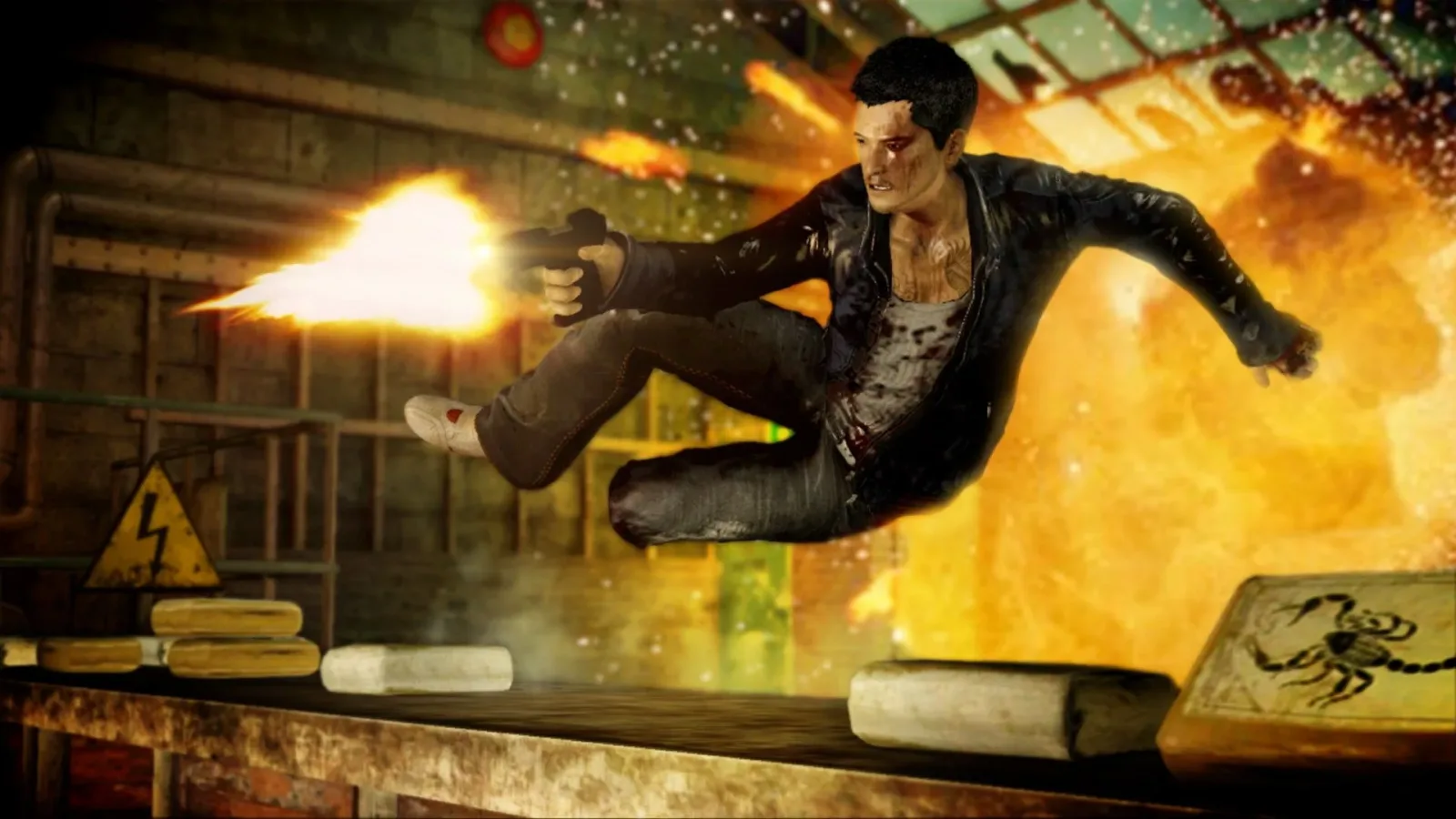
The long-gestating Sleeping Dogs movie remains in development, with director Timo Tjahjanto offering a clear explanation for the project's measured pace: bringing Wei Shen's journey from an open-world game to a feature film is a more complicated task than simply retelling the original plot.
Tjahjanto, who is attached to direct the adaptation starring Simu Liu, said that he and Liu are continuing to work toward making the film happen. The director described the challenge as staying faithful to Wei Shen's story while also adding the necessary layers to make the material function in a movie format. Rather than rushing that process, the pair are taking time to pursue what Tjahjanto called the best version of the film.
It is an update that may not bring a production date, casting list, or release window, but it does reaffirm that the project is still being actively shaped. For fans who have waited years for another major chapter in the franchise, the emphasis on patience will likely be encouraging--and familiar. Sleeping Dogs has long inspired a devoted audience precisely because its central story, its setting, and its combat all carry a distinct identity that would be easy to dilute in a less careful adaptation.
A feature-film version needs more than a mission-by-mission retelling
Released in 2012, Sleeping Dogs follows undercover police officer Wei Shen as he infiltrates a Triad organization amid conflict between warring groups. Its crime-drama premise gives the game an immediately cinematic foundation, but its storytelling was built around the freedoms and scale of an open-world video game. Players were able to spend substantial time driving through the city, taking on side activities, fighting through street encounters, and becoming immersed in the setting beyond the main narrative.
For useful background on this topic, read Witchbrook Sets January 28 Launch After Years of Anticipation.
A film cannot use that same structure. A feature has to establish its protagonist, stakes, emotional conflicts, criminal underworld, and action language within a much tighter running time. It also needs to make choices about what to foreground, what to reduce, and what to leave out. Tjahjanto's comments suggest the team is grappling directly with that balancing act instead of treating the game's storyline as a blueprint that can be transferred unchanged to the screen.
Wei Shen's position at the center of the story is especially important. He is not merely an action hero passing through a crime setting; he is an undercover officer whose work forces him to inhabit competing identities. The dramatic tension comes from the pressure of maintaining his cover, the relationships formed inside the organization he has entered, and the consequences of violence in a world where allegiance can shift quickly. Keeping those dimensions intact is likely vital if the film is to feel like Sleeping Dogs rather than a broadly familiar crime-action movie using its name.
That is where the idea of "adding layers" becomes meaningful. A movie may need to streamline the game's branching activities and broad collection of missions, but it can use the saved space to deepen character motivations, clarify relationships, and give the central conflict a satisfying cinematic arc. The difficult part is doing so without losing the elements that made players care about Wei Shen in the first place.
Simu Liu has championed the project for more than a year
Liu first announced that a Sleeping Dogs film was in development in February 2025. The project has been a personal priority for the actor, who has previously spoken about the difficulty of getting studios to understand why the property matters to its audience. That concern reflects the unusual position of the game: it was warmly received and has maintained lasting affection among fans, yet it has not grown into the ongoing sequel-driven series many hoped it would become.
The actor's involvement gives the adaptation a central creative advocate as well as a star. Liu is also set to return as Shang-Chi in Avengers: Doomsday, but his continued public support for Sleeping Dogs has made clear that this is not a casual attachment. Earlier in 2026, he said he hoped to share positive news on the movie soon. Tjahjanto's more recent remarks now provide a useful status check: progress is continuing, though the team is prioritizing the creative work required before the project moves further ahead.
That kind of development period can test fans' patience, particularly when a beloved game has gone so long without a new mainline entry. Yet a careful approach is arguably appropriate for a property whose fanbase is invested in more than its premise. The memory of Sleeping Dogs is tied to Wei Shen, to the game's emotional stakes, to its urban atmosphere, and to the physicality of its close-quarters combat. A successful movie needs to understand how those pieces fit together.
Timo Tjahjanto brings action experience to the adaptation
Tjahjanto's attachment became public in December of last year, marking a significant step for the film after Liu's initial announcement. The filmmaker has recently directed Nobody 2, and his arrival gives the project a director with experience in hard-hitting action. That connection is naturally notable for Sleeping Dogs, a game remembered for combat that favored punches, throws, counters, and environmental takedowns over simple gunfire alone.
The game's fights had a blunt, kinetic quality. Wei Shen's martial arts ability was not just a visual flourish; it made the player's approach to encounters feel different from many other open-world crime games. Translating that identity to a movie will require more than staging a handful of fight scenes. The action must express Wei Shen's skills, danger, and state of mind while remaining connected to the broader undercover narrative.
There is also the matter of tone. Sleeping Dogs could be brutal, but it was not defined solely by brutality. Its best moments paired action with tension, loyalty, loss, and the increasing weight of Wei Shen's double life. Tjahjanto's statement about loyalty to the story indicates that the adaptation is being approached as a narrative challenge first, not simply as a vehicle for recognizable fight choreography.
Why the original still matters
More than a decade after launch, Sleeping Dogs remains a cult favorite. Its original release drew praise for its compelling story and forceful combat, while its cast included names such as Emma Stone. The game's staying power is evident in the continued calls for a sequel and in the enthusiasm surrounding the movie's announcement.
For longtime players, a film also represents a chance to see one of gaming's most memorable protagonists reach a wider audience. Wei Shen's story has the kind of focused personal conflict that can work on screen, but the adaptation will face heightened expectations because the game remains so fondly remembered. Viewers who know the original will be watching for its characters and emotional core; newcomers will need a movie that stands confidently on its own.
Liu has even expressed hope that a film project could eventually help lead to a game sequel. There is no announced sequel at present, and no indication that one is in production. Still, the idea speaks to the broader ambition surrounding the adaptation. A strong film would not only revisit a beloved game--it could renew attention around a franchise that many players have never stopped wanting to see continue.
No release details yet, but development continues
At this stage, the Sleeping Dogs movie does not have a confirmed release date, and further production details have not been announced. Tjahjanto's update should therefore be read as a creative-progress report rather than a sign that the film is about to enter theaters.
What has been confirmed is the project's central direction: Simu Liu is leading the adaptation, Timo Tjahjanto is set to direct, and the team is working to preserve the heart of Wei Shen's tale while making the changes necessary for cinema. For a game whose appeal rests on a particular mix of undercover drama, martial arts action, and a richly realized criminal underworld, that is a sensible priority.
The wait may continue, but the people guiding the film appear aware of what is at stake. Turning Sleeping Dogs into a movie means making difficult decisions about story, character, action, and scope. The goal, as Tjahjanto has framed it, is not the fastest possible adaptation. It is the best version they can make.
Community
Discussion
Start the conversation.
No comments have been posted yet.