

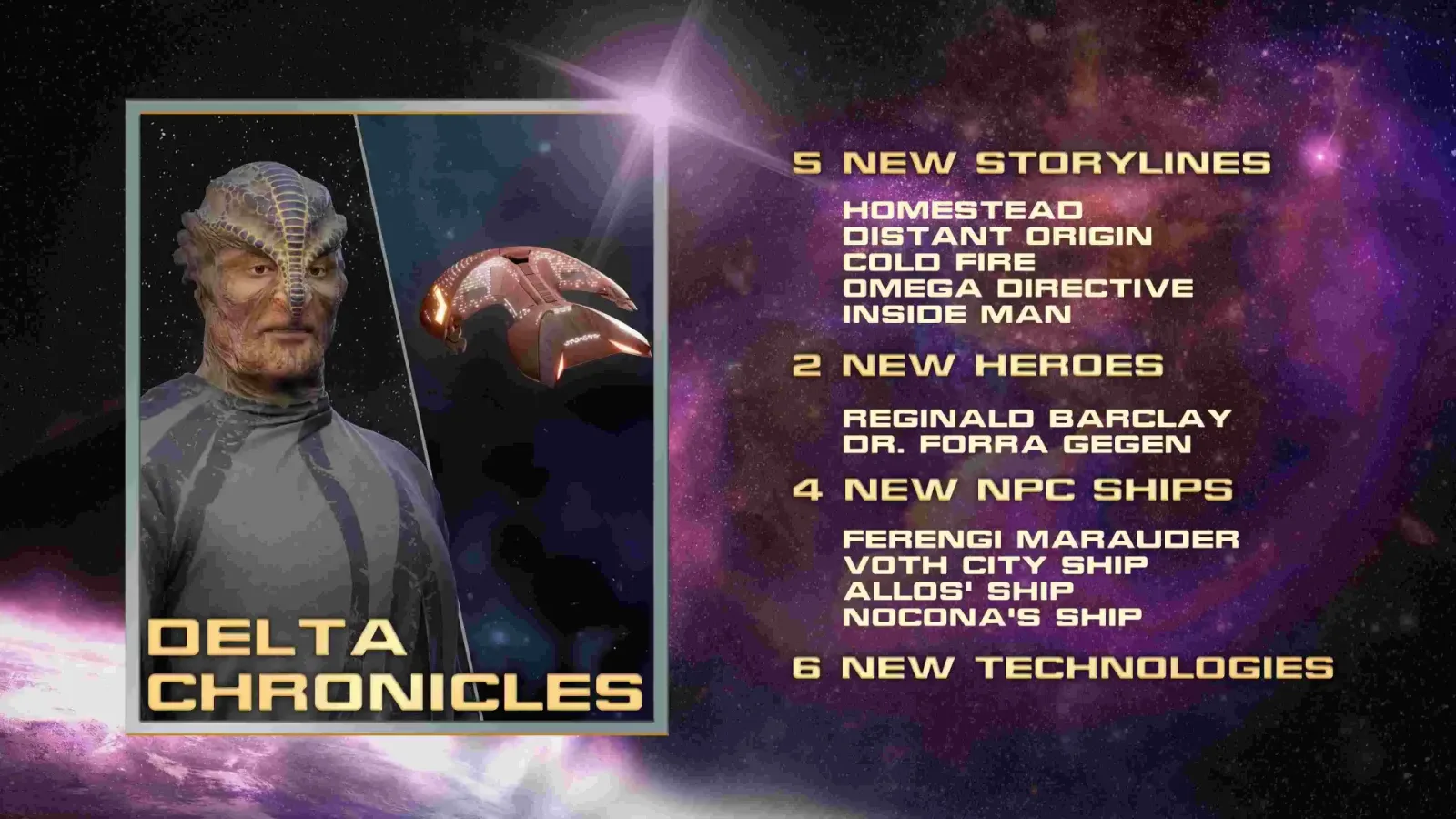
Star Trek: Voyager - Across the Unknown has expanded with a new free mode designed for repeat runs, unpredictable challenges and increasingly demanding choices. Publisher Daedalic Entertainment and developer gameXcite have released Q Trials, a roguelite mode available to every owner of the base game, alongside the paid Equinox DLC.
Both additions are available now on PC, Nintendo Switch 2, PlayStation 5 and Xbox Series X|S. Q Trials requires no additional purchase beyond the base game, while Equinox is included with the Expansion Pass and can also be bought separately. The base game is required for either experience.
The update shifts the game toward a more replay-driven structure without replacing its main campaign. Rather than taking players through a fixed voyage, Q Trials sends them into repeated attempts across the Delta Quadrant under the watchful eye of Q. Procedural events, randomized sector objectives and modifiers mean that each run can demand a different approach to survival, crew management and long-term planning.
Q Turns the Delta Quadrant Into a Repeatable Test
Q Trials is built around the kind of impossible scenarios and pointed dilemmas that fit the omnipotent being overseeing it. Players must work through a succession of sectors that grow more difficult as a run continues. Each sector has its own goal, while procedural events ensure that a familiar route or strategy may not play out the same way twice.
For useful background on this topic, read Defender Is Being Rebuilt for Amiga in Early Alpha.
That structure is central to the mode's roguelite design. Success is not solely about surviving a single chain of events; it is also about building momentum for future attempts. At the conclusion of every sector, Q offers a selection of three rewards. These can include resources, additional heroes or new technologies, and the decisions made there feed into permanent meta progression.
The reward choice should create tension between a run's immediate needs and its broader potential. Resources may help stabilize a struggling crew in the present, while a hero or technology could open up a different tactical direction. Since the mode is based on escalating runs and changing conditions, the best option may depend on a player's ship layout, current crew and the hazards already encountered.
Q Trials also puts a large emphasis on experimentation. The mode includes extensive customization options for crew assignments, allowing players to test combinations and strategies that might not be their usual choice. One example highlighted for the update is the ability to promote Harry Kim to Captain. That possibility underlines the mode's willingness to let players explore alternative command structures and unusual versions of a Voyager crew facing the same hostile region of space.
Modifiers Bring Benefits With Real Costs
Randomness alone is not the only source of pressure in Q Trials. The mode introduces Q modifiers, gameplay-altering conditions that present a useful advantage alongside a notable drawback. These are intended to make players assess whether a tempting bonus is worth the complications attached to it.
One modifier can double crew quarters capacity, but it does so with increased sickness. Another may provide extra morale while reducing building speed. A further option raises the likelihood of extreme outcomes, both positive and negative. These examples make the intended trade-offs clear: a modifier can solve one problem only to create another that may be harder to control later.
That system has the potential to make every run feel less like a straightforward optimization exercise. More crew capacity sounds valuable when space is limited, for example, but sickness can place a different strain on the ship and its personnel. Improved morale might support the crew's resilience, yet slower construction can hurt a player who needs to adapt the ship quickly. Q's challenges appear designed to ask not whether a choice is universally good, but whether it is good enough for the circumstances at hand.
Those trade-offs also complement the permanent progression rewards. A run can involve choices that are risky in the short term while still helping establish options for later attempts. The result is a format aimed at players who want to revisit the Delta Quadrant beyond the main campaign, learn from failed expeditions and pursue new combinations of crew, technology and sector decisions.
Equinox Offers a Much Harsher Alternative Ship
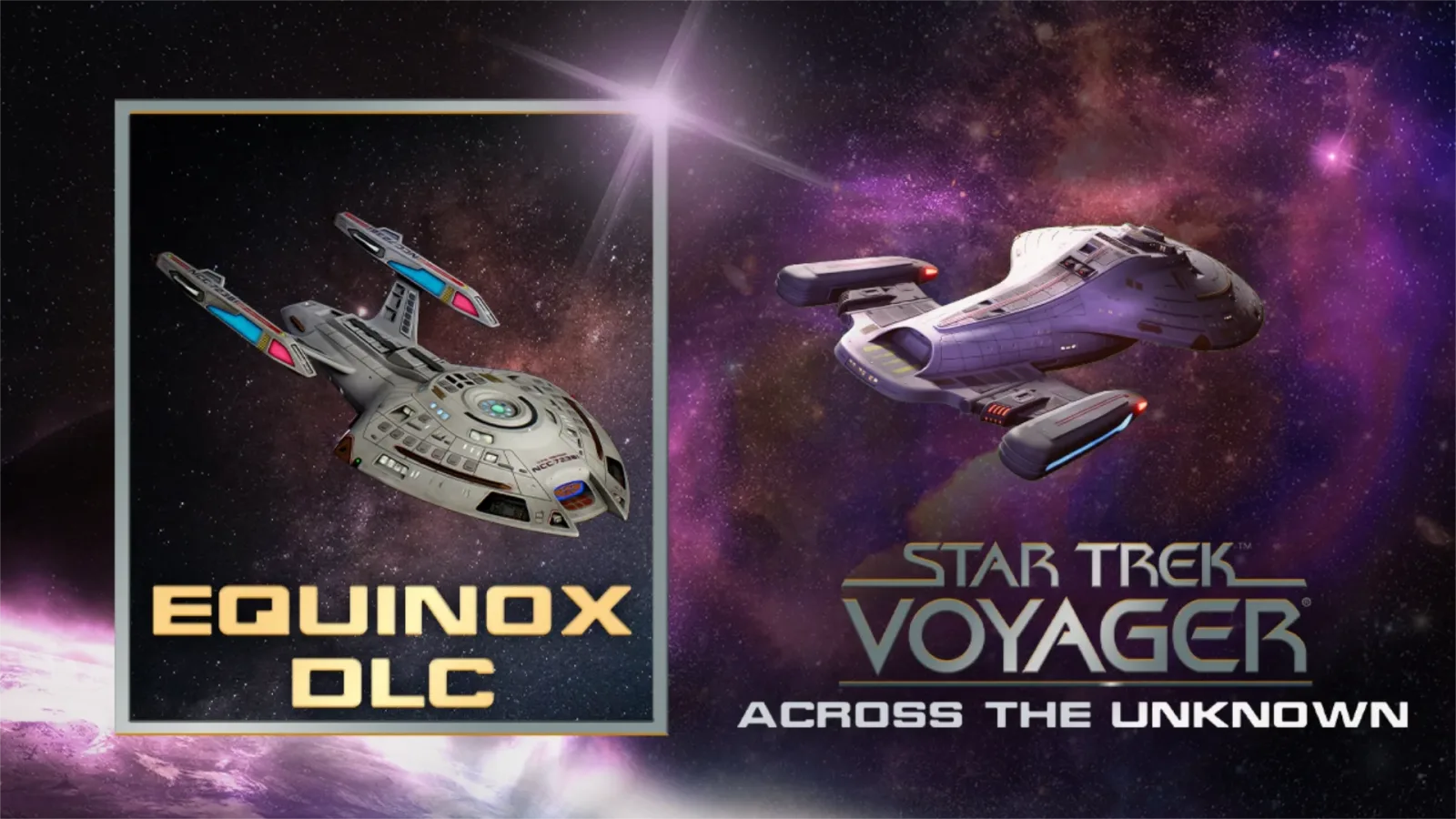
For players looking for an even more restrictive version of Q Trials, the Equinox DLC adds the U.S.S. Equinox as an alternate playable ship. The vessel is exclusive to Q Trials and cannot be used to alter the game's main campaign. Its arrival is not framed as a simple new skin or cosmetic option; it changes the practical limits under which players operate.
The Equinox is considerably smaller than the U.S.S. Voyager. It has less space for building, a lower crew capacity and reduced warp power. Those limitations should make each room placement, recruitment decision and resource commitment carry more weight. Where Voyager can offer room to absorb a setback, the Equinox appears intended to force leaner planning and harder compromises.
The DLC's focus on scarcity is particularly suited to Q Trials' procedural design. A run already asks players to respond to changing goals and unexpected events. Doing so from a ship with fewer physical and personnel resources raises the stakes. Players may need to prioritize a narrower set of systems, make decisions earlier than they would aboard Voyager and accept that they cannot prepare for every possible complication.
Equinox also adds three heroes available only in Q Trials. Captain Rudolph Ransom, captain of the U.S.S. Equinox and an accomplished xenobiologist, joins First Officer Maxwell Burke, described as a pragmatic Starfleet officer with technical expertise, and Crewman Noah Lessing, whose loyalty and resolve are tested during the ship's ordeal. None of the three can be recruited for the main campaign.
Keeping these characters tied to the separate mode gives Equinox its own identity within the larger game. Their presence should make the DLC's runs feel distinct not only because of the ship's constraints, but because the available personnel and their story context differ from Voyager's familiar crew.
A Questline Built Around the Equinox's Moral Crisis
The expansion includes an Equinox-exclusive questline named Spirits of Good Fortune. It follows the tragic situation surrounding the ship after it becomes stranded and is driven toward desperation by the Krowtonan Guard. The crew subsequently encounters the Ankari, setting up a moral choice with potentially far-reaching consequences.
Players can pursue a faster route home, but doing so comes at the possible cost of abandoning Starfleet principles. That dilemma is a fitting match for the Equinox's limited capabilities and the broader Q Trials setup. Survival is not presented as a purely mechanical matter of collecting supplies and improving a ship; it is also connected to the values players choose to preserve when pressure is at its highest.
Q monitors the choices made throughout the mode, making the player's judgment part of the experience rather than a background detail. The combination of procedural sector challenges, reward selections, modifiers and ethical decisions means that a run is shaped by more than combat or construction efficiency. It is also shaped by what players are willing to risk, sacrifice or compromise in order to continue.
What the New Content Means for Players
Q Trials gives Star Trek: Voyager - Across the Unknown a repeatable mode with a clear reason to return after campaign progress: its runs change through procedural events, sector goals and high-impact modifiers. The permanent meta progression layer provides continuity between attempts, while the open-ended crew assignments invite players to experiment with ideas that may not fit a conventional campaign strategy.
Because the mode is free for all base-game owners, existing players can try that structure immediately without purchasing the Expansion Pass. Equinox is the optional step for those who want a stricter challenge, a different ship, three exclusive heroes and the Spirits of Good Fortune questline. Its smaller vessel and reduced capabilities make it a deliberately demanding alternative rather than simply more content with the same conditions.
Q Trials and the Equinox DLC are available now for Star Trek: Voyager - Across the Unknown on PC, Nintendo Switch 2, PlayStation 5 and Xbox Series X|S.


Community
Discussion
Start the conversation.
No comments have been posted yet.