

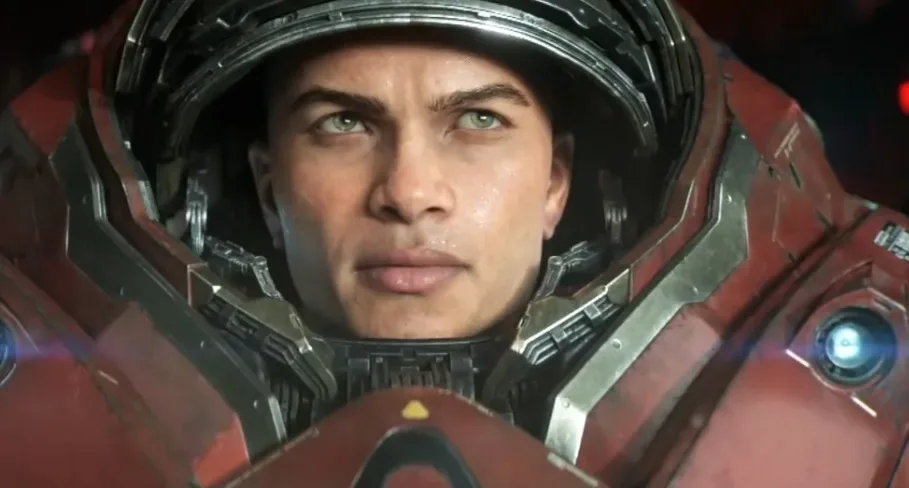
Blizzard has finally confirmed that a new StarCraft shooter is in development, but the project remains a distant prospect: it is targeting 2030. That unusually early reveal has naturally left fans with major questions about the format, perspective, setting, and scope of the long-awaited return to StarCraft outside its real-time strategy roots. Still, comments from StarCraft franchise lead Dan Hay have started to paint an intriguing picture.
Rather than describing the project solely through familiar shooter comparisons, Hay has pointed to a prestige Western drama as a creative reference. His ambition is for the game to potentially capture the interpersonal tension, contained cast, and rough sense of survival associated with Deadwood--except within the hostile science-fiction universe of StarCraft.
It is a striking idea for a series best known for galaxy-spanning warfare between Terrans, Zerg, and Protoss. The newly shown cinematic teaser emphasized military science fiction and a grim encounter with the Zerg, evoking the scale and intensity of a planetary conflict. Hay's comments, however, suggest Blizzard is equally interested in the smaller human stories inside that conflict: people who know one another, clash with one another, and nevertheless need one another to make it through an unforgiving situation.
A Smaller Cast in a Vast StarCraft Universe
Hay explained that he admired how Deadwood made its setting feel much larger than its central group of characters. The people within that group did not necessarily like one another, but their circumstances made cooperation essential. Applying that idea to StarCraft could give the shooter a more character-focused foundation than the teaser alone might imply.
For useful background on this topic, read World of Warcraft's Long-Ignored Sargeras Sword May Finally Matter in Midnight.
A "Deadwood in space" comparison does not mean the game will literally become a frontier Western with plasma rifles. Instead, it points toward a tone built around friction, dependency, and a close community facing constant pressure. StarCraft has plenty of places where that kind of story could fit: isolated Terran settlements, battered military units, outposts caught between larger powers, or survivors trying to endure a Zerg incursion.
That focus could also distinguish the game from simply being a sequence of large-scale battles. Hay has indicated that the shooter should include both major and more intimate moments. The result may be a campaign that lets players experience the spectacle expected from StarCraft while grounding it in relationships among a recurring cast.
At this stage, Blizzard has not announced the supporting characters, their factional loyalties, or the location of the story. There is also no confirmation that the game will adopt the exact narrative style implied by Hay's comparison. The comment is best understood as a statement of creative aspiration rather than a complete design outline. With years of development still ahead, many details could evolve.
For another perspective on this story, read StarCraft's New Shooter Is Eyeing a "Deadwood in Space" Feel Ahead of Its 2030 Launch.
A Terran Marine's Zero-to-Hero Story
One point has been more clearly established: the upcoming shooter will follow the experience of a Terran Marine. Hay characterized its narrative as the journey of a single character who grows from a relatively modest starting point into a hero. In a universe filled with psionic Protoss warriors, gigantic alien creatures, and imposing armored soldiers, choosing a Marine perspective offers a grounded way to explore the conflict.
Terran Marines are iconic to StarCraft, but they are also frequently presented in strategy games as disposable units within much larger armies. A dedicated shooter gives Blizzard an opportunity to make their armor, weapons, fear, endurance, and battlefield role feel personal. It also opens space for a story about what it costs for one ordinary combatant to survive and become exceptional amid wars that can engulf entire worlds.
Hay has also said the story will have a defined beginning, middle, and end. That strongly suggests a traditional, authored campaign with a clear narrative arc, rather than a purely emergent survival experience or an endless service-driven structure. This is particularly notable given the game's stated open-world direction. Open worlds can support lengthy exploration and optional activities, but Blizzard appears to want the Marine's progression to remain tied to a deliberate story with a destination.
The studio has not detailed whether players will create their own Marine or take control of a predefined protagonist. Nor has it specified the character's name, unit, place in Terran society, or relationship to established StarCraft figures. The teaser and Hay's remarks make the Zerg appear likely to be a major threat, though the full roles of the Protoss and other forces are not yet known.
Open-World Exploration and a World That Pushes Back
The biggest gameplay clue so far is Blizzard's stated intention to build an open-world experience. Hay described a game where players step out into the world, choose directions to explore, find things of interest, and make discoveries that may recall elements from earlier games. He also emphasized that StarCraft's factions are disruptive, and that the world ahead of players should actively resist them.
That wording leaves substantial room for interpretation. "Open world" can mean anything from a huge seamless map to several large explorable regions connected by a campaign. It can refer to free-roaming combat zones, exploration hubs, dynamic faction conflicts, or a structure that uses open spaces between more linear missions. Blizzard has not clarified which approach this StarCraft shooter will use.
Still, the promise that the world will "push back" is notable. A reactive environment would fit StarCraft's core premise, where no territory stays safe for long and rival powers can rapidly turn a local problem into a crisis. The Zerg in particular are well suited to this type of tension, as an infestation can alter a landscape, transform its inhabitants, and create an escalating threat rather than a static enemy presence.
Hay's earlier career working on Far Cry will inevitably invite comparisons, particularly because that series is so closely associated with open-world movement, enemy-controlled territory, emergent action, and systems that respond to player disruption. However, Blizzard has not confirmed that the StarCraft shooter will use familiar open-world conventions such as outpost liberation, map takeover mechanics, or a faction balance system. Those possibilities remain speculation, not announced features.
What is clear is that Blizzard wants exploration to be part of the appeal. Players should apparently be able to look across the landscape, head toward something that catches their attention, and find meaningful discoveries there. The challenge will be making that freedom feel true to StarCraft rather than merely placing its visual identity over a standard shooter template.
Perspective, Armor, and Progression Remain Unconfirmed
The game's camera perspective is another important unanswered question. Hay strongly implied that a third-person viewpoint could make sense, arguing that there is value in seeing the enormous power armor worn by a Marine. Given the scale of a Marine--described in the discussion as a roughly 10-foot, 1,000-pound figure in armor--a third-person format would certainly allow players to appreciate the silhouette and physicality of the suit.
That said, Blizzard has not formally confirmed third-person gameplay. A shooter can blend perspectives, shift camera positions for particular sequences, or retain a first-person perspective while showing armor in menus and cinematics. Until the developer provides direct confirmation, fans should treat the third-person suggestion as a hint rather than a finalized feature.
Similarly, Hay suggested the Marine may have swappable equipment and an upgrade path. Such systems could be crucial to the zero-to-hero premise, letting a player's combat capabilities visibly expand over the course of the campaign. But it is not yet known whether this will resemble a loot shooter, a curated arsenal progression, character skill trees, modular armor pieces, or another kind of system entirely.
The distinction matters. StarCraft's units have always been defined by clear battlefield identities, and any equipment system will need to preserve the feeling of playing a Marine while allowing enough flexibility for an open-world adventure. Blizzard has offered no concrete details on weapons, cooperative play, competitive multiplayer, difficulty structure, or whether the shooter will include any online components at all.
Why Reveal a Game So Far Ahead?
Announcing a game four years before its target launch can seem premature, particularly when so much is still deliberately vague. Hay has explained that a date gives the team a target to rally around. In his view, 2030 is not just a public promise but a frame that helps keep the project focused on delivering something fun, powerful, and exploration-driven.
There is also a community element to the early announcement. StarCraft fans have waited a long time for a major new project, and the team believes it is important to start sharing at least a small piece of what it is making. Hay has described the opportunity to work on the franchise as winning the "cosmic lottery," underscoring the significance Blizzard places on its return.
For now, the new StarCraft shooter is defined more by direction than by finished specifics: a Terran Marine protagonist, a complete character-driven campaign, open-world exploration, hostile factions that react to the player, and an aspiration toward a tense ensemble drama in space. Those are ambitious ingredients, especially for a series with such a strong strategic legacy.
The long road to 2030 means the eventual game could change considerably before launch. But Blizzard's early message is that this will not simply be StarCraft viewed through a different camera. The studio is aiming to make the universe feel inhabited at ground level, where survival depends not only on firepower and armor, but on the difficult people standing beside you.
Community
Discussion
Start the conversation.
No comments have been posted yet.