

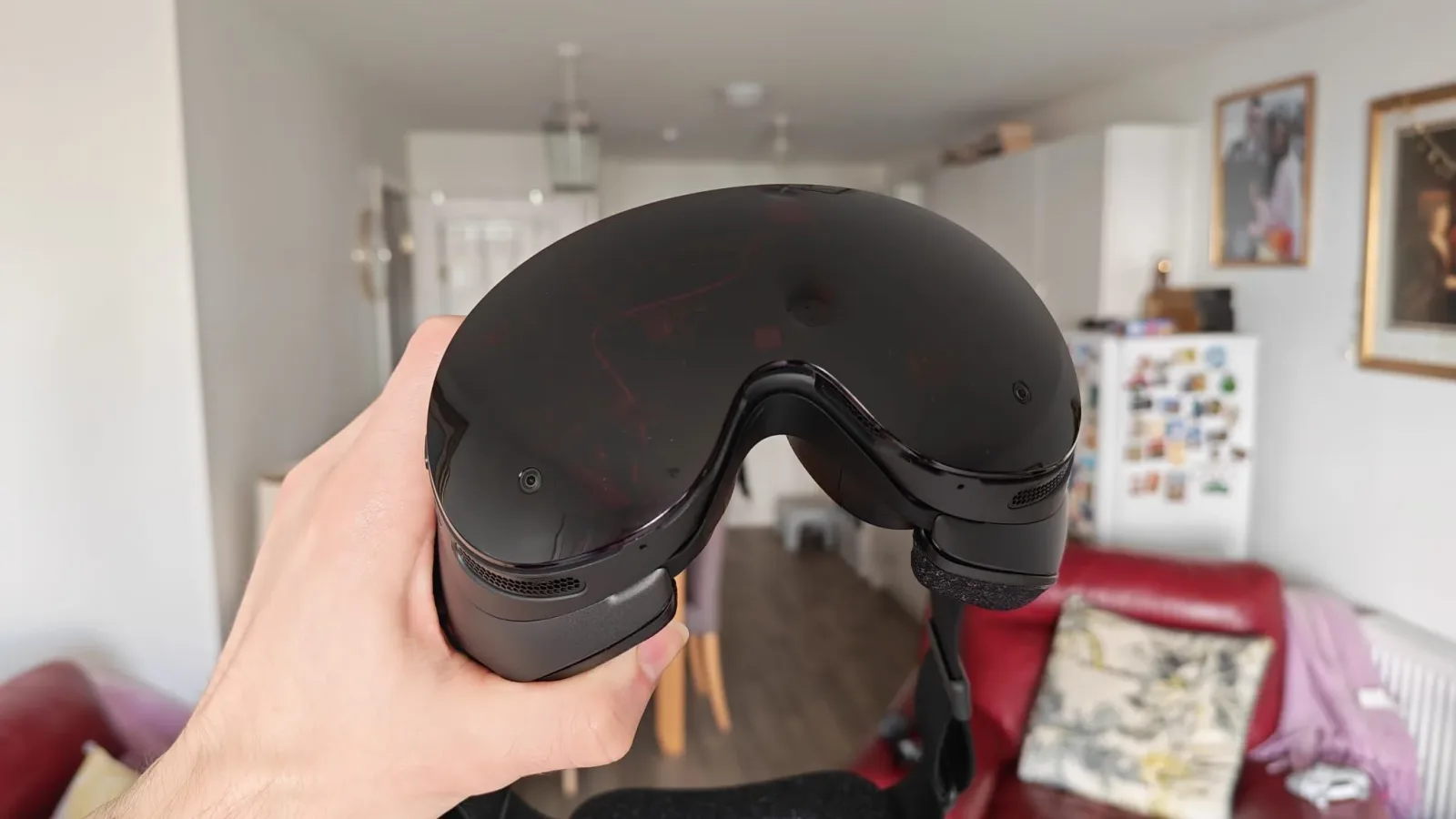
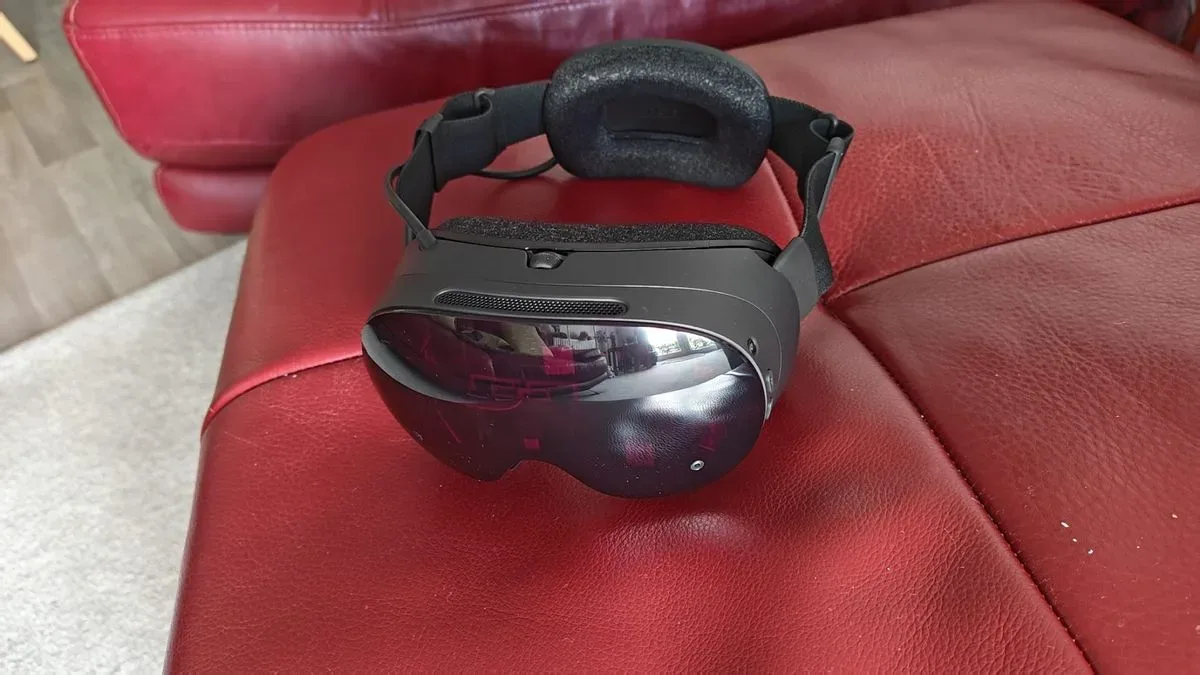
Valve's Steam Frame may be positioned as a VR headset, but an extended evening spent playing Big Walk points toward a potentially more important role: a portable way to access native Steam games on a huge virtual display. In a real-world test away from a gaming PC, the headset handled a multiplayer session of House House's social adventure without apparent performance or controller-latency problems, though battery life and current software limitations remain meaningful caveats.
The test took place during an overnight stay in Edinburgh, roughly an hour from home, in an environment with no gaming computer available. That meant missing a planned session with friends would normally have been the likely outcome. Instead, the Steam Frame was used as a self-contained gaming machine: it was connected to Wi-Fi, paired with a Bluetooth controller, and used to join the group in Big Walk.
That scenario is less glamorous than a showcase built around room-scale virtual reality, but it may say more about how some players could actually use the hardware. The appeal was not merely that a game could be displayed in a headset. It was that an existing Steam library could travel with the player and run locally in a place where a traditional desktop setup was unavailable.
Big Walk ran smoothly, with one major battery compromise
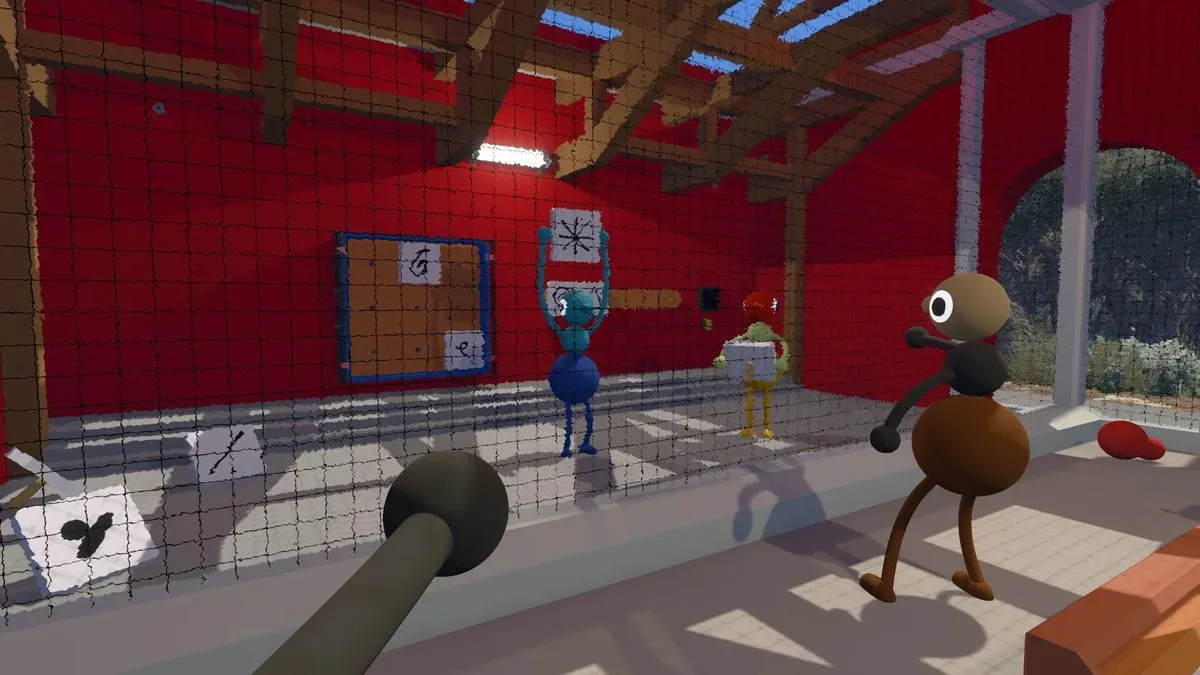
Beginning at around 9pm, the Big Walk session continued until approximately 12.30am. The game was run at low settings and was said to perform flawlessly on Steam Frame. That is notable because Big Walk can be more demanding than its relaxed appearance suggests, with the game reported to stutter at times even on PlayStation 5.
For useful background on this topic, read MediEvil Recomp Beta Brings Sir Daniel Fortesque to PC With Modern Visual Options.
There was, however, no avoiding the battery limitation. The headset needed to be plugged in after around an hour of play because its charge was draining too quickly to sustain the session wirelessly. For a device being considered partly as a travel-friendly Steam machine, that is an important qualification. It can still be useful in a hotel room, family living room, or other temporary setup where a power outlet is nearby, but long multiplayer nights may require a cable rather than complete freedom of movement.
The paired Bluetooth controller reportedly worked without issues or noticeable input delay. Aside from tightening the headset fit a couple of times during the evening, the setup remained comfortable enough to keep the session going for several hours. That is a practical result that matters for non-VR games. A headset can offer a giant private screen, but that advantage quickly disappears if its comfort, wireless connections, or controls make a regular gamepad session feel cumbersome.
A cinematic screen for Steam games
The broader idea resembles the cinematic display modes available on other VR hardware. PlayStation VR2, for example, can present standard PlayStation 5 titles on a large virtual screen. Meta's Quest headsets can also be used with a controller for services and applications including Xbox cloud gaming, Steam Link, and Virtual Desktop.
Steam Frame's distinction, based on this testing, is that it can run Steam games natively rather than depending exclusively on game streaming from another device or from the cloud. That changes the value proposition. A streamed game setup can be useful, but it depends heavily on network quality and generally assumes there is another PC or remote service doing the actual rendering. Steam Frame is instead being judged more like a compact Steam PC with a face-mounted display.
It does not appear to be a replacement for a powerful desktop computer, nor is it being presented as one. The newest, graphics-intensive AAA releases are expected to be a difficult fit for the headset's hardware. But the portable-PC comparison makes more sense when considering lighter titles, indies, older games, and games with flexible settings. Alongside Big Walk, testing has included Hades and TowerFall Ascension, both of which were said to run beautifully.
That selection also outlines a likely sweet spot. Games that are immediately readable on a virtual flat screen, work well with a gamepad, and do not demand the latest high-end GPU performance may be especially suitable. Those are many of the same games players already take to a Steam Deck when travelling.
Why the Steam Deck comparison matters
Descriptions of Valve's headset before its formal identity was established had suggested a device that could feel like a Steam Deck worn on the face. A few hours with Big Walk make that comparison easier to understand. The Steam Deck built its audience not by leading every raw-specification contest, but by making a large PC library convenient to use in more places.
Steam Frame may offer a version of that convenience without requiring the player to hold a handheld screen. Instead, it provides an oversized personal display inside the headset. For someone travelling without a monitor, television, gaming laptop, or desktop PC, that could be a compelling alternative. The private-screen aspect is also useful in shared spaces, whether that is a family home, a hotel, or any room where occupying the television is impractical.
There is another hardware advantage in the package: the included controllers have a gamepad mode, meaning a separate controller is not necessarily required. In the Big Walk case, a Bluetooth pad was already on hand and was used successfully, but players wanting to travel lighter may not have to bring an additional peripheral for every traditional game.
Still, Steam Frame should not be treated as a direct Steam Deck substitute in every situation. A handheld's built-in screen is instantly accessible, its battery expectations are well understood, and it does not require a headset to be secured on the user's head. Steam Frame's virtual display can be more immersive and potentially far larger, but it also creates different comfort and endurance demands. The best option will depend on whether a player values the compact familiarity of a handheld or the isolated, cinema-like scale of a headset.
The price looks different beside premium handheld PCs
At £899 / $1,059, Steam Frame is unquestionably expensive. It sits above the price range many people associate with accessible VR and is positioned alongside alternatives such as Meta Quest 3, which costs $599, and the less expensive Quest 3S. Those devices can cover some similar ground through streaming tools and cloud gaming, though their approaches differ from running Steam software locally on the headset.
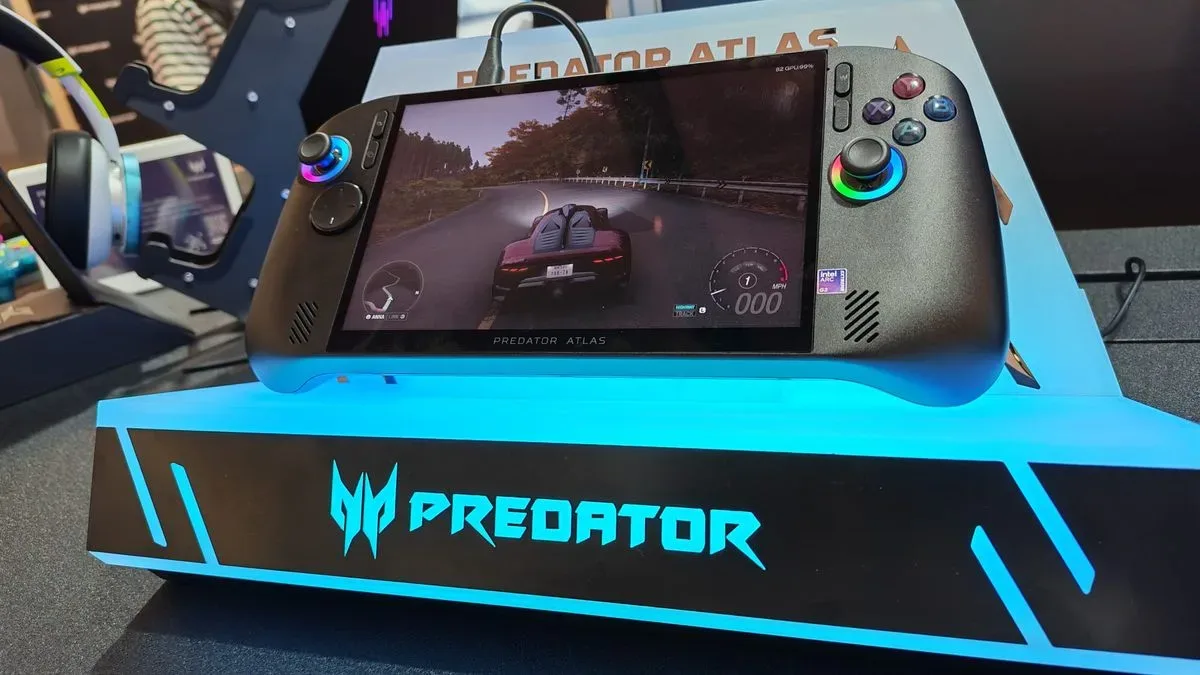
The more revealing comparison may be with premium handheld PCs. Machines using newer Intel graphics hardware, including the Acer Predator Atlas, can cost as much as or more than Steam Frame; the Predator Atlas has been cited at $1,300. From that perspective, Valve's headset is not cheap, but it is not uniquely priced for portable PC hardware either.
That does not automatically make the cost easy to justify. Performance comparisons and detailed benchmarks will be essential, particularly against portable PCs in the same broad price bracket. Buyers will want to know exactly which Steam games are viable, what compromises are needed, and how sustained performance changes when the device is running on battery. The test with Big Walk is encouraging, but it is only one game and one use case.
Voice chat and desktop-mode gaps need attention
The biggest non-performance concern from the multiplayer test is communication. Big Walk uses proximity chat, which meant the group could talk without needing an external voice-chat solution. Had the game required Discord, the evening may have gone very differently. Discord has so far proved difficult to get running on Steam Frame.
That is not a small omission for a device that could be used as a portable social-gaming machine. Many multiplayer groups rely on Discord regardless of the game they are playing, especially for co-op titles, competitive games, and groups split across platforms. A headset that runs a game well but cannot easily support the group's usual voice channel risks becoming inconvenient at exactly the moments it should be most valuable.
The current desktop mode also does not match the experience available on Steam Deck. That suggests Steam Frame's non-VR PC use is still developing and may require more software refinement. Discord support could arrive later, but it remains a limitation for prospective buyers right now rather than a solved problem.
Non-VR gaming could become Steam Frame's defining extra
VR releases continue to arrive, but the pace and breadth of the software library can leave headset owners searching for more reasons to use their hardware. Steam Frame's ability to turn into a large virtual screen for standard Steam games could therefore be more than a side feature. For some players, it may become the main attraction.
The early Big Walk experience supports that possibility. It combined local Steam gaming, reliable Bluetooth controller support, a workable travel setup, and enough comfort for a multi-hour session. The battery required a cable, the game needed modest settings, and integrated Discord support was absent, but the central promise held up: Valve's headset made it possible to take part in a planned PC gaming night without access to a gaming PC.
Steam Frame's eventual success will depend on the full VR offering, display quality, battery behavior, performance across a far wider Steam catalog, and how quickly its desktop software improves. Yet its strongest differentiator may be this hybrid identity. If it can reliably function as both a VR headset and a portable native Steam gaming system, it may occupy a space that conventional headsets and handhelds each only partly cover.

Community
Discussion
Start the conversation.
No comments have been posted yet.