

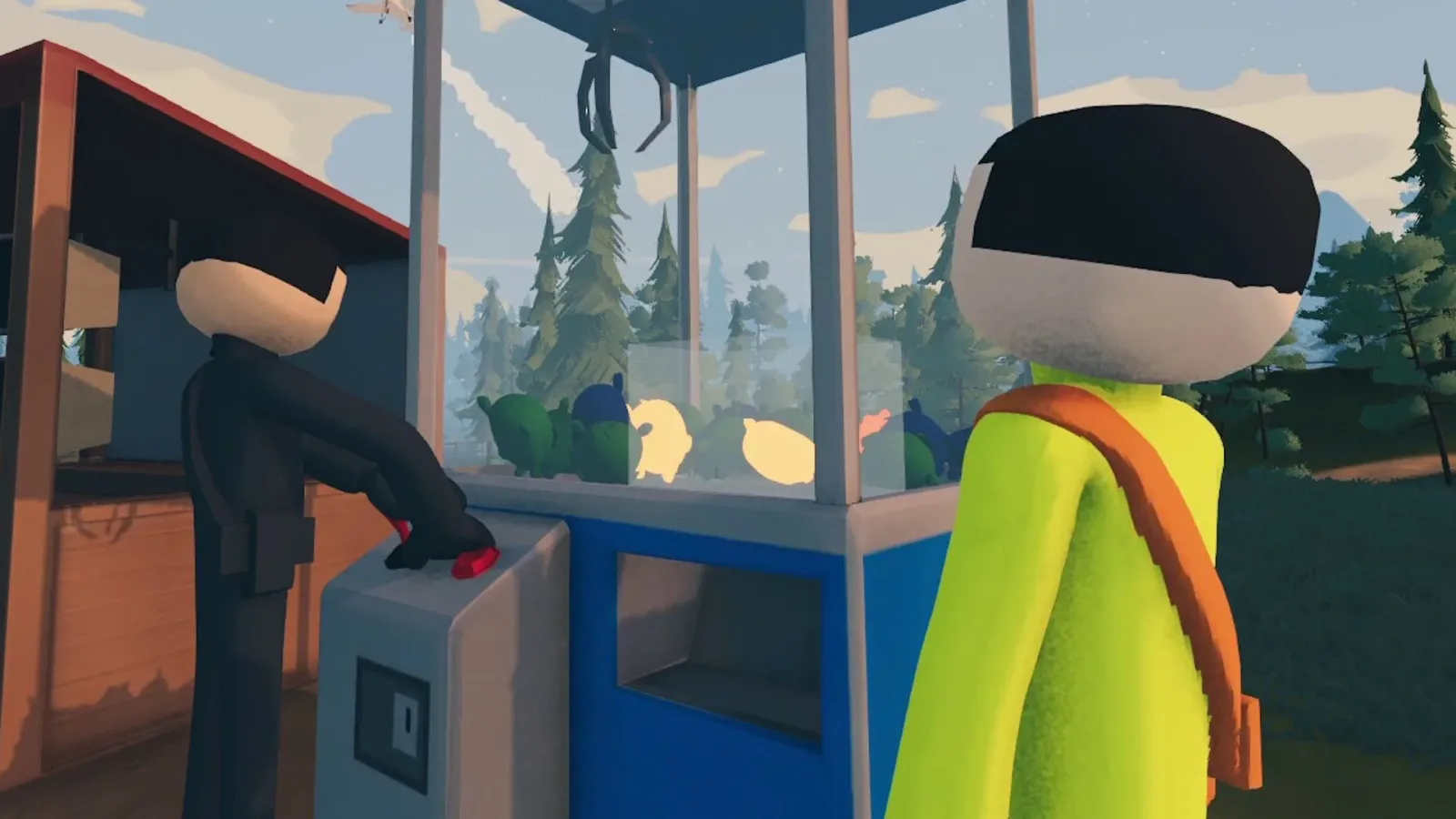
Steam's latest copycat dispute has taken an unusually pointed turn: a developer behind one of several near-identical needle-in-a-haystack games has accused another creator of copying not just its premise, but its actual code. The accused game, A Game About Needle In A Haystack, now appears to have been removed from Steam, leaving a public allegation, archived storefront material, and plenty of unanswered questions around a remarkably crowded niche built around looking for tiny objects in piles of hay.
The complaint came from a Steam user named Jahvin, who is linked through their Steam profile to NoGlyph, the developer of Needle In A Haystack. In a Steam discussion post that has since disappeared alongside the accused game's Steam presence, Jahvin claimed that code had been taken from NoGlyph's title without permission. The post was captured in a Reddit thread before it was removed.
The central allegation is much more serious than the increasingly familiar complaint that another game has imitated a successful concept. Jahvin said that the competing release included code copied from Needle In A Haystack, and asserted that the overlap was so close that NoGlyph's own error messages remained intact, word for word.
A dispute beyond a shared idea
Games copying trends is nothing new on PC storefronts. A breakout hit can quickly attract projects with similar mechanics, store descriptions, visual styles, and even titles engineered to appear beside the original in searches. The viral appeal of searching through a huge haystack for a single needle is particularly easy to understand: it is a simple joke, instantly legible in a screenshot or short video, and it offers a challenge that can be stretched into cooperative play, competitive runs, or a streamer-friendly endurance test.
For useful background on this topic, read Assassin's Creed Valhalla New Game+ Arrives November 5, Six Years After Launch.
But there is an important line between building a game around a familiar idea and taking material from another developer's project. Copyright does not generally give a studio ownership of a broad gameplay concept. "Find a needle in a haystack" is an old expression before it is a game pitch, and no one developer can claim the basic act of hiding a small object in a large environment. Specific code, assets, text, and other creative implementation, however, are a different matter.
NoGlyph's complaint rests on that distinction. The claim was not merely that A Game About Needle In A Haystack used a closely related title and the same central gag. It alleged that the game shipped with code from NoGlyph's own builds, including diagnostic text that developers typically would not expect to be reproduced coincidentally in a separate project.
"Our own error messages were left in word for word," Jahvin wrote in the now-deleted discussion post.
The post identified demo builds dated September 20 and September 21, 2026, as the versions that allegedly matched the copied material. It also said that the accused game launched on October 16. That timeline was presented as evidence that the other project could have drawn from NoGlyph's pre-release work before its own release.
Those are allegations rather than findings established through a public technical investigation. With the game no longer available through Steam, it is not currently possible for players to simply purchase it, inspect its files, and independently test the claim. The removal also means the exact reason for Valve's action, if Valve itself initiated it, has not been publicly confirmed.
The game appears to have vanished from Steam
A Game About Needle In A Haystack was seemingly taken down roughly nine days before the report of the dispute. SteamDB's update history indicates that the product was removed, while an archived version of its Steam store page remains accessible through web archives. Its community discussion post is no longer live, consistent with the game's removal from the platform.
A delisting can happen for many reasons. Developers can choose to withdraw a game themselves, while Valve can also remove products over policy, legal, technical, or administrative issues. Steam does not always publish detailed explanations for individual removals, particularly while complaints are being assessed. As a result, it would be premature to state that Valve conclusively determined that stolen code was present, or that the removal was directly caused by NoGlyph's accusation.
Still, the timing has ensured that the allegation has become the defining public narrative around the disappearance. In the absence of an explanation from Valve or the developer behind the removed game, observers are left with the developer's account, the dates cited in the post, and the abrupt loss of the game's Steam listing.
An overcrowded haystack of similarly named games
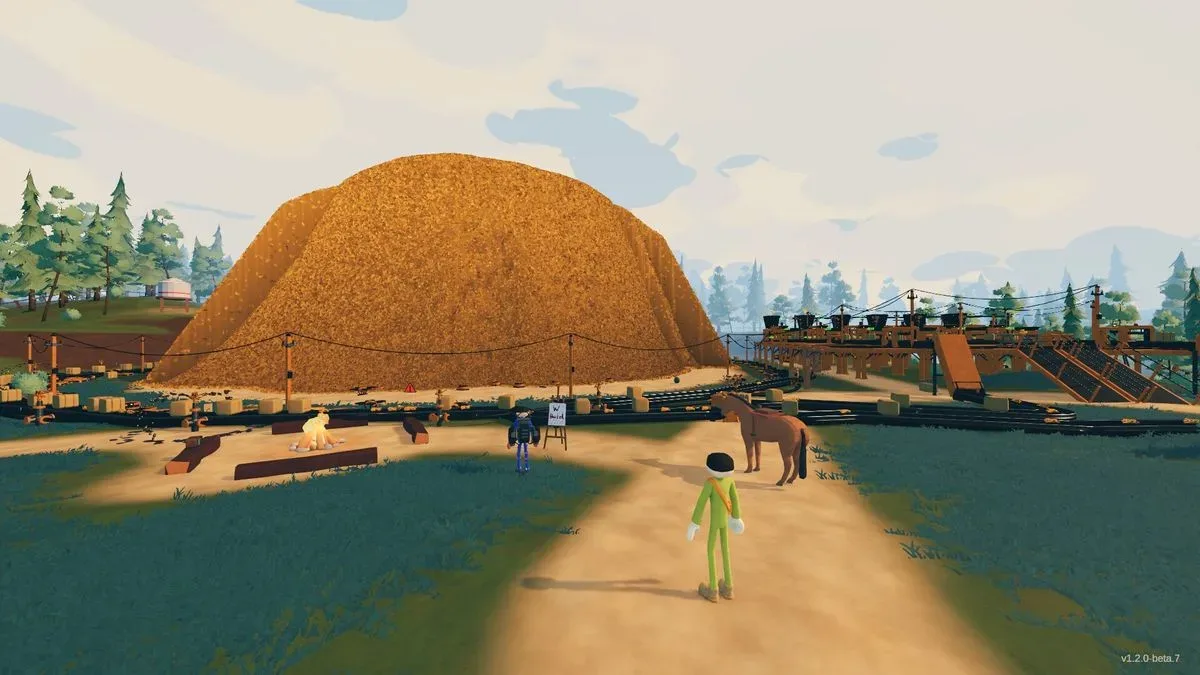
The dispute is also striking because all involved games emerged around the same unusually narrow premise. The original viral game, Needle In A Haystack Simulator, helped establish the idea's recent popularity. NoGlyph's Needle In A Haystack followed as a cooperative take on that concept. Then came A Game About Needle In A Haystack, a title close enough to the others to make clear that discoverability and trend recognition were part of the equation.
There is a practical reason developers chase these moments. On a crowded store, a concept that people are already searching for can be easier to market than something entirely unfamiliar. The downside is that consumers may struggle to distinguish which game is the original, which is a deliberate parody or variation, and which may be attempting to capitalize on confusion. When names become almost interchangeable, that confusion is not an accident of the marketplace; it can become a design of the marketplace.
The creator associated with the original needle-search game has already treated the sheer number of imitators with humor, joking about a possible mode in which players would search through stacks of boxed copycat games. It is an absurd response to an absurd situation, but it also reflects a real frustration for small creators. A novelty can be replicated faster than an individual studio can finish, announce, or meaningfully differentiate its own version.
Why the code allegation matters
For players, several nearly identical games may look like a harmless oddity. For developers, the difference between imitation and code theft can be enormous. Recreating a mechanic independently may be ethically questionable in some circumstances, but it still requires a team to build its own systems, solve its own technical problems, and create its own content. Copying code can potentially bypass much of that effort while carrying over bugs, internal messages, and implementation decisions from the original work.
Identical error messages can be particularly notable because they may contain phrasing created during development, references to a project's internal structure, or wording unlikely to emerge in the same form by chance. Even so, matching text by itself is not a complete public forensic analysis. Establishing what was copied, how it was obtained, and whether it is protectable material would require more evidence than the currently visible claims provide.
That uncertainty matters. Online accusations can spread far faster than a platform review or legal process, and removed listings can make it harder to preserve material for outside assessment. The available information supports reporting that NoGlyph made the allegation and that the accused game appears to be gone from Steam. It does not provide enough public evidence to independently confirm every technical detail of the accusation or the precise basis for the game's removal.
Steam's broader problem with fast-following releases
This incident arrives during a period of growing concern over low-effort clones and AI-assisted releases on Steam. Developers and players have increasingly raised alarms about titles that mimic successful games with minimal changes, use misleading presentation, or attempt to exploit recommendation systems and search traffic before legitimate projects can build an audience.
Valve has faced pressure to address that problem more directly. The company is famously restrained when discussing store moderation publicly, but members of its business team have acknowledged concerns around AI-generated low-quality material following a Steam Next Fest event that drew criticism for the volume of such projects. One piece of advice offered to developers was blunt: make games that are harder to copy.
That guidance reflects a difficult reality rather than a satisfying solution. Not every game can protect itself through complexity, constant content updates, a distinctive multiplayer community, or years of technical work. Some of the most appealing indie ideas are simple enough to explain in a sentence. Their simplicity is often their strength--and the reason they are vulnerable to rapid imitation.
The needle-hunt controversy illustrates the limits of relying on novelty alone. A simple premise can become a mini-rush almost overnight. Stronger branding, clear communication with players, and an implementation that offers more than the initial joke may help creators stand apart, but those steps cannot prevent a bad actor from potentially using copied assets or code.
What players should take from the episode
For consumers, the most useful response is caution rather than automatic certainty. Check a game's developer history, read recent reviews, look for clear descriptions of what makes a project distinct, and be wary of titles that appear designed to resemble another product as closely as possible. A cheap price and a recognizable concept do not necessarily mean a game is illegitimate, but they should not replace basic scrutiny either.
For developers, the case is another reminder to maintain records of builds, source control, asset creation, and release timelines. Those records can become essential if an ownership dispute emerges. It also underlines the value of reporting suspected infringement through platform channels rather than relying solely on public callouts, even if a public post may be what alerts players in the short term.
Ultimately, the clearest takeaway is the same one NoGlyph offered when presenting the claim: players should judge for themselves, while recognizing the limits of what can presently be verified. The joke may be that everyone is looking for a needle. The more serious issue is whether one developer's work was taken from a haystack of rapidly produced lookalikes--and whether Steam's removal of one listing marks meaningful enforcement or simply another unresolved storefront mystery.
Community
Discussion
Start the conversation.
No comments have been posted yet.