

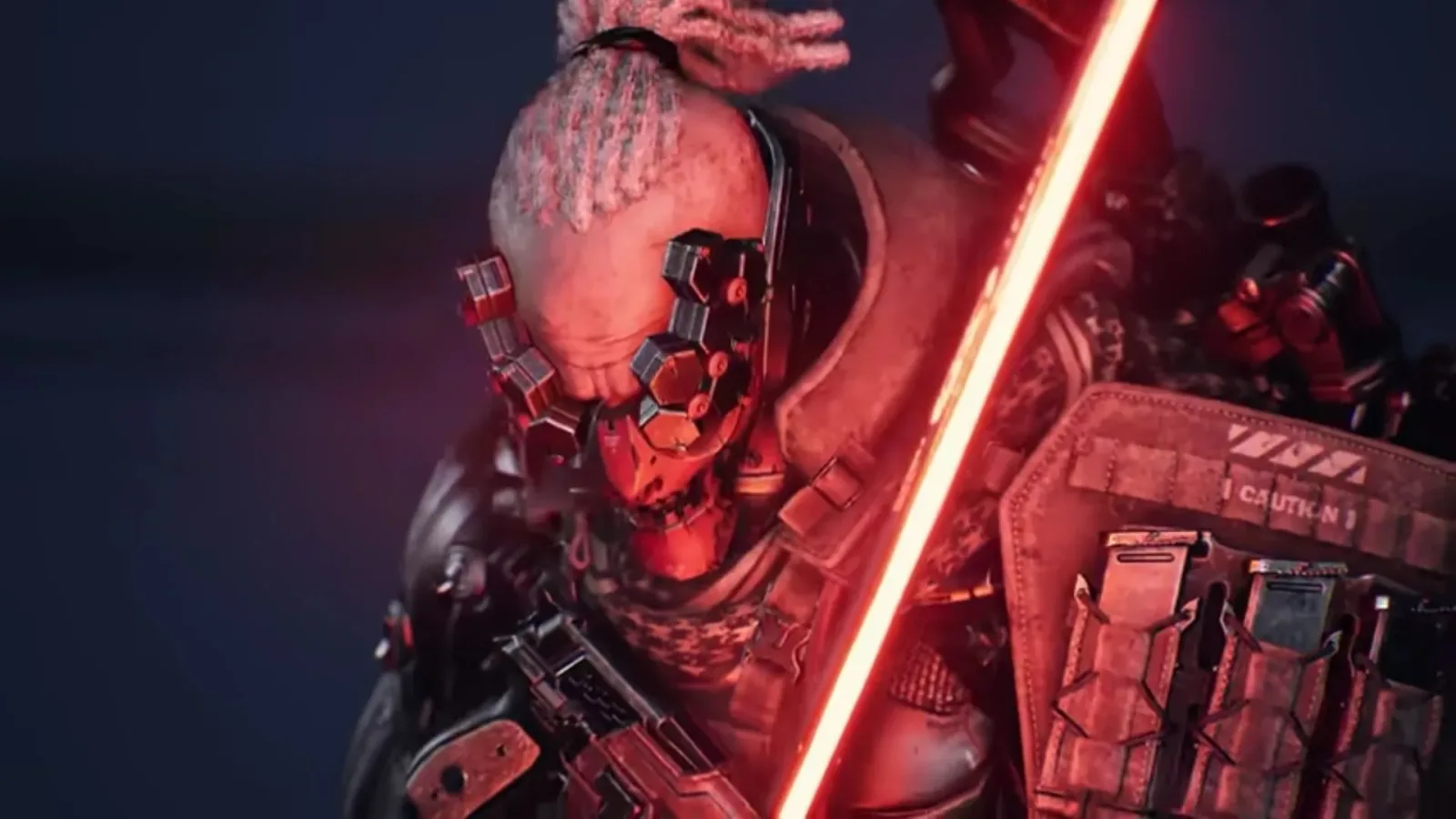
Stellar Blade may now stand as one of the most visible action-game successes to emerge from South Korea in recent years, but the project's road to release was apparently far more precarious than its eventual profile suggests. Shift Up CEO Hyung-Tae Kim has described a period during the first game's development when the studio had only enough money available to cover salaries for approximately three months.
Kim discussed the difficult early phase of the project in an interview with Inven that was translated by Automaton. His account paints a picture of a team trying to establish itself in the premium console action space while confronting skepticism from investors and publishers. The studio's ambitions for the game were seen as unusually risky, and multiple major publishers reportedly chose not to back it.
That makes Shift Up's later partnership with Sony all the more consequential. A playable build eventually reached Shuhei Yoshida, the former president of Sony Interactive Entertainment Worldwide Studios and former PlayStation Indie head. Yoshida's response led to a publishing agreement, helping turn what had once looked like a potentially unsustainable project into the released game known as Stellar Blade.
A Project That Faced Repeated Rejection
Before it became Stellar Blade, the game was publicly known as Project Eve. It was a conspicuous shift in direction for Shift Up: a high-end, action-focused production built around demanding combat, elaborate character animation, and a large-scale post-apocalyptic setting. For a studio still seeking to prove itself in that segment of the market, it was an especially ambitious undertaking.
For useful background on this topic, read Rare Moves Under Activision in Xbox Reshuffle, 24 Years After a Lost Acquisition Bid.
Kim said that prospective backers did not see the proposal as a safe bet. Several major publishers, whose names were not disclosed, turned down the game. Some apparently suggested that Shift Up could attract more interest by changing direction, indicating that the project's original form was a key part of the concern.
The precise timeline of the financial crisis was not fully detailed, but it appears to have occurred around 2020 or 2021, when Project Eve had already been revealed but remained years from launch. At one point, Kim said, the studio's resources were sufficient to pay employees for only about three months. For any developer, that is an extraordinarily narrow margin. For a company pursuing a technically demanding new action property, it would have made every decision around staffing, production, and outside investment significantly more urgent.
"While we were developing Stellar Blade, there was a time when the company was in a situation where we could only pay salaries for about three months," Kim said.
The statement also offers a reminder that a game's public visibility does not necessarily reflect the health of the business making it. A revealed project can appear polished and promising to audiences long before its creators have secured the funding needed to carry it through years of development. In Shift Up's case, the company was trying to move forward while its available runway had become alarmingly short.
Nikke Helped Strengthen Shift Up's Position
One major factor in Shift Up's ability to endure was the success of Goddess of Victory: Nikke, the free-to-play RPG with gacha mechanics released in 2022. The game generated tens of millions of U.S. dollars soon after launch, providing the company with a much stronger financial position than it had during the most difficult stretch of Stellar Blade's production.
That contrast is important because Nikke and Stellar Blade represent very different kinds of products. One is structured as an ongoing free-to-play mobile-style service game with gacha mechanics; the other is a premium action experience. Yet the commercial success of one helped support a studio whose broader ambitions included the other.
For Shift Up, Nikke's performance was not simply a separate success story. It helped create breathing room at a time when the company had previously been under serious pressure. Development studios often rely on a mix of investment, publishing support, existing revenue, and new releases to survive long production cycles. When one part of that equation changes dramatically, it can determine whether an ambitious project gets completed, delayed, reshaped, or abandoned.
Kim has credited the players who support Shift Up's games for the company's prosperity. That acknowledgment carries particular weight given the studio's earlier circumstances. The communities around its games did not merely contribute to their popularity; their support helped underpin the financial stability that allowed Shift Up to continue pursuing major projects.
Sony's Deal Changed the Project's Trajectory
The eventual turning point came when Shuhei Yoshida played a build of the game. Yoshida has long been associated with developer relations and PlayStation's efforts to identify distinctive projects, particularly through his work with PlayStation Indies. His interest in Shift Up's game resulted in the Sony publishing deal that gave Stellar Blade a path forward after the earlier wave of refusals.
That outcome is a significant example of how much a playable version can matter in the publishing process. Pitch materials, concept art, prototypes, and business forecasts are all important, but an effective build can make a project's potential much easier to communicate. In Stellar Blade's case, the game appears to have convinced the right person at a critical time.
The partnership also gave Shift Up access to the support structure needed for a major release. While the specifics of the agreement and its internal development impact have not been laid out here, the practical result is clear: Stellar Blade moved beyond its uncertain Project Eve period and became a released, internationally recognized action game.
That success later received formal recognition in South Korea. Kim was awarded a presidential commendation in December 2025 for his services to the country's games industry. The honor reflects both Shift Up's commercial growth and the wider visibility of its games, particularly at a time when Korean developers continue to expand their reach across mobile, PC, console, and global publishing markets.
The Series Is Continuing to Expand
The story is especially timely because Shift Up is not treating Stellar Blade as a one-off release. Stellar Blade: Blood Rain is currently in development, extending the action series beyond its initial entry. Details about the project remain limited, and no release date or specific platform availability was provided alongside Kim's comments, but its existence confirms that Shift Up is continuing to invest in the property.
A version of Stellar Blade for Switch 2 is also on the way. The planned Nintendo release signals a further expansion of the game's audience and represents a notable change from the uncertainty surrounding the original project's earliest years. A game that was once struggling to persuade publishers it was worth the risk is now positioned to reach another major platform ecosystem.
Shift Up additionally has at least one other unannounced project underway. The company has not shared enough information to define that game's genre, scope, launch window, or platforms. Still, its presence suggests that the studio is now building a broader production slate rather than depending on a single unproven idea.
A Familiar Development Story With an Unusually Sharp Edge
Many successful games have difficult development histories, but the scale of Shift Up's reported financial pressure makes this case stand out. Having roughly three months of payroll left is not merely an abstract business concern. It affects the people making the game, the studio's ability to retain talent, and the likelihood that a long-term project can survive in its intended form.
It also highlights how unpredictable publisher decision-making can be. The companies that passed on Stellar Blade may have had reasonable concerns about cost, risk, market positioning, or Shift Up's experience with a project of that size. But publishing decisions are made before a game's reception is known, and even experienced industry figures cannot perfectly forecast which new properties will break through.
For Shift Up, persistence mattered. The studio continued developing its vision despite suggestions that it should pivot, benefited from Nikke's revenue, and ultimately found a partner willing to support the game. Those pieces did not arrive all at once, and the period Kim described makes clear that failure remained a real possibility for a considerable time.
As Blood Rain progresses and the Switch 2 version approaches, Stellar Blade's near-miss origin will likely remain part of the series' identity. It is a reminder that behind a polished action game and a growing franchise can be years of uncertainty, rejected pitches, financial strain, and a small number of decisions that radically alter a studio's future.
Community
Discussion
Start the conversation.
No comments have been posted yet.