


The Legend of Zelda: Ocarina of Time remains one of Hyrule's most influential adventures, but it can feel strikingly different from newer Zelda games. Its world is comparatively compact, its progression is more structured, and many of its best upgrades are tucked behind conversations, side activities, hidden paths, and environmental details that are easy to overlook.
That is part of the game's appeal. Ocarina of Time wants players to become familiar with its spaces, return to earlier locations with new tools, and pay attention to what residents, enemies, and dungeon rooms are quietly communicating. For someone playing for the first time, though, that older design can occasionally create uncertainty: Where should Link go next? Which item solves this enemy encounter? Is that minigame worth the rupees?
The following habits will help newcomers get more out of the adventure without turning a first playthrough into a checklist. They emphasize the fundamentals that make exploration, combat, and dungeon-solving much more comfortable.
1. Spend a few minutes with Kokiri Forest's tutorial
It is tempting to leave Link's home and head immediately toward the next story objective. Before doing that, take the detour through the early Kokiri Forest tutorial area. The Know-It-Alls offer practical explanations, while the character outside can demonstrate basic actions such as rolling, dodging, and fighting techniques.
For useful background on this topic, read Ed Boon Polls Fans on Whether the Next Mortal Kombat Should Be MK2, MK12, or MK13.
These lessons may sound elementary, but Ocarina of Time's combat has a particular rhythm. Learning to move while locked onto an opponent, defend yourself, and create space is valuable long after the opening. Once Link has a sword, return to learn about the jump attack as well. The game does not keep introducing entirely new combat fundamentals at a rapid pace, so getting comfortable with the early toolkit pays dividends throughout the quest.
Rolling also deserves attention beyond its use as a fast movement option. It can interact with certain scenery and is worth trying around suspicious environmental objects. In a game built around small secrets, even a basic movement command can have surprising utility.
2. Make the jump attack part of your regular offense
The jump attack is one of Link's strongest early combat options because it inflicts substantially more damage than a standard sword swing. New players may initially use it only when they remember the tutorial's button combination, but targeting offers a more natural way to perform it.
While focused on an enemy, push forward and press A to execute the attack. This makes the move easier to incorporate into normal battles, especially against enemies that leave clear openings after an attack or while recovering from a missed strike.
That does not mean every encounter should become a stream of jump attacks. Some foes move too quickly, block head-on strikes, or punish reckless approaches. Still, when an enemy is vulnerable and Link has room to commit, the extra damage can shorten fights dramatically. The move is particularly useful in the early hours, when Link's equipment options are still limited.
3. Treat the main quest as a direction, not a strict itinerary
Characters across Hyrule can be very insistent about Link's next destination. Their guidance is useful, especially when the critical path is unclear, but there is no need to rush from one story marker to the next every time someone points toward a dungeon or important landmark.
Even the opening region contains optional discoveries, and the world steadily becomes more rewarding as Link gains new equipment. Revisiting familiar places is not wasted time. A route that was blocked earlier may now be accessible, a character may have new dialogue, or a previously unremarkable corner may make more sense once Link has a new item or song.
Ocarina of Time is not as open-ended as some later Zelda games, but it rewards curiosity. If the pace of the main story feels intense, spend some time fishing, exploring, talking to townspeople, or checking paths that initially seemed unimportant. Those pauses often produce upgrades, rupees, clues, and a stronger understanding of how Hyrule fits together.
4. Give Castle Town's minigames a real chance
Once Castle Town becomes available, players will begin encountering diversions and games that can look like optional distractions. Technically, many are optional, but they are worth attempting. Ocarina of Time's minigames can award practical prizes rather than just rupees or novelty rewards.
Some rewards improve Link's carrying capacity, while others can lead to especially valuable empty bottles. Even when a game does not immediately offer an upgrade, it can be a pleasant break from a dungeon or an opportunity to practice accuracy, timing, and movement.
Do not feel compelled to master every activity on the first visit. If a challenge seems expensive or frustrating, come back later with more rupees and a fresh perspective. The important point is not to dismiss every building or side attraction as background decoration. In this Hyrule, shops and side rooms frequently hold meaningful opportunities.
5. Prioritize empty bottles whenever you find a lead
Few inventory items are as flexible as an empty bottle. Bottles can carry restorative potions, fairies that revive Link after a defeat, fish and bugs used in particular situations, quest objects, and other useful contents. Having even one changes how safely players can approach dangerous areas; having several creates a valuable cushion for longer adventures.
When a side quest, minigame, or character interaction appears to offer a bottle, it is generally a good idea to pursue it. Unlike a single-use reward, the bottle remains useful for the rest of the journey and can be refilled in many different ways depending on the immediate problem.
For a first-time player, fairies are an especially sensible use of spare bottles before entering a difficult dungeon or boss battle. Potions are dependable, but a fairy's automatic rescue can save an otherwise painful trip back through a dungeon. Make a habit of considering what each bottle should contain before a major objective rather than leaving every slot empty by default.
6. Use every tool, not only the sword
Link's sword is reliable, but Ocarina of Time consistently asks players to think beyond simple close-range attacks. Different enemies react very differently to projectiles, explosives, magical effects, and utility equipment. If a foe feels unusually durable or difficult to approach, experiment.
The boomerang and hookshot can affect enemies from a safer distance. Deku Nuts can stun opponents and create an opening. Other items may knock enemies back, expose weaknesses, or bypass a hazard that makes sword combat awkward. The exact solution is not always obvious, which is why trying an item is often more productive than repeatedly attempting the same sword combo.
This approach applies in dungeons too. A newly acquired item is frequently relevant to the surrounding rooms, even if its purpose is not immediately spelled out. When progression stalls, consider what tool was most recently added to Link's inventory and where it could interact with the environment.
7. Talk to everyone, then talk to them again later
Hyrule's residents provide more than flavor text. Many offer direct guidance, hints about secrets, context for the current situation, or small nudges toward the next activity. Their dialogue can also change as the story progresses, making return visits worthwhile.
Speaking with people is one of the best ways to avoid unnecessary confusion without consulting a full solution. If you are unsure what to do, take a lap through the nearest settlement, check in with familiar faces, and listen for any mention of a location, item, or unusual event. The game often provides the information you need, but it expects you to seek it out.
Navi belongs in this category as well. Her prompts can be persistent, and players may have heard plenty about her reputation, but asking for help can provide valuable reminders about enemy behavior or the current objective. Use that assistance when needed rather than letting annoyance prevent a useful clue.
8. When a dungeon stops you, slow down and inspect the room
Many dungeon puzzles are less about obscure logic than observation. If you are stuck, resist the urge to assume that the answer lies in another part of the dungeon. First, stand still and look carefully at the room around Link.
Check walls for unusual markings, inspect floors for odd shapes or textures, and notice torches, flames, switches, doors, ledges, platforms, and objects positioned at different heights. Look up as well as down. A target, passage, or mechanism may be visible only from a particular angle, and some important elements are deliberately blended into the environment.
Also think about connections. Can fire be carried from one place to another? Is a block meant to be pushed onto a switch? Is there a platform beneath the current room? Could a tool reach something across a gap? Water and vertical space are particularly important in Ocarina of Time's puzzle design, so inspect underwater areas and distant surfaces instead of focusing only on the obvious route ahead.
9. Watch for glowing fairy symbols
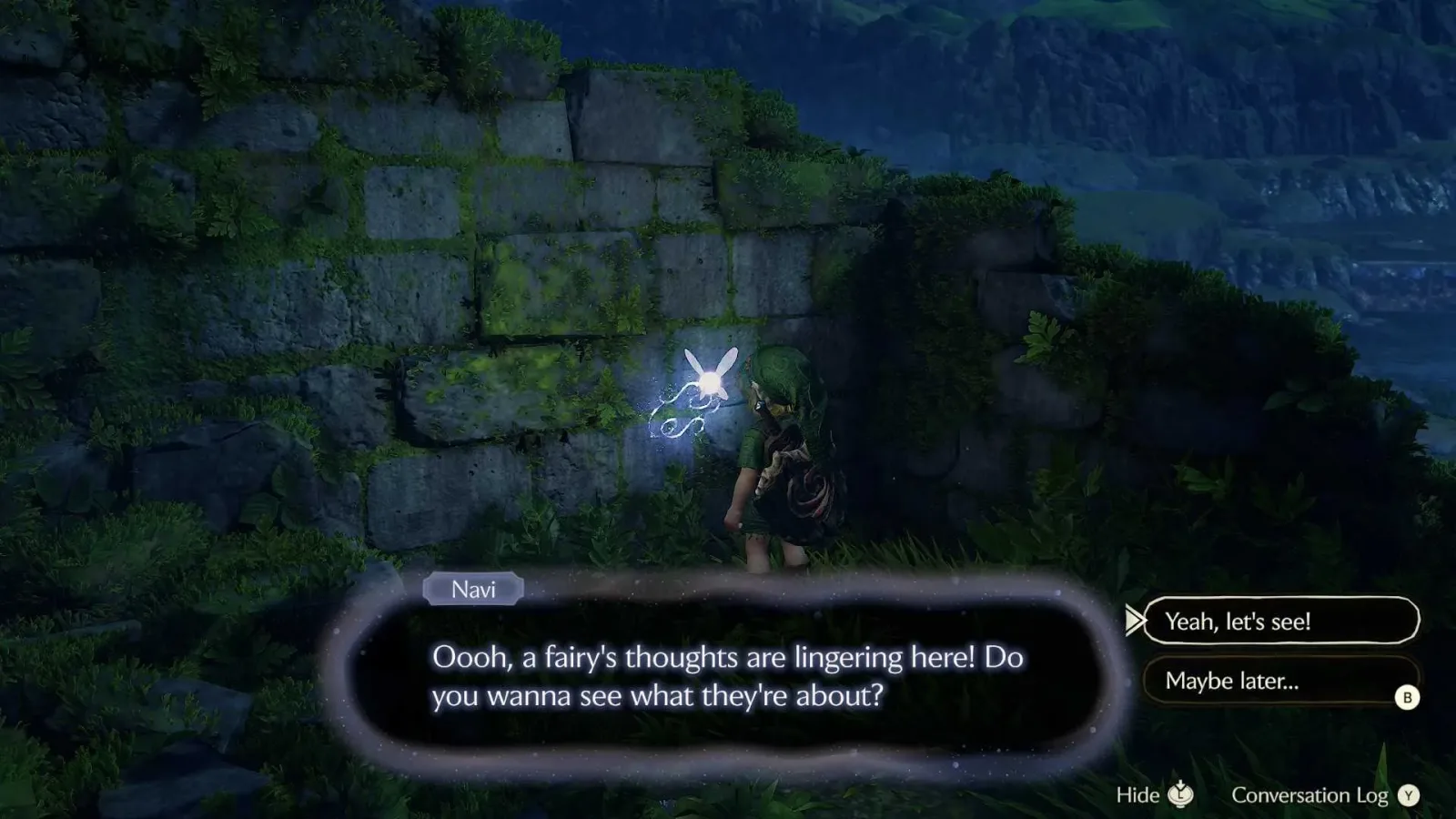
Players exploring the remake may encounter glowing fairy symbols etched onto walls, pillars, and other out-of-the-way surfaces. These markings can be examined with Navi and may point toward secrets or other bonuses tied to interacting with the nearby area in the right way.
They reinforce a useful rule for the entire game: visual oddities are rarely meaningless. If an object, texture, symbol, or arrangement seems unusually prominent, test it. Target it, speak to it, strike it, use an item nearby, or bring Navi's attention to it. Even when a suspicious detail is not immediately actionable, it may become relevant after Link gains another tool.
10. Start collecting Gold Skulltulas from the beginning
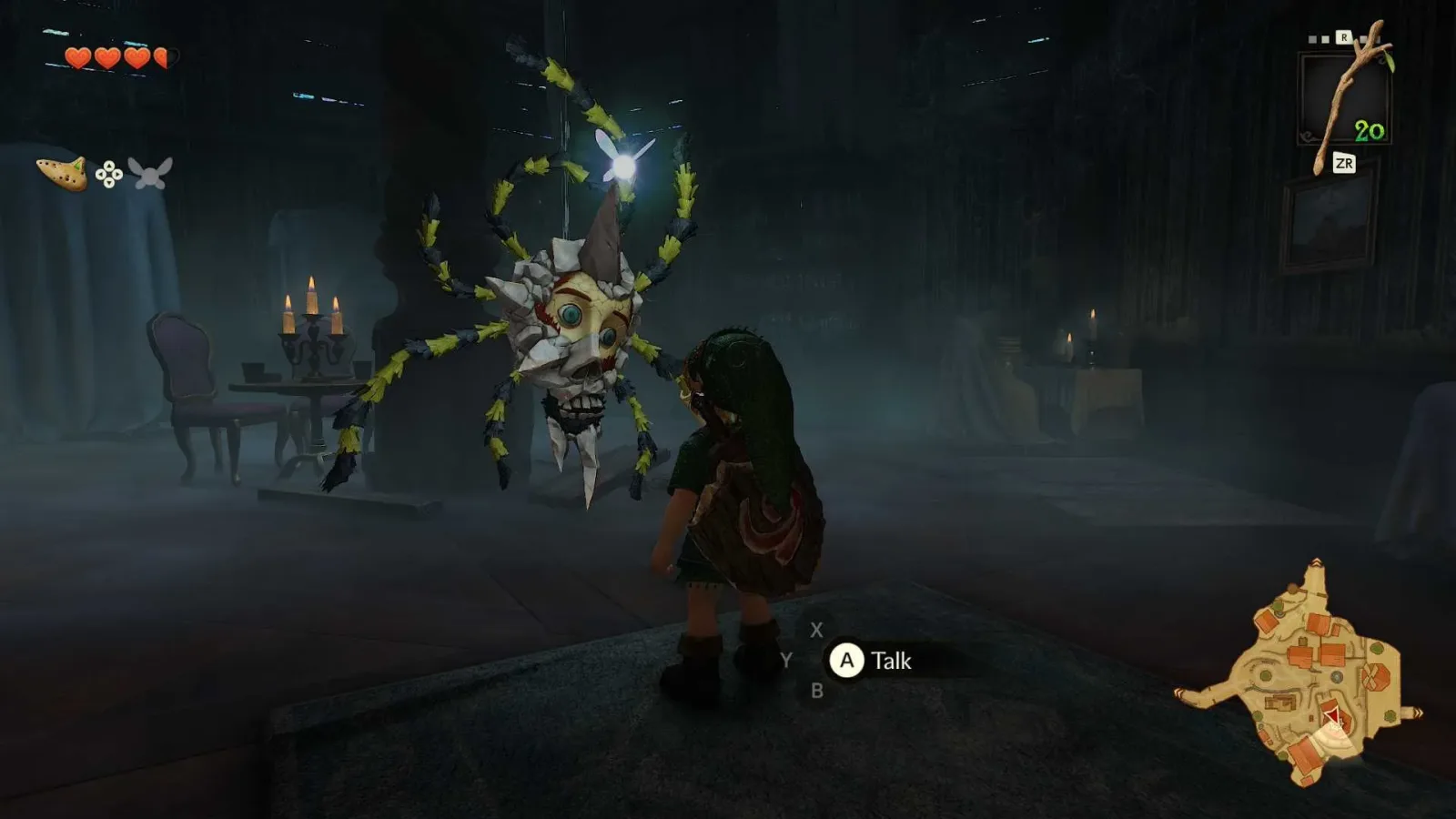
Gold Skulltulas are among the game's most important long-term collectibles. There are 100 to find, and reaching collection milestones produces rewards that can be extremely helpful over the course of the adventure. Waiting until the end to begin searching can turn them into a far more demanding cleanup project, so collect them naturally as you travel.
Listen for their distinctive scratching sound. It often signals that one is nearby, even when it is hidden behind you, above you, or on a surface you have not inspected. In towns, Gold Skulltulas appear at night, while dungeon encounters are not limited by the time of day. Rolling into trees that appear to be dropping leaves can also reveal one.
You will not find every Skulltula without deliberate searching, and that is fine. The best first-playthrough habit is simply to stay alert, investigate the sound, and grab any that are within reach. Every one collected now is one less to track down later.
One final rule: leave the Cuccos alone
Cuccos are Hyrule's chickens. You can pick them up, carry them, and toss them around for practical reasons or simple amusement. What you should not do is repeatedly attack them. This is a Zelda tradition with consequences, and Ocarina of Time is no exception.
With that lesson learned, take your time in Hyrule. Follow the story when you are ready, but allow yourself to wander, experiment, revisit places, and notice the details. Ocarina of Time is at its best when its challenges become discoveries rather than chores.



Community
Discussion
Start the conversation.
No comments have been posted yet.