

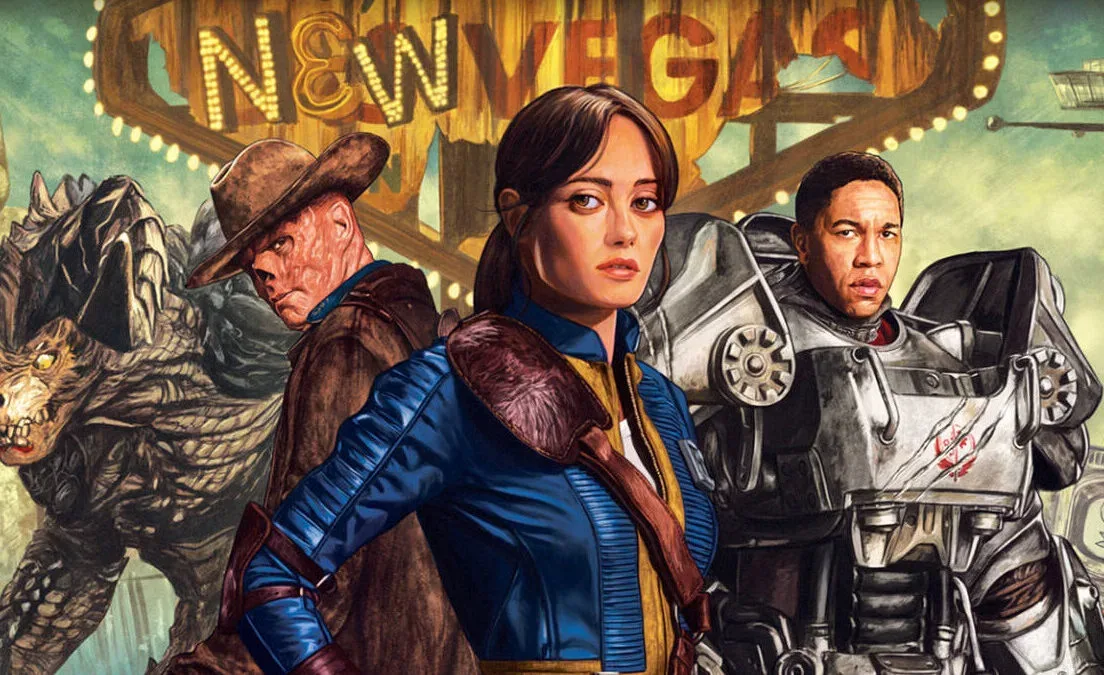
Stern Pinball is heading into the irradiated wastes for its next major licensed table. The company has revealed a Fallout pinball machine built around the journey of a Vault Dweller leaving safety behind and facing the dangers of the post-apocalyptic world beyond. Ghouls, raiders, Deathclaws, Nuka-Cola and Vault-Tec imagery all have a place on the new table, which will be sold in the usual Pro, Premium and Limited Edition configurations.
The announcement continues a noticeable shift toward video game properties at Stern. It comes roughly six months after the company introduced its Pokémon machine, and arrives at a time when another manufacturer, Jersey Jack, has also entered the space with a Sonic the Hedgehog table. Physical pinball adaptations of game franchises have remained comparatively rare despite the long-standing overlap between arcade culture and gaming culture, making Fallout a significant addition to the modern pinball lineup.
While Fallout began as a role-playing game series and remains closely associated with Bethesda's game releases, this table appears to take much of its visual and narrative inspiration from the live-action Fallout show. The machine incorporates material associated with both seasons of the television adaptation, which stars Ella Purnell and Walton Goggins. It also includes original voice work from Johnny Pemberton, who appears in the series as Thaddeus.
A Vault Dweller's Pinball Quest
The core premise puts players in the role of a relatively inexperienced Vault Dweller stepping into a hostile wasteland. That premise suits pinball naturally: each ball becomes another attempt to survive a chaotic environment packed with hazards, targets and larger-than-life monsters. Stern's design turns many recognizable Fallout concepts into physical mechanisms spread across the cabinet.
For useful background on this topic, read The Blood of Dawnwalker Sells 1 Million Copies in 48 Hours.
The most immediately striking feature is a sculpted Deathclaw, one of the franchise's most recognizable and dangerous creatures. The table also includes a spinning Nuka-Cola cap, a moving Vault 33 door, a functional PIP-Boy feature and a Fat Man launcher. The latter is used to destroy targets on an upper playfield, bringing one of Fallout's most infamous weapons into a mechanical tabletop form.
Vault 33 is especially notable because of its prominent role in the television series. Its inclusion reinforces the extent to which the new machine is engaging with the show's take on the Fallout universe rather than simply assembling a broad collection of game references. The series expanded Fallout's audience substantially, and the pinball table seems designed to welcome people who know the wasteland from television alongside longtime players familiar with the games.
At the same time, the machine is not exclusively tied to the show. Fallout 4 appears to be an important point of reference, particularly in the use of the V.A.T.S. system. The Vault-Tec Assisted Targeting System has been a defining gameplay concept in Bethesda-era Fallout titles, allowing players to select enemy body parts and manage attacks through a tactical targeting interface. Its presence on the machine suggests an effort to translate role-playing and combat mechanics into pinball objectives rather than relying only on character art and sound effects.
For another perspective on this story, read Stern Pinball Brings Fallout's Wasteland to Pro, Premium and Limited Edition Tables.
RPG Influences Meet Mechanical Pinball
Pinball tables based on fantasy, action and superhero licenses often need to convert a large fictional world into a series of ramps, lanes, multiballs and timed modes. Fallout presents a particular challenge because the franchise is defined not only by its retro-futurist imagery but also by exploration, player choices, upgrades and combat systems. Stern's past work has shown an increasing interest in accommodating those kinds of systems.
The company's 2025 Dungeons & Dragons machine incorporated elements from the tabletop role-playing game, and Fallout appears to follow a similar approach by recognizing its RPG roots. The inclusion of V.A.T.S. is an especially clear example: it is a game system with strategic associations, not just a recognizable object from the setting.
Stern Vice President George Gomez, who is also known as the creator of Spy Hunter, has said the project received input from Bethesda's Todd Howard. That involvement indicates Bethesda had a role in shaping the adaptation, though the full extent of Howard's contribution has not been detailed. For a property with decades of game history, multiple developers and a now-successful television branch, that kind of creative input could help the table balance references from different eras of Fallout.
The challenge for the finished machine will be ensuring that its abundant references serve the flow of play. A Fallout table can easily support a dense set of missions and modes: Vault exploration, faction encounters, creature hunts, weapon objectives, Nuka-Cola rewards and television-specific story beats all seem like natural candidates. But pinball's appeal still rests on immediate physical feedback. The moving door, spinning cap, upper playfield targets and Fat Man launcher will likely be central to making the table feel like more than a screen-filled tribute.
Keith Elwin Returns for Another Major License
The Fallout machine was designed by Keith Elwin, whose recent Stern work includes tables based on Jurassic Park, Jaws and King Kong. Elwin's designs are known for energetic shots, demanding play and layouts that ask players to build familiarity over repeated games. His involvement places Fallout among Stern's higher-profile contemporary licensed releases.
One especially notable layout element is the back Vault shot. Its position calls to mind the prominent central shot found in Elwin's Iron Maiden table, a design that drew heavily on the dramatic "One Ring" style of shot placement popularized in fantasy-themed pinball layouts. In Fallout, that kind of shot can make thematic sense as a route into or through the Vault, while also providing a high-visibility objective for players learning the table.
There is a useful contrast between the Fallout setting and the physical nature of pinball. Fallout frequently depicts crumbling technology, scavenged equipment and cheerful pre-war consumer branding surviving amid catastrophe. Pinball cabinets, with their glowing lights, mechanical toys, metal rails and busy art packages, already feel compatible with that retro-futurist aesthetic. A Nuka-Cola cap that literally spins and a PIP-Boy built into the machine are not merely references; they are the kinds of tactile objects that fit naturally into a pinball experience.
Pro, Premium and Limited Edition Models
As with many Stern launches, Fallout will be offered in three versions: Pro, Premium and Limited Edition. The versions will have differing features and price points, though detailed distinctions between every model were not included in the initial information. Stern's multi-tier approach is familiar to collectors and operators, allowing a lower-cost commercial-oriented model alongside more elaborate premium collector editions.
"Lower-cost" is relative in the current pinball market. The least expensive Fallout model starts at $7,299 USD. That places the machine firmly in the high-end hobby and commercial arcade category, rather than the mass-market game space occupied by console and PC releases. Buyers considering a home machine will need both a substantial budget and room for a full-size cabinet, while public venues may see the table as a way to attract Fallout fans who would not ordinarily seek out a pinball game.
The themed pricing also fits the franchise's in-world language. Fallout's universe is full of bottle caps, Vault-Tec branding and consumer artifacts turned into cultural relics. The new machine may cost considerably more than a pocket full of Nuka-Cola caps, but its hardware promises to offer a tangible way to interact with the setting beyond a controller or television screen.
Why Video Game Pinball Is Having a Moment
Video game licenses have not historically been common in modern physical pinball. There have been Super Mario tables and a RollerCoaster Tycoon machine, but the category has remained small compared with the abundance of rock bands, comic-book heroes, blockbuster films and television properties that have sustained pinball manufacturers for years.
Stern itself survived the difficult period that followed the arcade downturn of the 2000s and later economic instability by leaning heavily on familiar entertainment brands, including releases tied to AC/DC and Iron Man. Those licenses appealed to established collectors and traditional pinball audiences. The emergence of Pokémon, Fallout and competing game-themed tables suggests manufacturers see an opportunity to reach people whose strongest nostalgia is rooted in games rather than classic rock or older movie franchises.
Fallout is particularly well positioned for that crossover. It is a game series with a large multigenerational audience, while the television show has introduced its characters, iconography and strange sense of humor to viewers who may never have played Fallout 4 or any earlier entry. The table's mix of show material, Fallout 4 mechanics and broad series symbols seems intended to meet both groups in the middle.
Players who want to see the machine in person have an early opportunity at PAX West, where the Fallout pinball table is available to play during the event weekend. For Stern, the debut offers a chance to test a major new game-adjacent license directly in front of an audience that understands both the appeal of Fallout and the satisfaction of chasing a difficult high score.
The Fallout machine will ultimately need to prove itself as a table, not simply as an impressive cabinet packed with references. Still, the early feature list points to a suitably ambitious adaptation: a Vault door that moves, a Deathclaw looming over the action, a Fat Man aimed at upper-playfield targets, V.A.T.S. objectives and audio tied to the television cast. For fans of the wasteland, Stern's latest project offers a new kind of survival challenge--one played with steel balls, flashing lights and the ever-present threat of a drain between the flippers.
Community
Discussion
Start the conversation.
No comments have been posted yet.