

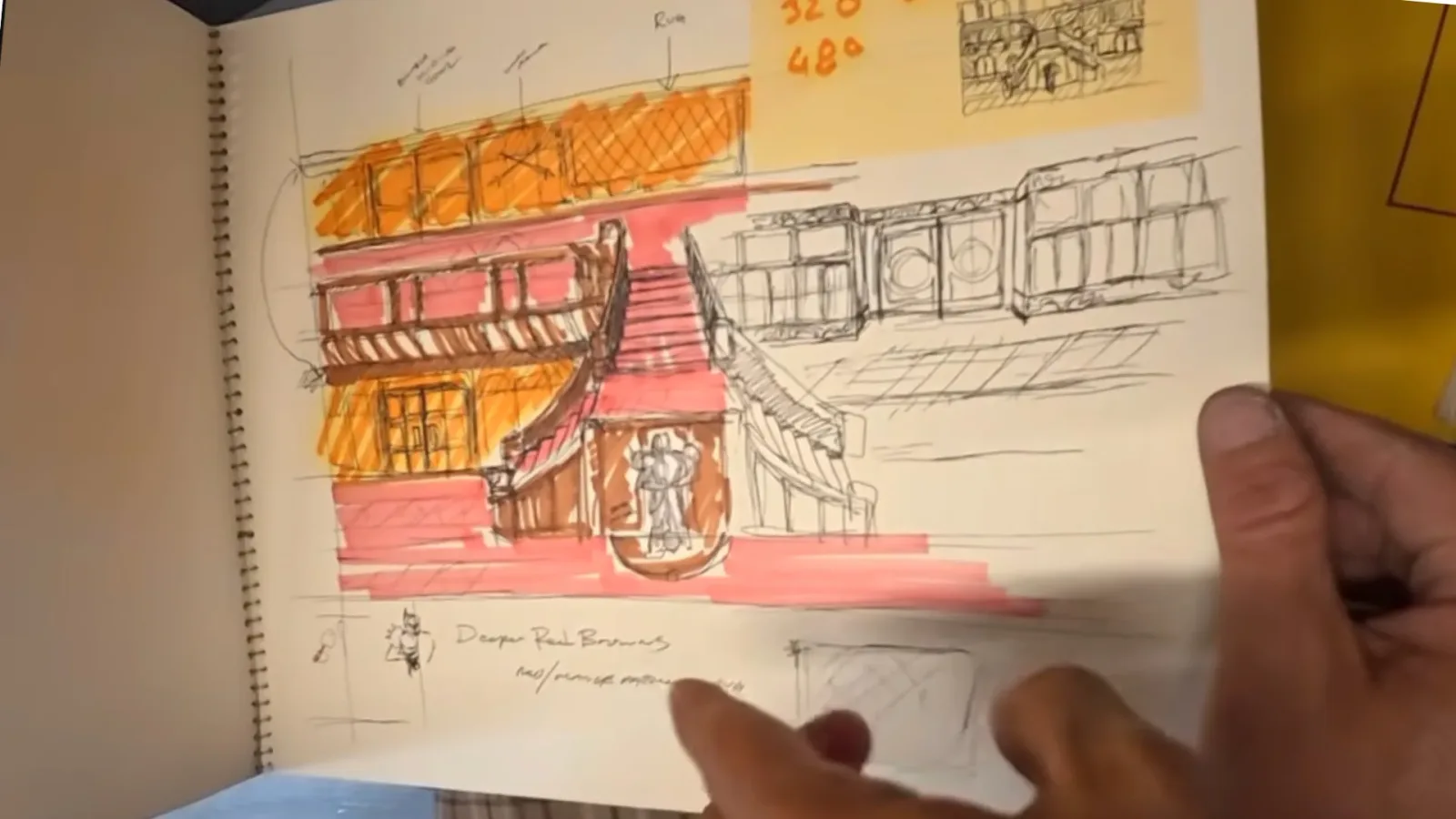
A storage-unit auction has become the center of a wider conversation about video game preservation after buyers uncovered what appears to be a substantial archive of development materials. Alongside the expected mix of old games, hardware, toys, films, anime releases and strategy guides were objects with potentially major historical value: apparent prototype chips, internal design documents, concept art, level layouts and other production-era records tied to several well-known games.
The collection was shown in a video by Pixel Game Squad, where Aaron Stapish, also known as Riff, examined the unit's contents after it had been purchased at auction. For collectors, the find was an extraordinary one. For preservation advocates, however, its eventual dispersal has prompted concern that materials which could help document the creation of older games may now be inaccessible in private collections.
The story is not only about the commercial value of rare game memorabilia. It also raises a more uncomfortable issue: the unit may have belonged to a developer, and parts of that person's career and personal archive were exposed to a huge online audience before being divided among buyers. The owner's identity has not been confirmed, but evidence in the materials has led viewers to believe they may have belonged to Tom Tanaka, a developer with credits connected to Virgin Games projects in the 1990s.
A remarkable mix of game-history material
Storage auctions routinely turn up games and electronics, but production materials are far less common. The unit contained numerous computer chips believed to hold game prototypes, including what appears to be a build of Contra III: The Alien Wars. If authentic and readable, prototype software can offer researchers a rare look at a game before release: unfinished stages, altered mechanics, missing audio, debug functions, staff notes or ideas that never made it into the final cartridge.
For useful background on this topic, read Sonic Team Veterans Call Sonic Adventure the Series' Toughest Development Challenge.
Other discoveries shown in the video appear to include art books and level-design material for Double Dragon, a Virgin Interactive folio containing documents for a Terminator game, and level layouts for the Super Nintendo title B.O.B.. These are the kinds of records that can answer questions retail copies cannot. A finished game preserves the final result; development papers can preserve the decisions, revisions, limitations and creative experiments that shaped it.
For older games in particular, that distinction matters. Many studios from the cartridge and early CD-ROM eras did not preserve their own work comprehensively. Hardware was discarded, work disks became unreadable, documentation was lost during office moves, and publishers changed ownership or disappeared. Even when a game itself survives, the source code, planning documents and preliminary artwork may be gone forever.
That makes discoveries like this one exciting, but also fragile. Physical media can degrade. Old chips may need specialized dumping equipment and careful handling. Paper documents may be one of only a few surviving copies, while handwritten notes and diagrams can supply context that a ROM image alone cannot. The longer such items remain uncatalogued, the greater the chance that their significance is not recognized before they are sold, damaged or separated from related materials.
For another perspective on this story, read Storage Unit Sale Puts Game Prototypes and a Developer's Private Archive at the Center of a Preservation Debate.
Why private ownership has become the flashpoint
Stapish indicated in a comment beneath the video that a great deal more game history from the locker had gone to many different collectors. That outcome is understandable from the perspective of an auction buyer dealing with a large and varied collection. Games, toys, artwork and vintage electronics all have collector markets, and auction purchases are typically made with resale, personal collecting or both in mind.
Still, critics argue that the situation exposes a persistent weakness in game preservation: historically important objects often pass through private hands before archivists even learn they exist. Once individual lots are dispersed, it can become extremely difficult to identify every item, determine its provenance, establish whether it contains unreleased material and convince each owner to allow preservation work.
Private collectors can absolutely play a meaningful role in preserving game history. Many rare games, prototypes and hardware revisions survive today because enthusiasts recognized their importance when institutions did not. Collectors have funded restoration work, shared scans, dumped prototype data and loaned items to exhibitions. The issue is not simply whether a private person owns an artifact. It is whether the knowledge contained in that artifact remains available for study, authentication and long-term access.
In this case, viewers have argued that the production materials would be better served through archival work or museum involvement. The Video Game History Foundation was specifically mentioned by commenters as an organization that could potentially help evaluate and preserve relevant items. Such organizations can catalog holdings, create high-quality scans, preserve digital data and connect materials to researchers. Just as importantly, they can provide context, keeping a design document associated with the game, studio and era it came from rather than reducing it to a single collectible page.
The debate is not about denying collectors a role in preservation. It is about whether one-of-a-kind development records should be documented and made available before rarity turns them into permanently closed artifacts.
The possible human story behind the locker
The uncertainty around the unit's former owner gives the discovery a somber dimension. Materials bearing the name Tom Tanaka appear in the video, leading to speculation that the archive may have been his. Tanaka is credited as a level designer on The Terminator for Sega CD and as an animator on Double Dragon for Sega Game Gear.
A person claiming to have worked with Tanaka at Virgin Games during the early 1990s said they had lost touch with him around 2020 and were trying to learn what had happened to him. They wrote that the footage was upsetting to watch, while also acknowledging that the auction buyers had not necessarily done anything illegal. Their reaction reflects the emotional gap between a collector's discovery and the possibility that the objects represent somebody's life, career and private belongings.
That uncertainty is central. A storage unit can go to auction for many reasons: a missed payment, a relocation, financial hardship, a death, an administrative error or circumstances that are never publicly known. Buyers are generally participating in a legal process, but legality does not resolve the question of how personal materials should be displayed, sold or handled once they emerge.
Frank Cifaldi, director of the Video Game History Foundation, described the video as deeply unsettling, focusing on the possibility that an entire career could be laid bare after a missed storage payment and then divided up for public entertainment and collecting. His comments did not accuse the buyers of wrongdoing. Instead, they emphasized the vulnerability of personal archives when preservation is dependent on chance discoveries rather than deliberate donation, institutional support or a clear plan for digital legacy.
What preservation can look like after a discovery
There is still a path for historically valuable material to be preserved even after it has entered private ownership. The most practical first step is documentation. Owners can photograph and inventory documents, record markings on chips and cartridges, and retain information about where each item was found. Maintaining that chain of context is especially important when artifacts are separated from a larger archive.
For prototype media, non-destructive data dumping should come before resale or restoration. A dumped copy can be checked by preservation specialists, compared with known builds and studied without requiring the original object to leave its owner permanently. In some cases, digital copies can be made available publicly; in others, legal questions or personal information may require restricted research access. The right answer will vary, but doing nothing risks losing the content entirely.
Paper materials need a similarly careful approach. High-resolution scans can preserve annotations, revisions, logos, dates and production details that ordinary photographs may miss. Documents can also contain personal addresses, phone numbers, contracts, financial information or other sensitive details. Those records should be reviewed before public release. Privacy and preservation do not have to be opposing goals: sensitive information can be redacted while historically useful development content is retained.
There is also value in contacting people connected to the work. Former colleagues, family members, studios and archival groups may help identify unlabeled prototypes or explain references in design papers. That contextual knowledge can disappear as quickly as physical items do. A chip marked with an internal code may mean little on its own, but become an important piece of history once a former developer recognizes it as a pre-release build or a canceled project.
A reminder that game history remains vulnerable
The storage-unit discovery is a reminder that video game history is not safely preserved just because games can be emulated, re-released or collected. The medium's history also lives in sketches, test builds, technical notes, planning documents, office correspondence and the memories of people who made the games. Much of that material was never intended to survive beyond production, and much of it now exists outside formal archives.
Collectors who acquired items from the unit may yet have an opportunity to contribute to preservation through scanning, sharing information or working with archival organizations. At the same time, the incident highlights a need for developers and studios to think more deliberately about their personal and professional records. Digital backups, clear instructions for archives, and planned donations can prevent a lifetime of work from becoming an anonymous auction lot.
For now, the full scope of the materials and their destination remain unclear. What is clear is that the discovery has renewed attention on a difficult truth: rare game artifacts can be both valuable collectibles and irreplaceable historical records. Treating them as only one or the other risks losing something essential.
Community
Discussion
Start the conversation.
No comments have been posted yet.