

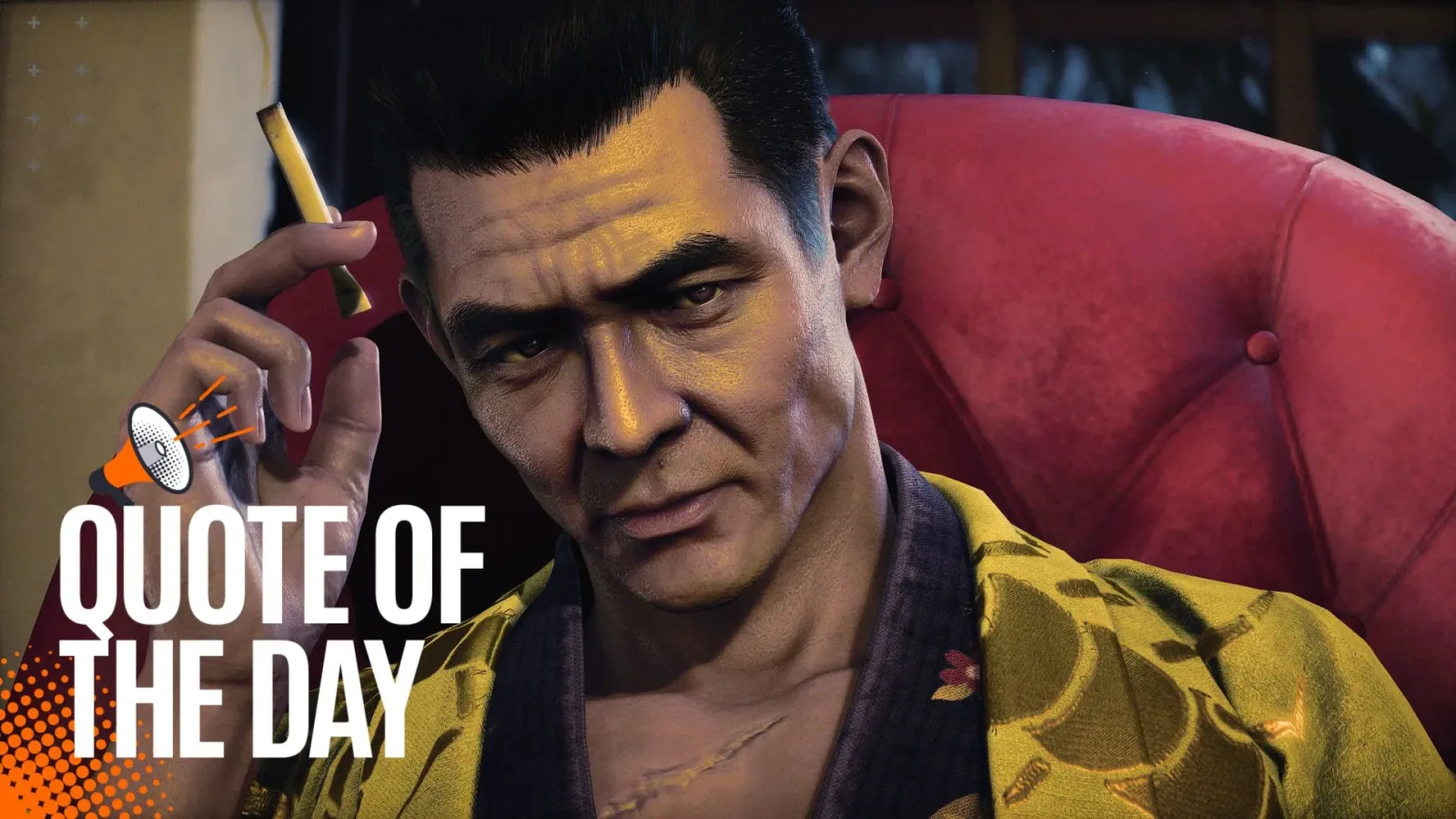
Stranger Than Heaven director Mikinobu Abe has offered a revealing look at how RGG Studio approaches creative leadership, saying that neither a developer's age nor the length of their career is treated as the deciding measure of their potential. Instead, Abe says the studio judges people on their individual ability and creative instincts--a philosophy that appears especially important for a project intended to move into unfamiliar territory.
The upcoming historical game represents a notable change of pace for RGG Studio, the team known for the Yakuza and Like a Dragon series. While Stranger Than Heaven appears to retain some recognizable elements of the studio's identity, its setting, tone, and central perspective point toward something substantially different. Rather than returning players to the neon-lit contemporary cities closely associated with Like a Dragon, the game travels back to the 1910s and is expected to progress through later parts of the 20th century.
Speaking as part of a major feature in Edge magazine, Abe discussed both his own appointment as director and the broader creative culture that helped make that role possible. His comments frame Stranger Than Heaven not simply as another production from an established studio, but as a game that required a fresh way of thinking.
Creative sensibility over time served
Experience is often viewed as an essential asset in game development. Long-serving staff can bring institutional knowledge, production discipline, technical understanding, and a clearer sense of how to navigate the risks that come with major projects. In an industry where large games can take years to make, that kind of expertise remains invaluable.
For useful background on this topic, read 12 Video Game Stocking Stuffers Under $30 That Gamers May Actually Use.
Abe's point is not that experience lacks value. Instead, he describes a studio environment where seniority alone does not decide who receives an opportunity or who is trusted to shape a project. As Abe put it, RGG Studio operates with the belief that "age and career length are not deciding factors," with decisions made on "each person's ability and creative sensibility."
That outlook can be particularly meaningful for a developer with a strong legacy. RGG Studio has spent years refining a recognizable approach through Yakuza and Like a Dragon: detailed urban spaces, melodramatic crime stories, eccentric side activities, character-driven drama, and a willingness to shift suddenly between sincerity and absurdity. Those strengths have given the studio a distinct voice, but they can also create expectations about what the next game should be.
For Stranger Than Heaven, the priority appears to be finding a creative lead capable of pushing beyond those expectations. Abe said he does not see his role as merely an effort to hand a chance to a younger generation. In his view, the assignment came because the project itself needed to become "something truly new."
A new perspective for a different kind of story
Abe's personal background also gives him a perspective that connects closely to Stranger Than Heaven's premise. He is fluent in English, and he said that ability has provided a helpful viewpoint for the game's story. The protagonist, Daito, is half Japanese and half American, returning to Japan after having grown up in the United States.
That setup has the potential to make Daito an observer as well as a participant in the world around him. A character arriving in Japan after being raised elsewhere may notice social rules, cultural tensions, and changing identities differently from a protagonist who has never left. It is also a framework that could allow the game to explore belonging from more than one direction: Daito may be connected to Japan by heritage while still being shaped by an upbringing outside it.
Abe's English-language fluency may therefore be useful to the project's storytelling process, especially when considering a character whose life spans Japanese and American influences. However, Abe was clear that language ability was not the simple explanation for why he became director. The studio's decision, he indicated, came down to the wider needs of a game seeking a new creative identity.
That distinction matters. Stranger Than Heaven's protagonist and period setting may require cultural perspectives that differ from those used in RGG Studio's more familiar modern-day stories. But the director's role encompasses far more than a single biographical connection to the material. It involves guiding the tone, story, characters, mechanics, and overall direction of a project that is trying to establish its own place alongside a studio's best-known work.
Leaving modern Japan behind
One of the clearest signs of Stranger Than Heaven's departure is its historical setting. RGG Studio's contemporary games have made memorable use of dense city districts packed with restaurants, shops, entertainment venues, side stories, and the constant glow of nightlife. Stranger Than Heaven instead heads to the early 20th century, beginning in the 1910s and moving gradually forward over subsequent decades.
That time-spanning structure could give the game an opportunity to depict major changes in society, fashion, architecture, technology, and public life. Even without further specifics about the exact scope of the game's progression, the concept naturally separates it from the modern environments associated with Like a Dragon. A city changing across decades is not just a different backdrop; it can become a central part of the story's emotional and thematic movement.
The shift also appears linked to a more grounded and grittier atmosphere. Stranger Than Heaven still seems likely to carry some DNA from its developer's previous work, but its early presentation suggests a less neon-saturated, more down-to-earth experience. Historical drama can bring a different kind of pressure to RGG Studio's usual strengths. The team's flair for heightened personalities and intense criminal narratives may remain relevant, yet a period setting also asks for convincing details and a strong sense of lived-in place.
In that context, appointing a director whose approach aligns with novelty rather than repetition makes sense. Veteran developers can be ideal for building the next installment in a proven series, particularly when audiences want refinement and continuity. A new property with a different era, different lead character, and different emotional texture may benefit from someone prepared to challenge the assumptions attached to a studio's past successes.
What the philosophy means for RGG Studio
Abe's comments offer a concise statement of a development philosophy that can be hard to maintain in practice. Creative industries frequently celebrate fresh voices, but large projects also tend to rely on established hierarchies. RGG Studio's reported focus on ability and creative sensibility suggests that advancement is meant to be tied to what an individual can bring to a particular game, rather than an automatic reward for tenure.
For younger developers, that can be an encouraging message. It does not guarantee leadership roles, nor does it imply that expertise accumulated over decades can be replaced easily. It does suggest, however, that a compelling idea, a strong point of view, and the capacity to execute on that vision can carry real weight inside the studio.
For established creators, the approach can be equally useful. It means experience does not have to become a constraint that channels every new project into a familiar form. A studio can still draw on the knowledge of its veterans while making room for people whose creative instincts better fit a specific challenge. Stranger Than Heaven seems to be a case where that balance is being tested on a prominent scale.
The game's development will likely be watched closely not only because of RGG Studio's reputation, but because it could show how far the team is willing to stretch beyond its most recognizable formula. The developer has already demonstrated an ability to evolve its flagship work, including the transition of Like a Dragon into turn-based role-playing territory. Stranger Than Heaven poses a different kind of evolution: a new historical canvas, a protagonist with a cross-cultural background, and an apparent effort to build a more distinct tone.
An important test for a new project
There is still much to learn about Stranger Than Heaven, including how its historical journey will function from one era to the next and how closely its gameplay will resemble other RGG Studio titles. What is clear from Abe's remarks is that the game's leadership was chosen with change in mind.
Rather than presenting the director role as a symbolic generational handoff, Abe characterizes it as a response to the project's creative demands. That may be the most significant takeaway from his comments. Stranger Than Heaven is not being positioned as a routine extension of what RGG Studio has already done well. It is being shaped as a game that needs a perspective suited to making something new.
For a studio with such a defined history, that willingness to prioritize the right creative voice over a traditional measure of seniority could be a vital part of its next chapter. If Stranger Than Heaven succeeds in combining RGG Studio's storytelling strengths with a genuinely different sense of time, place, and identity, Abe's appointment may stand as an early example of that philosophy paying off.
Community
Discussion
Start the conversation.
No comments have been posted yet.