

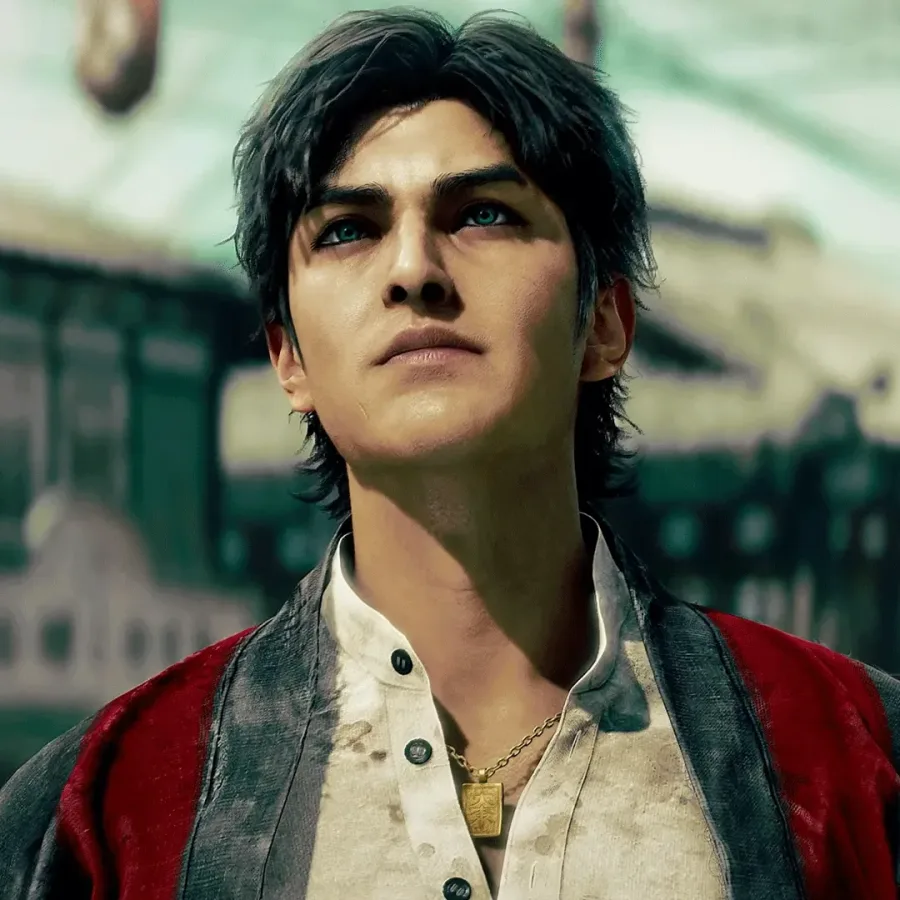
Stranger Than Heaven is shaping up to be a major technical turning point for RGG Studio. The developer has confirmed that its next game is being created exclusively for PlayStation 5, Xbox Series X|S, and PC, leaving PlayStation 4 and Xbox One behind. For a studio that has continued to bridge generations throughout the current console cycle, that decision represents much more than a revised platform list: it is an opportunity to build without the performance and memory limits that have shaped many of its recent releases.
Producer Hiroyuki Sakamoto discussed the team's approach during Gamescom Asia x Thailand Game Show 2026, describing Stranger Than Heaven as a completely new project intended to deliver the best quality RGG Studio can achieve at this point. The team chose to abandon previous-generation support so the game could be designed around hardware such as PS5 from the start, rather than adapting a current-generation concept to machines released more than a decade ago.
That distinction matters for a game that spans multiple decades of early 20th-century Japan. Stranger Than Heaven is not simply another entry using an established setting and familiar technical framework. It is a new undertaking with a historical scope that calls for changing environments, populated streets, detailed characters, and a strong artistic identity across different periods. Developing only for current hardware gives RGG Studio more freedom to pursue that scale without carrying the compromises involved in supporting older systems.
A clean break after years of cross-generation releases
PlayStation 5 and Xbox Series X|S launched in 2020, but RGG Studio has remained committed to players on older hardware for much of the generation. That approach has made its games accessible to a broad audience, but it has also meant developers needed to consider the capabilities of PS4 and Xbox One while planning visual density, character complexity, loading behavior, and the size of individual spaces.
For useful background on this topic, read Final Fantasy XIV: Evercold Delayed to February 2027 as Zephyr Job Revealed.
Like a Dragon: Infinite Wealth, released in 2024, was developed for PlayStation and Xbox platforms from two different console eras. More recently, Yakuza Kiwami 3 & Dark Ties dropped Xbox One support, yet still included a PlayStation 4 version. Stranger Than Heaven is the first point at which the studio can fully move beyond that legacy hardware baseline across consoles.
It is an important evolution for a developer whose games are often defined by dense urban spaces and close-up character work. RGG Studio's worlds are not usually built around enormous empty landscapes. Their appeal instead comes from concentration: busy streets, shops, side activities, cinematic confrontations, pedestrians, signs, interiors, and a steady stream of smaller details that make a neighborhood feel lived in. Every additional figure, animation, object, and lighting effect adds to the demands on the system.
By focusing on PS5, Xbox Series X|S, and PC, the developer no longer needs to ensure that the same core experience can run on older CPUs, slower storage, and more limited memory. That does not automatically guarantee every technical ambition becomes possible, but it gives the team a much higher ceiling when deciding what is worth building into the game.
More people on screen and a higher bar for character detail
Sakamoto identified two especially clear benefits from the current-generation-only move: the number of characters that can appear on screen simultaneously and the overall quality of those characters. In earlier projects, hardware restrictions forced the team to limit crowd counts and make other sacrifices. Stranger Than Heaven is designed to push further, with more people visible at once than RGG Studio has previously been able to show.
For a historical game set in early 20th-century Japan, crowd density can be more than a visual luxury. Public spaces, commercial districts, nightlife, travel hubs, and political or social gatherings all rely on a sense that people inhabit the world beyond the player character. A handful of repeated background models can make a large street feel artificial, while a richer collection of pedestrians can give a period setting a more convincing rhythm.
Improved character quality has equally broad implications. RGG Studio has long placed considerable emphasis on faces, performances, and dramatic close-ups, particularly in story scenes where emotional nuance carries a confrontation or revelation. Greater visual fidelity can help those moments land more effectively, but it can also benefit ordinary interactions: how a passerby is dressed, how expressions read in a crowd, or how a character's appearance changes between different decades of the narrative.
The producer's comments suggest the studio is treating technical capability and art direction as connected goals rather than separate checkboxes. Stranger Than Heaven is meant to offer a richer visual experience with a more pronounced artistic identity than the team's previous work. Better hardware utilization is therefore not being presented merely as a route to sharper textures or higher numbers. It is part of how the developer wants to communicate the game's atmosphere and historical setting.
A new framework for a decades-spanning story
Stranger Than Heaven's journey through early 20th-century Japan gives RGG Studio a particularly compelling reason to aim higher. A game moving through multiple decades needs more than costumes and date cards to make those jumps meaningful. Architecture, fashion, transportation, advertising, public spaces, and the general feel of a city can all change dramatically over time. Building those shifts into the world requires a detailed visual language and an ability to fill scenes with elements that sell each era.
A current-generation foundation may allow RGG Studio to make those transitions more immediate and more visually distinctive. Larger on-screen populations can change the tone of a location. More detailed character models can better reflect class, occupation, age, and fashion. Stronger lighting, richer environments, and more elaborate scenes can make one period feel substantially different from another rather than simply presenting the same spaces with a few surface-level alterations.
There is still much to learn about exactly how the game's decades-spanning structure will work, including the size and variety of its playable locations. However, Sakamoto's explanation establishes an important principle: the game was not conceived as a cross-generation title that later shed old hardware. It was planned as a fresh experience built natively around current systems. That can make a meaningful difference in development, since environments, systems, and asset creation can be designed for one technological target instead of being scaled down after the fact.
Confidence with launch approaching
Stranger Than Heaven is scheduled to arrive on January 15, 2027, leaving a little over two months between these comments and release. Sakamoto sounded confident that the project has achieved its central visual goals, saying the team believes it has created something richer and more artistically defined than its past games.
That confidence will be tested by high expectations. RGG Studio has earned a devoted audience through the Yakuza and Like a Dragon series, where heartfelt drama, eccentric side content, combat, and highly specific locations are commonly blended into a recognizable style. A completely new game faces the challenge of proving that the developer's strengths can translate to a different concept while also delivering a substantial technical advance.
Early hands-on impressions have pointed to plenty of potential, even as questions remain around the game's digital use of late rapper Tupac Shakur. That element has drawn understandable reservations, but the broader response to playable material has been positive. With the launch date now close, attention will increasingly turn to how the full game handles its setting, its time-spanning narrative, and the balance between its dramatic ambitions and the unusual details that have become part of RGG Studio's identity.
Cheats return alongside the technical ambitions
While Stranger Than Heaven is making a serious push toward a more advanced presentation, it will not be all solemn prestige and historical drama. Sakamoto also confirmed that the game includes in-game "cheats." Specific details about their functions have not been outlined here, but their presence fits the studio's history of embracing playful systems and unexpected diversions alongside cinematic storytelling.
That contrast may be central to what makes Stranger Than Heaven intriguing. On one side, RGG Studio is positioning the game as its strongest visual production yet, taking advantage of the power and storage speed available on current hardware. On the other, the confirmation of cheats hints that the team has not abandoned its willingness to let players experiment, disrupt the expected tone, or find amusement beyond the main plot.
The move away from PS4 and Xbox One does mean some long-time players will need newer hardware or a capable PC to join the new release. But for RGG Studio, the trade-off is clear. Rather than dividing its attention between generations, the team can direct its resources toward a version of Stranger Than Heaven designed to make the most of modern platforms.
Stranger Than Heaven launches January 15, 2027, for PlayStation 5, Xbox Series X|S, and PC. If its technical ambitions translate into the finished game, it could mark the moment RGG Studio finally makes the full current-generation leap its recent releases have been building toward.
Community
Discussion
Start the conversation.
No comments have been posted yet.