

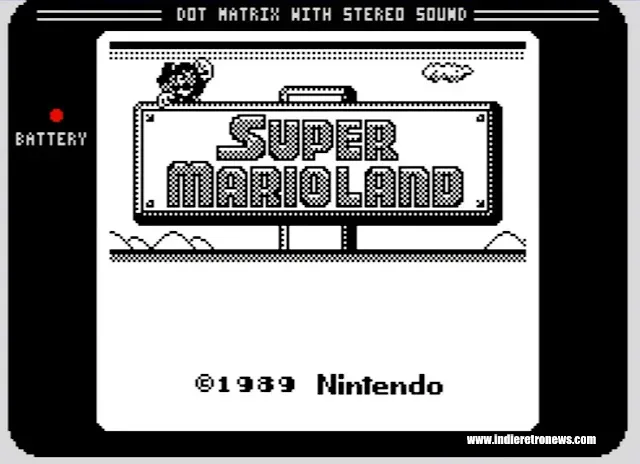
Super Mario Land ZX is bringing one of Mario's most important handheld adventures to a very different piece of classic hardware. Created by Kirby2000, the public beta is an AI-assisted ZX Spectrum 128K adaptation of Super Mario Land, Nintendo's 1989 Game Boy launch title. Its central ambition is unusually bold for an 8-bit conversion: the project is intended to include the complete original game in a single 128K load.
That means all 12 levels across the game's four worlds are represented, rather than a small selection of stages or a loosely inspired tribute. The beta can be played with a keyboard or a Sinclair joystick, and it also recreates the portions of Super Mario Land that most clearly departed from the usual Mario platforming template: the submarine and aeroplane shoot-'em-up stages. The project's music has likewise been reworked for the ZX Spectrum's AY sound chip, with 18 tunes arranged for the machine.
It is an intriguing collision of two landmark home-computing and gaming formats. The Game Boy and ZX Spectrum occupy very different places in the history of 1980s games, with Nintendo's monochrome handheld built around portability and Sinclair's computer associated with a vast library of British and European bedroom-coded software. A conversion between them is not just a matter of placing familiar sprites on another screen. It requires adapting a Game Boy game's pace, level presentation, controls, sound, and technical assumptions to hardware with its own visual and audio identity.
A full-scale Spectrum interpretation
The original Super Mario Land was already a compact take on Mario. Released alongside the Game Boy in 1989, it translated the side-scrolling ideas established by the NES games into a shorter adventure designed around a portable system. Its four worlds and 12 levels made for a brisk journey, but the game still offered varied locations, distinctive enemies, secret-hunting opportunities, and memorable set pieces.
For useful background on this topic, read Kingdom Hearts' Deep Jungle Still Exposes the Original Game's Roughest Edges.
Super Mario Land ZX takes advantage of that relatively concise structure while setting itself a substantial preservation-style goal. Rather than simply borrowing the first stage, Mario's movement, or the broad look of the Game Boy original, the beta seeks to retain the adventure from beginning to end. For retro players, that full-game approach is a significant part of the appeal. Conversions and demakes often have to focus on one famous level or one core mechanic; a project that attempts the entire game can offer a more complete way to compare the original design with its reinterpretation on another platform.
The vehicle stages are especially important in that respect. Super Mario Land is remembered not only as Mario's first portable outing but also for its unexpected genre shifts. In certain levels, Mario pilots a submarine or aeroplane in horizontal shooting sequences, a feature that makes the game stand apart from the more conventional platforming structure of many series entries. Their inclusion in the Spectrum version signals that the adaptation is aiming for the unusual details as well as the familiar running-and-jumping action.
Those moments also pose a different kind of challenge from standard platform levels. Shoot-'em-up scenes need responsive controls, enemy behavior, projectile handling, scrolling, and a sense of momentum that differs from navigating platforms and pits. Recreating them on ZX Spectrum 128K hardware makes the project more than a visual novelty; it is also an attempt to carry over the range of play styles that defined the 1989 release.
For another perspective on this story, read Super Mario Land ZX Brings the 1989 Handheld Adventure to ZX Spectrum 128K.
Music adapted for the AY chip
Sound is another major component of the conversion. The beta includes 18 tunes rearranged for the Spectrum's AY audio chip. The original game's music remains one of its most recognizable qualities, from its upbeat overworld themes to the music associated with its more unconventional sections. Translating those melodies to AY audio necessarily gives them a new character, shaped by the capabilities and constraints of the ZX Spectrum 128K.
That is part of what makes cross-platform retro projects compelling. A direct one-to-one replication is rarely possible, and it is not always the most interesting target. Instead, a strong adaptation can preserve a game's identity while allowing the destination hardware to be heard and seen on its own terms. The Spectrum has a recognisable audiovisual personality, and the new arrangements give Super Mario Land ZX an opportunity to feel like a Spectrum game as much as a Game Boy conversion.
The single-load claim is notable as well. Loading was an everyday consideration for many ZX Spectrum games, particularly for users playing from cassette media. Fitting an entire rendition of Super Mario Land within one 128K load reflects careful technical planning, whatever format players use to run the software today. It also creates a cleaner experience: once loaded, the full adventure is available without the interruption of swapping or separately loading individual worlds.
A beta built around real-hardware feedback
Kirby2000 has released the project as a public beta and is seeking feedback from the community, with particular interest in how the game behaves on original ZX Spectrum hardware. That focus matters. Retro software can run differently across emulators, FPGA-based systems, modern storage devices, and original machines. Timing, controls, display behavior, audio output, and compatibility can all reveal issues that are not immediately obvious during development or when playing through an emulated setup.
Public testing gives Spectrum enthusiasts a chance to help shape the build before it progresses beyond this early stage. Players using authentic 128K hardware are in a particularly useful position to report whether controls feel reliable, whether the game loads and runs as expected, and whether any technical quirks emerge during longer sessions. As with many homebrew releases, feedback from the active retro community can be a practical part of the development process rather than merely a post-launch reaction.
The use of AI assistance is disclosed for the project. That places the release within a broader ongoing conversation around AI-supported creative and technical work, but the immediate result is a fan-made retro conversion being tested in public. The beta status is important: players should view the current build as work in progress, not necessarily as a finished or final version.
Why Super Mario Land still matters
The original Super Mario Land remains a defining Game Boy release. It sold 25 million copies, making it the fourth best-selling Game Boy title. Its importance was not just commercial. It demonstrated that Mario's basic platforming appeal could work in a compact, handheld form, even with the technical differences between the Game Boy and Nintendo's home consoles.
The game also made a lasting contribution to the series' cast by introducing Princess Daisy. While later Mario games would expand and reinterpret the Mushroom Kingdom and its surrounding worlds in many directions, Daisy's debut in Super Mario Land gives the game a permanent place in franchise history. Its success led to Super Mario Land 2: 6 Golden Coins, which in turn introduced Wario and helped set the stage for the separate Wario Land series.
Official rereleases have kept the original accessible through the Nintendo 3DS Virtual Console and Nintendo Switch Online. Even so, Super Mario Land ZX offers a different kind of return. It is not an official rerelease and not a replacement for Nintendo's version. Instead, it is a platform-specific reinterpretation that lets players encounter the same compact adventure through the color, sound, controls, and technical culture of the ZX Spectrum.
A meeting point for two retro communities
For Mario fans, the project provides a fresh way to revisit a formative 1989 game. For ZX Spectrum players, it is a chance to see how an iconic handheld title can be reshaped for 128K hardware. And for enthusiasts of retro development, it is an example of how much interest remains in creating ambitious new software for machines whose commercial eras ended decades ago.
The public beta's real-hardware testing phase will be key to its next steps. If the complete 12-level structure, vehicle sequences, and AY soundtrack continue to hold together across original machines, Super Mario Land ZX could become a particularly unusual addition to the Spectrum's modern homebrew scene: a full reinterpretation of a Game Boy launch classic, built for a computer with an entirely different legacy.
Community
Discussion
Start the conversation.
No comments have been posted yet.