

Nearly 25 years after its PlayStation 2 debut, Kingdom Hearts remains easy to love in theory. It is a wildly sincere collision of Disney animation, Square Enix melodrama, action-RPG combat, original mythology, and Final Fantasy guest stars. Few games of its era had such an immediately recognizable premise, and even fewer managed to turn an apparently impossible corporate crossover into something with its own identity.
Actually playing the original game again, however, can be a much more complicated experience. A replay of Kingdom Hearts during the opening month of a year-long series journey has highlighted the difference between remembering its most magical moments and navigating its moment-to-moment design. The early worlds still contain flashes of the strange, earnest energy that made the franchise beloved. But they also make a strong case that nostalgia can only do so much when Sora is asked to platform.
The clearest offender is Deep Jungle, the world inspired by Disney's Tarzan. It is a location built around vertical movement: vines, elevated platforms, tree branches, and a series of routes that require Sora to leap, swing, and occasionally grind across the jungle. That setup would be challenging in any action game. In the original Kingdom Hearts, where Sora's jumps can feel unusually floaty and his landings often lack precision, it can become exhausting.
Deep Jungle turns one missed jump into a long detour
The central issue is not simply that a difficult jump exists. Platforming games can ask players to make demanding inputs, then let them quickly try again. Deep Jungle instead uses several layers of terrain. Missing a vine or falling short of a ledge frequently sends Sora down to a lower section of the map rather than returning him to the beginning of a single obstacle.
For useful background on this topic, read Why SNES Games Remain So Expensive in 2026.
That structure makes every error cost more time. The player does not merely reset a jump; they must retrace the route needed to regain the height they just lost. When the controls themselves inspire little confidence, the result is a cycle of hesitation, failure, and backtracking. Deep Jungle's traversal has become one of the most memorable examples of the first game's aging design, precisely because the world asks so much of mechanics that never feel fully reliable.
That criticism is not based on expecting a 2002 action game to handle exactly like a modern one. Plenty of PlayStation 2-era titles offered sharp movement and responsive combat. Kingdom Hearts was also unusually ambitious, attempting to combine several genres at once: action game, role-playing game, platformer, and the on-rails Gummi Ship sequences that connect its worlds. Its reach is part of the appeal, but its many moving parts do not always fit together cleanly.
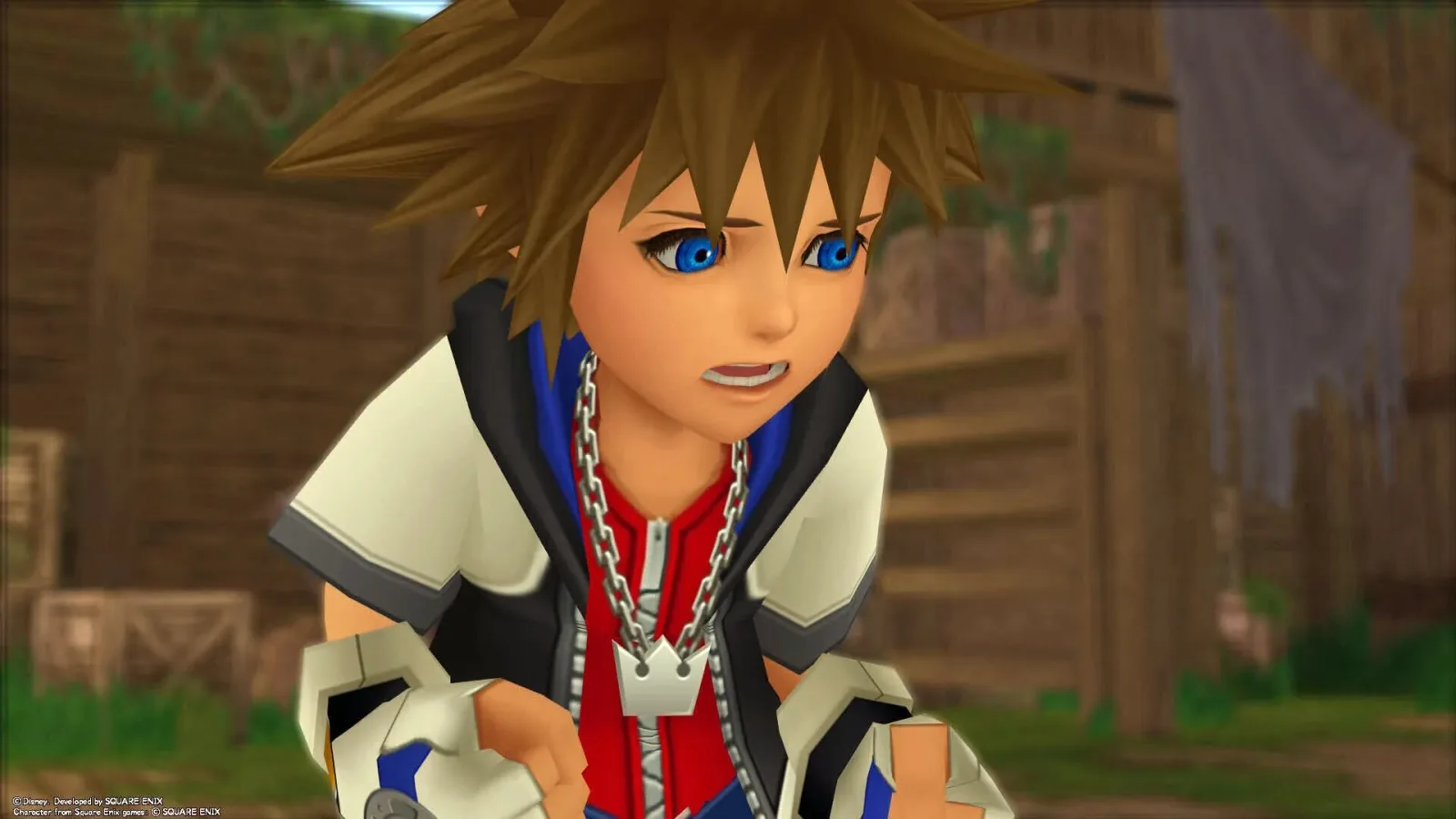
Sora's jump is a particular sticking point. He can seem to drift past intended landing spots, and the exaggerated proportions of his oversized shoes do not help players judge his position in space. On a flat arena, that looseness may barely register. In worlds designed around elevation and narrow paths, it becomes a persistent problem. One replay session reportedly became frustrating enough that stepping away to play Overwatch sounded preferable to continuing through the jungle.
The Disney worlds remain inventive, even when they are smaller than memory suggests
For all the frustration around movement, revisiting the early Disney settings also reveals what Square Enix accomplished with the material. The worlds may feel more compact than they did in memory, but their best moments establish the series' distinctive ability to place its original dark-fantasy concepts alongside familiar Disney characters and villains.
Wonderland, based on Alice in Wonderland, is one example of a world whose scale can seem surprisingly limited on return. It remains a suitably strange place, with its shifting rooms and distorted perspective, but it does not necessarily carry the emotional or dramatic weight of the game's strongest early stops.
Deep Jungle, despite its platforming headaches, works better thematically. Clayton is not transformed into an elaborate new version of himself to accommodate the crossover. He is essentially a man whose own cruelty and ambition place him in alignment with the Heartless. That direct integration helps the Disney setting feel less like a detached licensed level and more like a genuine part of Kingdom Hearts' larger conflict.
The game's early worlds can be modest in physical size while still containing ambitious ideas. That is one of the reasons the first game continues to invite examination even when playing it can be rough. It was willing to experiment with how Disney stories might coexist with original villains, Keyblades, and a mythology about hearts, darkness, and connected worlds.
Olympus Coliseum shows why the crossover concept worked
Among the opening Disney destinations, Olympus Coliseum stands out as the most effective blend of the game's different inspirations. It contains only a handful of areas, but it makes excellent use of them. The Hercules setting becomes more than a simple venue for combat challenges because it provides one of the earliest and most memorable Final Fantasy crossovers in the series.
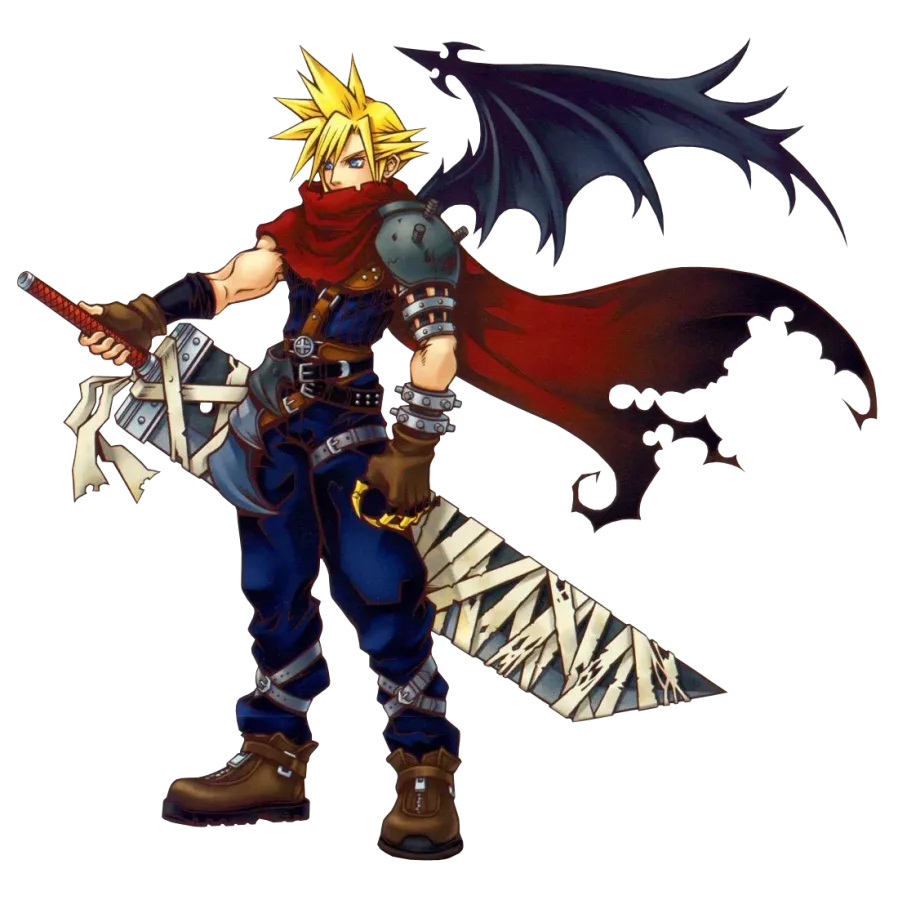
Cloud Strife from Final Fantasy VII enters Phil's games under orders from Hades, with the goal of taking down Hercules. The premise is delightfully odd on paper, yet it feels natural within the heightened fantasy tone of Kingdom Hearts. Cloud's appearance, including his bandaged Buster Sword, immediately signals that the game is not merely borrowing recognizable faces for decoration. He is a difficult opponent with fast attacks and superior mobility, and the battle can leave Donald and Goofy struggling to contribute much before they are knocked out.
Defeating Cloud with no potions left is the kind of hard-won victory that helps explain why the first game's combat still has supporters. The subsequent Cerberus encounter may be more readable and conventional, but it delivers on the Hercules fantasy in a satisfying way. Olympus Coliseum demonstrates how a small world can be memorable when its characters, fights, and crossover logic all reinforce one another.
It also revives a long-running conversation about Final Fantasy's place in the franchise. Some fans view the guest cast as a crucial ingredient in what made the first game special. Others argue that the series has always been fundamentally Disney-focused, with Square Enix characters serving as occasional additions rather than equal partners. Disney characters vastly outnumber Final Fantasy visitors, and the series has never had a full Final Fantasy-themed world, but the cameos still gave the original a distinctive texture.
Cloud's role at Olympus makes the case for that texture. He is not required to explain the core plot, yet he makes the setting feel less predictable. His presence creates a type of crossover surprise that became a defining part of the original game's identity.
Fans remain divided on Gummi Ship travel
Another major piece of that identity is the Gummi Ship system. The original game requires players to travel through on-rails space routes between worlds, using ships they can customize from modular pieces. For some, those sequences are a cumbersome interruption that runs too long and would likely be optional in a contemporary release. Critics also note that a player can often survive by holding the fire button and flying straight ahead, limiting the need for careful aiming or movement.
For others, the builder is the point. The ability to construct a wildly impractical ship, test different designs, stack on weapons and engines, or simply create a giant craft with a huge health pool has its own toy-box appeal. The most enthusiastic descriptions of Gummi Ship construction lean into that freedom: ships do not have to look symmetrical or aerodynamic to be fun.
The divide becomes more understandable when separating the creation tool from the travel missions themselves. Designing a spacecraft out of block-like pieces can be satisfying, while repeatedly completing the on-rails stages may feel like a chore for players who do not enjoy the genre. Later entries changed the system substantially, with Kingdom Hearts II often praised for more vibrant routes and improved building options. Kingdom Hearts III expanded ship customization further, though its open-space approach has also been criticized as less focused and more time-consuming.
Even the original Gummi Ships had ideas later games did not retain, including the ability for certain ships to transform. It is another reminder that the first Kingdom Hearts was frequently more experimental than elegant.
An important classic that can be difficult to revisit
The first Kingdom Hearts remains compelling because of its ambition and emotional directness, not because every system has aged gracefully. Its early worlds contain clumsy platforming, uneven pacing, and design decisions that can test even players who adore the series. Yet Deep Jungle's frustrating routes sit in the same game as Cloud's dramatic Olympus showdown, the unusual charm of Gummi Ship construction, and Disney worlds willing to embrace the franchise's darkness.
That tension may be the most honest way to approach the original today. It is not a game that should be dismissed simply because it is old, nor is it a flawless classic preserved perfectly by memory. It is a foundational, messy, imaginative adventure whose best ideas still shine through its roughest mechanics. The challenge for a full replay is whether that earnestness can continue to carry players through the parts that feel most dated--especially when another vine jump is waiting.
Community
Discussion
Start the conversation.
No comments have been posted yet.