

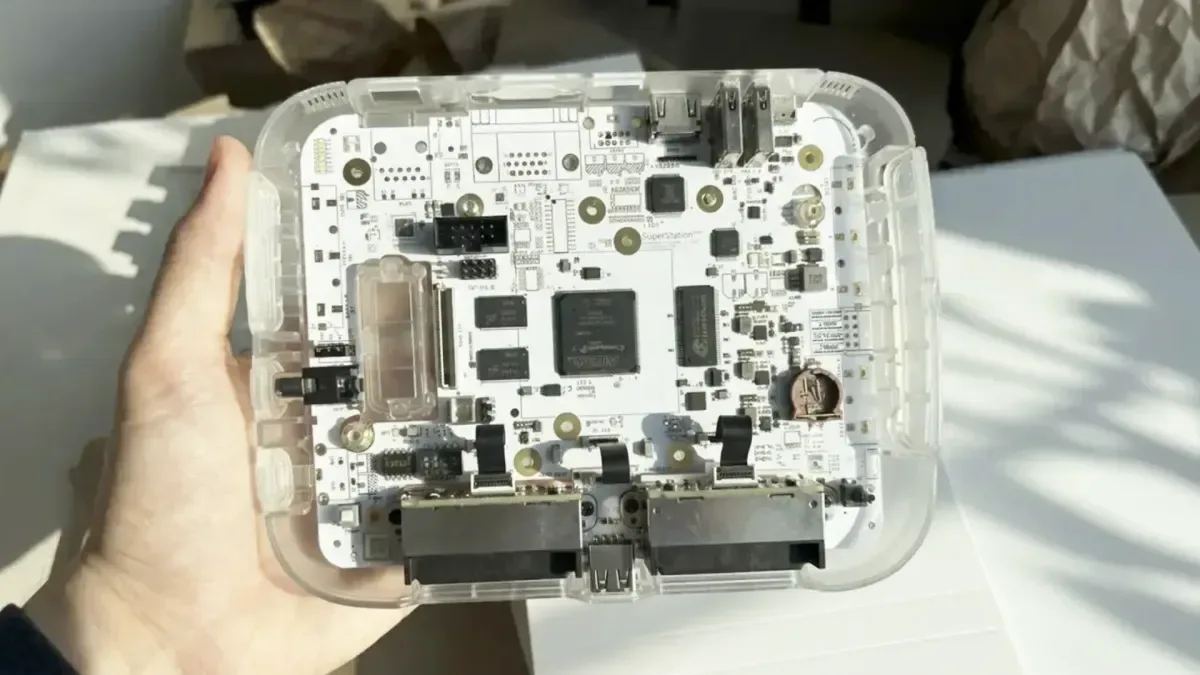
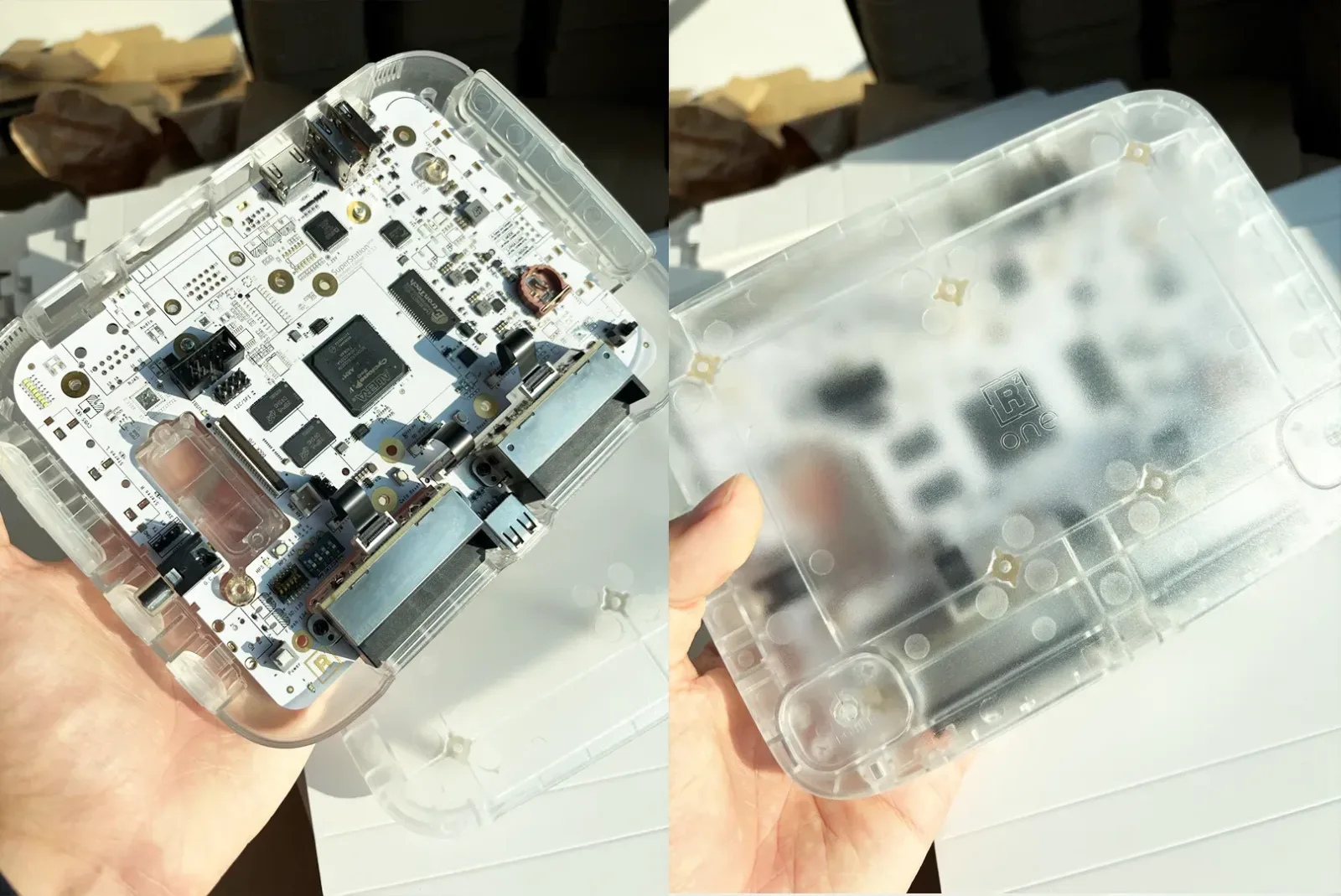
Retro Remake may be considering a more affordable way into its PS1-inspired FPGA hardware. A prototype called the SuperStation One Lite, or SS1 Lite, has been discussed with a proposed $200 price point. If it moves beyond the prototype stage, the streamlined model would cut several of the standard SuperStation One's standout features: analog video output and support for the optional Super Dock.
The trade-off is straightforward. The Lite model is intended for players who use modern displays and primarily want HDMI, rather than enthusiasts building elaborate retro display setups or connecting a large range of specialist accessories. The prototype is also said to consume two to three watts less power than the regular machine and to have notably improved airflow.
Those details make the SuperStation One Lite an interesting prospect, but it is important to treat it as exactly that for now: a prototype. There has been no confirmation that the unit will become a retail product, no announced launch window, and no finalized specification sheet. Still, its existence indicates that a lower-cost configuration is being explored alongside the standard SuperStation One hardware.
What the SuperStation One is built to do
The SuperStation One is an FPGA-based console designed with the original PlayStation's appearance in mind. FPGA, short for field-programmable gate array, hardware takes a different approach from conventional software emulation. Rather than relying solely on a program that imitates old systems on modern processors, an FPGA can be configured to reproduce hardware behavior at a low level.
For useful background on this topic, read Starforce Is Heading to Amiga AGA in a New Retro Arcade Conversion.
That approach has made FPGA devices especially appealing to preservation-minded players and retro enthusiasts who care about timing, compatibility, controller behavior, display options, and the distinctive quirks of original-era games. As with any recreation of vintage hardware, practical results depend on the individual core, peripheral, software version, and display setup. But FPGA platforms are valued for giving users a flexible route to experience classic systems without needing to maintain every original console.
The standard SuperStation One is positioned as more than a machine for PlayStation software. It can also use an array of MiSTer cores, widening its purpose beyond a single classic platform. Its appeal is therefore tied not just to its console-inspired exterior, but to a broad selection of connectivity options for different types of screens, controllers, storage, and accessories.
That versatility comes at a higher cost. The standard SuperStation One is listed at $249, while a $299 bundle includes the Super Dock. The Lite prototype's suggested $200 level would bring the entry price down by roughly $49 compared with the regular console, assuming that figure and the rest of the hardware plan remain unchanged.
For another perspective on this story, read SuperStation One Lite Prototype Points to a $200 HDMI-Only FPGA Option.
An HDMI-first design with significant omissions
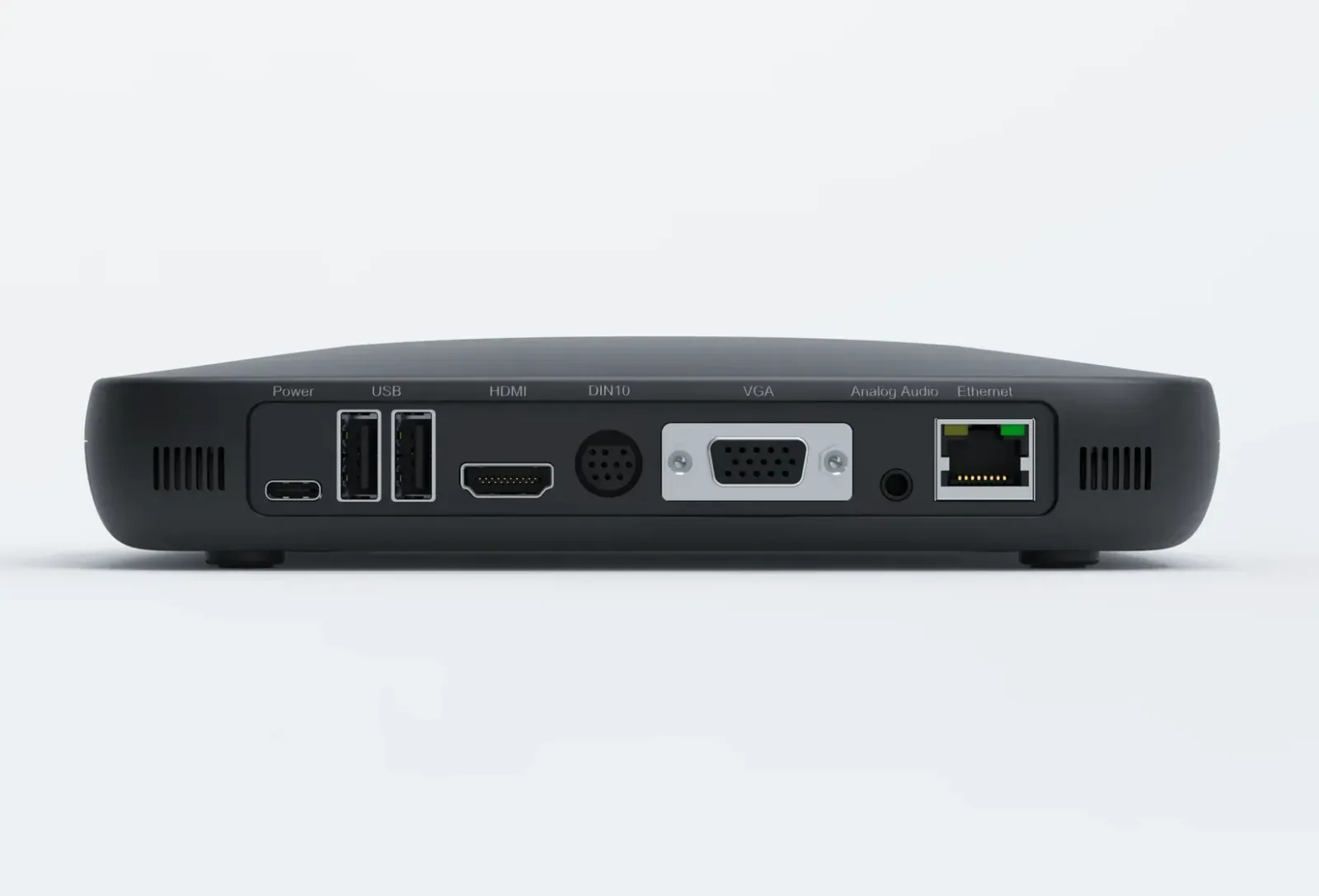
The defining change for the SuperStation One Lite is its apparent move to an HDMI-only video setup. The regular SuperStation One includes HDMI alongside a collection of analog and legacy-friendly connections. These include component video via YPbPr, VGA, a 10-pin DIN connection that can carry RGB, S-Video, and composite through compatible cables, plus separate S-Video and composite options.
For a player connecting the console to a current television, monitor, capture device, or HDMI switch, those extra analog outputs may not matter. HDMI is simple, common, and often the only connection a modern setup requires. Removing the other ports could reduce manufacturing complexity, help lower the retail target, and make the physical design less cluttered.
For the retro community, however, video output is rarely a minor matter. CRT televisions and professional video monitors can produce an image and motion presentation that many players strongly associate with older games. RGB, component, S-Video, composite, and VGA each serve different hardware generations and display types. Some users also prefer analog connections because they want a setup that resembles how specific games were originally played.
Consequently, the Lite's reduced I/O would not simply be a specification downgrade for everyone. It would divide the audience by use case. Players who have no interest in CRTs or legacy displays could see it as a sensible budget edition. Collectors, tinkerers, and users with carefully assembled analog setups may find that the missing ports remove a central reason to choose this type of FPGA console in the first place.
No Super Dock support changes the value equation
The other major limitation is the absence of Super Dock compatibility. On the full SuperStation One, the dock is designed to substantially expand the machine's capabilities. It provides four additional USB ports, an M.2 NVMe SSD slot, an optical disc drive, a dedicated SNAC port, an infrared receiver, and an expansion connector.
That collection is important because it gives the standard system room to grow. More USB ports can help with multiplayer controller arrangements and peripherals. NVMe storage can be attractive for users maintaining larger game libraries or multiple cores. The optical drive speaks directly to players who want to use physical discs, while the dedicated SNAC connection is relevant to users seeking direct support for original controllers and related accessories.
Without dock support, the SuperStation One Lite would be a much more self-contained device. That can be a positive for buyers who do not want an ecosystem of add-ons. It also means prospective owners would need to accept the machine's initial configuration as its practical ceiling, rather than planning to add disc functionality, expanded storage, or additional dedicated connections later.
The distinction could ultimately make the two models easier to understand. The standard SuperStation One would remain the flexible enthusiast machine, suitable for analog video users and expansion-focused setups. The Lite would target those who want the core FPGA experience in a smaller-cost HDMI configuration. Whether a $49 difference is enough to persuade buyers to give up those features will depend on how much the broader final specifications differ from the current model.
Lower power use and airflow could be meaningful benefits
The Lite prototype is not being presented solely as a stripped-back console. Its reported two-to-three-watt reduction in power draw and improved airflow suggest that the revised design may have practical strengths of its own. Lower power consumption is modest in the context of a home console, but it can still matter for heat, long-term use, and the kind of compact setup likely to appeal to HDMI-focused buyers.
Improved airflow is especially worth watching if the Lite progresses. FPGA systems, storage devices, and enclosed electronics all benefit from considered thermal design. Quiet, cool operation may not generate the same excitement as an optical drive or a bank of video ports, yet it can have a major effect on the everyday experience of using a device for long sessions.
At present, there is no detailed explanation of how the reduced power use and airflow improvements were achieved. It is not known whether the final layout, case, cooling solution, or internal components would match the discussed prototype. Those are the kinds of questions that will need answers before potential buyers can make a meaningful comparison with the existing SuperStation One.
A possible expansion of Retro Remake's FPGA plans
The SuperStation One Lite is not the only possible direction being considered. FPGA handhelds have also been mentioned as a potential area of development. That does not provide a product announcement, technical specification, price, or release timing, but it does suggest a broader interest in building a family of FPGA devices rather than relying on one console format.
A handheld would present a very different set of design challenges, particularly around battery life, screen quality, controls, heat, portability, and cost. The Lite prototype's reported focus on power efficiency could be relevant experience for future compact hardware, though there is no confirmation of any direct connection between the two efforts.
For now, the clearest takeaway is that the SuperStation One Lite remains an idea under active experimentation. It promises a potentially more accessible $200 entry point, HDMI output, lower power consumption, and better airflow. In exchange, it would leave behind analog video connections and the expansion path offered by the Super Dock.
That is a compromise many modern-display users could happily make, while others will understandably prefer the regular system's wider connectivity. Until Retro Remake confirms a final product, its price, and a release plan, the Lite should be viewed as a promising but uncommitted branch of the SuperStation One concept rather than a guaranteed upcoming console.
Community
Discussion
Start the conversation.
No comments have been posted yet.