

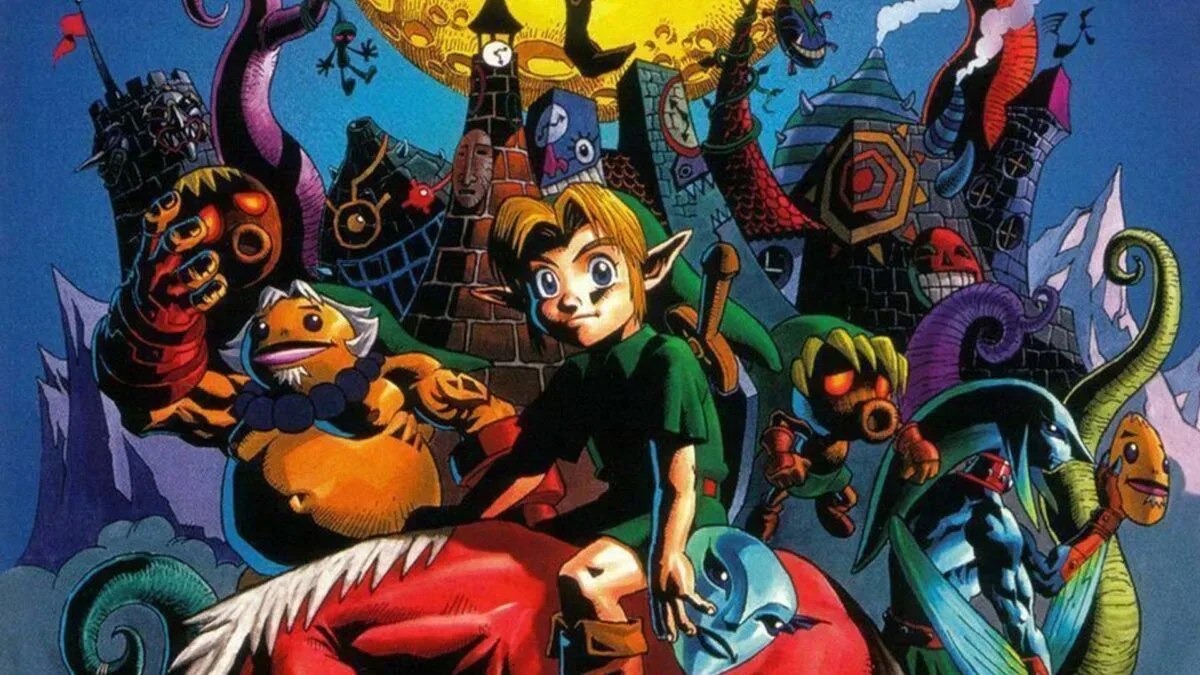
Takaya Imamura, the veteran game artist and designer whose career includes major work on Star Fox, F-Zero, and The Legend of Zelda: Majora's Mask, has become the focus of an online argument after sharing an AI-assisted game-development experiment. The prototype, described as a 3D shooter test, prompted criticism from users who objected to generative AI being used in creative production.
Imamura later addressed the negative reaction directly, saying he had been surprised by the intensity of the response. He emphasized that he had not announced plans to complete or publish the prototype as a commercial game. Instead, he characterized it as a quick test of AI tools and their potential usefulness during early development.
The discussion is another example of the sharp divide surrounding generative AI in games. Supporters often point to its ability to help individuals build prototypes, organize ideas, or overcome technical barriers. Critics raise concerns about training data, creative labor, consent, ownership, quality control, and the prospect of companies using the technology to reduce jobs or devalue artists' work. In Imamura's case, the reaction was especially notable because many of the critical replies appeared to come from Japanese users.
Embedded X/Twitter post
A Designer With Deep Nintendo History
Imamura's name carries considerable weight among Nintendo fans because of the breadth of his past contributions. He worked as a graphic designer on the original Star Fox, a formative series for Nintendo's 3D game ambitions. He is also credited as character designer on F-Zero: Climax, served as a supervisor on Super Smash Bros. Brawl, and was art director on The Legend of Zelda: Majora's Mask.
For useful background on this topic, read Tracer Remains Overwatch's Mascot as Blizzard Prepares Its Next Hero Era.
Those projects span distinct eras and styles of Nintendo development, from the striking polygonal aesthetic of the Super Nintendo's Star Fox to the surreal, time-looping world of Majora's Mask. That history likely made the post more visible than an ordinary prototype update. It also meant that the AI discussion was attached to a creator strongly associated with beloved games and handcrafted visual identities.
Imamura shared images of the shooter prototype on X and described himself as testing AI-assisted game development. In the translated wording of his post, he suggested that exchanging ideas with AI reminded him of the collaborative process of building games alongside a programmer: proposing an idea, trying it, revising it, and seeing where the process leads.
For a creator who does not identify as a programmer, the immediate appeal was clear. A tool that can help convert a rough concept into something interactive can make prototyping more accessible. Early prototypes do not need final art, polished mechanics, or a complete production pipeline; their purpose is usually to answer basic design questions. Is an idea playable? Does movement feel good? Can a core loop hold attention? Can a concept be communicated to collaborators?
For another perspective on this story, read Takaya Imamura Faces AI Prototype Criticism After Sharing 3D Shooter Test.
Why the Experiment Drew Pushback
Not everyone saw the test as a harmless personal exercise. Replies criticized generative AI's broader ethical and industrial implications, particularly the concern that current systems are built using data taken or used without proper authorization from creators. One response urged Imamura not to adopt the technology amid growing criticism and boycotts internationally, while warning that AI use could harm a company's credibility.
That response also referenced Level-5 as an example of a developer whose public standing had been affected by AI-related controversy. The comparison illustrates why the issue extends beyond the quality of a single prototype. For many players and artists, an AI tool is not neutral simply because it is being used at the earliest stage of a project. They see experimentation by prominent creators as an endorsement that may normalize wider adoption.
There is also an important difference between the narrow question of whether an individual can use AI to make a test build and the larger question of how game companies might use similar systems. A lone designer exploring ideas without a programming background presents one scenario. A major publisher replacing concept artists, writers, localization staff, quality-assurance teams, or developers with automated systems presents another. Online arguments frequently collapse those cases into one debate, but the concerns around them can overlap.
Critics are also wary of a familiar pattern in technology discussions: an initially limited convenience tool can become part of a larger push for cost cutting. Even when a prototype is not intended for sale, players may worry that public enthusiasm from experienced developers helps create pressure for AI to become standard across production. That concern can be heightened in an industry already facing layoffs, studio closures, unstable employment, and increasingly lengthy, expensive development cycles.
Imamura Says It Was Not a Release Announcement
Imamura responded to criticism by saying that he understood the concern, but maintained that AI is difficult for someone in his profession to ignore. He explained that he was testing the tools because he was impressed that they could help fill the programming gap and turn his ideas into a functioning game experiment.
His initial comments led some readers to infer that he might be pursuing a completed game. In a subsequent post, however, Imamura pushed back on that interpretation. He said he was receiving heavy criticism simply for making a quick prototype with AI and stressed that he had never said he would finish or release it.
"I never even said a word about finishing or releasing it," Imamura wrote while responding to the reaction.
That clarification matters, although it does not entirely settle the objections raised by critics. A prototype can be personally exploratory and still invite scrutiny over the software or methods used to make it. At the same time, Imamura's comments distinguish this situation from an announced retail game or a studio publicly committing to an AI-driven production pipeline.
Nothing in the posts establishes a release plan, a target platform, a publisher, or a commercial model for the shooter prototype. It should therefore be viewed as an experiment rather than evidence of a new Imamura-led game entering development.
The Ongoing AI Divide in Gaming
Generative AI has become one of the most contentious subjects in the games business. The debate is not limited to image generation. Developers and publishers have explored, discussed, or been accused of using AI for artwork, writing, voice work, code, customer support, localization, testing, marketing, and player-facing dialogue systems. Each application brings different technical and ethical questions.
For artists, the most immediate concern is often whether models were trained on copyrighted work, personal portfolios, or other creative material without permission. For performers and writers, anxiety can center on unauthorized imitation, loss of bargaining power, and the use of generated material as a substitute for human work. For players, the concern may be less about production process and more about whether games become less distinctive, less carefully authored, or filled with unreliable generated content.
On the other side, some independent creators see AI tools as a way to test prototypes that would otherwise be beyond their technical means. A designer with an idea but no coding experience may be able to create a basic playable demonstration. That does not necessarily mean the result is ready for production, nor does it resolve questions about data provenance and creative rights. But it explains why the technology can appear useful to people working outside a full studio team.
Imamura's description of the process reflects that practical appeal. He compared the back-and-forth with AI to bouncing concepts around with a collaborator, focusing on the speed of turning an idea into something tangible. His critics, meanwhile, focused on the consequences of embracing the underlying technology. Both responses emerge from the same reality: AI tools are increasingly capable of participating in tasks that once required specialized collaborators.
A Notable Reaction From Japanese Players
The controversy also complicates assumptions about regional attitudes toward generative AI. Public discussions often portray responses to AI in games as split cleanly between different markets or audiences, but the criticism aimed at Imamura suggests the picture is more complicated. Japanese players and creators are not a single bloc, and neither are Western players and creators. Reactions vary depending on the use case, the person involved, the company behind a project, and the perceived effect on working artists.
In this instance, Imamura's status may have intensified the response. Fans who admire his past work may be especially protective of the human artistry associated with games such as Majora's Mask and Star Fox. Others may simply feel that a respected designer testing emerging tools is a reasonable part of understanding where game development is heading.
For now, the clearest point is that Imamura has described the 3D shooter as a test, not a confirmed commercial project. The episode does not signal a release, nor does it reveal a broader production initiative. It does show, however, that even a small AI-assisted prototype can spark a major conversation when it comes from a creator with a long and influential game-development legacy.
As AI remains a central issue for developers, artists, publishers, and players, experiments like this will likely continue to draw both curiosity and resistance. The tools may lower barriers to making a rough game concept playable, but the debate over how those tools are built, when they should be used, and what they mean for creative work is far from settled.
Community
Discussion
Start the conversation.
No comments have been posted yet.