

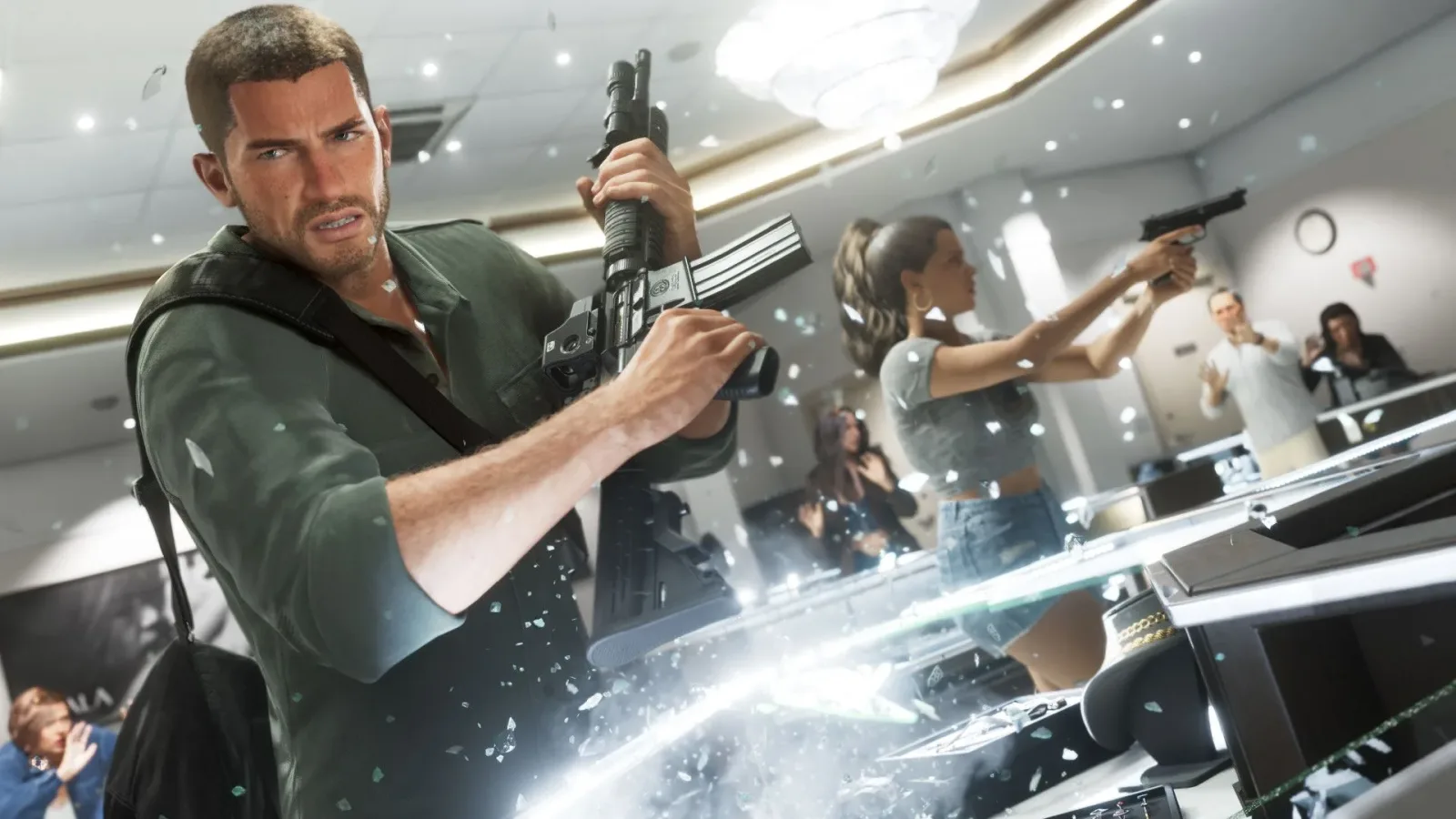
Take-Two Interactive does not see a need to join a larger entertainment company, even as consolidation continues to reshape the video game business. Speaking ahead of the launch of Grand Theft Auto 6, chairman and CEO Strauss Zelnick said the publisher is in a position to remain competitive on its own, pointing to its scale, balance sheet, and collection of major franchises.
The comments arrive at a particularly consequential moment for the company. Grand Theft Auto 6 is nearing release and has already generated extraordinary commercial anticipation. It is described as the most pre-ordered game ever on both PlayStation and Microsoft storefronts, while one market-intelligence estimate puts its pre-launch revenue at $942 million. That level of interest gives Take-Two an unusually prominent position in an industry where blockbuster releases increasingly influence the fortunes of entire publishers.
But Zelnick's argument was broader than the potential success of one game. He said Take-Two has already demonstrated that it can thrive as an independent business and does not require the backing of a bigger parent company to compete with its largest rivals.
"We are not in a place where we need to be part of a bigger organization to be competitive," Zelnick said during an appearance on David Rubenstein's Bloomberg program.
For useful background on this topic, read NETGEAR Nighthawk Wi-Fi 6 Router Drops to $45 Ahead of Black Friday.
Take-Two says it has reached the scale that matters
In Zelnick's view, size is important in games--but only up to a certain point. A publisher needs enough revenue to assemble experienced development teams, launch games around the world, sustain marketing efforts, and withstand projects that fail to meet expectations. Below that threshold, the modern premium-game business can be especially unforgiving.
He placed that basic threshold at roughly $1 billion in annual revenue. Companies operating below it may struggle to fund high-end creative work and global operations while absorbing the occasional commercial disappointment. Take-Two, however, considers itself far past that stage. The company's guidance for its current fiscal year is between $8 billion and $8.2 billion in revenue.
That distinction is central to Zelnick's position. He did not suggest that scale has no value at all. Rather, his point was that there can be diminishing returns once a publisher already has the resources, infrastructure, brands, and worldwide reach necessary to run a major games business.
"Additional scale doesn't seem to help you succeed," Zelnick said of companies that are already well beyond the level needed to support competitive creative and commercial operations.
For Take-Two, the argument is supported by more than its annual guidance. Its business includes Rockstar Games, 2K, and a broad group of labels and development teams. It also spans premium releases, ongoing online businesses, sports titles, mobile operations, and catalog games. A company with that range can spread risk across several types of products, even though a release as large as Grand Theft Auto 6 will understandably command enormous attention.
GTA 6 is a powerful test of Take-Two's strategy
No discussion of Take-Two's immediate future can avoid Grand Theft Auto 6. Rockstar's next open-world crime epic is not simply another major release; it is expected to be one of the defining entertainment launches of its era. Its pre-order performance on PlayStation and Microsoft stores illustrates the extent of that demand before players have even had access to the full game.
The reported $942 million estimate should still be treated as an outside market-intelligence assessment rather than a financial figure supplied by Take-Two. Even so, the number underlines why the game has become such a focal point for investors, competitors, and fans. A launch of this magnitude could have implications well beyond initial unit sales, especially given Rockstar's history of building long-running engagement around its biggest worlds.
For Zelnick, that momentum appears to reinforce rather than alter the case for independence. Take-Two is not presenting itself as a company looking for an exit while holding a valuable asset. Instead, it is emphasizing that its existing portfolio and financial position enable it to retain control of the properties that give it its identity.
That portfolio includes Grand Theft Auto, Red Dead Redemption, Borderlands, and BioShock, among other series. Zelnick described Take-Two as having the best collection of intellectual property in games. That is a bold claim in a business full of long-established franchises, but the company's lineup makes the reasoning easy to understand. These are brands with global awareness, distinct audiences, and the potential to support sequels, expansions, remasters, adaptations, and other long-term initiatives.
Consolidation has made independence a bigger question
Zelnick was asked whether he would consider a sale in light of recent transactions involving two of the industry's biggest competitors. Although the companies were not named in the question, the context pointed toward Electronic Arts and Activision Blizzard.
Activision Blizzard's acquisition by Microsoft was one of the most significant deals the business has ever seen, bringing franchises such as Call of Duty, World of Warcraft, Diablo, and Candy Crush under Microsoft's umbrella. Meanwhile, Electronic Arts was sold earlier in 2026 in a $55 billion deal involving Saudi Arabia's Public Investment Fund, Silver Lake, and Jared Kushner's Affinity Partners. That transaction included $20 billion in debt.
Deals of that size naturally prompt questions about which major independent publishers might be next. Take-Two often appears in those conversations because of the value associated with Rockstar, Grand Theft Auto, and its wider collection of studios and IP. Yet Zelnick's comments make clear that Take-Two does not view itself as needing a larger corporate home in order to keep up.
He also said that Take-Two expects to become a net-cash company again by the end of the fiscal year. In simple terms, that means the company expects its cash position to exceed its debt. A stronger balance sheet can provide more room to finance development, marketing, acquisitions, and shareholder priorities without the pressure that can accompany a heavily debt-funded ownership change.
Why ownership changes concern game communities
For players, the question of independence is not only about finance. Acquisitions can lead to reorganizations, changing priorities, studio closures, layoffs, canceled projects, and a new focus on different kinds of games or business models. None of those outcomes is automatic, and each deal has its own circumstances, but the concern is understandable when beloved developers and franchises are involved.
The recent EA sale has already heightened those worries. After the company was acquired, it announced the closure of BioWare, the studio behind Dragon Age and Mass Effect, and canceled Mass Effect 5. Those developments do not establish a universal rule about mergers, but they are a stark reminder that major corporate changes can have tangible creative consequences.
That context helps explain why some Take-Two and Rockstar fans may welcome Zelnick's firm stance. Independence does not guarantee that every studio, project, or franchise will be protected from difficult business decisions. Game development is expensive, schedules shift, and publishers continually reassess investments. Still, remaining independent leaves Take-Two's leadership and board in direct control of its strategic decisions rather than placing those decisions within a much larger owner's priorities.
A major year, with pressure to match confidence
Take-Two's leadership is expressing confidence from a position of strength, but that confidence will be tested by execution. The company's fiscal outlook, its ambition to return to a net-cash position, and its assertion that it has sufficient scale all depend on successfully delivering games and managing an increasingly costly development environment.
Grand Theft Auto 6 will loom largest in that assessment. Its record pre-order status and extraordinary revenue expectations suggest that it could be a historic launch. Yet the industry's attention will also turn to how Take-Two supports its other labels, protects the identity of its studios, and balances blockbuster investment with the varied creative work needed for a durable portfolio.
Zelnick's message is ultimately a straightforward one: Take-Two believes it has already crossed the line between being a publisher that needs greater scale and one that can create its own future. With Grand Theft Auto 6 on the verge of arrival and several of gaming's most recognizable franchises under its roof, the company is betting that independence is not a limitation. It is an advantage worth preserving.

Community
Discussion
Start the conversation.
No comments have been posted yet.