

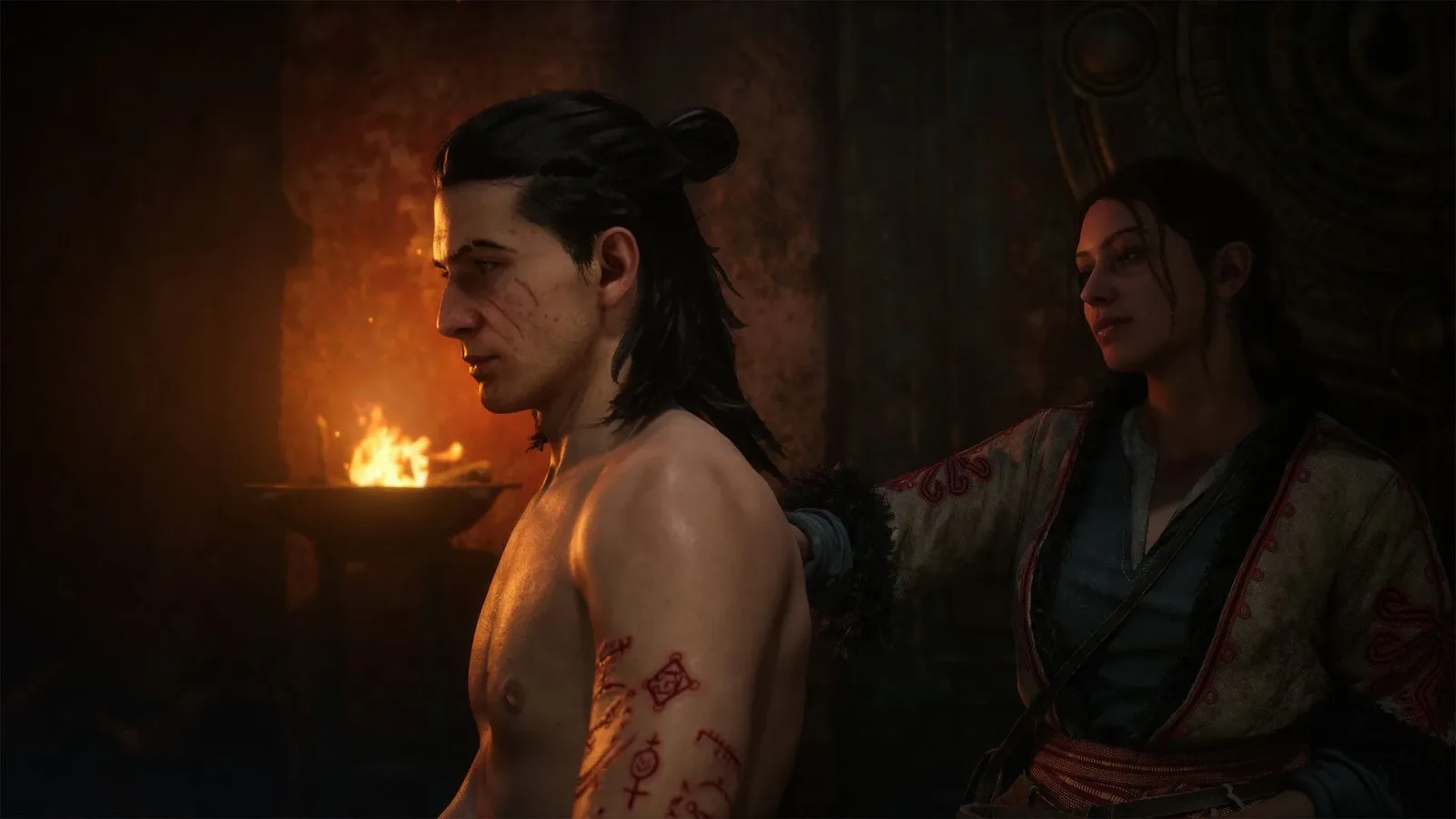
The Blood of Dawnwalker appears to be finding a particularly receptive audience among players of The Witcher 3: Wild Hunt. New Steam player-overlap analysis shared by Alinea Analytics' Rhys Elliott indicates that roughly 58% of people playing Rebel Wolves' newly released dark fantasy RPG on Valve's platform have previously played The Witcher 3.
That is a substantial crossover for a new premium RPG, and it offers an early indication of where The Blood of Dawnwalker's audience is coming from. The connection is not difficult to understand: Rebel Wolves is led by veterans of CD Projekt Red, including director Konrad Tomaszkiewicz, whose prior work includes The Witcher 3. Still, the scale of the reported overlap is notable, especially so soon after The Blood of Dawnwalker's launch last week.
The data does not mean every Witcher player has moved directly to Rebel Wolves' first game, nor does it establish why each individual chose to try it. It does, however, point to a meaningful shared audience between two large-scale fantasy RPGs associated with some of the same creative talent. For a studio making its debut release, attracting that kind of immediate attention from an established RPG community is an encouraging start.
A Familiar Creative Lineage, Not a Direct Continuation
The Blood of Dawnwalker is not a Witcher sequel and is not presented as one. It is a new open-world dark fantasy role-playing game with its own setting, lore, characters, and systems. But creative lineage matters enormously in games, particularly in RPGs where players often follow studios and directors because they value a certain approach to quests, atmosphere, world-building, or player choice.
For useful background on this topic, read NBA 2K27 Shows DLSS 5's Visual Gains, but the Performance and Power Cost Is Hard to Ignore.
Tomaszkiewicz's association with The Witcher 3 gives many prospective players a clear point of reference. The earlier game remains one of the genre's most prominent modern releases, widely recognized for its dense quest design, grim fantasy tone, branching storytelling, and memorable characters. A new project from a team with that background was always likely to attract attention from people hoping to see familiar strengths explored in a different universe.
The reported 58% figure suggests that this interest has translated into real Steam engagement. Elliott identified The Witcher 3 as the premium game with the greatest player-base overlap with The Blood of Dawnwalker. The result supports the idea that players are willing to follow individual developers and development teams after they leave a major studio, especially when their new game occupies a related genre and shares broad creative sensibilities.
That is an important distinction in an industry often driven by company brands and long-running franchises. A well-known franchise can carry immense recognition, but specific creators can also build trust over time. When those creators move on, their next project may inherit expectations as well as enthusiasm. The Blood of Dawnwalker is now navigating both sides of that equation.
Early Reception Has Been Positive, With Room for Debate
The game launched to high expectations and has received a mostly positive user-review rating on Steam. Critical reactions have also been broadly favorable, although not universally enthusiastic. That mixed edge is worth emphasizing because it places The Blood of Dawnwalker in a different early position from the towering reputation The Witcher 3 earned over time.
Not every player or critic will respond to a new RPG in the same way, and first-week impressions rarely settle a game's long-term standing. Large role-playing games are especially prone to evolving conversations. Players need time to explore optional content, test consequential systems, compare choices, and form opinions about how the narrative and world design hold together beyond the opening hours.
For The Blood of Dawnwalker, the early discussion has centered not only on the expected dark fantasy atmosphere and RPG depth, but also on the way its design uses time. This mechanic gives urgency to decisions and progression, asking players to consider time as a meaningful resource rather than treating it as background flavor. It is a concept that could have felt restrictive in another context, particularly if it imposed pressure without purpose. Early impressions suggest that, for some players, it instead helps make the world feel active and reactive.
That system may be one of the clearest ways Rebel Wolves is establishing an identity separate from comparisons with The Witcher 3. Shared genre DNA can bring players through the door, but a new series needs its own defining ideas if it is going to sustain interest. A time-driven structure that affects the rhythm of a role-playing adventure could become one of Dawnwalker's distinguishing traits, depending on how players continue to respond as they progress further into the game.
Why the Steam Crossover Matters
Steam overlap data is not a complete measure of a game's total audience, and it should not be read as a full sales breakdown. It reflects activity among players on a single platform, rather than the entire possible market. Even so, it can reveal useful patterns about audience behavior and the games that players are most likely to connect in their libraries.
In this case, the pattern is especially clear. The Blood of Dawnwalker and The Witcher 3 share a broad genre category, a dark fantasy aesthetic, an emphasis on story, and a notable personnel connection. Players familiar with Geralt's world may reasonably expect compelling quests, morally complicated situations, sword-focused combat, and detailed RPG systems from Rebel Wolves' new project. The available early impressions indicate that those expectations are not entirely misplaced.
Comparisons between the two games have pointed to several common elements: grim fantasy world-building, branching narrative choices, fast swordplay, and layered character progression. Those similarities are enough to make The Witcher 3 an obvious reference point. Yet similarity can also be a challenge. A player arriving with one of the most acclaimed RPGs of its era in mind may judge every quest, battle, and narrative decision against an exceptionally high standard.
That makes the current overlap figure a double-edged but ultimately valuable signal. It shows a ready-made audience is giving the game a chance. At the same time, that audience is likely highly experienced with the kinds of systems and storytelling choices that The Blood of Dawnwalker is attempting. Winning their interest at launch is significant; maintaining it will depend on whether Rebel Wolves' world and mechanics feel distinctive enough to stand independently.
A New Saga Has More Than One Game to Prove Itself
Rebel Wolves has described plans for The Blood of Dawnwalker as a saga rather than a one-off release. That ambition means the first installment has an additional task beyond simply delivering a satisfying standalone RPG. It must lay the groundwork for a larger setting, establish characters and conflicts worth revisiting, and persuade players that this universe has room to grow.
The Witcher series itself demonstrates why that long view can matter. RPG communities often deepen their attachment to a world over years rather than days, returning for expansions, replaying major choices, and discussing stories long after release. A new saga cannot assume that kind of investment, but it can create the conditions for it through a strong foundation.
The Blood of Dawnwalker's early player crossover suggests Rebel Wolves has already reached an audience likely to appreciate that longer-term proposition. Fans of expansive fantasy RPGs tend to be invested in worlds that reward patience, exploration, and repeated discussion. If the game's momentum holds as more players move beyond its opening sections, the connection to The Witcher 3 may become less about inherited expectations and more about a community finding another world it wants to inhabit.
The Bigger Picture for RPG Fans
The early numbers also reflect a broader truth about the RPG audience: players remember the teams behind the games they love. Franchises remain powerful, but creative reputations travel. A developer who helped shape a defining game can bring a portion of that audience to a new studio and a new intellectual property, provided the new work speaks to the same interests without merely repeating the past.
For now, The Blood of Dawnwalker has a promising early foothold on Steam. Its mostly positive user response, its strong overlap with The Witcher 3 players, and the conversation around its time-based structure all suggest that Rebel Wolves has given RPG fans something substantial to investigate. The game may not have unanimous acclaim, and its eventual reputation remains uncertain, but the early audience data shows that many players who valued The Witcher 3 are prepared to see what this former CD Projekt Red talent can do next.
Whether that attention develops into lasting enthusiasm will become clearer as players spend more time with the world, its choices, and its larger ambitions. For a debut project intended to begin a saga, bringing in such a large share of Witcher veterans is a meaningful first step.
Community
Discussion
Start the conversation.
No comments have been posted yet.