

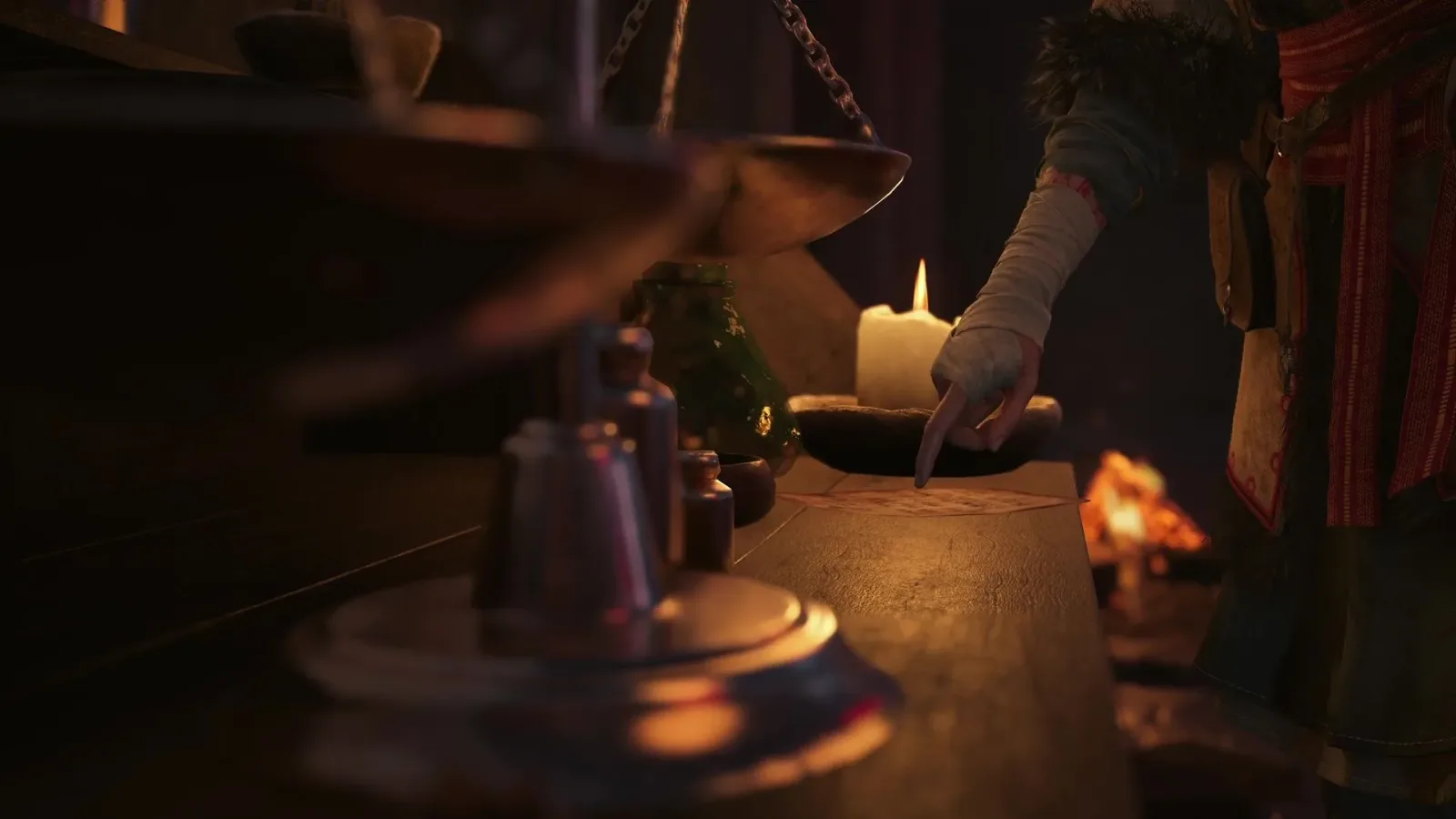
The Blood of Dawnwalker presents players with an uneasy decision after defeating Leonica: destroy a set of notes connected to black magic, or hand them over to Anca and let her pursue a dangerous ritual. It is the kind of choice designed to make a player pause. The documents could offer a way to help the cursed sisters of St. Tyna's, but Anca's determination to study and reproduce their magic raises clear concerns about what she might have to do--and what it could cost her.
According to GamesRadar+'s guide by Joel Franey, the broad answer is that allowing Anca to keep the notes is the better overall outcome, even if the practical difference between the two branches is relatively limited. Burning the papers prevents her from carrying out her plan, while giving them to her allows the ritual to succeed and frees the undead nuns from their curse. The troubling part is that the game implies Anca pays a personal price during the process.
That makes this less a question of loot, romance, or a dramatically different quest path and more a moral call about risk, consent, and whether a possible rescue justifies using forbidden knowledge. Here is what the choice means, what each result changes, and why players may still reasonably reach different conclusions.
When does the Leonica notes decision happen?
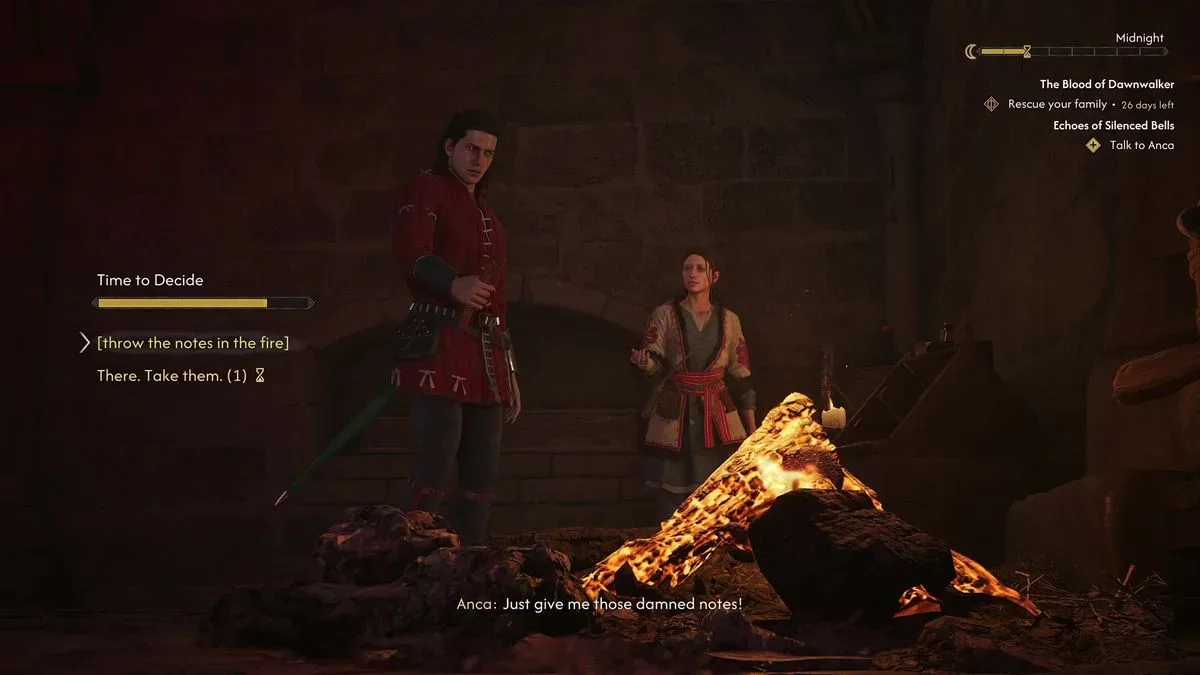
The decision occurs after Leonica has been beaten. The player is then given a timed opportunity to either throw the notes into a fire or give them to Anca. The timing matters because it leaves little room to deliberate in the moment, and the context intentionally makes the choice feel loaded.
The notes concern black magic, and Anca sees them as an avenue for reversing the affliction affecting the sisters of St. Tyna's. Dialogue gives players an opportunity to voice objections to her intended course of action. However, simply advising Anca not to continue is not enough to stop her. If the goal is to deny her access to the knowledge entirely, the notes need to be destroyed.
That distinction is important. The game frames the scene as a debate, but the meaningful action is not merely what the player says. The decisive step is whether the documents remain available for Anca's research. Players who are uncomfortable with the ritual cannot depend on a cautionary dialogue response alone.
What happens if you throw Leonica's notes in the fire?
Burning the notes is the direct way to prevent Anca from attempting the magical procedure. With the material destroyed, she has nothing to work from and cannot move forward with the plan to reverse the curse through Leonica's research.
The immediate emotional consequence is that Anca is upset. From a role-playing perspective, that response makes sense: she believes the papers may represent a rare chance to save people suffering under a supernatural condition. Destroying them closes off that possibility, at least through this route.
Mechanically, though, the outcome appears restrained. GamesRadar+ reports that the decision does not significantly alter the rest of the game's main path. The story soon returns to its central questline, and the choice is not presented as one that locks players out of the game's romance possibilities. Anyone worried that burning the notes will derail a relationship path or create a major progression penalty can take some reassurance from that.
There is also no indication in the source material that choosing the fire route creates a major gameplay reward, unlocks a separate campaign arc, or reshapes the player character's capabilities. Its primary value is ethical and narrative. It is the choice for players who believe that black magic should not be replicated, particularly when the person undertaking the ritual may be harmed by it.
In other words, burning the notes is a defensible refusal. It prioritizes preventing Anca from exposing herself to a dark process whose full danger is not clearly explained. The cost is that the sisters of St. Tyna's are not freed through Anca's ritual.
What happens if you give the notes to Anca?
Letting Anca have the notes enables her to proceed with her research and ritual. This route succeeds at its central objective: the magic is dispelled, and the undead nuns of St. Tyna's are freed from the curse.
For players focused on helping the sisters, this is the strongest reason not to throw the pages away. The notes are not merely an ominous collectible or an abstract temptation. They provide the means for a tangible rescue, and Anca is able to accomplish what she set out to do.
But the favorable result for St. Tyna's comes with an unsettling implication. As GamesRadar+ notes, the game suggests that Anca does dark things in order to complete the ritual and that she suffers as a result. The exact risk is not made especially clear beforehand, which is part of what makes the decision difficult. Players are asked to choose without a detailed, clinical explanation of the likely cost to her.
This ambiguity prevents the route from being a simple "good" ending. Saving the sisters is a compassionate outcome, but it is tied to Anca's willingness to embrace dangerous knowledge and endure its consequences. Players who support her may see the decision as respecting her agency and commitment to those she wants to save. Others may conclude that letting her proceed is irresponsible because the player has enabled a path that harms her.
Even so, the source's recommendation is to give Anca the notes. The reason is straightforward: the ritual achieves something meaningful for St. Tyna's, while the broader mechanical consequences remain small. The result offers a more hopeful resolution for the afflicted nuns, despite the moral discomfort surrounding Anca's involvement.
Does this choice affect romances or the main story?
Not in a major mechanical way, based on the information available from GamesRadar+. Both decisions lead back toward the main questline after the immediate scene. The choice also does not affect access to The Blood of Dawnwalker romances.
That is useful context for players who are trying to optimize a first playthrough. There is no need to treat Leonica's notes as a hidden test for a romance route, nor as a major fork that demands a separate save solely to protect core story progression. The scene is consequential in tone and in the fate of St. Tyna's, but it is not described as a sweeping campaign split.
The aftermath is also relatively light in regular dialogue. Anca's experience and the decision itself may receive occasional mentions, but the issue is largely moved past as the larger narrative continues. That may be disappointing to players hoping for an extended exploration of forbidden magic and its effects, yet it also means the decision can be made according to personal role-playing values rather than fear of missing extensive content.
The long-term result appears in the post-game recap
The most notable later acknowledgement arrives in the post-game recap. The Blood of Dawnwalker ends by describing the long-term state of the world in relation to the player's choices, and the fate of St. Tyna's is included there.
GamesRadar+ does not spoil the specific recap wording, and players who want to preserve the surprise should avoid seeking out detailed ending summaries before finishing the game. What matters for this decision is that St. Tyna's is remembered by the ending framework. The choice therefore has narrative permanence even if it does not substantially change combat, romances, or the main sequence of quests.
That kind of consequence can be more meaningful than a short-term reward. A player may never receive a powerful item or a radically different mission line for handling the notes one way or another, but their decision contributes to the game's final accounting of the world they leave behind.
Which Leonica notes option should you choose?
If the priority is obtaining the most positive outcome for the sisters of St. Tyna's, give the notes to Anca. Her ritual works, the curse on the undead nuns is lifted, and the choice does not appear to impose a major mechanical drawback elsewhere in the game.
Choose the fire if your character would refuse to enable black magic regardless of its potential benefits, or if protecting Anca from an implied personal cost matters more than the chance of a successful cure. This route is not a gameplay disaster; Anca is angry, but the main story continues and romance options remain unaffected.
- Give the notes to Anca: The ritual succeeds and frees the sisters of St. Tyna's, though Anca is implied to suffer after doing dark things to make it happen.
- Burn the notes: Anca cannot pursue the ritual and is upset, but the story returns to the main path with no reported romance impact.
- For the broadly recommended result: Let Anca keep the notes, as it resolves the curse affecting St. Tyna's.
- For role-playing caution: Burn them if your version of the protagonist will not accept the use of this kind of magic or the risk it creates for Anca.
Ultimately, Leonica's notes are a choice where the game places more weight on narrative perspective than on systems-driven punishment or reward. There is a clear practical recommendation--allow Anca to use the notes--but the darker implication surrounding her ritual ensures that the answer is not entirely comfortable. Players can save St. Tyna's, or they can stop Anca from taking a path they consider too dangerous. Either way, the game carries the result forward into its account of the world after the final chapter.
Community
Discussion
Start the conversation.
No comments have been posted yet.