

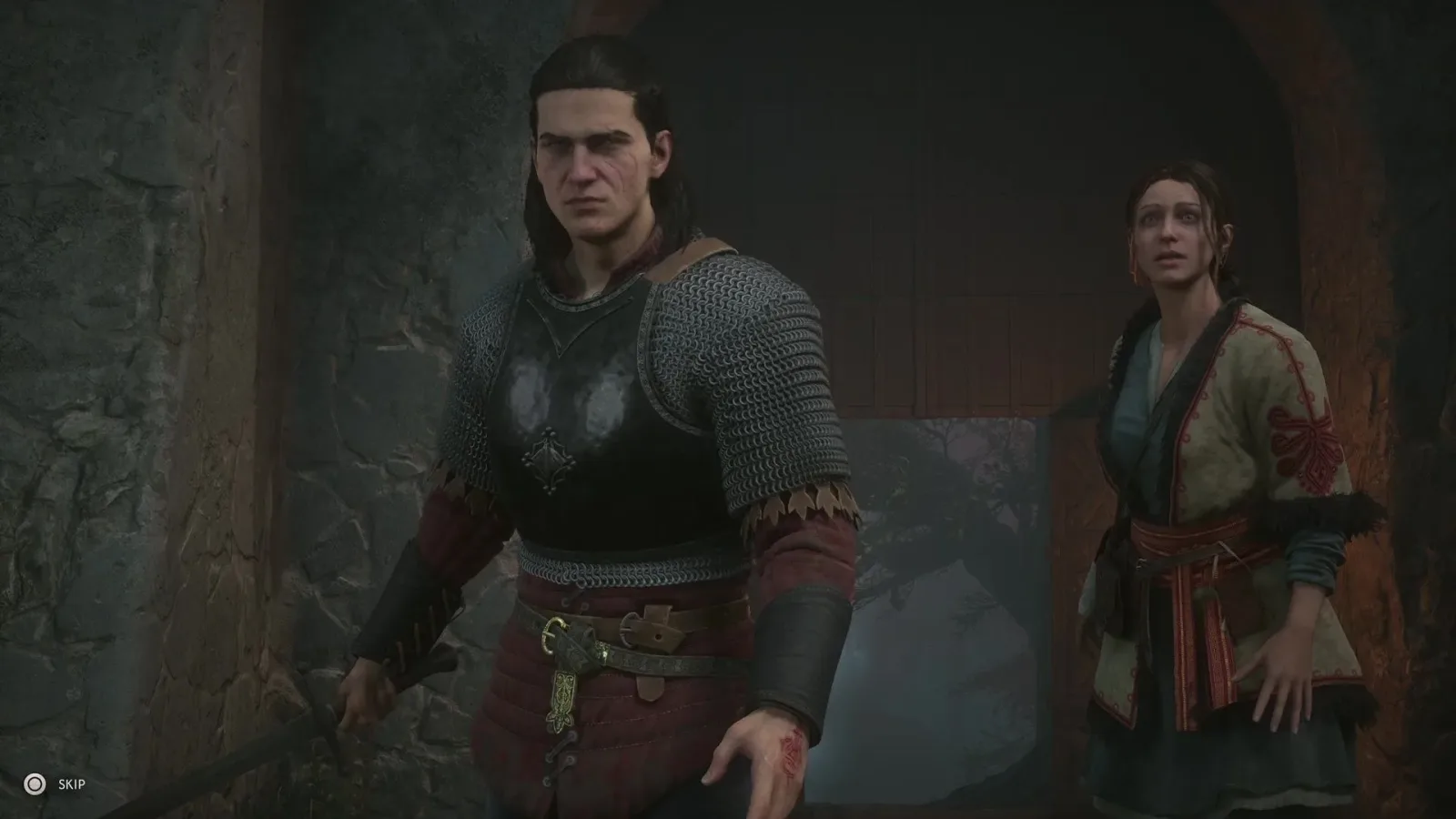
The Blood of Dawnwalker does not treat time like a typical open-world action RPG. Players are not racing against a constantly ticking clock while wandering through the map, hunting for collectibles, or pausing to explore. Instead, its day-and-night structure advances through meaningful actions: quests, dialogue decisions, major interactions, and progression events.
That distinction is central to understanding how the game handles pressure. As detailed by GamesRadar+ writer Joel Franey, the clock is designed to make players consider the consequences of committing to an activity without punishing them simply for moving through the world. The game's time system is therefore less about real-time urgency and more about resource management, planning, and deciding which opportunities are worth spending part of the available schedule on.
It is a major mechanic because time affects quest availability, character interactions, the hero's skill set, healing methods, and the broader balance between daylight and darkness. The game gives players visual and audio warnings before many time-consuming actions, but recognizing those indicators is essential for avoiding missed objectives or arriving at the wrong time of day.
Time does not advance while players freely explore
The most important rule is also the most reassuring one: time in The Blood of Dawnwalker does not pass automatically during ordinary exploration. Standing still in the overworld does not move the clock forward, and neither does traveling across the map repeatedly. Players can roam, scout locations, and generally take in the world without automatically burning through a chunk of the day or night.
Instead, the clock moves ahead when the player triggers designated story or quest events. These can include interacting with particular objects, selecting certain dialogue responses, entering a key area for the first time, or beginning an activity that the game identifies as requiring time. The precise amount spent is not always identical. One decision might take a small portion of a phase, while a larger story action can consume multiple segments.
This makes time a deliberate currency rather than a background simulation. A player is not being punished for curiosity in the traditional sense, but important commitments can have consequences. Before agreeing to help someone, examining a crucial object, or pushing into a significant destination, it is worth checking the on-screen notices and the quest journal.
Quest actions can spend time in stages
Not every quest applies its entire time cost at once. GamesRadar+ notes that a quest's listed duration may be divided across multiple moments in its structure. A mission that consumes five hours, for instance, might spend part of that time early during research and use the remaining amount later when protagonist Coen travels with another character or completes the next phase of the assignment.
That approach means players should not assume that starting a quest immediately resolves every timing consequence. A mission can still include a later jump forward, potentially carrying the world from day into night or vice versa. The journal markers are meant to help communicate the expected commitment, but the eventual timing can be woven into the quest's narrative beats.
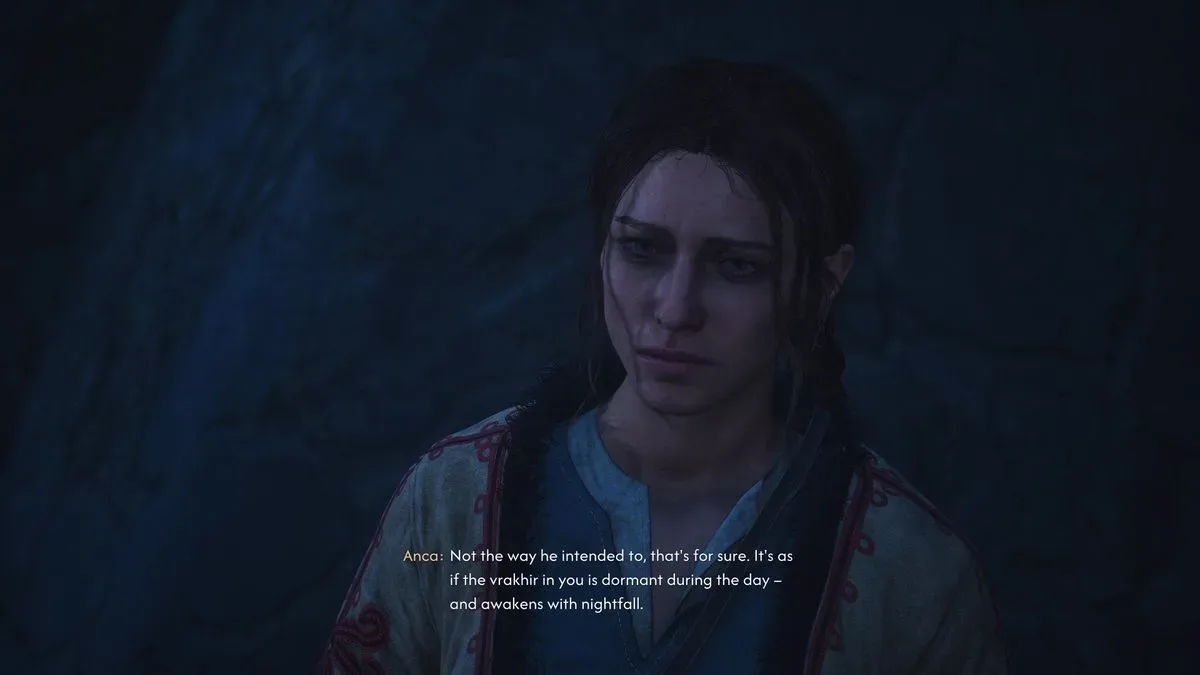
The source highlights the rescue of Mert the Miller as one example. Opening his cell uses several time segments. Elsewhere, players can encounter optional moments that spend time in exchange for additional character context. Choosing to remain with Anca early in the game is cited as such a decision: it takes up time, but gives the player a chance to know the character better.
Those examples underline the intended tension. Spending time is not automatically a mistake. It may be the cost of gaining information, pursuing a relationship, completing a rescue, or seeing more of the game's narrative. The key is making that choice knowingly rather than stumbling into it.
Warnings signal when a time jump is about to happen
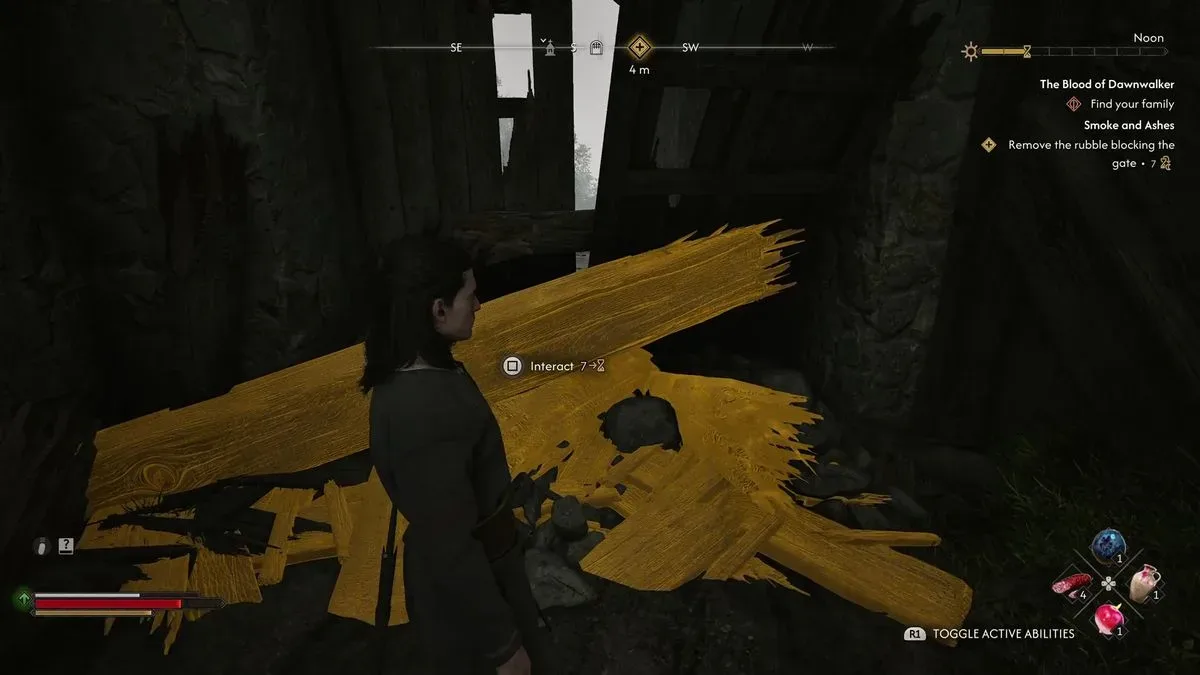
The Blood of Dawnwalker provides several ways to telegraph an approaching time cost. When a task is likely to push the current phase from daylight into nighttime, or the reverse, players can see an hourglass icon with an arrow pointing toward either a sun or moon. That symbol warns that accepting the activity will change the broader time-of-day state.
The game also warns players who move close to an important person or location that will automatically trigger a time jump. According to GamesRadar+, a ticking sound plays in these situations, while a portion of the clock display in the upper-right corner of the screen becomes greyed out. The greyed segment represents the time that will be spent immediately if the player continues.
That is particularly useful because some triggers are based on proximity rather than a simple menu confirmation. Hearing the ticking and seeing the shaded clock section gives players an opportunity to stop, reconsider, or handle another priority before stepping forward.
In practical terms, the safest habit is to pause whenever the game highlights a cost. Check whether a quest needs to begin in a specific phase, whether another activity is about to expire, and whether changing from day to night will alter Coen's available tools. The system is built around informed commitments, and those warnings are the player's most useful planning tools.
Blue clocks, suns and moons define quest restrictions
Quest icons in the journal provide additional information about timing and availability. A blue clock marker indicates a limited-time quest. These objectives can disappear after a certain point, meaning players who want to see them should treat them as a priority rather than assuming they will remain available indefinitely.
Other quests are explicitly tied to either daytime or nighttime. A sun symbol means the activity must be started during the day, while a moon symbol means it needs to begin at night. Attempting to begin one of these missions during the wrong phase can leave it unavailable.
This applies to more than combat or exploration. GamesRadar+ specifically notes that some relationship and romance-related content is time-sensitive. Players interested in following those threads will need to account for the calendar and avoid using too much time elsewhere before an important meeting or quest opportunity.
The result is a structure in which the journal is more than a list of errands. Its markers tell players whether an objective has a deadline, whether it demands a certain part of the cycle, and how much of the schedule may be required to see it through. Players who routinely review those labels should be better positioned to avoid losing optional content.
Day and night change Coen's powers and survival needs
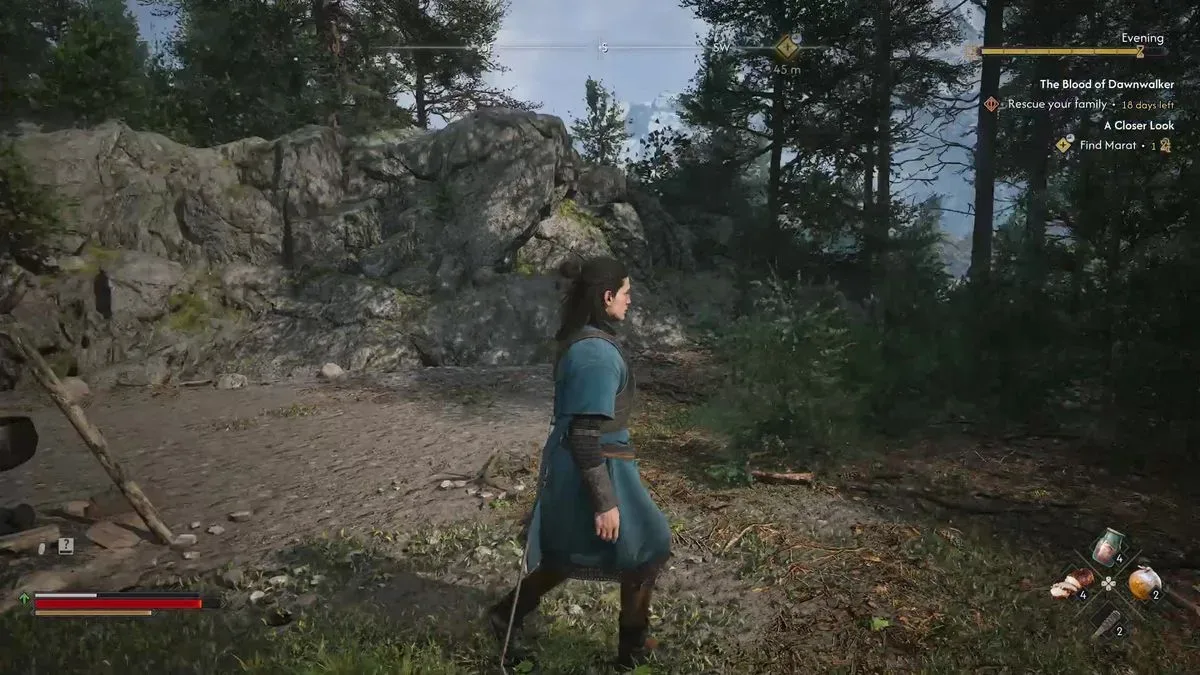
The day-and-night cycle is not only a scheduling system. It directly affects how Coen plays. Each day and each night is divided into eight sections, with the upper-right interface bar showing progress through the current phase. That display provides a quick way to judge how close the player is to a transition before initiating something that costs time.
During the day, Coen has access to Witchcraft abilities. At night, he instead uses Vampiric powers. The nocturnal toolkit includes abilities such as teleportation, wall climbing, and attacks using claws, making the character broadly more powerful after dark.
Perks reinforce this divide. When players unlock abilities, they are labeled as Daytime, Nighttime, or Anytime. That categorization matters when building a character and deciding which encounters or exploration routes to tackle in a given phase. A player who relies on a nighttime mobility power, for example, may want to avoid pushing the clock back into daylight before attempting a vertical or difficult approach.
Healing also changes across the cycle. Foods and potions that restore a human character during the day do not work at night. In the vampiric state, survival depends on blood acquired from items or taken from enemies. The game's transformation is therefore not just an increase in movement and combat potential; it requires players to reconsider their recovery resources as well.
There is an additional danger at night. If Coen's health falls to one segment or below, dialogue options can unpredictably shift to "Give in to the hunger." Choosing that option results in him attacking and killing the person he is speaking with. Players entering nighttime conversations in poor health will need to be especially cautious, both for survival and for the possible narrative consequences of losing control.
The main quest has a 30-day-and-night limit
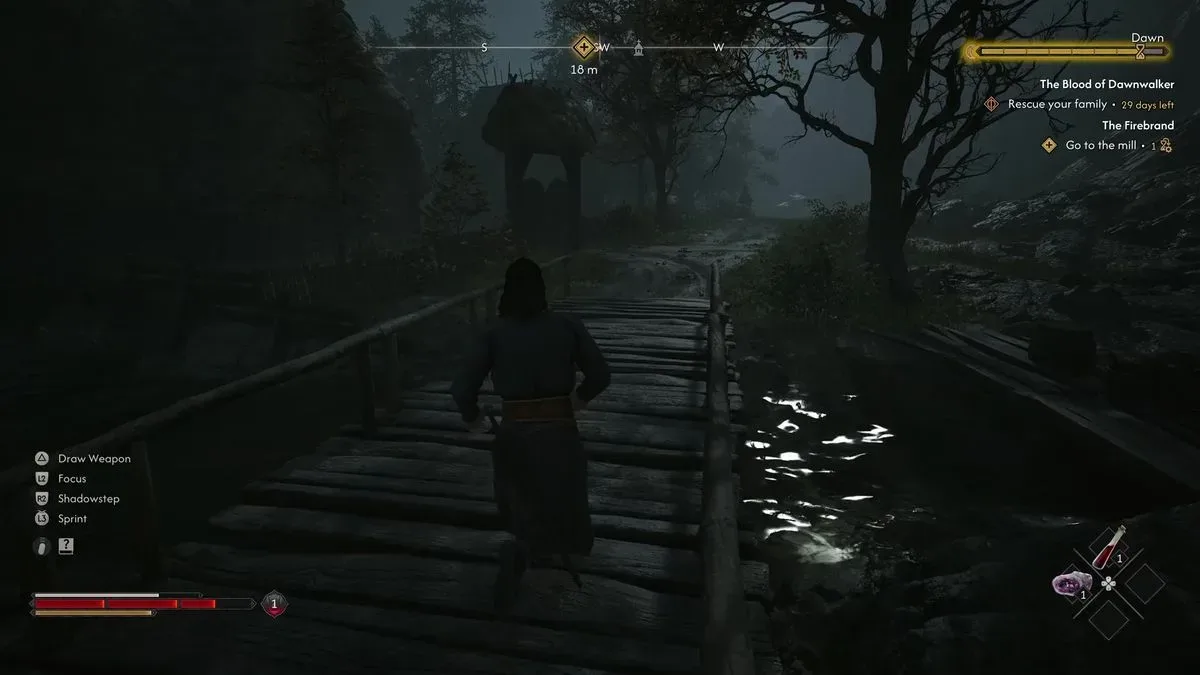
After the tutorial, players receive 30 days and nights to complete the main quest. The campaign can be finished before that limit, and GamesRadar+ reports that the game remains playable after the main quest has been completed.
Although a numbered deadline can initially sound restrictive, the source's assessment is that 30 days provides substantially more room than players may expect. Since simple exploration does not consume time, the available window is mostly spent through intentional progress and optional commitments. Players who are mindful about training and other time-consuming choices should be able to experience the vast majority of the game within that period.
There is currently no option to disable, alter, or otherwise modify the time-passage mechanics. That appears to be a deliberate part of the game's intended design rather than an accessibility setting waiting to be adjusted. The pressure created by decisions, deadlines, and the different strengths of day and night is meant to shape the experience.
Planning matters more than rushing
The best way to approach The Blood of Dawnwalker is not to sprint through its content out of fear that every minute is disappearing. The system does not work that way. Exploration is safe from the clock, while meaningful activities tell players when they will demand time. The challenge is to prioritize time-limited objectives, watch for sun and moon requirements, and recognize that optional character scenes can still be valuable enough to justify their cost.
Players should review quest markers often, listen for the ticking warning near major triggers, and pay attention to greyed-out segments on the clock. They should also plan around Coen's shifting identity: daytime Witchcraft, nighttime Vampiric strength, different healing rules, and the threat of hunger during low-health nighttime conversations.
Rather than functioning as a punishment, the time system gives choices weight. Every commitment can influence what is available next, what version of Coen the player controls, and which stories can be pursued before the main objective is resolved. For players willing to read its signals, The Blood of Dawnwalker turns the clock into another part of the RPG's strategy.
Community
Discussion
Start the conversation.
No comments have been posted yet.