

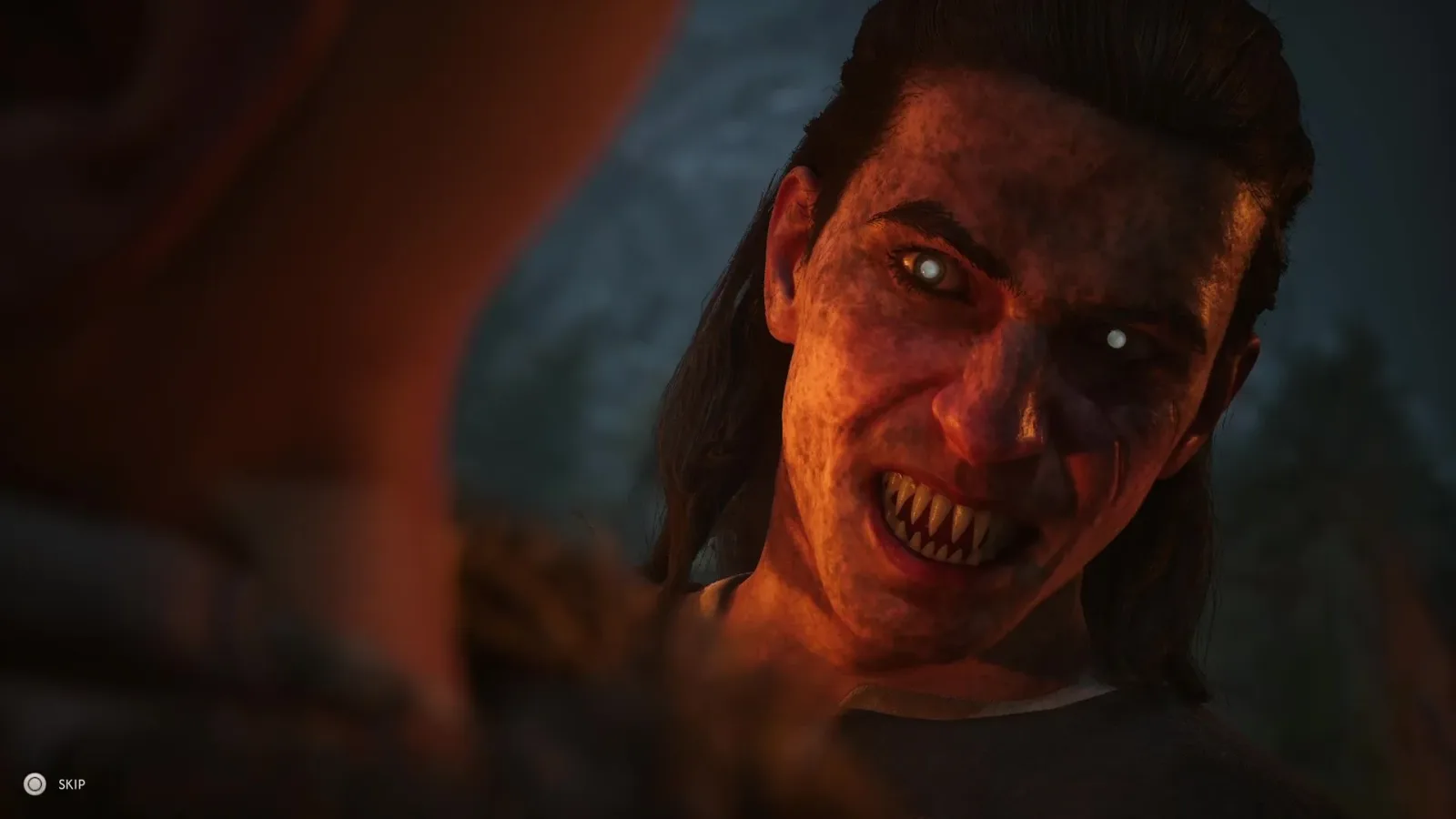
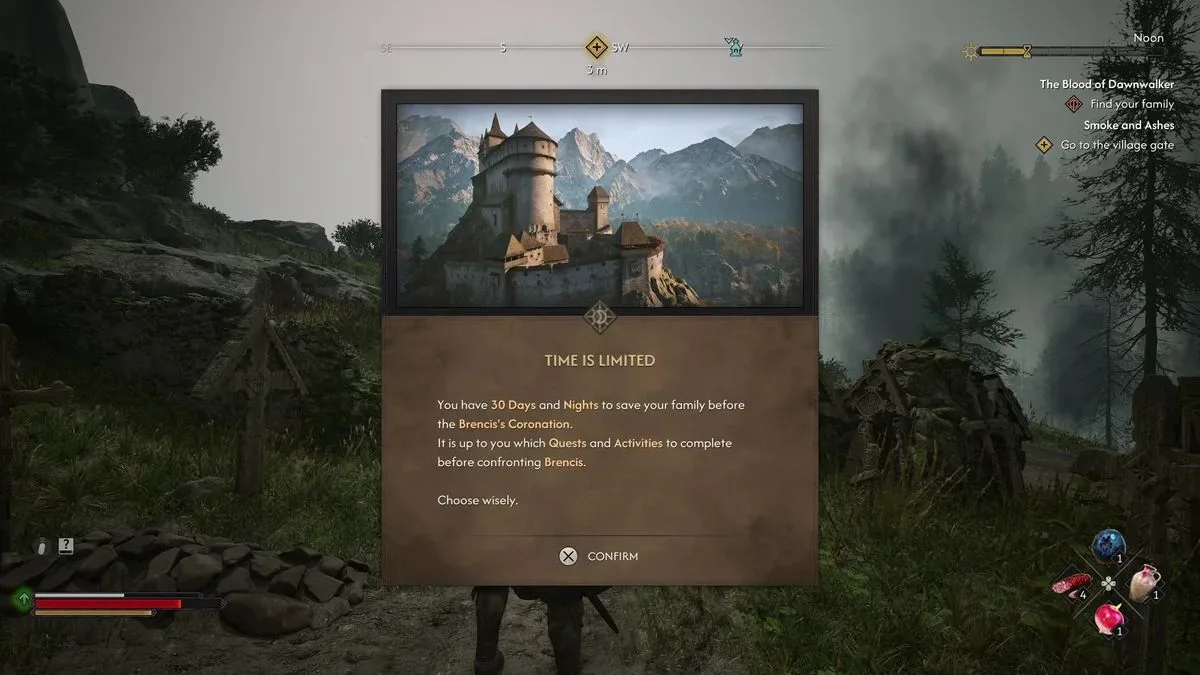
The Blood of Dawnwalker does not waste much time making its opening feel dangerous. Once the tutorial in Laslea is over, the game starts its 30-day deadline to save the protagonist's family, then sends players into a region with several possible leads and no single, clearly marked "safe" route. That combination can make the first stretch feel more intimidating than a conventional action RPG introduction.
GamesRadar+ writer Joel Franey's early-game recommendations point toward a useful answer: do not immediately commit to the biggest or most difficult objective. Instead, use the opening hours to reveal the local map, build a small equipment base, establish a quest connection with the Rebels, and pick an encounter where the protagonist's vampire abilities offer a strong advantage.
That approach is especially valuable after leaving Laslea and separating from Anca. The game gives players multiple threads to investigate, but the clock can create the impression that every choice must be rushed. Franey's advice suggests a more measured opening: tackle nearby, manageable tasks first, learn how the game's combat and exploration systems work, then make a more confident attempt at the more demanding rescue objectives.
Start by visiting both Scouting Towers
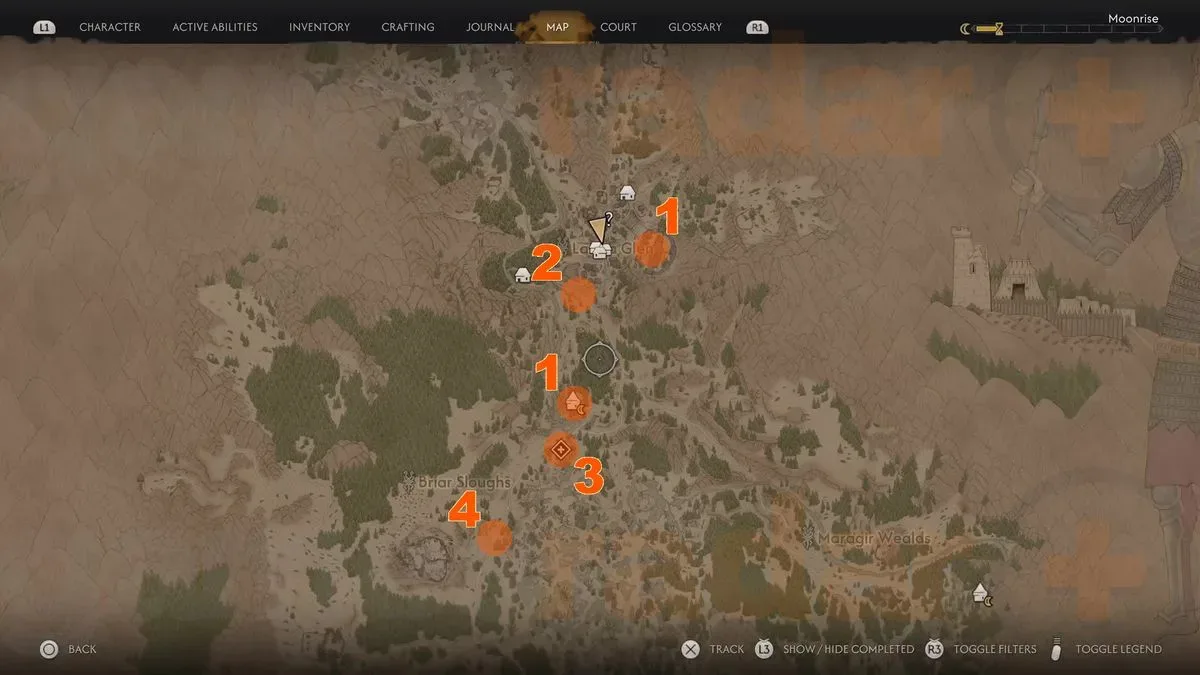
The first recommended priority is reaching the two Scouting Towers available in the opening area. One is in Laslea itself, while the other is located in the Marshes. Once the protagonist is in vampire mode, both towers can be climbed, and doing so reveals the northernmost section of the map.
This is a sensible first move because it improves the player's understanding of the area before they become deeply involved in a quest chain. A deadline-driven game naturally encourages direct travel from marker to marker, but opening the map provides context for those decisions. It helps establish where important locations sit in relation to Laslea, the marshland, roads, camps, and other nearby points of interest.
It also gives the player an immediate opportunity to get more comfortable with vampire movement. The ability to scale the towers is not merely a map-unlocking convenience; it is part of the early lesson in how the protagonist can interact with the world differently while in vampire form. Before relying on those abilities in a hostile situation, using them for reconnaissance is a lower-pressure way to understand their utility.
Players worried about wasting precious time may find the tower route reassuring. Franey identifies the towers as an early recommendation precisely because map knowledge can support every subsequent decision. Rather than blindly chasing one lead, players can begin their run with a clearer view of the territory they are expected to navigate.
Clear the soldiers' camp outside Laslea for early gear
After scouting, the next worthwhile stop is the soldiers' camp outside Laslea. Clearing it provides a basic set of rewards, including improved equipment. Franey cautions that these items are not among the game's best weapons, but they are still useful for a character who has only recently emerged from the tutorial.
That distinction matters. The point of the camp is not to find a build-defining prize or solve the game's most dangerous challenge immediately. It is to establish a more functional baseline for the difficult opening hours. Better gear can make later encounters more forgiving, while also giving players a chance to test the game's combat before stakes rise around a central quest objective.
The camp also fits neatly into the broader early-game philosophy. A player who tries to leap directly into a hard rescue scenario may face enemies with limited tools, limited knowledge of the combat system, and few perks. Taking the camp first means engaging with a challenge that can pay forward into the rest of the opening area.
Do not treat this as a guarantee that the early game suddenly becomes easy. According to Franey's experience, the opening part of The Blood of Dawnwalker is its toughest period. The camp rewards are a start, not a solution. However, having a few additional resources and better gear is preferable to approaching the game's harder fights with only the most basic setup.
Speak with the Miller's wife to open a Rebel connection
The next recommended step is more narrative-focused: speak to the Miller's wife. This conversation begins a quest concerning the rescue of the Miller, Mert, and puts the player in contact with the Rebels.
For anyone deciding which conversation or lead is worth pursuing first, this makes the Miller's wife an important early stop. It is not simply a side conversation detached from the wider conflict. The quest creates a connection to the Rebels, giving the player another meaningful thread to follow as the story opens up after Laslea.
There is an important caveat. Franey describes the quest as easy if the player does not attempt to free the Miller, but difficult if they do. That should shape expectations before players charge toward a rescue. Starting the quest and making contact is one thing; completing the more daring objective is another.
This is where the earlier map scouting and equipment gathering can help. By the time players engage seriously with the Miller's situation, they can have more of the northern map revealed and at least some improved gear from the soldiers' camp. Even then, the rescue should be approached with care. The source does not frame saving Mert as an effortless early objective, and the game's initial difficulty means that caution is justified.
In practical terms, it may be best to view the Miller quest as a route to information and relationships before viewing it as an immediate test of strength. Players can begin it, understand what is at stake, and decide whether they are prepared for its more difficult branch rather than assuming that every active quest needs to be finished on the spot.
Rescue the prisoners at night
One of the clearest tactical recommendations concerns a caravan of prisoners on the road leading toward the military camp. Players can rescue these prisoners, and Franey strongly recommends attempting it at night.
The reason is tied to the protagonist's combat options. At this early stage, the choice between using claws and using swords is, in Franey's assessment, fairly straightforward. The implication is that the vampire form's claws provide the more favorable tool for this particular point in the game, and nighttime lets players capitalize on that advantage.
That makes the prisoner caravan a useful early lesson in matching the time of day to the protagonist's abilities. Instead of seeing the day-night cycle as background atmosphere, players should consider it when selecting an encounter. A difficult rescue can become more manageable when undertaken in conditions that favor vampire mode and claws.
The recommendation does not mean players should disregard all risk. The opening hours remain demanding, and the caravan is still an encounter that requires judgment. But compared with simply facing every problem in the same form and at the same time of day, choosing the night gives the player a more favorable starting position.
It also complements the rest of the suggested route. By revealing the map, collecting a modest gear upgrade, starting the Miller-related quest, and then choosing a night operation against the prisoner caravan, players have dealt with several easier challenges while preparing for more open-ended exploration.
Why the opening can feel harsher than later sections
Franey's central warning is that The Blood of Dawnwalker is hardest during its early hours, at least in his experience. That is useful perspective for players who leave Laslea, encounter resistance, and immediately wonder whether they have chosen the wrong route.
The challenge is not necessarily evidence of a failed build or a missed mandatory objective. Early on, players have fewer perks, less equipment, and less familiarity with the nuances of the game's systems. As those factors improve, the game should become easier to manage. Perks and weapons expand the player's options, while repeated encounters teach the timing, positioning, transformation choices, and situational judgment needed to survive.
This is why the recommended first activities emphasize preparation rather than heroics. The two towers build awareness. The soldiers' camp offers rewards. The Miller's wife opens a significant quest and introduces the Rebels. The prisoner caravan gives players a chance to lean into the advantages of nighttime claws. Each task contributes something useful without demanding that the player immediately conquer the most difficult available objective.
A simple early-game order to follow
There is still freedom in how players spend their first days, and Franey stresses that there are multiple available paths after the Laslea tutorial. But for players who want a dependable starting structure, the following order captures the recommended priorities.
- Climb the Scouting Tower in Laslea. Use vampire mode to reveal more of the northern map.
- Visit the Scouting Tower in the Marshes. Finish uncovering the northernmost portion of the area.
- Take on the soldiers' camp outside Laslea. Collect the early rewards and improved gear available there.
- Speak to the Miller's wife. Start the quest connected to Mert the Miller and make contact with the Rebels.
- Consider the prisoner caravan at night. The nighttime approach is recommended because claws are particularly advantageous early on.
- Assess whether you are ready for the Miller rescue. Starting that quest is easier than attempting to free the Miller, so do not mistake the two for the same level of commitment.
After that, players should be in a better position to explore freely or take a braver shot at saving Mert. They will not be overpowered, and the game's early challenge will still be present, but they will have taken several of the most useful first steps available.
Adjust the difficulty if the opening stops being enjoyable
Finally, there is no reason to regard the early game's difficulty as something that must be endured unchanged. Franey notes that players who continue to find the opening too hard should consider adjusting the difficulty settings through the menu.
That option is particularly relevant in a game whose opening combines combat pressure with a 30-day narrative timer. Players interested primarily in the story, relationships, exploration, or broader role-playing decisions may not want repeated early setbacks to dominate the experience. Likewise, players who enjoy a hard challenge can keep experimenting with gear, perks, time of day, and vampire abilities before escalating into tougher objectives.
The best first move after Laslea, then, is not a single destination. It is a preparation-minded routine. Scout the landscape, collect what gear you can, make the Miller quest available, use the night to your advantage when rescuing prisoners, and remember that the first few hours are expected to be the roughest. With those steps complete, the road ahead should feel less like an impossible sprint against the clock and more like an open, if still dangerous, set of choices.
Community
Discussion
Start the conversation.
No comments have been posted yet.