

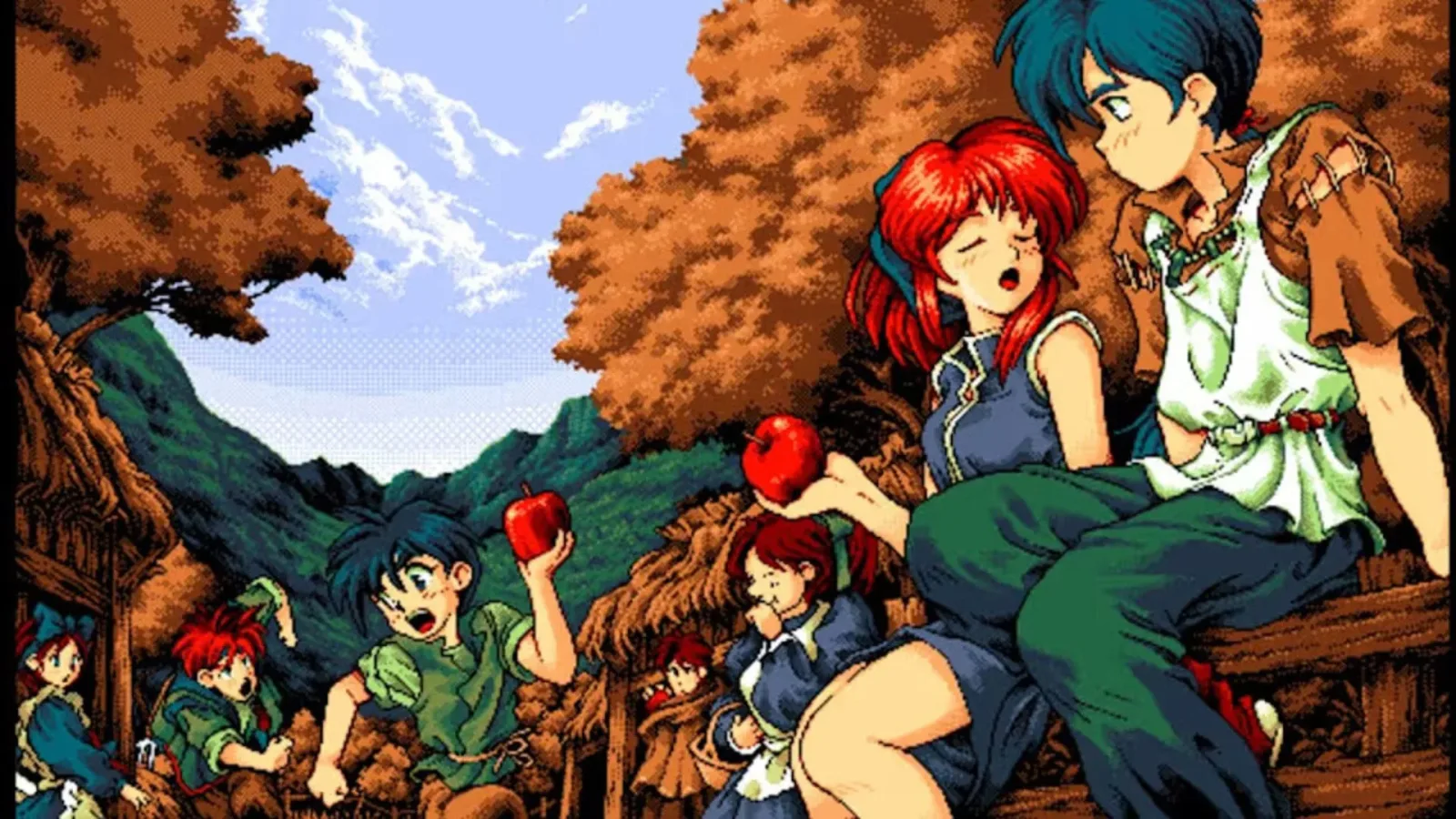
The Legend of Heroes 3: The White Witch, a role-playing game first released in 1994, is set to return in a new revival from Neowiz. The company, known to many players as the publisher of Lies of P, has confirmed it is developing and publishing an updated adaptation for PC and consoles.
There is no release date yet, and the announced console platforms have not been individually identified. Neowiz has also not firmly called the project a remake or remaster. Instead, the company has described its plans as a "revival" and "recreation," language that leaves open exactly how extensively the original game will be rebuilt. What is clear is that the project aims to make one of the more difficult-to-access chapters in the long-running Legend of Heroes lineage available to a much broader modern audience.
That accessibility angle is particularly significant for English-speaking players. The game's only official English localization arrived in North America for PlayStation Portable in 2006. It has remained exclusive to that handheld release ever since, meaning the upcoming PC-and-console version could represent the first practical official route for many fans to experience the game in English without relying on aging PSP hardware.
A return for an unusually hard-to-find RPG
The White Witch occupies a peculiar place in JRPG history. It is more than 30 years old, belongs to a franchise with several naming complications outside Japan, and has never enjoyed the broad availability granted to many of its peers. The PSP edition gave North American audiences an official translation, but it did not lead to later ports for PlayStation consoles, PC, Switch, Xbox, or other platforms.
For useful background on this topic, read Kane Parsons' Valve Visit Sparks Fresh Portal Movie Speculation.
Japan has had another way to access the title in more recent years. D4 Enterprise released the Japanese version through its EGGCONSOLE retro line on Nintendo Switch. However, that version is not equivalent to a new English release. While English text can be used in menus, it does not provide the complete official English localization from the PSP edition. For players wanting to follow the game's story in English, the old PSP release has therefore remained the only official option.
That is a notable limitation for a game whose appeal is closely tied to its narrative and emotional tone. RPG preservation is not simply a matter of getting old software running on new machines; localization is a crucial part of preserving how a game was introduced to a particular audience. Neowiz's project has the potential to resolve a gap that has persisted since the PSP era, though the company has not yet detailed the languages, text options, voice work, or technical features planned for the new version.
What Neowiz has said so far
Neowiz's initial announcement is deliberately broad. The publisher says it wants to deliver a polished experience that retains the emotional impact that made The White Witch beloved among RPG fans while inviting both returning players and newcomers into an updated adaptation.
"The White Witch has been cherished by RPG fans worldwide for over 30 years," a Neowiz representative said. "We want to bring a polished experience that recaptures the emotional experience of the original game, while inviting new and old players to immerse themselves in an updated adaptation."
The statement also frames the deal as the beginning of a stronger partnership with Nihon Falcom, the original developer behind the Legend of Heroes series. That relationship will be one to watch. Nihon Falcom has built an enormous catalog over the decades, and several parts of its role-playing legacy remain unavailable, incomplete, or inconsistently presented in English across current platforms.
For now, fans should be careful not to read unconfirmed specifics into the word "updated." No gameplay footage, screenshots, combat details, visual direction, team information, or list of confirmed console destinations has been announced. It is not yet known whether Neowiz is reconstructing the game with entirely new assets, revising the original presentation, preserving its classic mechanics closely, or taking another approach entirely.
The title confusion behind The White Witch
Part of the reason this news may confuse even longtime JRPG followers is that the game's Western naming history does not line up with its original Japanese numbering. In Japan, this title is The Legend of Heroes 3: The White Witch. But its English PSP identity was different.
In North America, the game that was originally The Legend of Heroes IV in Japan arrived first, in 2005, simply under the name The Legend of Heroes. When its predecessor received an English localization on PSP in 2006, it was then published as The Legend of Heroes II: Prophecy of the Moonlight Witch. As a result, the Western numbers appeared to move in the opposite direction from the Japanese sequence.
Neowiz is using the original Japanese-style designation, The Legend of Heroes 3: The White Witch, for the revival. That is useful clarification for anyone who remembers the PSP game under its alternate English title. The newly announced project is tied to that same 1994 entry, rather than a newly discovered sequel or a separate branch of the franchise.
It is a reminder of the complicated localization paths faced by Japanese series that began decades before worldwide simultaneous publishing became common. The Legend of Heroes is far from alone in carrying legacy numbering differences, renamed installments, and delayed Western releases. But because its later offshoot became especially prominent internationally, its older games can be even harder to place in the broader franchise timeline.
The series connection to Trails
Modern audiences are likely to know Nihon Falcom's work through the Trails games. That subseries grew out of the Legend of Heroes banner with 2004's The Legend of Heroes: Trails in the Sky, eventually becoming one of the most expansive connected RPG sagas in the genre.
The White Witch predates Trails by a decade, so players should not approach it expecting a direct continuation of the enormous cross-country, cross-arc storyline associated with more recent Trails entries. Its importance is instead historical and thematic: it belongs to the older foundation from which the franchise evolved. For fans who have spent years following Trails protagonists, regions, and recurring political threads, a modern revival offers a chance to explore an earlier era of Falcom's RPG output.
The timing is also interesting because the Trails name remains active. Trails in the Sky 2nd Chapter, the second release in a remake initiative for the Trails series, is launching this week to a very strong critical response. The renewed attention around Falcom's catalog makes a high-profile return for The White Witch feel less like an isolated archival project and more like another sign that classic entries in the company's history are finding new life.
Why the revival matters
The announcement matters beyond nostalgia. A great many classic JRPGs survive in a fragmented state: they may exist in one region but not another, receive ports without translations, or remain connected to hardware that is no longer readily available. The White Witch checks several of those boxes. It has a Japanese Switch release, an older official English PSP release, and a history complicated enough that prospective players may not realize which version they are looking for.
An updated edition for PC and consoles could finally consolidate some of that history into a more accessible package. It could also introduce the game to players whose familiarity with Neowiz began with the very different action-RPG world of Lies of P. The two titles are separated by genre expectations, era, and design tradition, but Neowiz's involvement gives The White Witch a publisher with recent experience bringing a carefully received RPG to a global audience.
There are still important questions waiting for answers. Will the revival retain the classic game's structure and pacing? Will it use the PSP English script, produce a revised translation, or offer multiple language choices? Which consoles will receive it? And how far will its visual and mechanical modernization go? None of those details have been confirmed.
Until Neowiz shares more, the central news is simple: a 1994 Legend of Heroes game that English-speaking fans have officially been able to play only on PSP is returning for modern PC and console audiences. For an RPG with such a tangled release history, that alone is a meaningful step toward making an overlooked classic easier to discover.
Community
Discussion
Start the conversation.
No comments have been posted yet.