

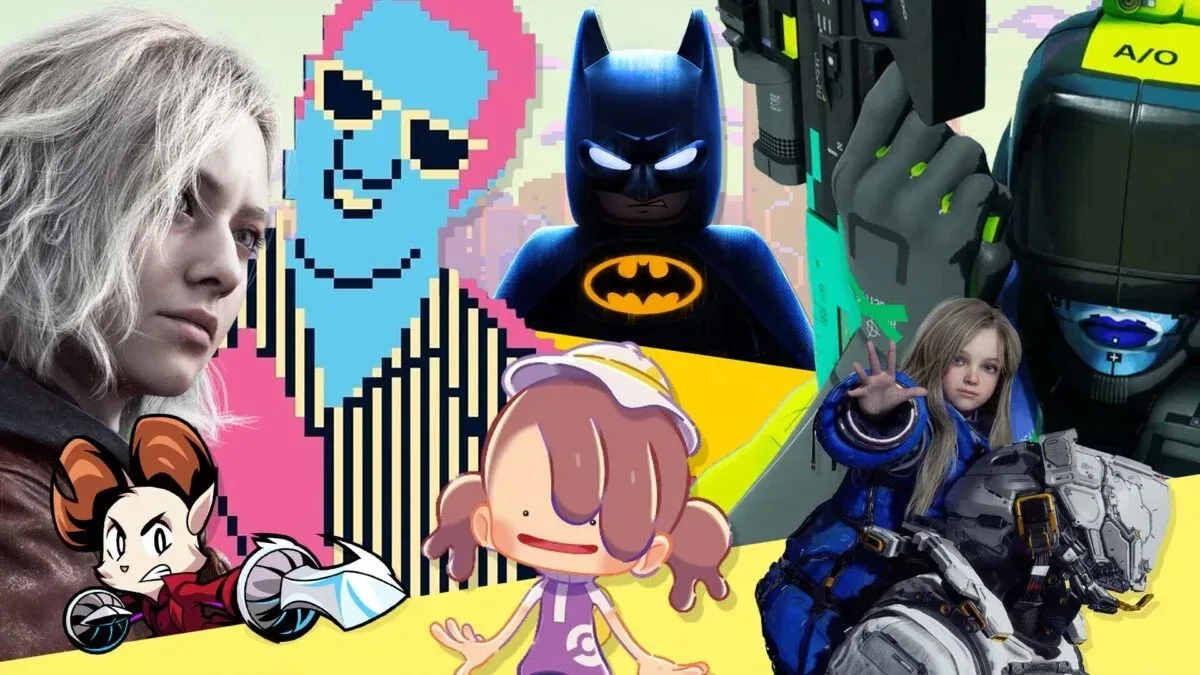
Even before the final stretch of 2026, the year has produced a remarkably broad group of games worth celebrating. The common thread is not a single dominant genre or platform, but ambition: games that take a familiar format and find a sharper angle, whether that means turning communication into the central challenge, revising a beloved formula, or building a world so compelling that players want to stay in it long after the objectives are complete.
That variety is visible everywhere. There are demanding action games and cozy builders, intimate narrative adventures and enormous open worlds, competitive fighters and weirdly personal games about stories, art, and the act of play itself. A few have arrived with rough edges, Early Access caveats, or technical issues. Yet the best of them have still made a strong case for themselves through ideas that feel specific, confident, and memorable.
Games built around being together
Big Walk is among the year's most distinctive multiplayer experiences. It sends groups of two to 12 players onto a surreal island full of toy-like structures, mechanisms, and environmental puzzles. The real toolset is communication. Players use sound, movement, signals, lights, walkie-talkies, flare guns, and whatever else helps them overcome the distance separating them. Its appeal comes from how deliberately it creates opportunities for friends to be silly, confused, inventive, and triumphant together. It is a social playground as much as a puzzle adventure, with an emotional ending that gives its strange journey unexpected weight.
Marvel Tokon: Fighting Souls has a different kind of group energy. Arc System Works' 4v4 tag fighter is mechanically dense, but it also gives newcomers a clear route into a genre that can be intimidating. High-level competition has already shown how much expressive play sits beneath the accessible controls. Its PC version had a troubled start, though ongoing improvements have helped establish a much stronger foundation for a game with real long-term fighting-game potential.
For useful background on this topic, read Amazon Luna Wireless Controller Drops to $40 for Prime Members Ahead of Prime Day.
Dead as Disco also asks players to find a rhythm, only here that rhythm is literal. The stylish beat-'em-up ties punches, kicks, and evasions to its soundtrack, transforming combat into choreography. Its Early Access build is not yet feature-complete, with further levels due ahead of its planned 1.0 update next year, but custom-track tools already offer a substantial reason to experiment.
RPGs that make choices matter
Deltarune Chapter 5 continues Toby Fox's unusual, funny, and increasingly affecting RPG. The larger story may ultimately span seven chapters or more, but five chapters have already established a cast with exceptional charm and emotional range. Its turn-based battles blend with bullet-hell mechanics, while the writing moves between absurd comedy and thoughtful explorations of family, grief, romance, growing up, and loss. Chapter 5 delivers particularly strong character work alongside another standout soundtrack.
The Blood of Dawnwalker finds its identity in pressure. Its vampire action RPG structure assigns time costs to activities, meaning players cannot see or do every available thing in one pass. That friction is the point. Rather than treating completionism as an expectation, the game forces deliberate decisions and lets their consequences carry real weight.
Zero Parades: For Dead Spies is an ambitious RPG about Cascade, a spectacularly troubled spy, and an elusive concept called "it." Its conditioning-thought system can influence skill checks, but the game's real strength is its ability to make identity, confidence, perspective, and personal myth-making feel intertwined. It has the boldness and literary confidence many hoped to see from a successor in this tradition.
Meanwhile, Esoteric Ebb brings political identity crises and tabletop fantasy together in a CRPG shaped by years of solo development from Christoffer Bodegård. It is easy to recognize the influence of dialogue-heavy RPGs within its design, but its own comic voice stands out. Beautiful art and voice acting support writing that is, above all else, extremely funny.
Action games refining familiar forms
Mortal Shell 2 is a major step forward from its predecessor. Where the first game could feel too close to an imitation of established Soulslike ideas, the sequel has more distinct direction. The shell system encourages dramatic shifts in combat style, while removing the stamina bar makes encounters faster and less constrained. The game still has rough spots and a back half that may divide players, but its best moments are brutal, beautiful, and unusually confident.
Nioh 3 similarly expands an already strong action formula. Team Ninja's blend of Soulslike tension and Ninja Gaiden-style intensity now sits within broader maps and more open exploration. Earlier games' repetitive mission loops and fixation on gear scores have been reworked into a more satisfying RPG structure. The story remains comparatively unremarkable, but the combat is more than strong enough to carry the experience.
Pragmata makes an old-fashioned-looking sci-fi premise feel fresh through mechanical multitasking. Hugh and Diana must hack enemies' defenses before conventional shooting can do much damage, turning deliberate encounters into hectic tests of coordination. Its optimistic father-daughter dynamic also distinguishes it from the darker "sad dad" games that once dominated big-budget action storytelling.
Saros continues Housemarque's evolution of the cinematic roguelike shooter. It can be a punishing gauntlet for players who want one, but it also offers a more adjustable route for those hoping to reach the end. Its bullet-heavy battles feel as precise as expected from the studio, while its psychological-horror narrative gives the game's tension a second dimension beyond its bosses.
Horror, espionage, and science fiction thrills
007 First Light finally gives James Bond a game that leans into more than gunplay. IOI's third-person espionage adventure embraces stealth, conversation, improvisation, and reactive spaces in ways that suit the character perfectly. Its structure recalls the freedom of modern Hitman games, letting players sneak, shoot, or talk their way through missions while presenting a notably strong version of Bond.
Star Wars Zero Company succeeds because its pitch is so clean: tactical, turn-based squad combat in a galaxy far, far away. Battles carry the tension expected from the format, while downtime at the base gives its band of mercenaries and misfits room to breathe. Technical problems occasionally intrude, but it remains one of the strongest Star Wars games in years when its systems are firing properly.
The Sinking City 2 turns Lovecraftian horror into a gripping third-person survival experience. It may not have the polish of the biggest genre leaders, but the achievement is especially notable given the developers' work amid the war in Ukraine. Its grotesque worms and cosmic nightmares replace familiar corporate villains and mutations, while the result offers a creepy, heartfelt adventure with impressive resolve.
Resident Evil Requiem, the ninth main Resident Evil, has both scarcity-driven terror and explosive action. Grace's portions emphasize limited resources and vulnerability; Leon's let players turn the tables with a much larger arsenal. Some of its reflections on the franchise's own legacy may not work equally well for everyone, but its scares and dual-protagonist structure showcase why the series has endured for three decades.
Open worlds, comfort games, and pure movement
Forza Horizon 6 offers exactly what a great Horizon game should: a spectacular playground built for the joy of driving. Its digital Japan invites players to cruise through Tokyo in high-end sports cars, tackle challenges, and launch oversized trucks over hills. It looks excellent, feels immediately rewarding, and stands among Xbox's biggest games of the year.
Fields of Mistria takes the farm-life template popularized by Stardew Valley and builds on it nearly everywhere. Farming, fishing, relationships, marriage, mining, animals, and home decoration are all present, but the game adds deeper dialogue, stronger character development, richer caves, detailed customization, and animal breeding that can produce rare colors and accessories. It understands why the genre works while smoothing out many of its frustrations.
Pokémon Pokopia approaches life simulation from another angle. Its town-building has enough depth for players who want to obsess over infrastructure, but a melancholy central mystery gives the game forward momentum. Filling a Pokédex of 300 monsters also provides a meaningful goal for players who may not naturally gravitate to open-ended builders.
Big Hops is a colorful reminder that the 3D platformer still has room to surprise. Its movement, jumping, power-ups, and exploration are exceptional, producing a sense of agility that can stand alongside the genre's most famous names. Demon Tides looks back even further, evoking the attitude and tactile design of PS2-era mascot platformers without becoming trapped in nostalgia.
More essential 2026 discoveries
- Assassin's Creed: Black Flag Resynced carefully modernizes a pirate adventure with improved visuals, new missions, and updated controls while preserving what made the original work.
- Denshattack! turns train stunts into a fast, difficult, score-chasing thrill ride with a vivid anime-inspired style.
- Blood Dungeon fuses roguelite structure, arcade cruelty, platforming haunted-house design, and hidden secrets into something far stranger than it first appears.
- Mixtape uses music and varied minigames to tell a short, funny, sincere coming-of-age story about small-town frustration and big-city dreams.
- Titanium Court combines match-three, tower defense, Shakespeare, and a narrative adventure into an unusually effective meditation on games and players.
- Mina the Hollower blends top-down adventure design, Game Boy-era RPG sensibilities, Soulslike challenge, and gothic atmosphere into Yacht Club Games' impressive follow-up to Shovel Knight.
- Marathon makes extraction-shooter losses sting precisely because the victories feel so electrifying.
- Slay the Spire 2 is already a compelling Early Access sequel, adding new builds and events while preserving the original's irresistible deckbuilding loop.
- Mewgenics reinvents the roguelite deckbuilder through generational teams of cats, one-run decks, and an unapologetically grotesque sense of humor.
- Perfect Tides: Station to Station offers an intimate, emotionally wide-ranging point-and-click portrait of college life in post-9/11 New York.
- TR-49 uses archival organization inside a book-eating machine to explore narrative reality, language, authoritarianism, and cultural anxiety around generative AI.
- Cairn makes climbing stressful, beautiful, frustrating, and deeply rewarding through survival mechanics, difficult decisions, and philosophical reflection.
- Scott Pilgrim EX channels crunchy retro beat-'em-up energy with affection, color, chiptunes, and a sense that nostalgia can still point toward the future.
The strongest message from 2026 so far is that there is no shortage of games willing to be peculiar. Whether that means coordinating with friends on a bizarre island, navigating a vampire RPG's time limit, cataloguing texts inside an impossible machine, or simply driving across a beautifully realized Japan, this year's best releases have given players plenty of reasons to try something outside their usual lane.
Community
Discussion
Start the conversation.
No comments have been posted yet.