

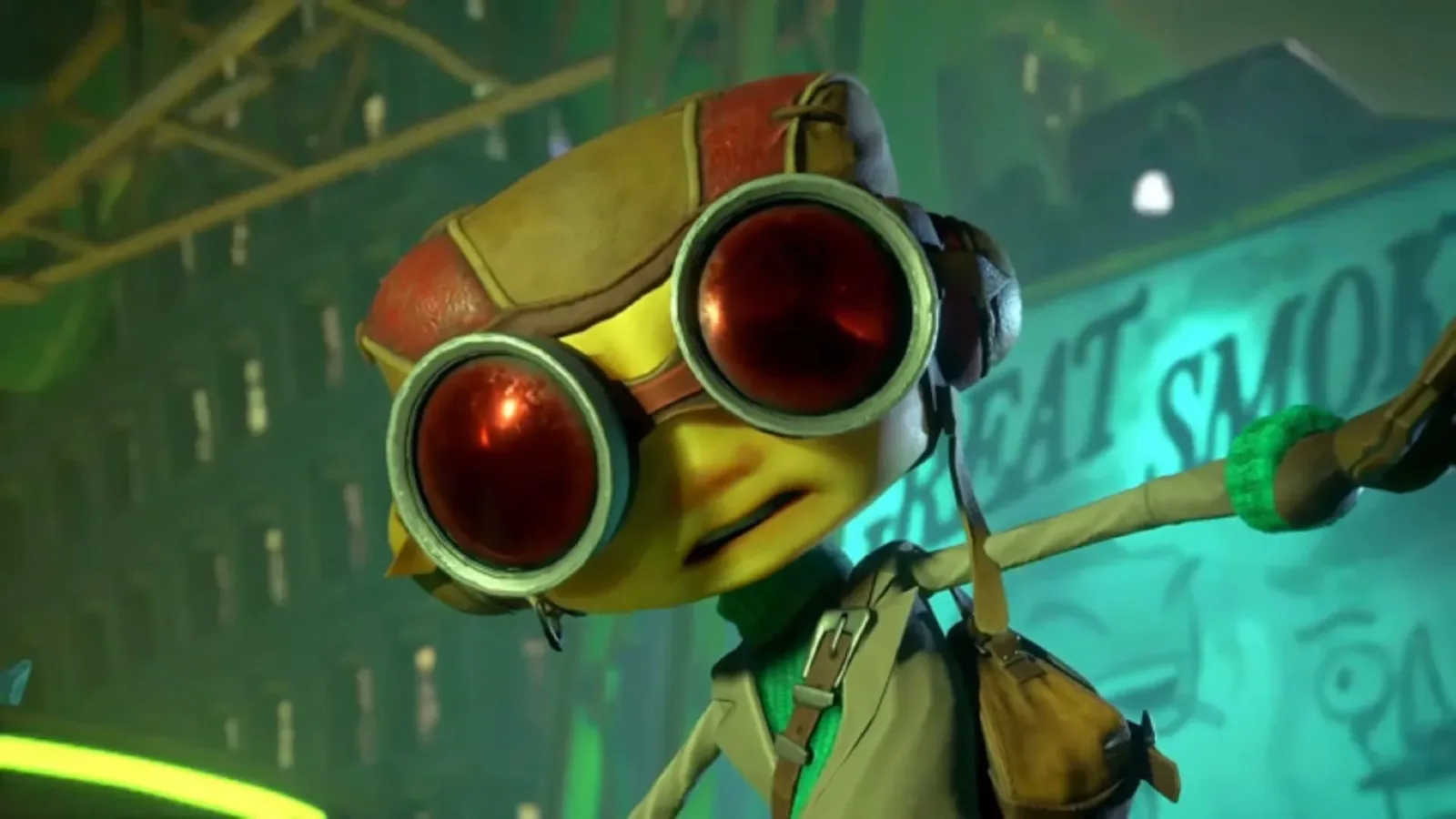
Double Fine founder Tim Schafer has spoken candidly about the studio's return to independence following seven years under Microsoft ownership, explaining that his skepticism about being acquired was rooted in Xbox's history of closing teams. In comments reported by Bloomberg and highlighted by GamesRadar+, Schafer described a changing leadership environment at Xbox, his determination to keep Double Fine alive, and why the developer's appetite for unusual ideas remains central to its future.
The studio officially became independent again on July 6, separating from Microsoft alongside three other teams. Among the studios mentioned in the wider change was Compulsion Games, the developer behind South of Midnight. The move ended a period that began in 2019, when Microsoft acquired Double Fine and folded it into its expanding Xbox Game Studios organization.
For Schafer, however, the possibility of joining Microsoft was not initially an easy one to embrace. He recalled his first reaction to the acquisition offer in stark terms: "I don't want to get bought by you," he said, citing a concern that Microsoft "love[s] shutting down studios." The comment reflects a fear familiar to many developers during an industry period marked by acquisitions, restructuring, layoffs, and closures.
Schafer's concern was about survival, not creative ownership alone
Double Fine has long built its reputation around distinctive projects that are difficult to reduce to a conventional commercial formula. Schafer's career includes landmark adventure games from the LucasArts era, while Double Fine itself has released titles ranging from Psychonauts and Brütal Legend to Broken Age, Costume Quest, and Psychonauts 2. The company has also continued to take chances on ideas that might appear especially unconventional within the blockbuster-focused side of the games business.
That willingness to experiment is specifically what Schafer believes makes the team worth preserving. GamesRadar+ pointed to Double Fine's recent work, including the acclaimed Psychonauts 2 and the unusual pottery-focused brawler Kiln, as examples of the studio's continued commitment to the strange. Schafer said creative work must be rewarding in its own right, particularly when the projects are demanding and are not guaranteed to become massive commercial successes.
"That's why I'm focused on keeping my team alive," Schafer said. "That's why we do these creative things all the time. If we stopped doing these wacky creative things, we'd eventually be like, 'Who cares?'"
He added that these games are not lucrative enough to justify the difficulty of making them on financial grounds alone. In his view, they also need to be "really fun and rewarding" for the people creating them. It is an outlook that helps explain both Double Fine's history and Schafer's sensitivity to the possibility of being judged solely by large-scale sales expectations.
Phil Spencer and Matt Booty helped ease the original doubts
Although Schafer entered acquisition discussions with reservations, he said former Microsoft Gaming CEO Phil Spencer was a genuine admirer of Double Fine. Current Xbox chief content officer Matt Booty also assured Schafer that the developer would be allowed to operate with a degree of self-sufficiency. According to Schafer, that promise largely held true during Double Fine's time within Microsoft.
That detail is important because Double Fine's 2019 acquisition came during a major Xbox expansion. Microsoft was buying and building studios while preparing a larger pipeline of first-party games. For a developer with Double Fine's identity, the appeal of financial backing and access to broader resources had to be balanced against the risk of being absorbed into a more standardized corporate production structure.
Schafer's account suggests that, for much of the seven-year period, Double Fine retained enough room to remain recognizably itself. Yet the picture changed amid Xbox's significant leadership overhaul in 2026. Asha Sharma succeeded Phil Spencer as Xbox CEO, and Schafer indicated that he sensed trouble before any formal resolution was communicated.
"It's not all at once out of the blue," Schafer said. "It's like - oh, that person didn't reply to my joke text. That's kind of how you find out these things. So I knew before I knew."
While Schafer did not present a detailed account of internal discussions, the remark conveys the uncertainty that can precede broad corporate changes. He appeared to be referring to a realization that Double Fine could be caught up in Xbox's mass layoffs and restructuring. In the end, the studio emerged as an independent company rather than being shut down.
"No one puts Double Fine out of business except for me"
Schafer summarized his feeling about Double Fine's future with a deliberately dark joke. "No one puts Double Fine out of business except for me," he told Bloomberg. He extended the metaphor by saying Sharma was not going to "shoot my dog," because he would be the one to do it--before quickly making clear that he does not expect that outcome. "But I'm not going to shoot it because it's going to do great. A lot of people want to walk the dog."
The humor is characteristically Schafer, but it also carries a serious message: he wants Double Fine's fate to be decided by the studio and its work rather than by a parent company's organizational priorities. His earlier fear had been that the team could be doomed within Microsoft unless it delivered an enormous, Minecraft-scale success in a given year. Independence removes the specific pressure of fitting into Xbox's shifting first-party strategy, though it does not remove the practical difficulties of running a game developer.
Schafer openly acknowledged that the business remains hard to predict. "After all these years," he said, "how little I understand about the business just shows how hard it is to know." That statement is a useful reminder that independence is not a simple victory lap. It can mean more autonomy, but it also means a studio must continue to secure funding, plan projects, manage staffing, and find an audience without the same corporate safety net.
Thank You Bus Driver begins Double Fine's new chapter
On September 4, Double Fine announced its next game, Thank You Bus Driver. The premise is exactly the kind of offbeat concept that observers associate with the studio: players take the role of a bus driver who wants passengers to say thank you. The announcement arrived on the same day GamesRadar+ published its report on Schafer's comments, giving the developer's newly independent era an immediate creative focal point.
Few further details were included in the source material regarding the game's release plans, supported platforms, pricing, or launch timing. What is clear is that the project fits Schafer's stated philosophy. Rather than pursuing an obviously trend-driven concept, Double Fine is once again presenting something specific, playful, and eccentric.
That does not mean the studio is insulated from the pressures affecting the wider industry. The source material notes that Double Fine laid off 23 people after leaving Xbox. Schafer described the decision as one the company would only consider for the sake of survival, underscoring the painful reality behind the optimistic language surrounding the studio's return to independence.
The layoffs put the story in a more complicated light. Double Fine has regained control of its own direction, but that transition has come with costs for employees and challenges for the remaining team. Schafer's repeated focus on keeping the studio alive should therefore be read not only as a creative mission statement, but also as a practical response to an unstable development landscape.
A familiar Double Fine balancing act
Double Fine's next phase will likely involve the same balancing act that has defined much of its history: finding enough commercial stability to continue making projects that other studios might not attempt. The developer's identity has been built on personality, humor, inventive worlds, and mechanics that often sit outside the safest market categories. Its return to independence potentially protects that identity, but it also places the responsibility for sustaining it back in the studio's own hands.
Schafer's comments do not portray Microsoft's ownership as uniformly negative. He credited Spencer's enthusiasm and Booty's assurances, and said Double Fine did feel self-sufficient for a time. Instead, his account presents the separation as the result of a broader change in circumstances, especially after Xbox's leadership transition and restructuring.
For fans, the key immediate development is that Double Fine is still operating, still pursuing unusual ideas, and has already revealed the first game of its post-Microsoft chapter. Thank You Bus Driver may be a small premise on paper, but it represents a much bigger statement for the studio: Double Fine intends to remain Double Fine, even as the business around it continues to change.
Community
Discussion
Start the conversation.
No comments have been posted yet.