

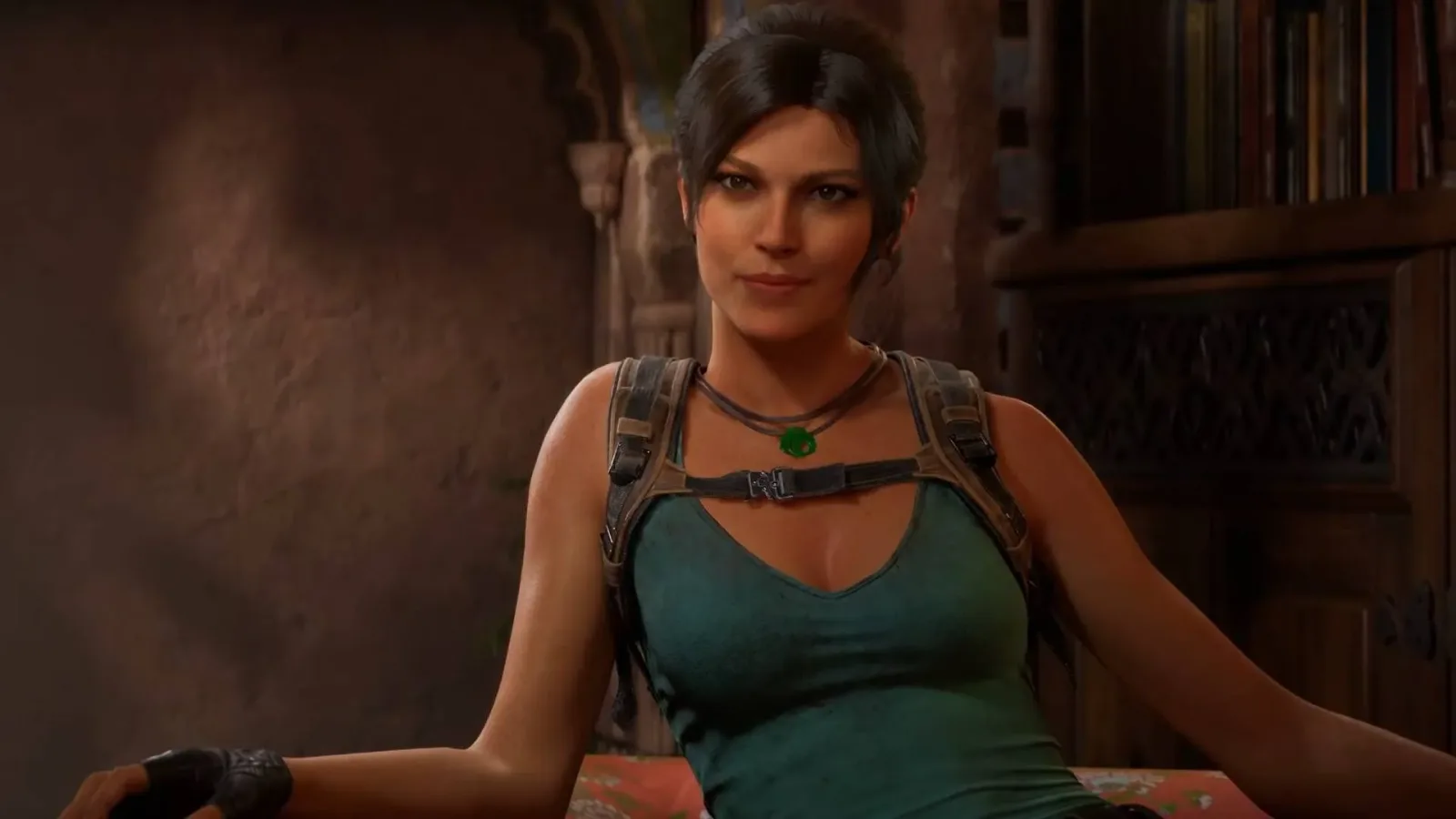
Tomb Raider: Legacy of Atlantis is being built around an idea that can feel unusually bold in modern blockbuster action-adventure games: players should sometimes be uncertain about where to go next. Rather than constantly pointing Lara Croft toward the next ledge, doorway, switch, or scripted spectacle, the development teams want to preserve the isolation and self-directed discovery that defined the 1996 original.
That does not mean simply recreating every old limitation for its own sake. The remake is aiming for a careful balance between remembering what made the first Tomb Raider memorable and reworking elements that no longer fit its more detailed, realistic presentation. But when it comes to traversal, puzzles, and the feeling of being alone in a vast ancient space, the message from the developers is clear: getting lost is part of the point.
Jeff Adams, experience director at Crystal Dynamics, described that approach in Edge magazine issue #429. He said the team values sequences where it can resist over-explaining the route, allowing players to search for unexpected discoveries rather than being pushed directly from one objective to another.
"We celebrate those moments to say, 'Hey, let's not hold your hand. Let's let you go out there and hunt around, maybe find some stuff that you weren't expecting to find,'" Adams said. "That's the idea, to have that sense of 'be adventurous, go out, explore, get on your own, get lost, then find your way back.' And that gives a lot of reward just by traversing the world."
For useful background on this topic, read Battlefield 6 Leads Xbox Game Pass' October 2026 Lineup.
It is a philosophy closely tied to the identity of the original Tomb Raider. Lara's earliest adventure was not merely a succession of cinematic ruins and shootouts. Its environments could be intimidating spatial puzzles in their own right: towering chambers, submerged tunnels, steep vertical drops, hidden pressure plates, and routes that only became clear after a player had spent time observing the space. Progress frequently depended on patience, experimentation, and the willingness to retrace steps with a new understanding of the level.
Those qualities could be obscure, even frustrating, but they also created a distinctive kind of accomplishment. Reaching the next area was often rewarding because the player, rather than a waypoint marker or a heavily signposted path, had figured out how to get there. Legacy of Atlantis appears to be treating that feeling as a key piece of the material worth protecting.
Making exploration meaningful instead of automatic
Over the years, Tomb Raider has taken several different approaches to guidance and accessibility. Later entries introduced more obvious climbing surfaces, clearer routes through set pieces, and design choices intended to reduce the chance that players would become completely stuck. The more recent survival-focused games also leaned into cinematic momentum, crafting, combat upgrades, and broad areas with recognizable points of interest.
Those approaches have their own strengths, especially when a game is trying to maintain pace through action-heavy sequences. Yet they can also make exploration feel prescribed. If every usable grip is visually distinct and every destination is outlined by interface prompts, a player is less likely to experience the tense, uncertain moment of looking across a tomb and wondering whether a distant platform is reachable at all.
Legacy of Atlantis is not positioning confusion as an end in itself. Adams' comments instead suggest a desire to make space for curiosity. A player who goes off-route, investigates an odd corner of an ancient structure, or studies an unfamiliar vista may find a useful item, a hidden route, or simply the satisfaction of understanding the environment. The emphasis is on the journey through the world, not only the completion of a task list.
That design direction was already apparent in a Summer Game Fest hands-on demonstration, where the game's puzzle-forward foundations were visible. Further presentations have also indicated that the remake is trying to navigate a difficult line: it needs to look and play like a modern production without turning a famously demanding adventure into an experience where the game continually solves its own challenges.
Remembering the moments that mattered
For Flying Wild Hog creative director Michael Kuk, deciding what should return from the original begins with memory. Rather than treating every element of the 1996 game as equally essential, he described a process of identifying the places, objects, vistas, and encounters that stayed with players long after they put down the controller.
"Imagine you just finished the first Tomb Raider, then you close your eyes and you imagine a playthrough in your head, and your brain remembers the things that generated the most emotions for you," Kuk said. "These moments, locations, vistas, objects that stick in your memory, these are the things that have to be in the game almost untouched."
That is an important distinction for a remake. Faithfulness does not necessarily mean preserving every interaction, interface convention, or design compromise exactly as it was. A modern project has different visual expectations, different movement systems, and a different relationship with players accustomed to contemporary controls. At the same time, revising too much can erase the strange, solitary character that made the original endure.
Kuk's description points toward a remake built around emotional landmarks. A cavernous room, a startling reveal, a particular artifact, or the sight of a distant destination may need to retain its role and impact even if the surrounding mechanics are updated. The goal is not just to reproduce a map layout. It is to reproduce the memory of discovery.
That could be especially significant for Tomb Raider, a series whose first game was defined by atmosphere as much as by Lara herself. Long periods without dialogue, music used sparingly, and environments that dwarfed the protagonist helped establish a sense of archaeological adventure. The player was not always being entertained by an explosion or a conversation; sometimes they were simply trying to understand an ancient place.
Why crafting is part of the remake's modernization
One of Legacy of Atlantis' more divisive additions is a crafting system. Some longtime fans have questioned whether crafting belongs in a version of the original Tomb Raider, particularly given how strongly the first game is associated with simple resource management and the scavenging-free clarity of its classic design.
Adams explained that the decision partly comes from the remake's heightened realism. In the original, Lara could discover a medical pack inside a tomb that had been sealed away for thousands of years. That was a familiar video game convention, but it becomes harder to accept when the world is presented with a greater degree of physical detail and plausibility.
The new system therefore lets players create healing supplies and other temporary boosts primarily from materials that could reasonably be found in or around the ruins. In theory, that change can serve the same core fantasy as exploration: players search the environment, pay attention to what is available, and turn what they find into a means of survival.
Whether that will satisfy fans who prefer the original's more stripped-back structure remains to be seen. Crafting can easily become a repetitive obligation if resources are too common, recipes are too elaborate, or upgrades distract from platforming and puzzle-solving. It could also be used sparingly, however, as a practical replacement for implausible pickups while giving optional exploration more tangible value.
The key question is whether crafting supports the expedition or competes with it. If the system encourages players to look more closely at the world without burying them under inventories and materials, it may fit the remake's wider goals. If it makes every tomb feel like a checklist of harvestable objects, it risks pulling the experience toward the kind of modern design Legacy of Atlantis is otherwise attempting to avoid.
A remake that trusts the player
The most promising part of the developers' stated vision is not simply that Legacy of Atlantis may be harder or less explicit than other modern action-adventure games. It is that the teams appear to understand why the original's uncertainty mattered. Being briefly lost in a Tomb Raider level was not always a flaw. Often, it was the condition that made eventual success feel earned.
Modern conveniences do not have to disappear entirely for that sensation to return. Responsive controls, readable visual design, and sensible accessibility options can coexist with environments that demand observation. The challenge for Crystal Dynamics and Flying Wild Hog will be ensuring that any assistance feels available when needed rather than constantly imposed.
If Legacy of Atlantis can preserve the awe of entering an enormous ruin, the tension of not knowing the route, and the quiet reward of discovering the answer independently, it will be doing more than revisiting a famous adventure. It will be bringing back a design sensibility that remains comparatively rare: one that trusts players to be curious, make mistakes, and eventually find their own way forward.
Community
Discussion
Start the conversation.
No comments have been posted yet.